Skip to content

Multiple Artists

CURRENTS

Jan 12–Feb 5, 2023

Installation view of CURRENTS at Lehmann Maupin Palm Beach

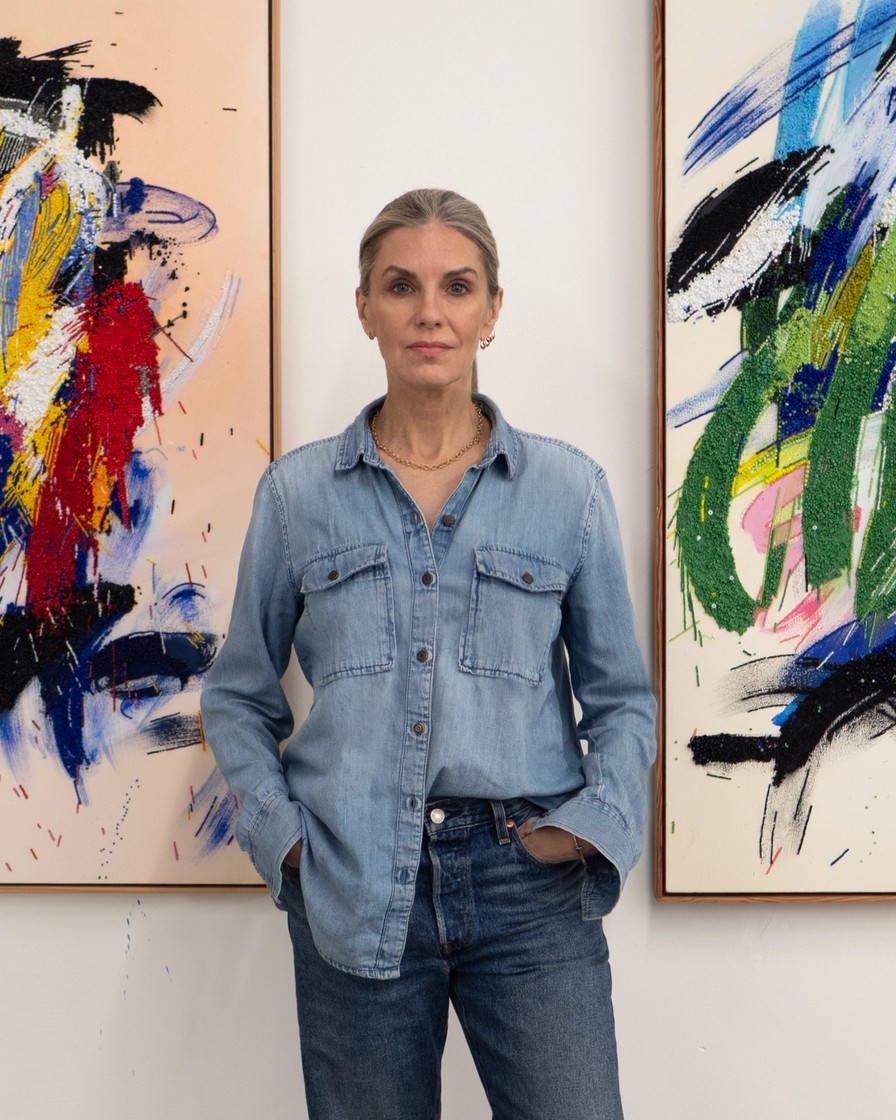
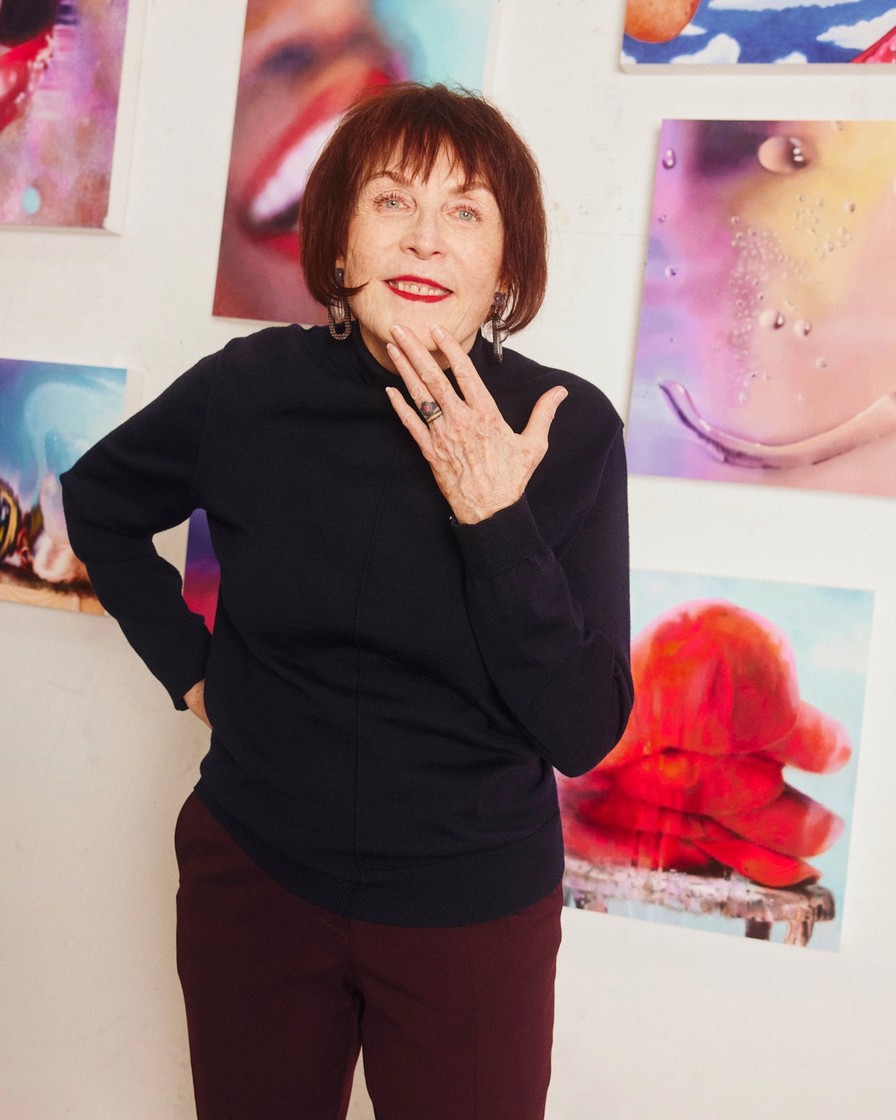
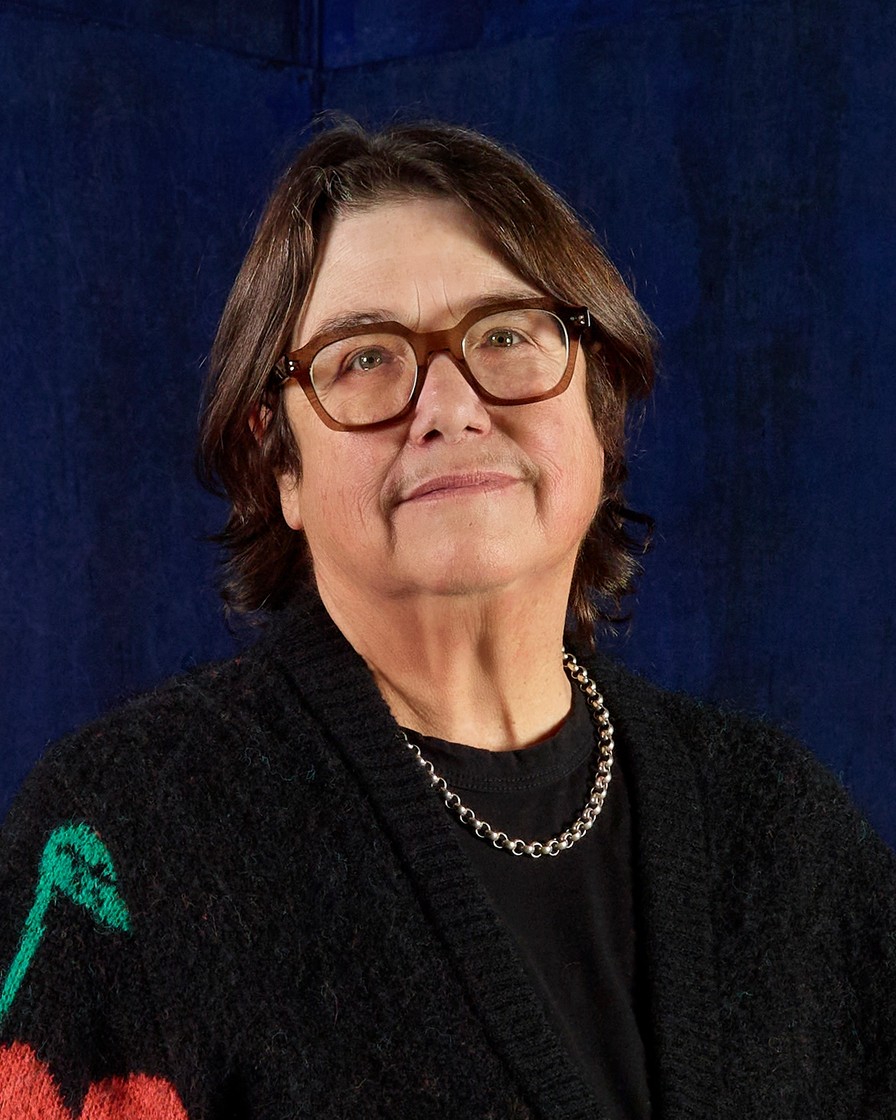
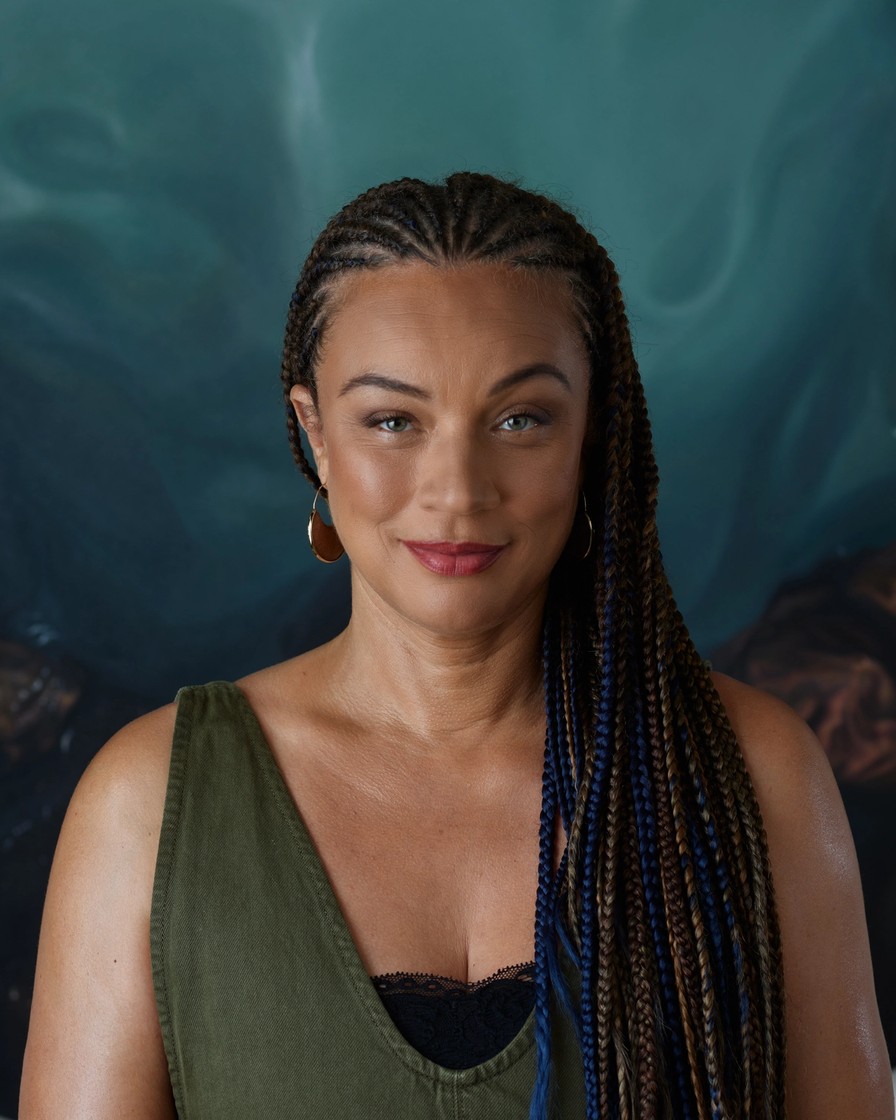
CURRENTS unites eight artists from Lehmann Maupin’s global program who engage the aesthetics of water, reflecting the element’s formal and conceptual qualities. Works by Heidi Bucher, Dominic Chambers, Teresita Fernández, Liza Lou, Marilyn Minter, Catherine Opie, Calida Rawles, and Robin Rhode render aquatic imagery through painting, installation, photography, tapestry, and works on paper. Together, the artists in CURRENTS consider the visual and material properties of water in order to assess its phenomenological possibilities and foster a haptic viewing experience.

A new work in acrylic and pastel by Calida Rawles continues the artists’ exploration of water as both a multifaceted physical material and a historically charged space for Black bodies. In The Fire Through Time (2022), a body appears partially submerged in an exquisitely rendered submarine landscape; Rawles deploys water as a mode of abstraction, allowing vistas of bubbles, ripples, refracted light, and expanses of blue and green to distort her subject. In doing so, The Fire Through Time seeks to revisit the cultural and historical trauma that surrounds water and the Black experience, reclaiming it as a space for healing, discovery, and bodily autonomy. 

Installation view of CURRENTS at Lehmann Maupin Palm Beach
Installation Views: 1 of 5
Installation view of CURRENTS at Lehmann Maupin Palm Beach
Installation Views: 1 of 5
Painting by Dominic Chambers

Dominic Chambers

Brother and I, 2023

Painting by Marilyn Minter

Marilyn Minter

Big Bang, 2012

Photograph by Catherine Opie

Catherine Opie

Untitled #4 (From Your Shore to My Shore), 2009

Work on paper by Heidi Bucher

Heidi Bucher

Untitled (Wasserbild / Water work), 1985

Wall sculpture by Teresita Fernández

Teresita Fernández

Untitled (Anthem), 2008

Photograph by Catherine Opie

Catherine Opie

Untitled #7 (From Your Shore to My Shore), 2009

Tapestry by Calida Rawles

Calida Rawles

Our Grace, 2022

Work on paper by Calida Rawles

Calida Rawles

The Fire Through Time, 2022

Photograph by Robin Rhode

Robin Rhode

Calypso’s Cave, 2022

Work on paper by Heidi Bucher

Heidi Bucher

Untitled (Wasserzeichnung / Water drawing), 1985

Work on paper by Heidi Bucher

Heidi Bucher

Untitled (Wasserzeichnung / Water drawing), 1985

Work on paper by Heidi Bucher

Heidi Bucher

Untitled (Wasserzeichnung / Water drawing), 1985

Work on paper by Heidi Bucher

Heidi Bucher

Untitled (Wasserbild / Water work), 1985

Exhibition Artists

Portrait of Heidi Bucher

Heidi Bucher (b. 1926, Winterthur, Switzerland; d. 1993, Brunnen, Switzerland) was a Swiss artist who is best remembered for her innovative use of latex and exploration of the physical boundaries between the body and its surroundings. Serving simultaneously as means of historical preservation and metaphorical molting, Bucher’s Hauträume—or “roomskins”—act as indexes of the complicated relationship humans have to their bodies and pasts. Working across the United States, Switzerland, and the Canary Islands, Bucher forged a practice anchored in familial, cultural, and architectural histories and deeply entwined with contemporary concerns around the boundaries between public and private space, and femininity and the body. Though Bucher’s many bodies of work—from her early drawings and wearable sculptures to her later latex-encased objects and Hauträume—each reflect distinct artistic interests and origins, they all trace back to the artist’s mantra, which uniquely summarizes her career-long engagement with bodies and rooms: Räume sind Hüllen, sind Häute (Spaces are shells, are skins).

Beginning in the 1970s, Bucher embalmed clothing in a mixture of latex and mother of pearl, preserving the objects as artifacts of their time and creating a surface that appeared skin-like in both color and texture. Bucher primarily used women’s clothing, such as nightdresses and pantyhose, as a critical response to the rigid gender restrictions she had experienced during her childhood and adolescence. By the end of the decade, Bucher began applying her signature latex medium to the surfaces of domestic objects and spaces, aligning women’s clothing with these designated “feminine” spaces. Allowing the latex mixture to harden, then peeling it off, Bucher produced translucent skins that held elements of paint, rust, dirt, and the minute details and markings of the architecture. During the years that followed, Bucher produced several major bodies of work based on the domestic spaces of her past—her ancestral house in Winterthur, the study in her parents’ home, and her studio in Zurich. Each space she inhabited was rendered translucent and ghostly, like a visual memory that, due to the fragile nature of the latex material, would warp and discolor over time. Displayed suspended mid-air, the series of latex Hauträume are simultaneously monumental and fragile, mimicking the very process by which they are created; the removal of the latex from the architectural space required a great deal of both physical strength and delicate dexterity.
Portrait of Dominic Chambers

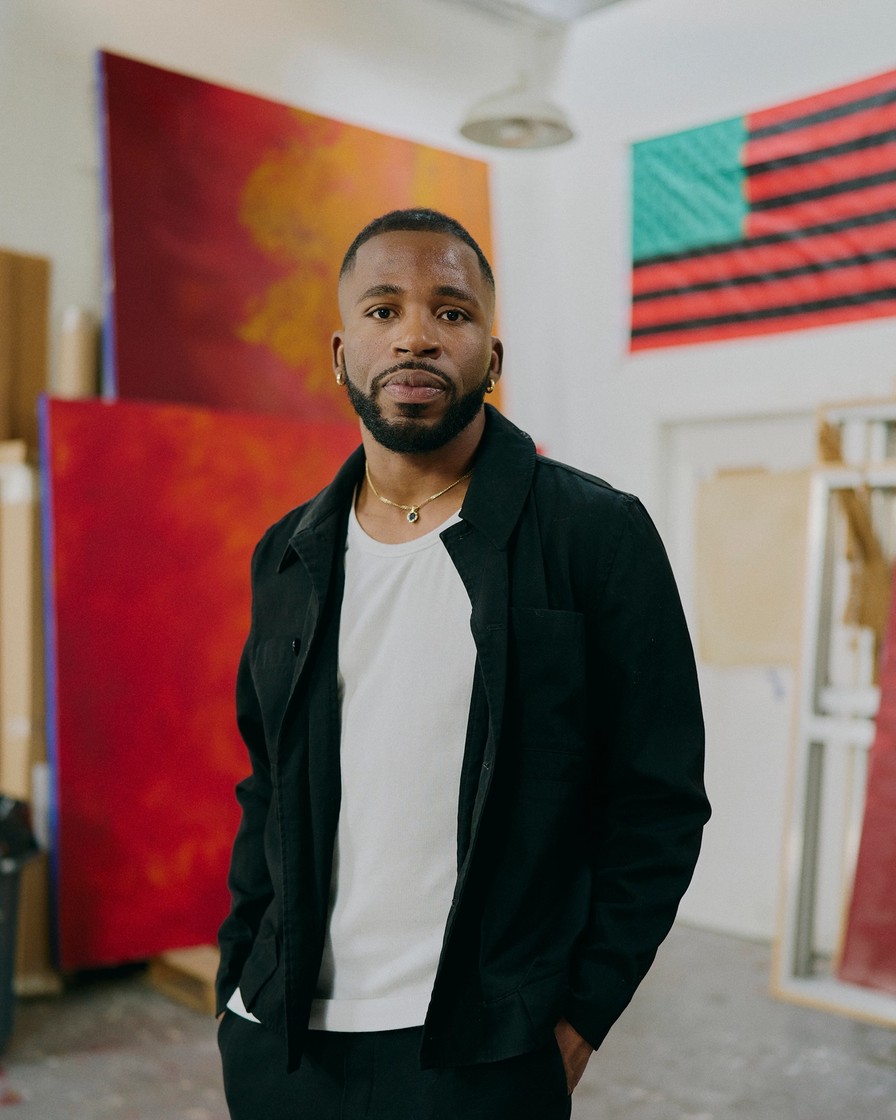
Dominic Chambers (b. 1993 St. Louis, MO; lives and works in New Haven, CT) creates vibrant paintings that simultaneously engage art historical models, such as color-field painting and gestural abstraction, and contemporary concerns around race, identity, and the necessity for leisure and reflection. Interested in how art can function as a mode for understanding, recontextualizing, or renegotiating one’s relationship to the world, the artist sees painting as a critical and intellectual endeavor, as much as an aesthetic one. A writer himself, Chambers draws inspiration from literature, especially Magical Realism and the writing of W.E.B. Du Bois, particularly Du Bois’ The Souls of Black Folk, and one of its central themes―the veil. A product of racial injustice that is a metaphorical lens through which Black bodies are observed and experienced, references to the veil appear throughout the artist’s work, whether in large swaths of color that obscure his figures or in the recurring use of a raindrop motif as both an active and passive element in his canvasses.

Chambers sees color as a protagonist in his paintings that is as important to unlocking their meaning as his subjects, and his deft manipulation of the tension and interplay between contrasting colors gives his work a subtle electric charge. In his most recent series, Leave Room for the Wind, Chambers situates his subjects in vivid landscapes that evoke shifting, monochromatic dreamscapes, and reference the mutability of our environment. The richly-hued paintings in this body of work depict open fields saturated in primary hues of red, yellow, and blue. Many of these scenes are populated by figures flying kites―a profoundly domestic activity pursued solely for its own sake, unconnected with external recognition or reward. In these works and throughout his oeuvre, Chambers proposes that enjoyment, stillness, or wonder can act as a gateway to private life and reminds us that leisure and recreation are critical to replenishing our own interiority.

Portrait of Teresita Fernández

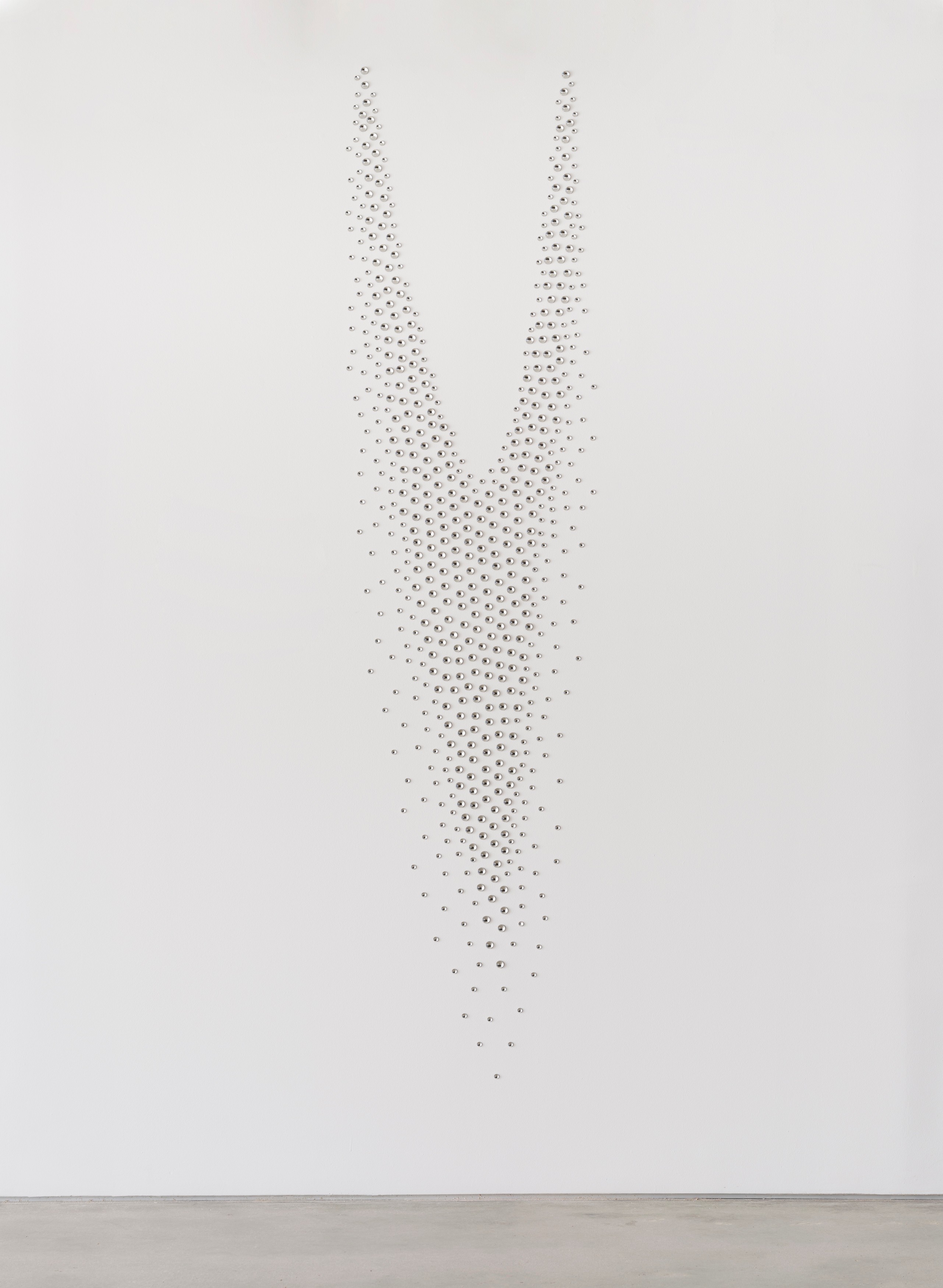
Teresita Fernández's work is characterized by an expansive rethinking of what constitutes landscape: from the subterranean to the cosmic, from national borders to the more elusive psychic landscapes we carry within. Fernández unravels the intimacies between matter, human beings, and locations. Her luminous, sculptural works poetically challenge ideas about land and landscape by amplifying the powerful, emotional connection in how we imagine place, and, by extension, one another. Fernández exposes the complex narratives that stem from distorted, colonial histories, elaborating on these themes in subtle ways that insist on intertwining beauty, the socio-political, the intimate, and the immense. Imagining the landscape with reciprocal sentience, Fernández has said “You look at the landscape, but the landscape also looks back at you."

Fernández is a 2005 MacArthur Foundation Fellow and the recipient of numerous awards, including a Creative Capital Award; Guggenheim Fellowship; the Louis Comfort Tiffany Biennial Award; an American Academy of Rome Fellowship (AFAAR); and a National Endowment for the Arts Individual Artist’s Grant in Visual Arts, among others. Her works have been exhibited and collected both nationally and internationally including: The Museum of Modern Art, New York; The Whitney Museum of American Art; the San Francisco Museum of Modern Art; The Menil Collection; Philadelphia Museum of Art; Pérez Art Museum Miami; Modern Art Museum of Fort Worth; Centro de Arte Contemporáneo de Málaga, Spain; The Museum of Fine Arts, Boston; SITE Santa Fe; The Smithsonian Museum of American Art; MASS MoCA; and Castello di Rivoli, Italy, among others. She lives and works in Brooklyn, New York

Portrait of Liza Lou

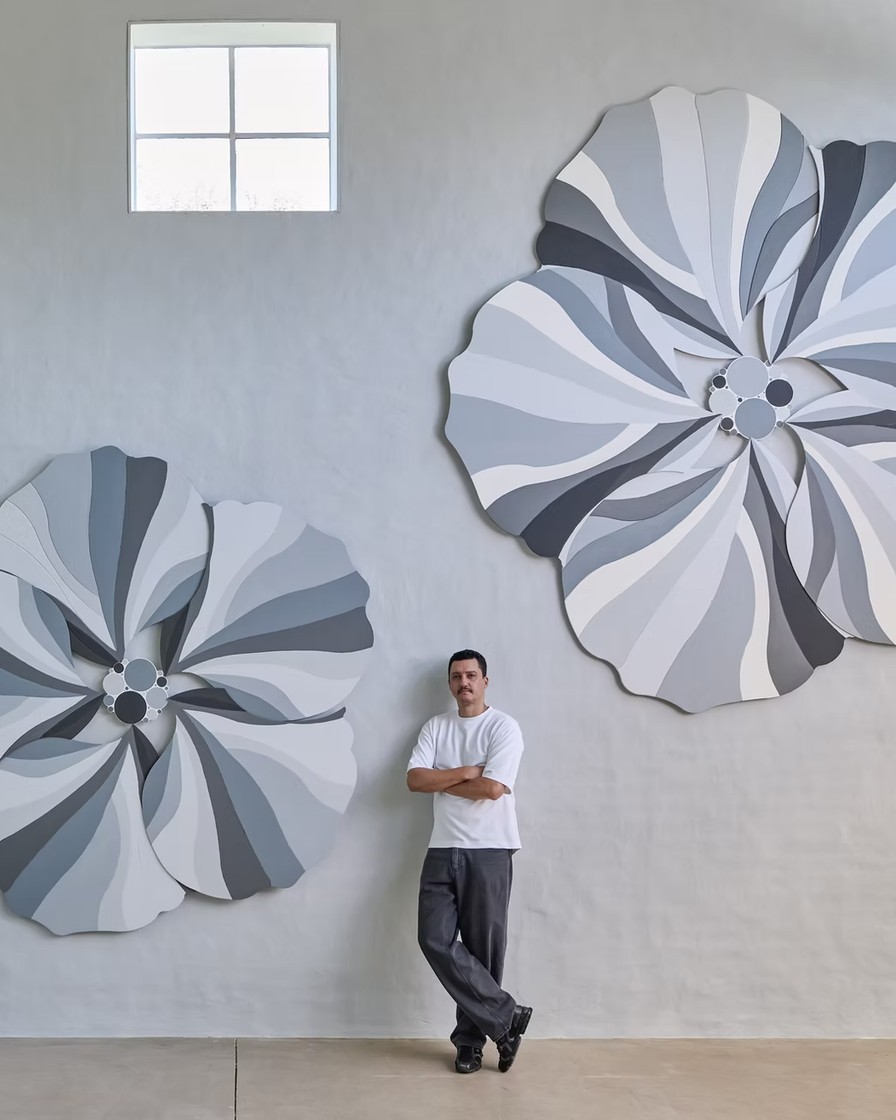
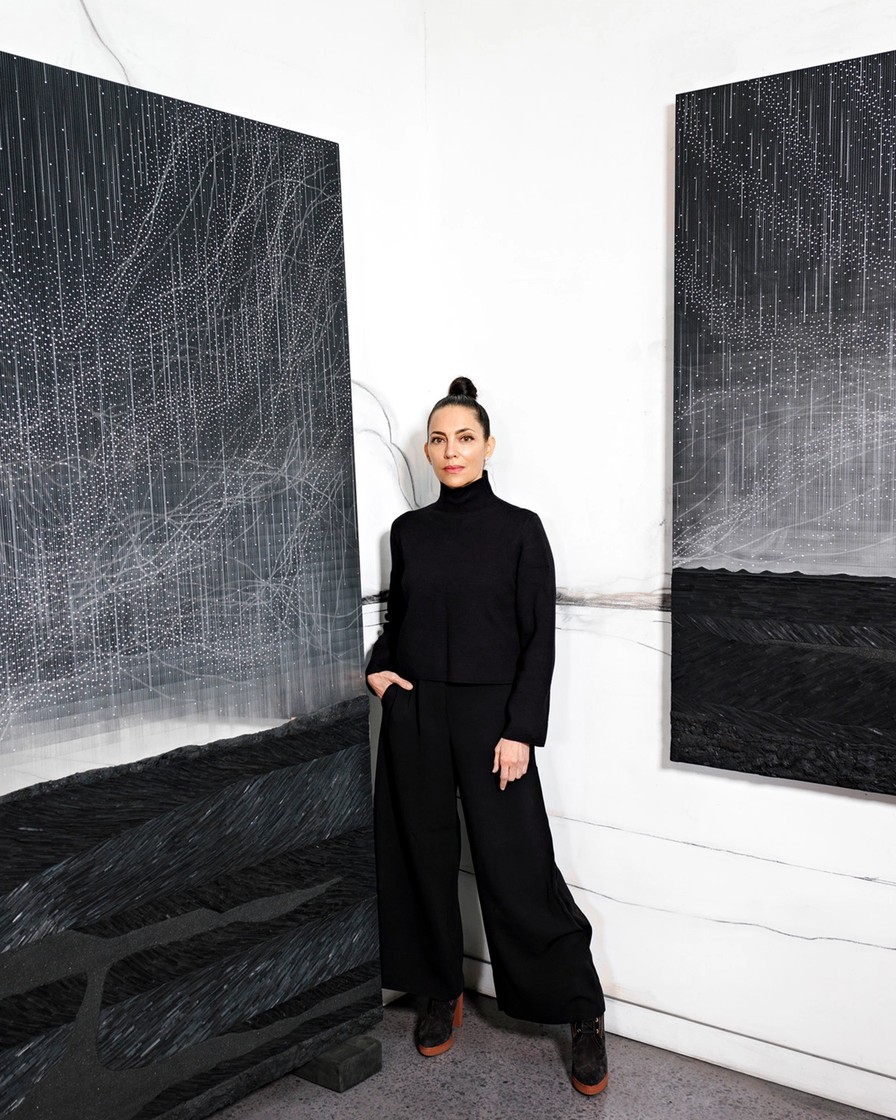
Liza Lou (b. 1969 NYC lives and works in Joshua Tree, California) is widely known for her pioneering work as both an artist and for her groundbreaking social practice of the mid-2000s. Beginning with her conceptual use of glass beads, Lou’s room-size installations of the 1990s challenged stereotypes and gender roles within the art canon and broke down boundaries between art and craft.¹ In 2002, she received a MacArthur Foundation Fellowship, which she utilized to found a women’s advocacy program within her studio in Durban, South Africa which she operated from 2005-20, expanding the possibilities of social engagement within an art studio environment. During the 15 years she lived and worked in South Africa, Lou developed a poetic, handmade approach to Minimalism that utilizes the oils of the human hand as a form of paint in woven paintings, such as Soil | Solid (2012), which is in the permanent collection of the Des Moines Art Center, and room-scaled wall works, sculptures and installations, such as Security Fence (2005), now in the collection of the Los Angeles County Museum of Art, and Continuous Mile (2008), in the collection of the Cleveland Museum of Art.

Current work has the artist in further dialogue with art history as she explores the possibility of her chosen material to act as a fluid paint body, bringing an original and Feminist vision to painting.² Through the slow accrual of a humble material, Lou recalibrates the action of a brushstroke into elaborate, cell-by-cell explorations that combines the exuberance of Pop and Abstract Expressionism with the materiality and sheen of her early work, while pushing the language of painting further forward.

Portrait of Marilyn Minter

Marilyn Minter (b. 1948, Shreveport, LA; lives and works in New York, NY) creates photographs, painting, and videos that offer nuanced representations of women. Well known for her meticulous technical mastery, Minter’s details often highlight natural corporeal qualities that are omitted in mass-media depictions of women, such as body hair and stretch marks, which she deems not only authentic but also beautiful. In her early work, Minter explored erotica—most often images created by men for men—and created new versions of erotic images solely meant for female consumption as a means of reclaiming female sexuality and desire. This revolutionary act was met with serious criticism from leaders of the feminist movement who questioned the ability to reclaim such exploitative images. Nevertheless, Minter has unabashedly continued to advocate for women’s rights and reproductive freedoms, a stance, which for her, always includes women openly expressing their sexuality and desire—reclaiming the female body and subverting the historical objectification of women from the male gaze.

In addition to her commitment to challenging the historic portrayal of women through images, Minter’s work also reveals true mastery of her mediums. Her training in both photography and painting make her working process unique: for each painting she begins with a photograph or series of photographs, which serve as the basis for her larger compositions. Minter replicates the photograph in paint but makes subtle formal adjustments by altering the “focus” of the image, increasing the density of elements such as frost or steam through the use of layering thousands of colors, applying the photographic tenet of focus to the painting process. Likewise, Minter applies painterly approaches to her photography. She physically obscures the pictorial plane, skillfully introducing abstraction into the image. Through steadfast progressive values and a rigorous, time-consuming studio practice, Minter continues to reveal and revel in the exquisite reality of women’s bodies.

Portrait of Catherine Opie

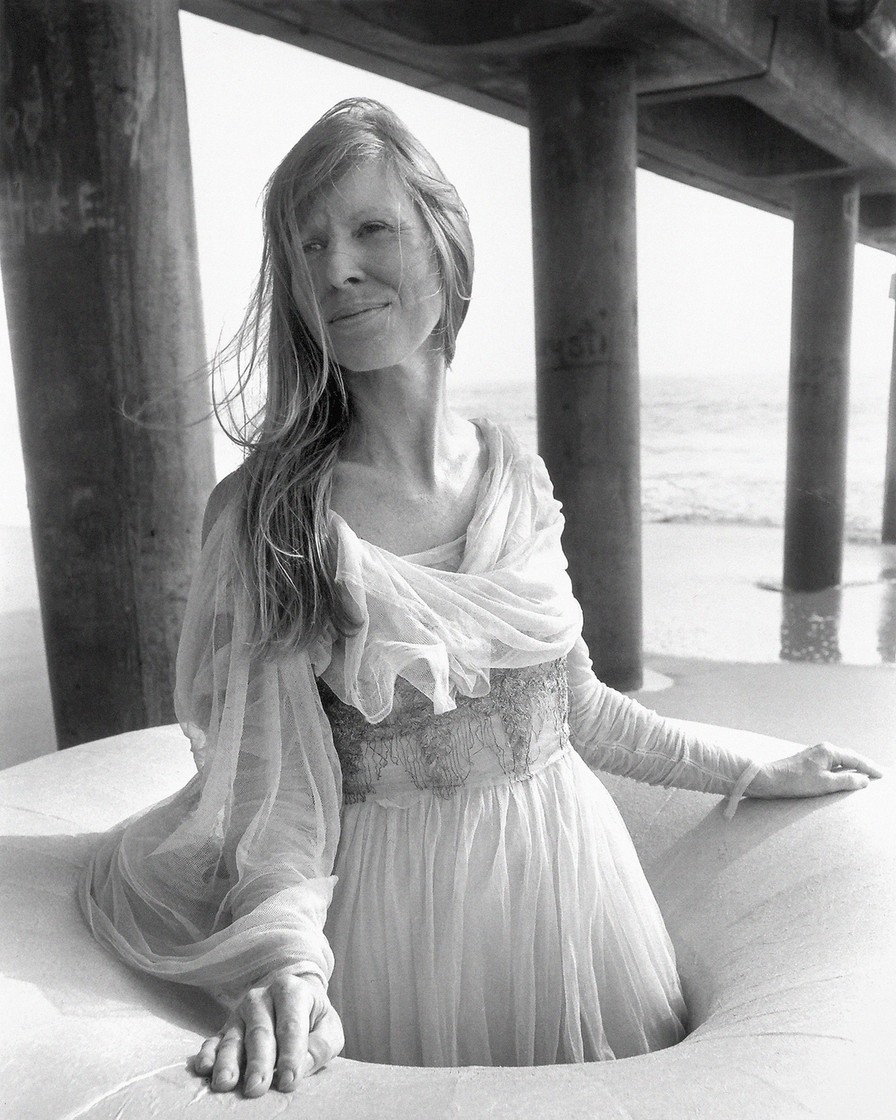
Catherine Opie (b. 1961, Sandusky, OH; lives in Los Angeles, CA) is known for her powerfully dynamic photography that examines the ideals and norms surrounding the culturally constructed American dream and American identity. She first gained recognition in the 1990s for her series of studio portraits, photographing gay, lesbian, and transgender individuals drawn from her circle of friends and artists. Opie has traveled extensively across the country exploring the diversity of America’s communities and landscapes, documenting quintessential American subjects—high school football players and the 2008 presidential inauguration—while also continuing to display America’s subcultures through formal portraits. Using dramatic staging, Opie presents queer and trans bodies in intimate photographs that evoke traditional Renaissance portraiture—images of power and respect. In her portraits and landscapes, Opie establishes a level of ambiguity of both identity and place by exaggerating masculine or feminine characteristics, or by exaggerating distance, cropping, or blurring her landscapes.

Opie received a B.F.A. from San Francisco Art Institute in 1985, and an M.F.A. from CalArts in 1988. Solo exhibitions of her work have been organized at Museum of Art São Paulo (MASP), São Paulo, Brazil (2024); Heide Museum, Melbourne Australia (2023); The Current Now, Stowe, VT (2022); Plug In Institute of Contemporary Art, Winnipeg, Canada (2020); Museum of Contemporary Art (MOCA), Cleveland, OH (2019); Marciano Foundation, Los Angeles, CA (2019); Princeton University School of Architecture, Princeton, NJ (2018); Centro Internazionale di Fotographia, Palermo, Italy (2018); Los Angeles County Museum of Art, Los Angeles, CA (2016); Museum of Contemporary Art, Pacific Design Center, Los Angeles, CA (2016); Hammer Museum, Los Angeles, CA (2016); Wexner Center for the Arts, Columbus, OH (2015); Long Beach Museum of Art, Long Beach, CA (2012); Socrates Sculpture Park, New York, NY (2012); Institute of Contemporary Art, Boston, MA (2011); Portland Art Museum, Portland, OR (2010); Solomon R. Guggenheim Museum, New York, NY (2008); Museum of Contemporary Art Chicago, IL (2006); Walker Art Center, Minneapolis, MN (2002); and the Saint Louis Art Museum, Saint Louis, MO (2000).

Portrait of Calida Rawles

Calida Rawles (b. 1976, Wilmington, DE) is known for paintings that merge hyper-realism with poetic abstraction. Situating Black subjects in dynamic, fluid spaces, Rawles employs water as a vital, multifaceted material and historically charged space through which questions of identity, memory, healing, and belonging come into focus.

At times buoyant and ebullient, at others submerged and mysterious, her subjects float within exquisitely rendered landscapes of bubbles, ripples, and refracted light. For Rawles, water holds a profound duality: it can signify physical and spiritual healing while evoking histories of trauma, racial exclusion, and displacement. Drawing from history, mythology, philosophy, and politics, she uses this complexity to reimagine Black subjects beyond racialized tropes and envisions new possibilities for healing. At times referencing specific geographic locations, Rawles uses place to bring attention to the histories and specific events embedded within them, while water’s ability to alter perception acts as the central force of her practice. A ripple may obscure a face while revealing something less immediately visible.

Portrait of Robin Rhode

With his research-based and socially engaged practice, Robin Rhode (b. 1976, Cape Town, South Africa; lives and works in Berlin, Germany) engages the urban landscape to create complex, symbolically rich narratives that disrupt and transform their environments.

The artist is best known for his multi-panel works that deftly combine photography, performance, wall painting, and drawing. Negotiating the urban landscape, these photographs often depict silhouetted figures interacting with carefully composed wall paintings that the artist paints in public spaces, most often in the city of Johannesburg. In each succession of photographs, the choreographed movements of the individual or group appear to alter the two-dimensional renderings, compressing space and time and morphing the urban landscape into a fictional storyboard. Using the medium of photography to capture his painted and performative actions, Rhode disrupts the fixity of the wall, rendering it a mobile substrate that can be transported into a variety of contexts.