Skip to content

Multiple Artists

Body Topographies

London

Jun 16–Sep 4, 2021

Detail of painting by Cecilia Vicuña

No.9 Cork Street

Mayfair, London W1S 3LL

Our own body could be considered, from a topographical point-of-view, a land with mounds and valleys and caves and holes. So it seems rather evident to me that our own body is a figuration that appears in mother earth...Well, just picture a female dog, or a cow; you put her on her back and you have a very interesting, moving, live and flexible landscape. Everything comes back to that. — Louise Bourgeois

Lehmann Maupin London presents Body Topographies, an exhibition curated by Senior Director Isabella Icoz that brings together five influential female artists whose work offers a nuanced understanding of the female gaze. Spanning multiple generations and continents, Body Topographies presents work by Louise Bourgeois (1911–2010, Paris, France), Heidi Bucher (1926–1993, Winterthur, Switzerland), Mandy El-Sayegh (b. 1985, Malaysia), Adriana Varejão (b. 1964, Rio de Janeiro, Brazil), and Cecilia Vicuña (b. 1948, Santiago, Chile). Each artist engages with the body, rendering it in ways that are abstract, conceptual, political, and at times surreal. While the works in this exhibition are deeply concerned with expansive formal, material, and spatial considerations, they also explicitly examine the social, political, and psychological underpinnings that inform narrative compositions.

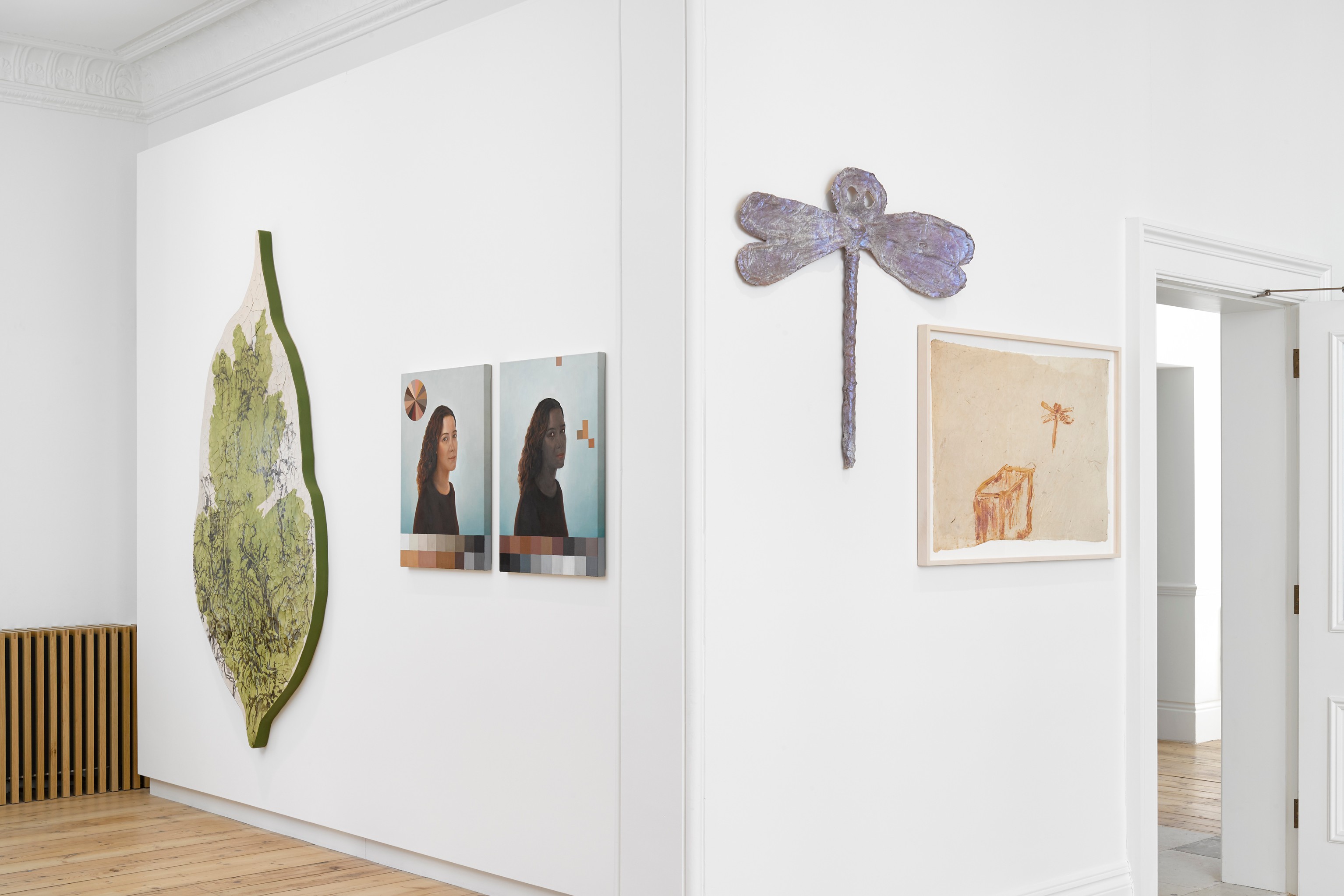
Installation view of Body Topographies at Lehmann Maupin London
Installation Views: 1 of 4
Installation view of Body Topographies at Lehmann Maupin London
Installation Views: 1 of 3
Work on paper by Heidi Bucher

Heidi Bucher

haus mit libelle, 1981

Aaron Wexler

THE FAMILY, 2008

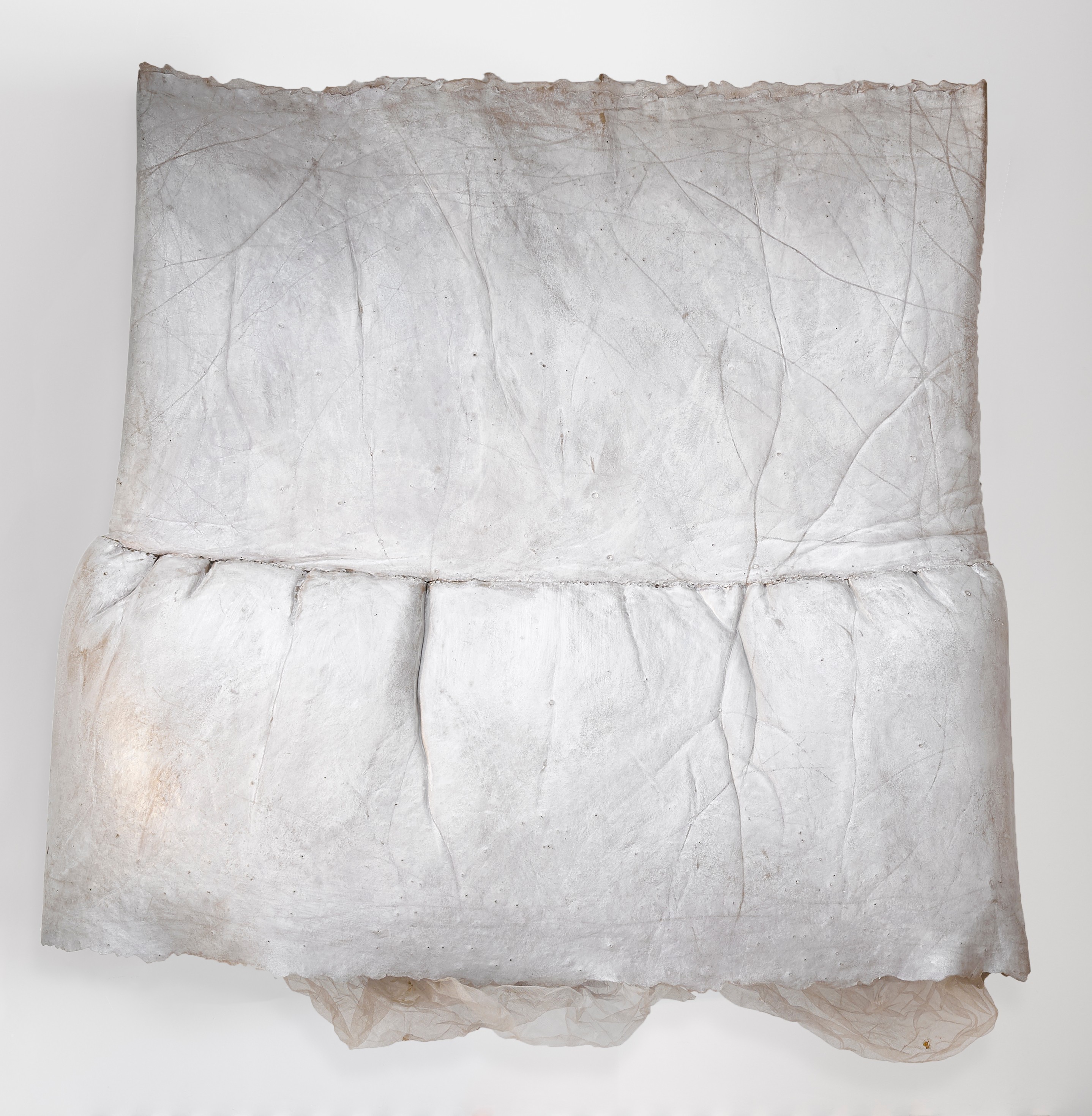
Object by Heidi Bucher

Heidi Bucher

Untitled (from the body shell conception) Zurich, 1974

Painting by Mandy El-Sayegh

Mandy El-Sayegh

Passengers, 2018

Painting by Mandy El-Sayegh

Mandy El-Sayegh

Fore, 2020

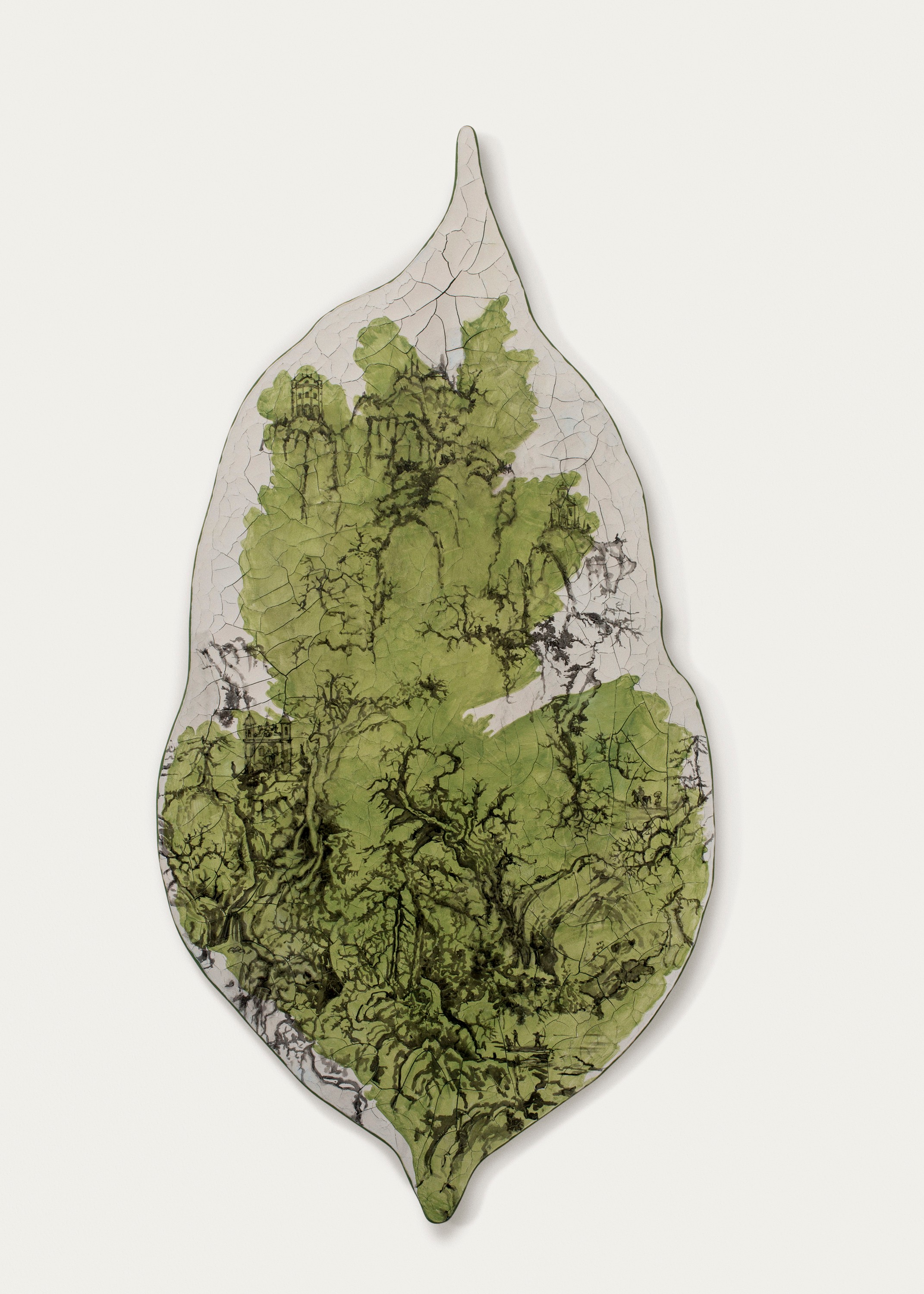
Painting by Adriana Varejão

Adriana Varejão

Paisagem sino-brasileira com verde, 2015

Sculpture by Adriana Varejão

Adriana Varejão

Folds, 2000-2001

Painting by Cecilia Vicuña

Cecilia Vicuña

Thenar Eminence, 2021

Quipu by Cecilia Vicuña

Cecilia Vicuña

Boogie-Woogie Quipu, 2018

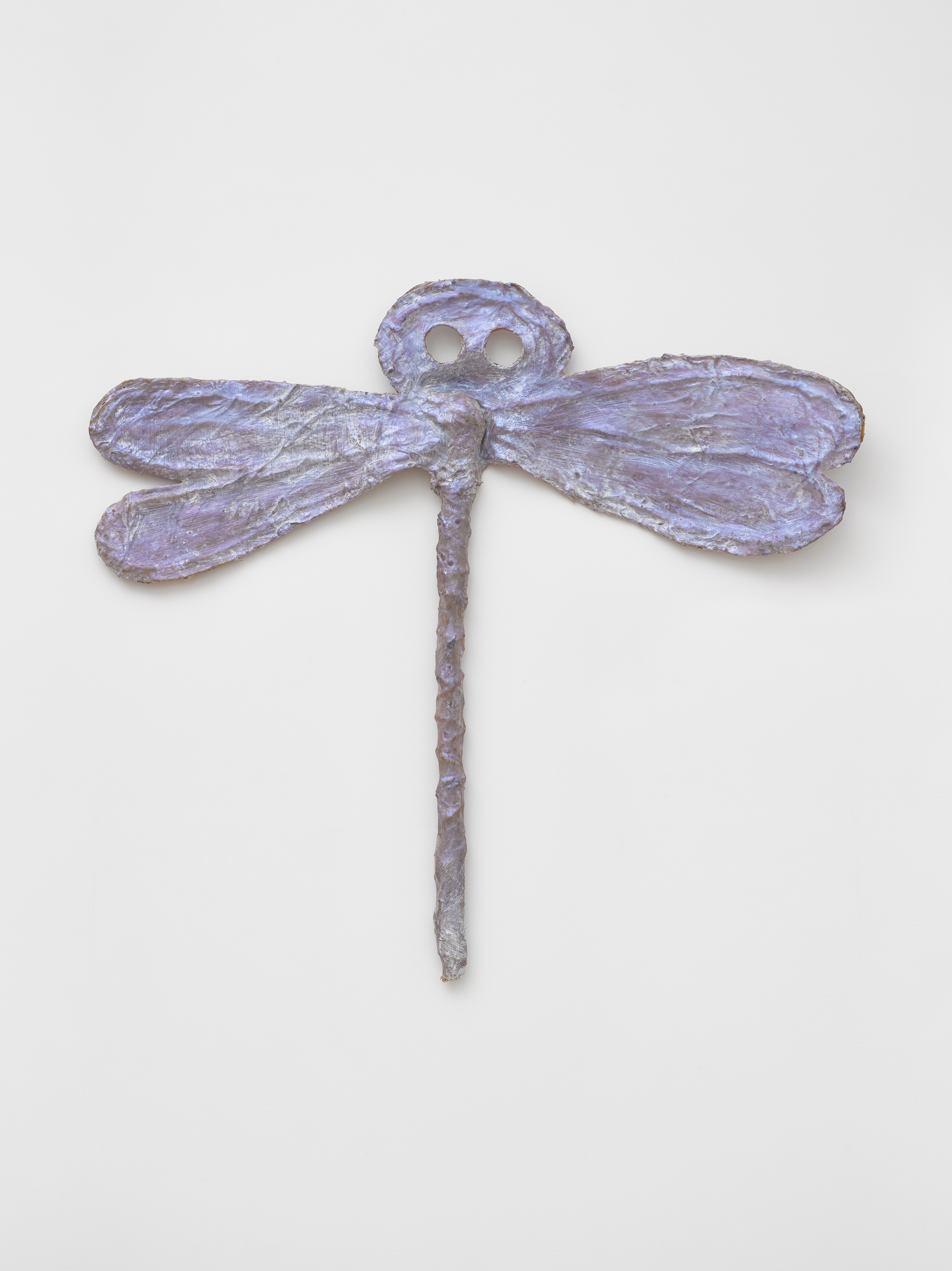
Latex & rubber work by Heidi Bucher

Heidi Bucher

Untitled Dragonfly object (from the "Libellenrochen" series), 1978-1983

Exhibition Artists

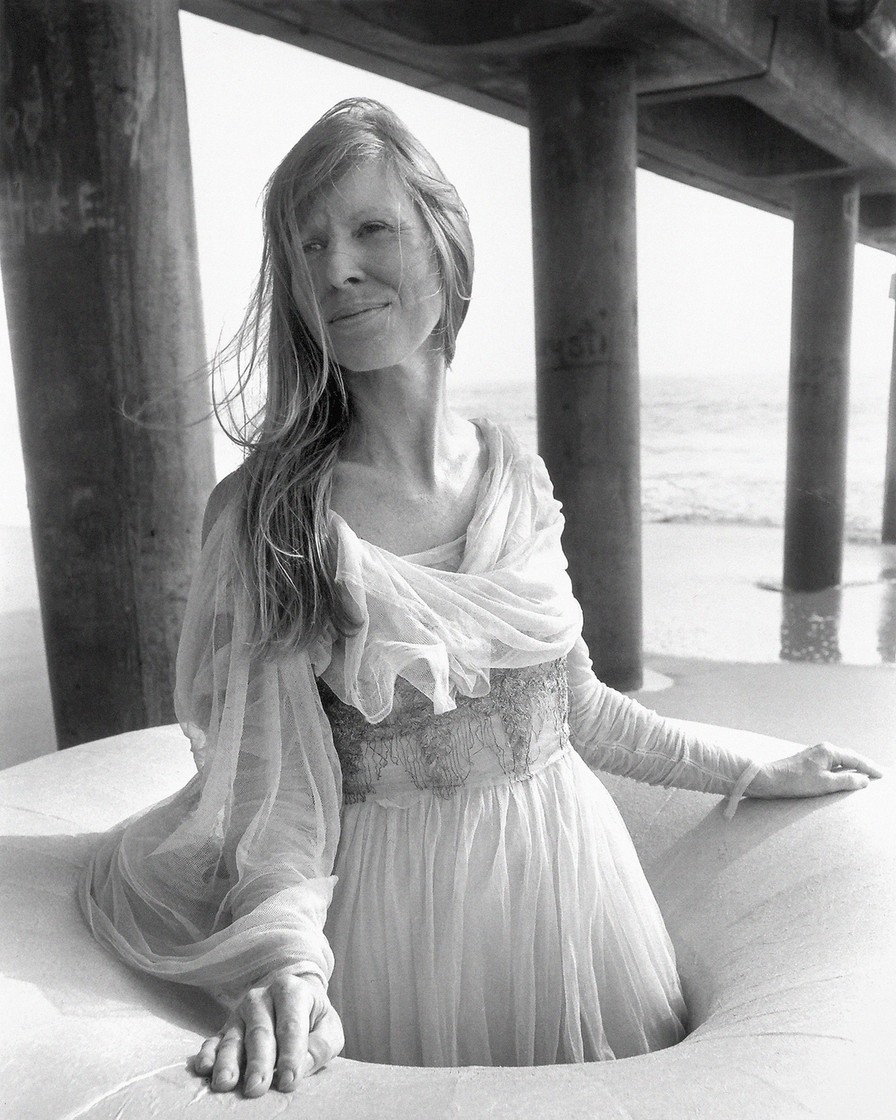
Portrait of Heidi Bucher

Heidi Bucher (b. 1926, Winterthur, Switzerland; d. 1993, Brunnen, Switzerland) was a Swiss artist who is best remembered for her innovative use of latex and exploration of the physical boundaries between the body and its surroundings. Serving simultaneously as means of historical preservation and metaphorical molting, Bucher’s Hauträume—or “roomskins”—act as indexes of the complicated relationship humans have to their bodies and pasts. Working across the United States, Switzerland, and the Canary Islands, Bucher forged a practice anchored in familial, cultural, and architectural histories and deeply entwined with contemporary concerns around the boundaries between public and private space, and femininity and the body. Though Bucher’s many bodies of work—from her early drawings and wearable sculptures to her later latex-encased objects and Hauträume—each reflect distinct artistic interests and origins, they all trace back to the artist’s mantra, which uniquely summarizes her career-long engagement with bodies and rooms: Räume sind Hüllen, sind Häute (Spaces are shells, are skins).

Beginning in the 1970s, Bucher embalmed clothing in a mixture of latex and mother of pearl, preserving the objects as artifacts of their time and creating a surface that appeared skin-like in both color and texture. Bucher primarily used women’s clothing, such as nightdresses and pantyhose, as a critical response to the rigid gender restrictions she had experienced during her childhood and adolescence. By the end of the decade, Bucher began applying her signature latex medium to the surfaces of domestic objects and spaces, aligning women’s clothing with these designated “feminine” spaces. Allowing the latex mixture to harden, then peeling it off, Bucher produced translucent skins that held elements of paint, rust, dirt, and the minute details and markings of the architecture. During the years that followed, Bucher produced several major bodies of work based on the domestic spaces of her past—her ancestral house in Winterthur, the study in her parents’ home, and her studio in Zurich. Each space she inhabited was rendered translucent and ghostly, like a visual memory that, due to the fragile nature of the latex material, would warp and discolor over time. Displayed suspended mid-air, the series of latex Hauträume are simultaneously monumental and fragile, mimicking the very process by which they are created; the removal of the latex from the architectural space required a great deal of both physical strength and delicate dexterity.
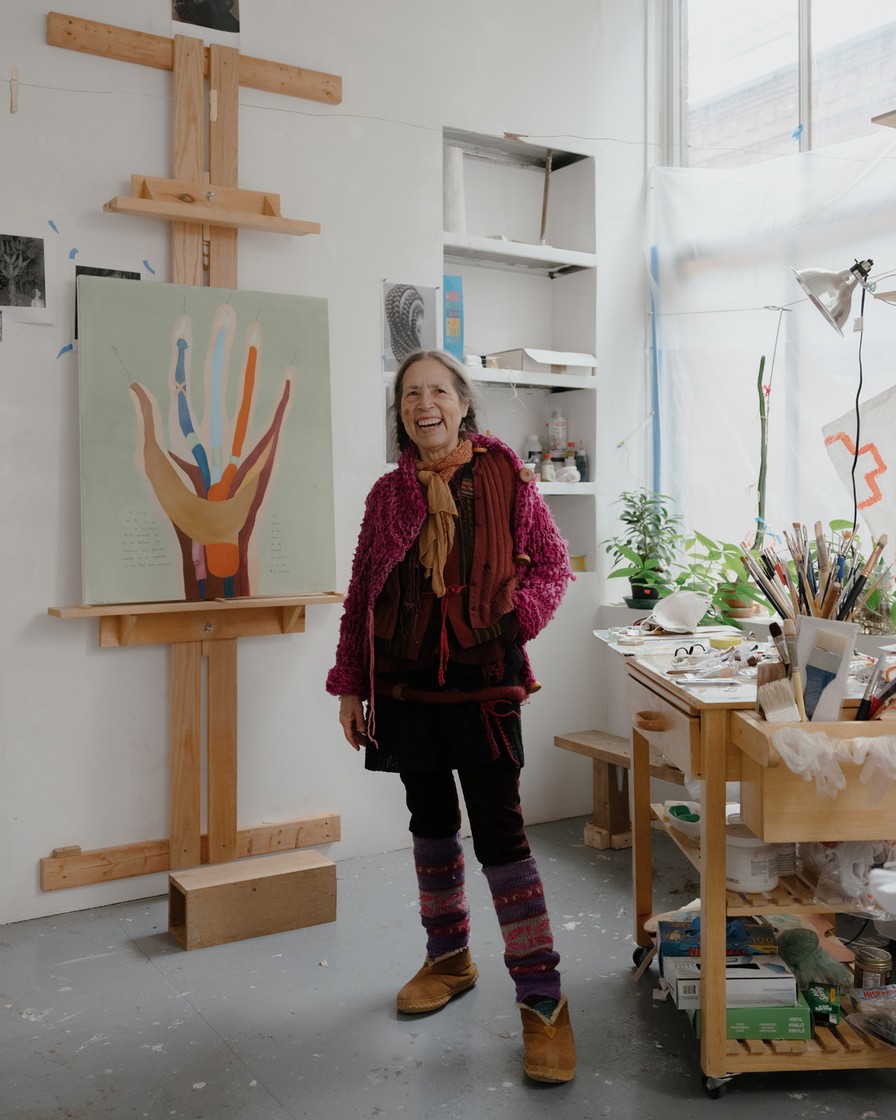
Portrait of Cecilia Vicuña

Cecilia Vicuña (b. 1948 in Santiago, Chile; lives and works in New York, NY and Santiago, Chile) integrates practices of poetry, performance, Conceptualism, and textile craft in response to pressing concerns of the modern world, including ecological destruction, human rights, and cultural homogenization. Born and raised in Santiago, she was exiled during the early 1970s after the violent military coup against President Salvador Allende. This sense of impermanence, and a desire to preserve and pay tribute to the indigenous history and culture of Chile, have characterized her work throughout her career.

While living in Chile during the mid-1960s, Vicuña began an ongoing series of small sculptures she calls precarios, spatial poems in which she combines feathers, stone, plastic, wood, wire, shells, cloth, and other human-made detritus. She coined the term “Arte Precario,” as an independent autonomous category, to name these works defined by their fragility and ephemerality: Vicuña initially composed the precarios along the ocean’s edge, for high tide to complete the work by erasing it. Around the same time, Vicuña came across ancient quipus in a book—and this Andean communication system involving the knotting of colored strings, generated a deep response in her. In the early 1970s she began creating spatial weavings and living quipus, which evolved into her Quipus in multiple materials, including unspun wool. These ephemeral, site-specific installations combine the tactile ritual of weaving with assemblage, poetry, and performance. Vicuña’s surreal figurative paintings of the late 1960s and 1970s are more explicitly personal and political in comparison to her other bodies of work and were created in direct response to European colonization. Their highly charged imagery refers to the subtly subversive images made by 16th-century indigenous artists in Latin America after the Spanish conquest, when they were forced to paint angels and saints for the Catholic church. In Vicuña’s paintings, religious icons are replaced by personal, political, and literary figures, commemorated and mythologized by the artist.

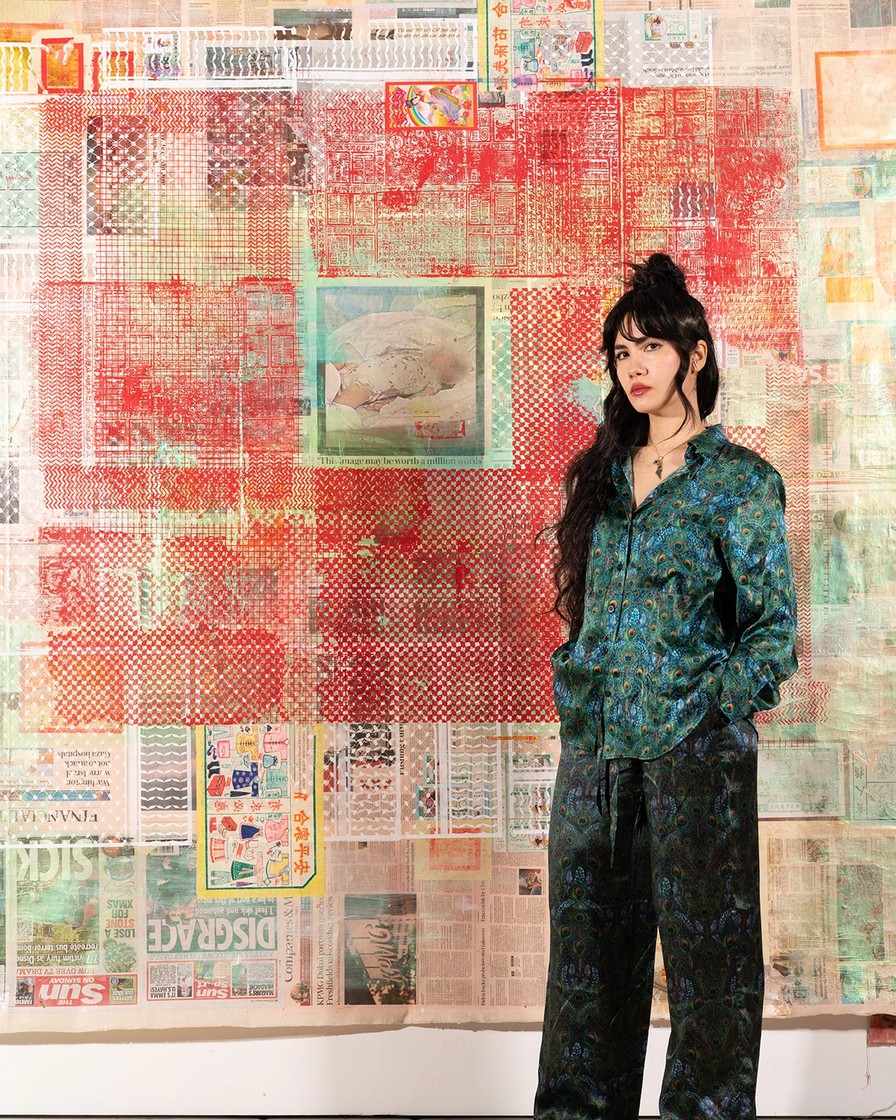
Portrait of Mandy El-Sayegh

Mandy El-Sayegh’s (b. 1985, lives and works in London, United Kingdom) highly process-driven practice is rooted in an exploration of material and language. Executed in a wide range of media, including densely layered paintings, sculpture, installation, diagrams, and sound and video, El-Sayegh’s work investigates the formation and break-down of systems of order, be they bodily, linguistic, or political. She is particularly interested in exploring the Part-Whole relationship–how something significant yet unpremeditated emerges and comes into being through various smaller, micro-interactions or repetitions. She physically demonstrates this by collaging disparate fragments, text, and found imagery, and layering them with materials like latex, rubber, and clay. Through simple, repetitive patterns such as a hand-painted grid or geometric molds, formal and narrative synthesis occurs that is not consciously intended or anticipated.

El-Sayegh likens her exploratory, observational process to the occurrence of contemporary social and political events, which unfold in highly chaotic and often disturbing ways. Justifications or explanations for such events typically appear after the fact; they are devised in an effort to impose order on an inherently subjective and incomplete set of social, cultural, and political processes. The artist’s work aims to remove the veil of these superimposed structures and reveal the intricacies of growth and decay as they happen in real time. El-Sayegh is interested in the observation of process and she believes that through such observation, one can better understand how the social and political phenomena that shape our world exist in a constant state of flux.