Skip to content

Art Basel

Online Viewing Room

Sep 23–26, 2020

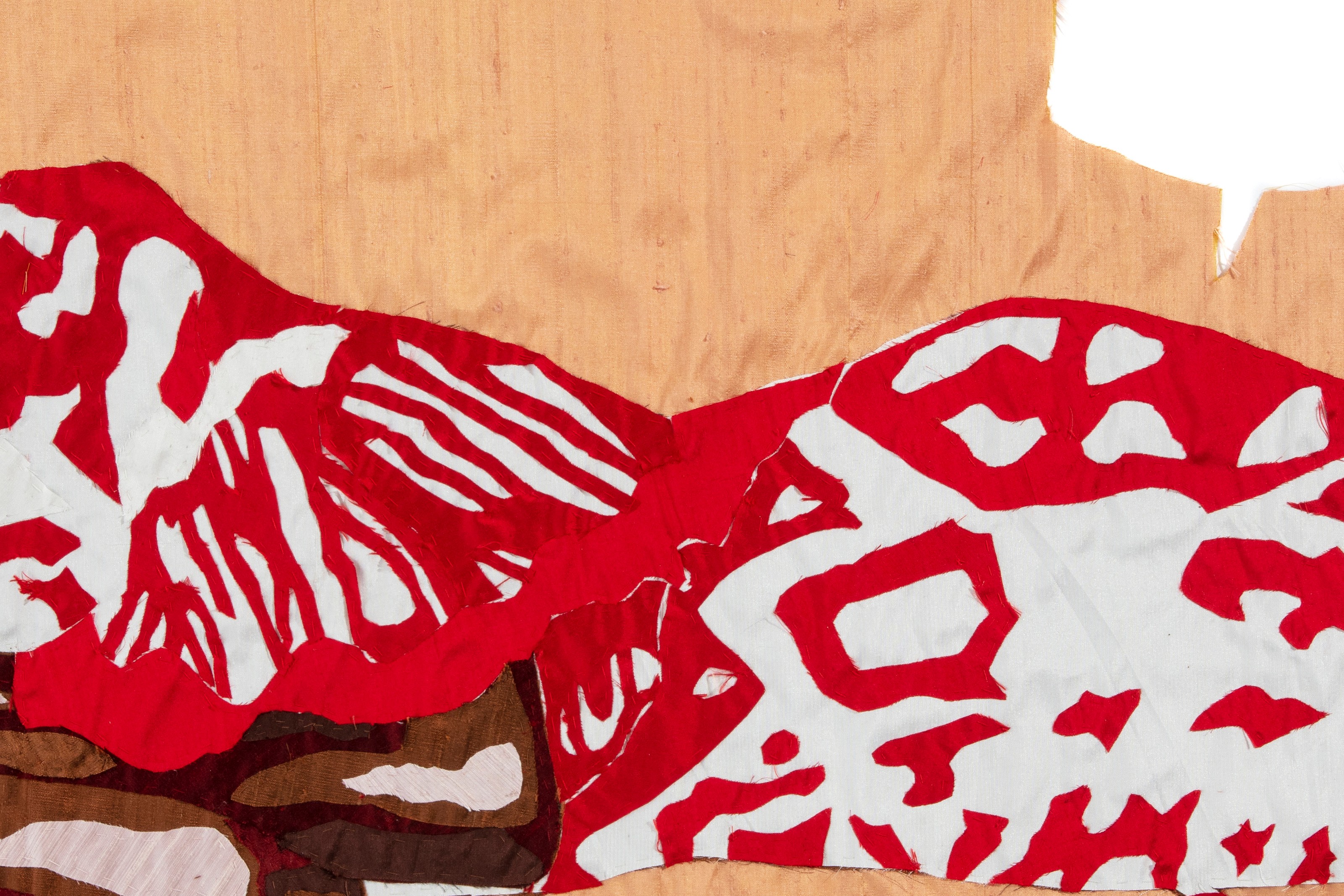
Detail of wall work by Billie Zangewa

Online Viewing Room

For Art Basel OVR:2020 Lehmann Maupin is proud to present ambitious new works by Mandy El-Sayegh, Lee Bul, Angel Otero, Cecilia Vicuña, Nari Ward, and Billie Zangewa.

In response to a year of global upheaval and uncertainty, the artists featured in this presentation have pushed the boundaries of their media to create work that speaks to this moment and in turn reveals universal themes of memory, loss, and rebirth. Exemplifying the breadth of Lehmann Maupin’s global program, these artists engage in complex conversations around personal and shared history, public and private space, and the physicality of the body in a world increasingly dominated by technology. Together, these works offer a critical examination of identity and belonging.

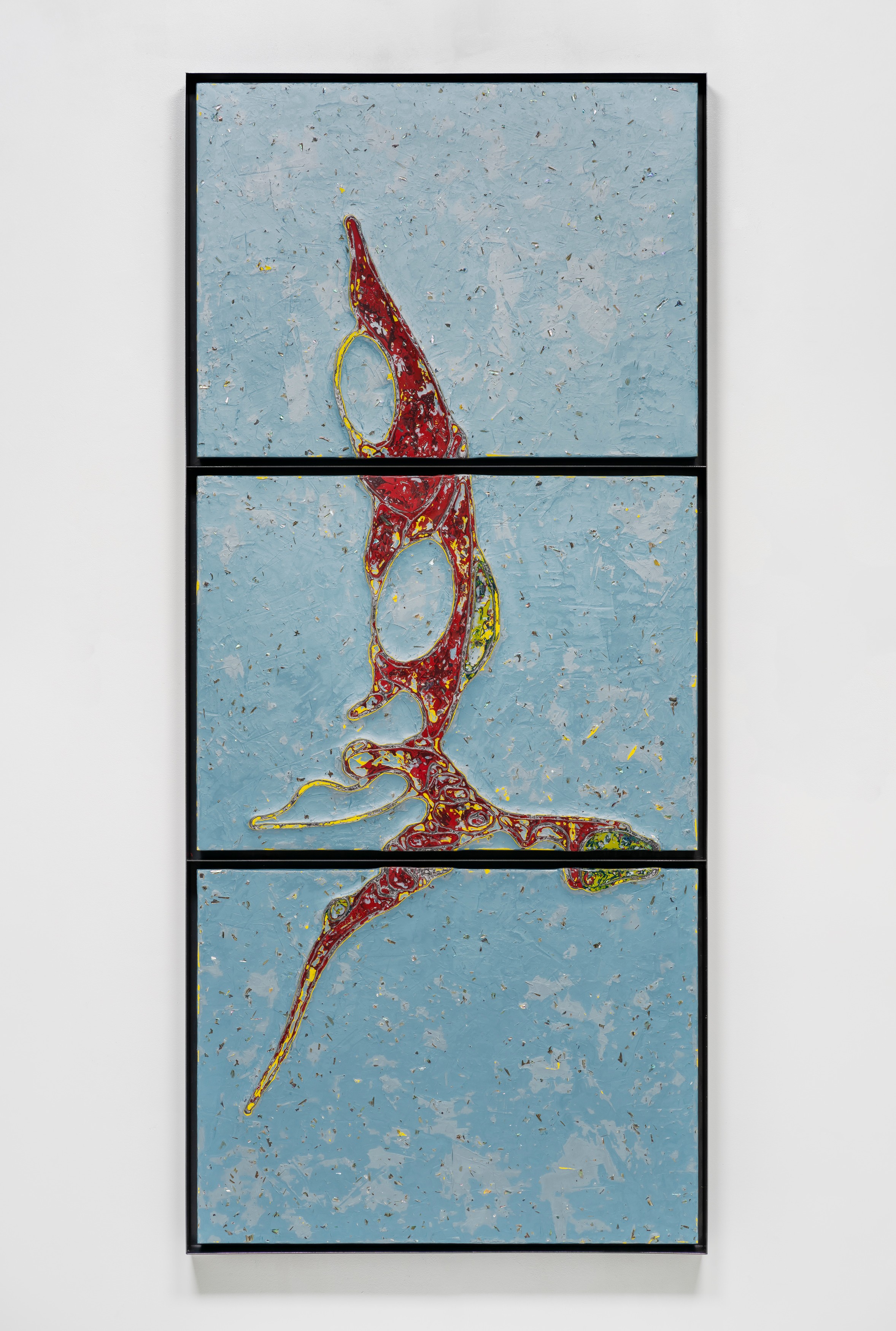
Painting by Mandy El-Sayegh

Mandy El-Sayegh

Net-Grid (strike), 2020

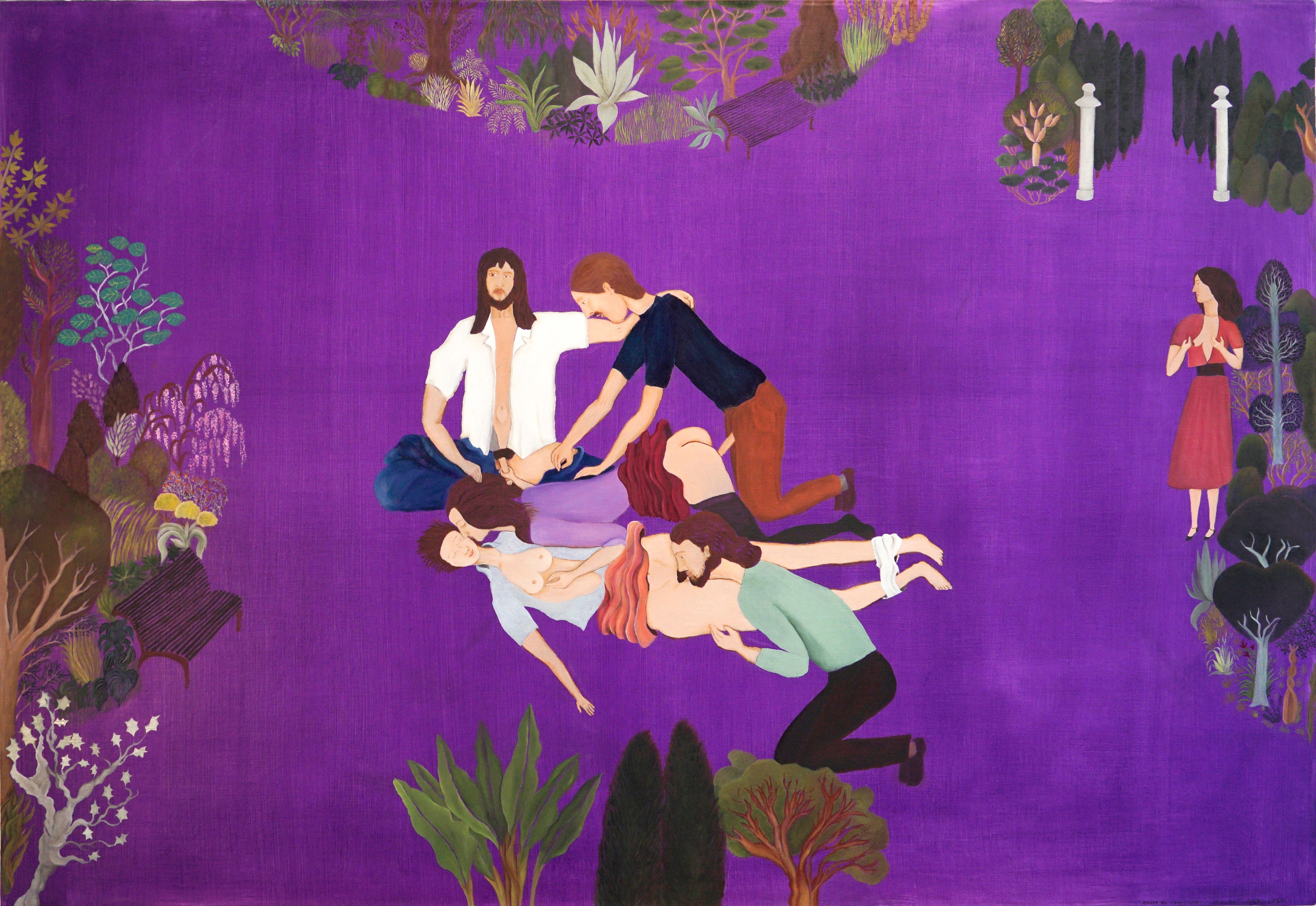
Painting by Cecilia Vicuña

Cecilia Vicuña

Cruce de caminos / Crossroads, 2020

Wall work by Billie Zangewa

Billie Zangewa

An Angel at My Bedside, 2020

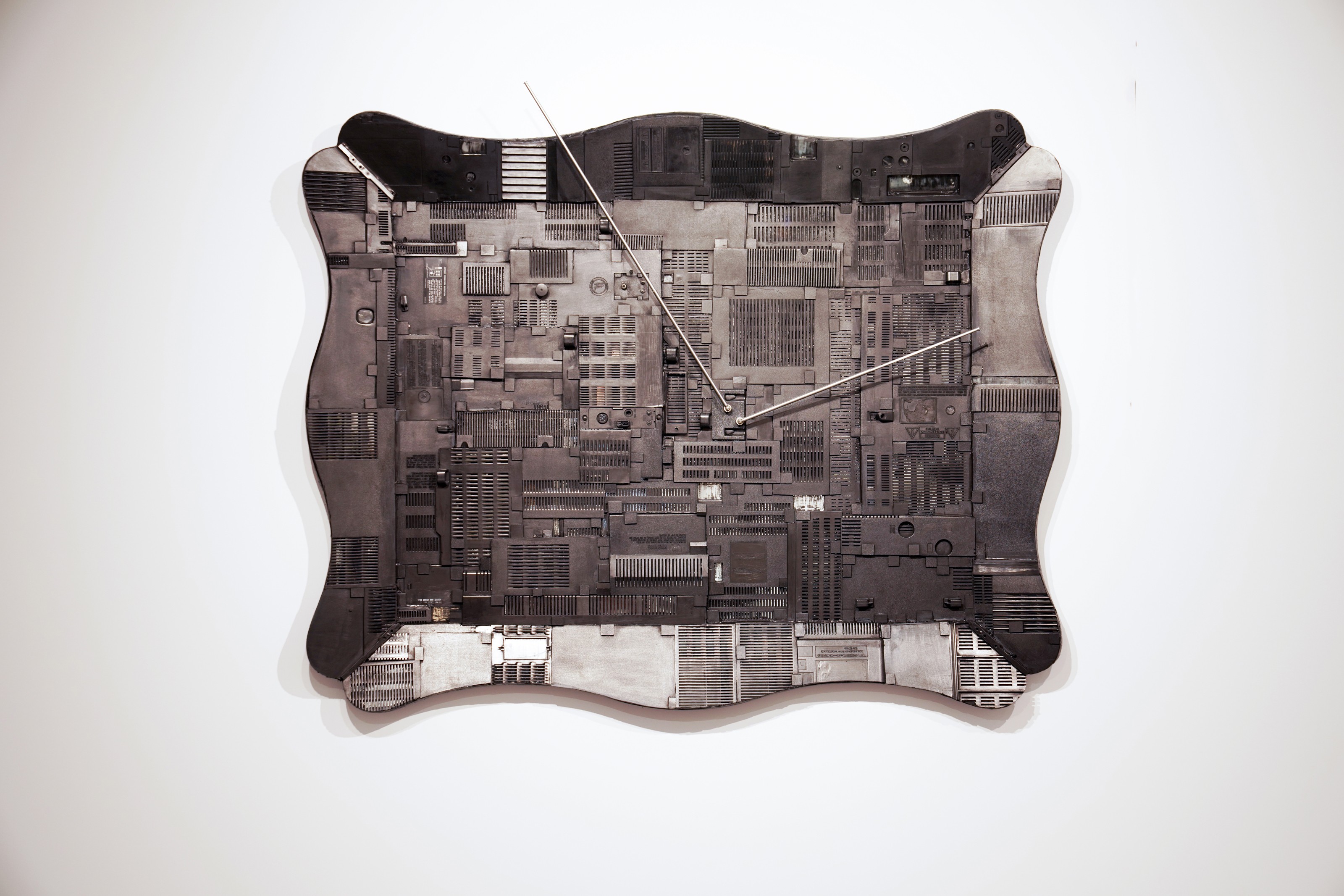
Wall work by Lee Bul

Lee Bul

Perdu XXXIX, 2020

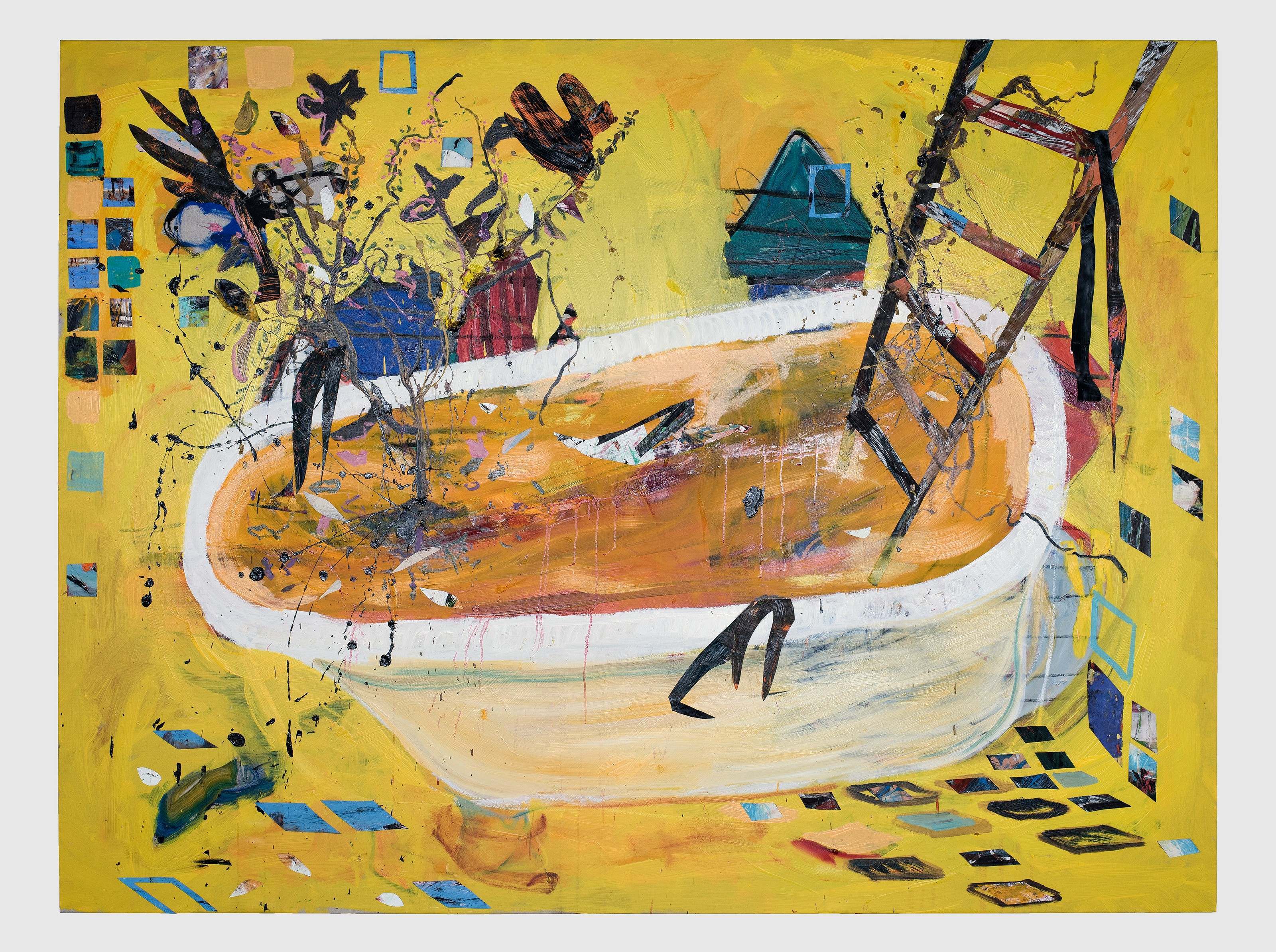
Painting by Angel Otero

Angel Otero

Painter’s Bath, 2020

Wall work by Nari Ward

Nari Ward

BE TELEVISED, 2020

Exhibition Artists

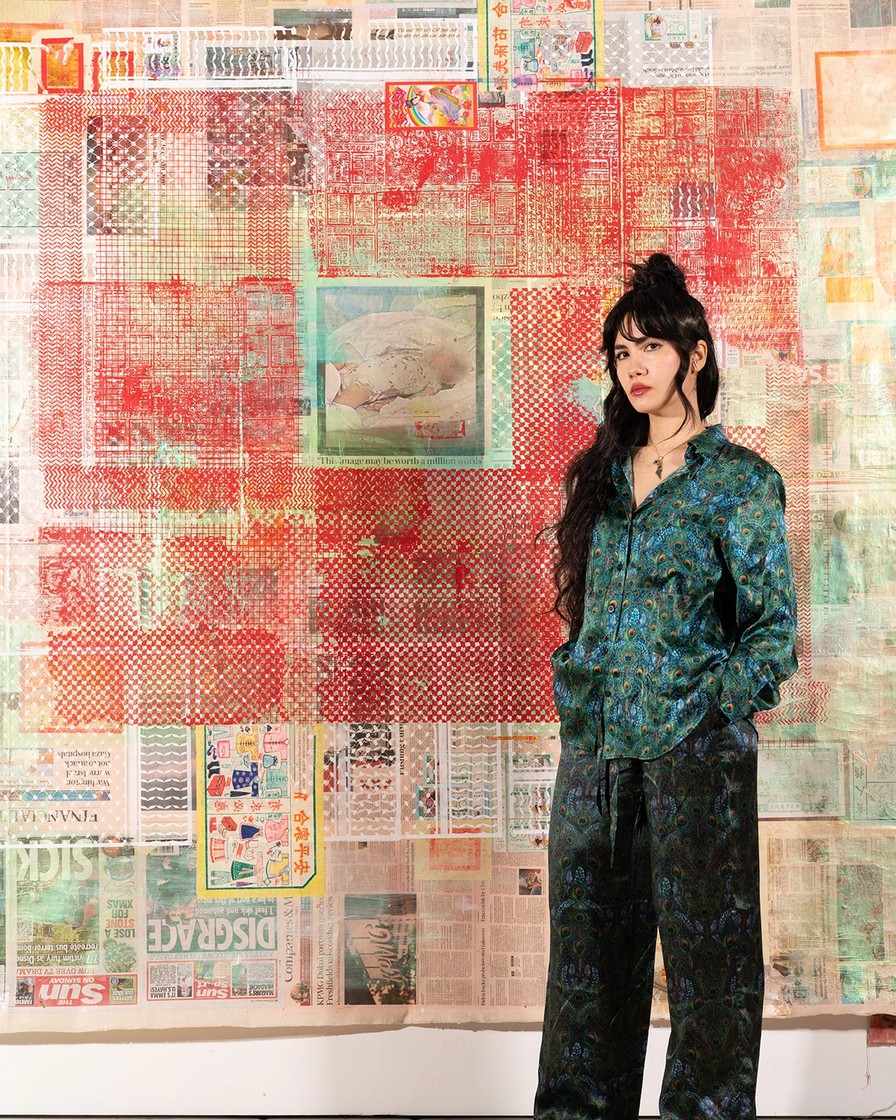
Portrait of Mandy El-Sayegh

Mandy El-Sayegh’s (b. 1985, lives and works in London, United Kingdom) highly process-driven practice is rooted in an exploration of material and language. Executed in a wide range of media, including densely layered paintings, sculpture, installation, diagrams, and sound and video, El-Sayegh’s work investigates the formation and break-down of systems of order, be they bodily, linguistic, or political. She is particularly interested in exploring the Part-Whole relationship–how something significant yet unpremeditated emerges and comes into being through various smaller, micro-interactions or repetitions. She physically demonstrates this by collaging disparate fragments, text, and found imagery, and layering them with materials like latex, rubber, and clay. Through simple, repetitive patterns such as a hand-painted grid or geometric molds, formal and narrative synthesis occurs that is not consciously intended or anticipated.

El-Sayegh likens her exploratory, observational process to the occurrence of contemporary social and political events, which unfold in highly chaotic and often disturbing ways. Justifications or explanations for such events typically appear after the fact; they are devised in an effort to impose order on an inherently subjective and incomplete set of social, cultural, and political processes. The artist’s work aims to remove the veil of these superimposed structures and reveal the intricacies of growth and decay as they happen in real time. El-Sayegh is interested in the observation of process and she believes that through such observation, one can better understand how the social and political phenomena that shape our world exist in a constant state of flux.
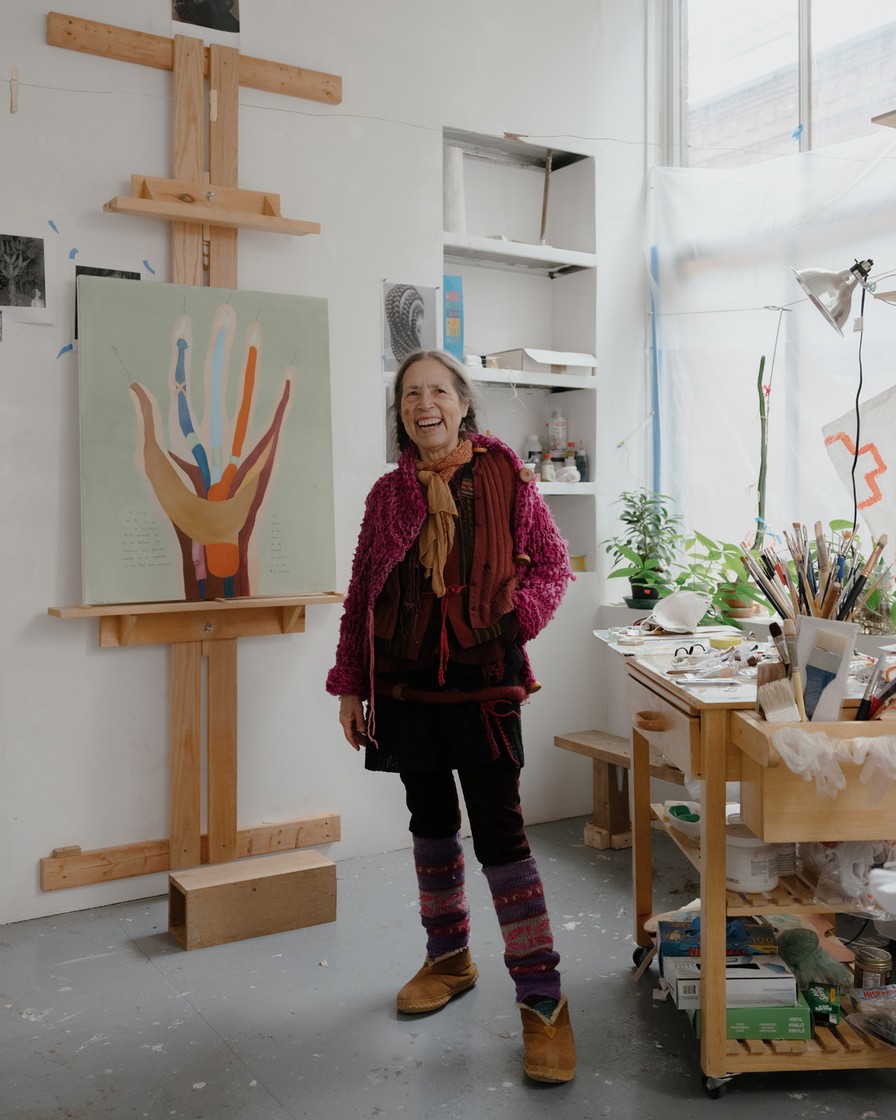
Portrait of Cecilia Vicuña

Cecilia Vicuña (b. 1948 in Santiago, Chile; lives and works in New York, NY and Santiago, Chile) integrates practices of poetry, performance, Conceptualism, and textile craft in response to pressing concerns of the modern world, including ecological destruction, human rights, and cultural homogenization. Born and raised in Santiago, she was exiled during the early 1970s after the violent military coup against President Salvador Allende. This sense of impermanence, and a desire to preserve and pay tribute to the indigenous history and culture of Chile, have characterized her work throughout her career.

While living in Chile during the mid-1960s, Vicuña began an ongoing series of small sculptures she calls precarios, spatial poems in which she combines feathers, stone, plastic, wood, wire, shells, cloth, and other human-made detritus. She coined the term “Arte Precario,” as an independent autonomous category, to name these works defined by their fragility and ephemerality: Vicuña initially composed the precarios along the ocean’s edge, for high tide to complete the work by erasing it. Around the same time, Vicuña came across ancient quipus in a book—and this Andean communication system involving the knotting of colored strings, generated a deep response in her. In the early 1970s she began creating spatial weavings and living quipus, which evolved into her Quipus in multiple materials, including unspun wool. These ephemeral, site-specific installations combine the tactile ritual of weaving with assemblage, poetry, and performance. Vicuña’s surreal figurative paintings of the late 1960s and 1970s are more explicitly personal and political in comparison to her other bodies of work and were created in direct response to European colonization. Their highly charged imagery refers to the subtly subversive images made by 16th-century indigenous artists in Latin America after the Spanish conquest, when they were forced to paint angels and saints for the Catholic church. In Vicuña’s paintings, religious icons are replaced by personal, political, and literary figures, commemorated and mythologized by the artist.

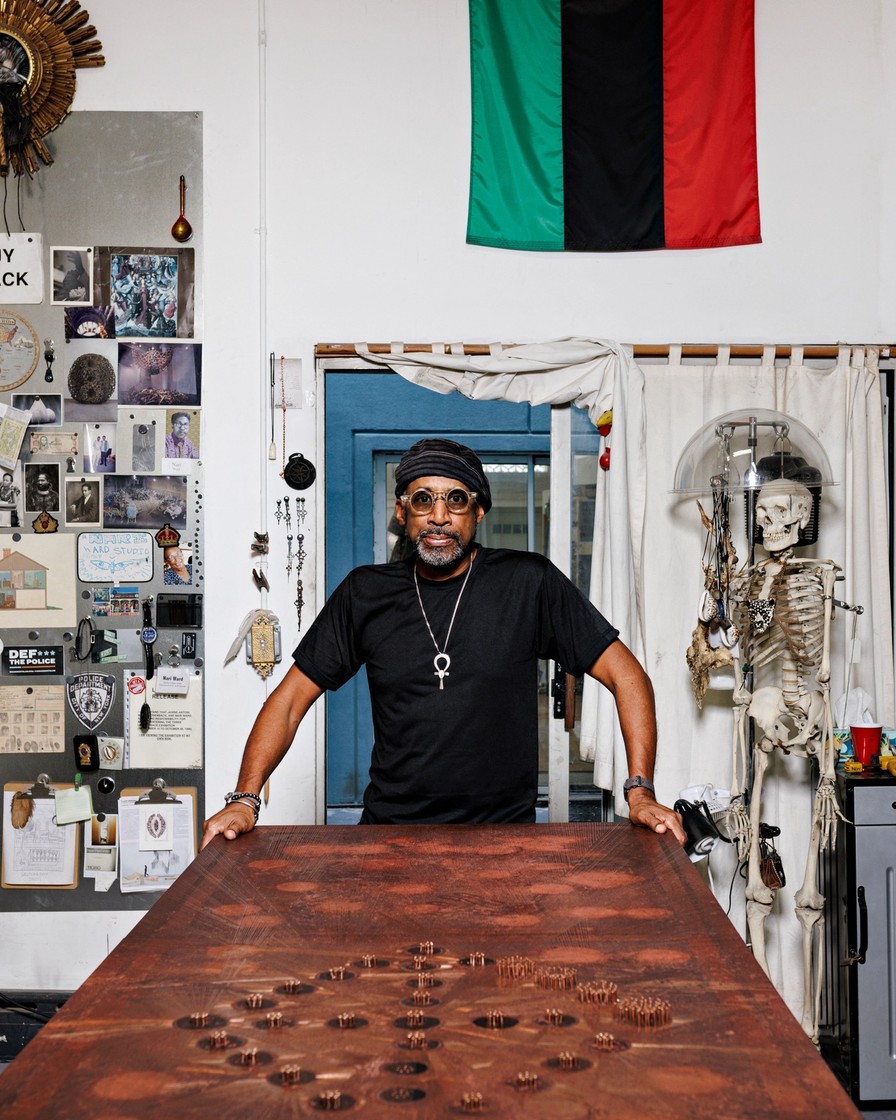
Portrait of Nari Ward

In a career spanning over three decades, artist Nari Ward (b. 1963, St. Andrew, Jamaica; lives and works in New York, NY) has gained recognition for an interdisciplinary and multimedia practice that engages historical and contemporary discourse around race, migration, democracy, identity, and community. Ward is best known for his wall and installation-based sculptural works created primarily from materials found and collected throughout Harlem, his longtime neighborhood in New York. These objects imbue his work with a sense of intimacy, reflecting the shared experience of community. Combining materials to re-contextualize their original meanings, Ward’s assemblages probe a range of spiritual and conceptual issues through literal and metaphorical juxtaposition.

Materially specific but conceptually ambiguous, Ward’s multimedia and performance works unfold into many possible interpretations—as materials and movements accumulate, so too do signifiers. Each found object—including baseball bats, strollers, shoelaces, cash registers, bottles, and shopping carts—contains a multiplicity of meanings and histories that speak to both collective experience and individual memory. The intentional synthesis of such objects, combined with the more traditional disciplines of painting, sculpture, and performance, allows for varied interpretations, inviting viewers to project their own associations and transcend the specific context of any given work. At the same time, Ward’s art reflects on the complexities of contemporary society, transforming overlooked material through artmaking to foreground forgotten histories or marginalized communities.

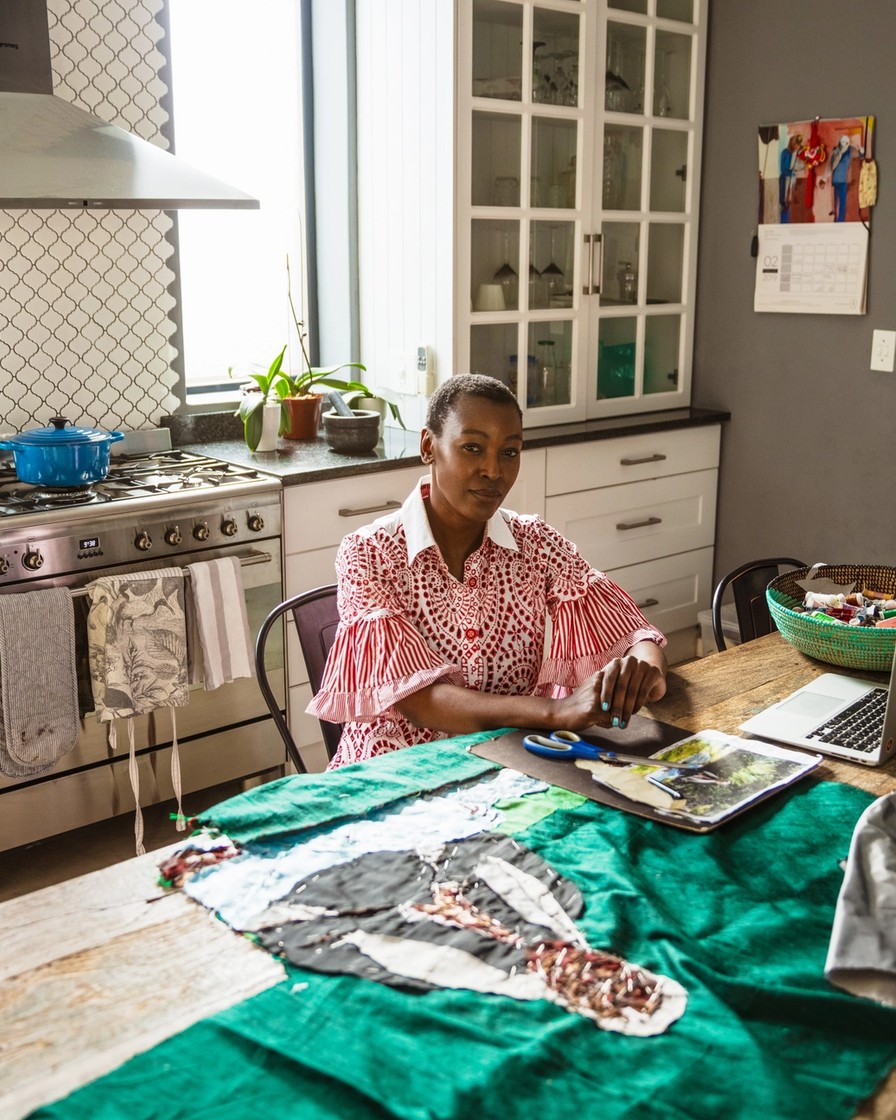
Portrait of Billie Zangewa

Billie Zangewa (b. 1973, Blantyre, Malawi; lives and works in Johannesburg, South Africa) creates intricate collages composed of hand-stitched fragments of raw silk. These figurative compositions explore contemporary intersectional identity in an attempt to challenge the historical stereotype, objectification, and exploitation of the black female form. Beginning her career in the fashion and advertising industries, Zangewa employs her understanding of textiles to portray personal and universal experiences through domestic interiors, urban landscapes, and portraiture. Her earliest works were embroideries on found fabrics depicting remembered botanical scenes and animals from Botswana, where the artist was raised, but she soon transitioned to creating cityscapes, focusing on her experience as a woman in the city of Johannesburg and her personal relationships. These works explored her experience of the male gaze, leading her to begin to think more critically about how women view themselves and what the visualization of the female gaze, through self-portraiture, could look like.

After the birth of her son, Zangewa began making her well-known domestic interiors to explore the shift in focus from self-examination and femininity to motherhood and the home. Often referencing scenes or experiences from everyday life, Zangewa has stated that she is interested in depicting the work done by women that keeps society running smoothly, but which is often overlooked, undervalued, or ignored. Zangewa refers to this as “daily feminism,” which can be considered a contemporary version of “the personal is political.” Through the method of their making and their narrative content, Zangewa’s silk paintings illustrate gendered labor in a socio-political context, where the domestic sphere becomes a pretext for a deeper understanding of the construction of identity, questions around gender stereotypes, and racial prejudice.

Art Basel | Lehmann Maupin