Skip to content

Multiple Artists

Writings Without Borders

Hong Kong

May 1–Aug 24, 2013

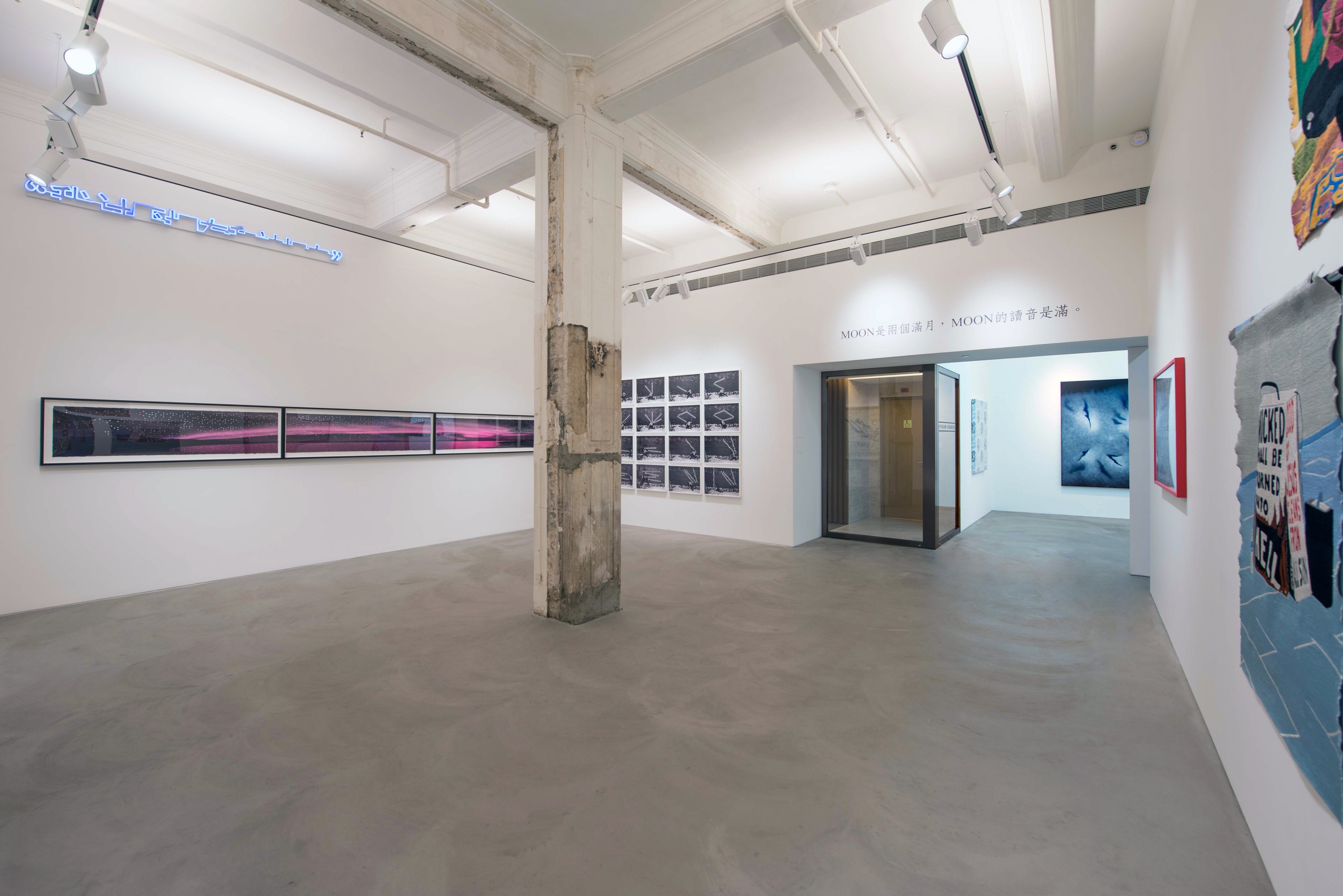
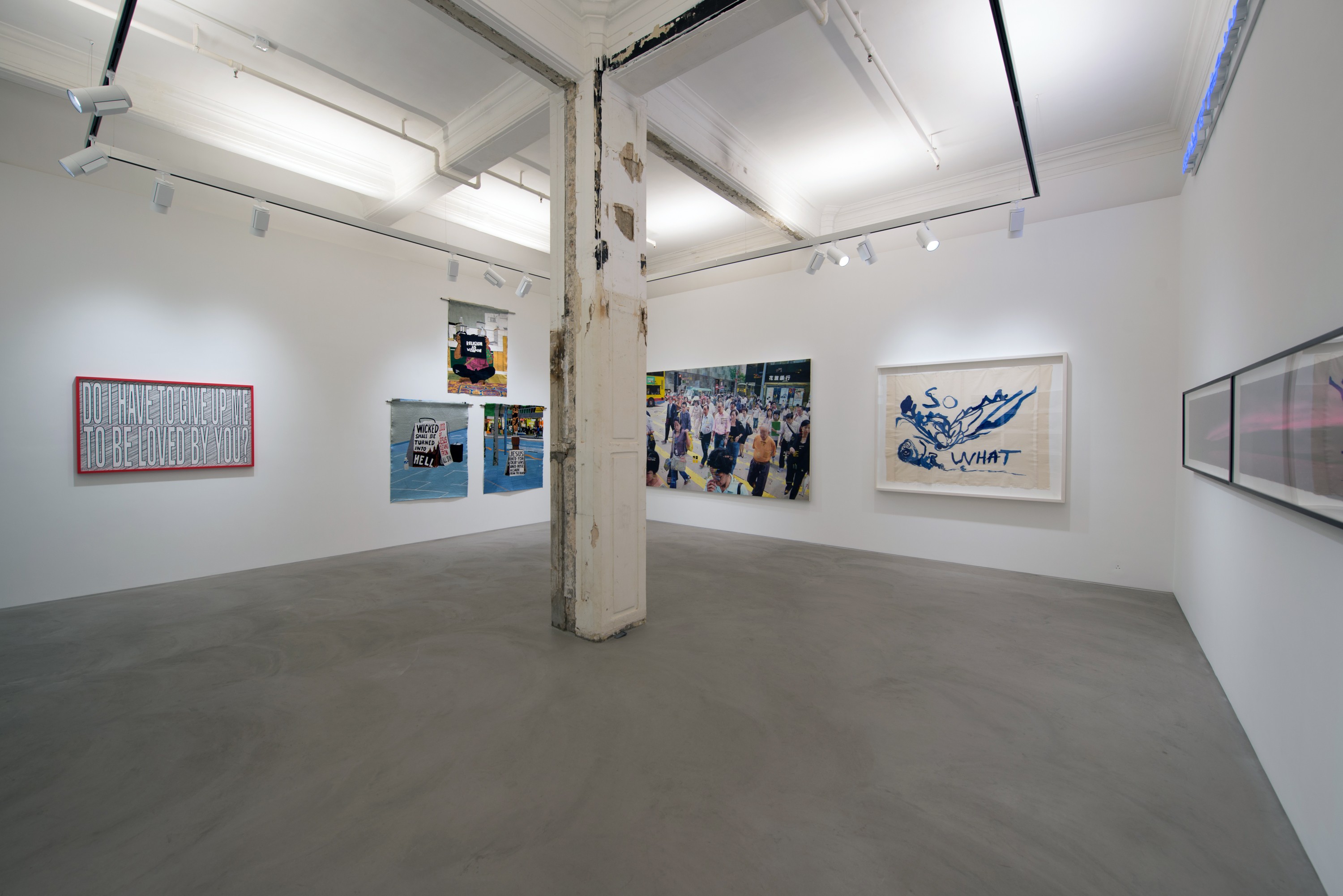
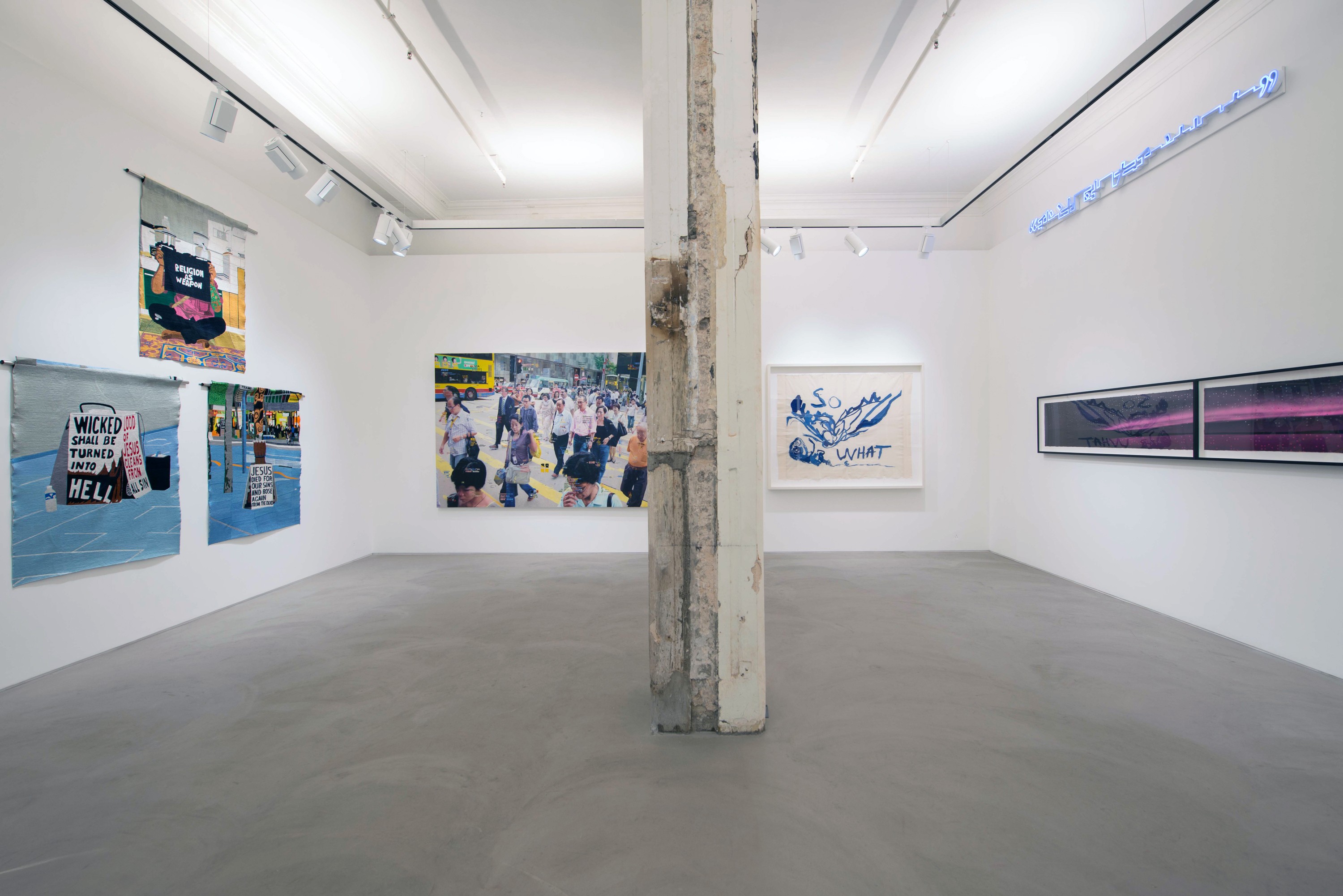
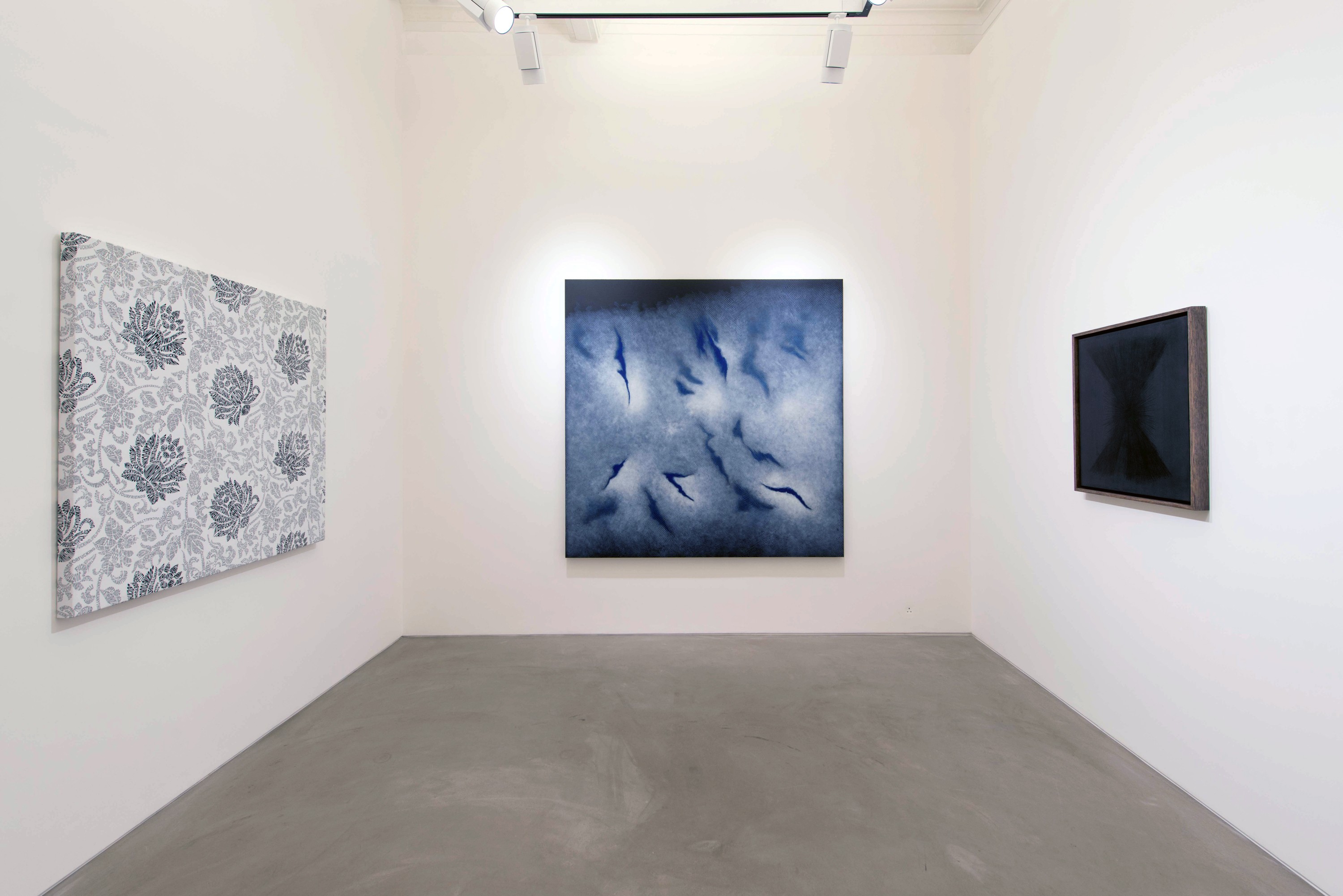
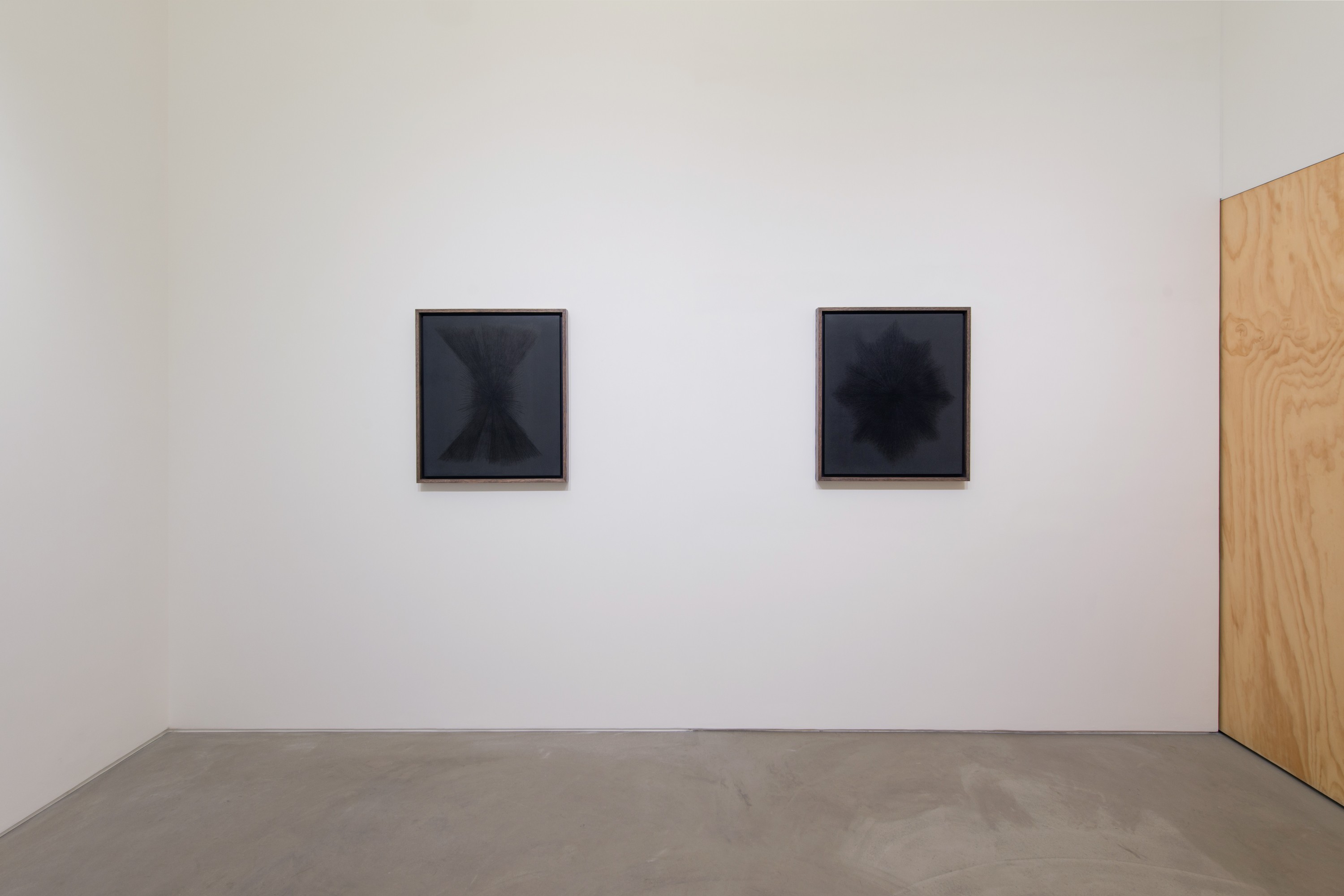
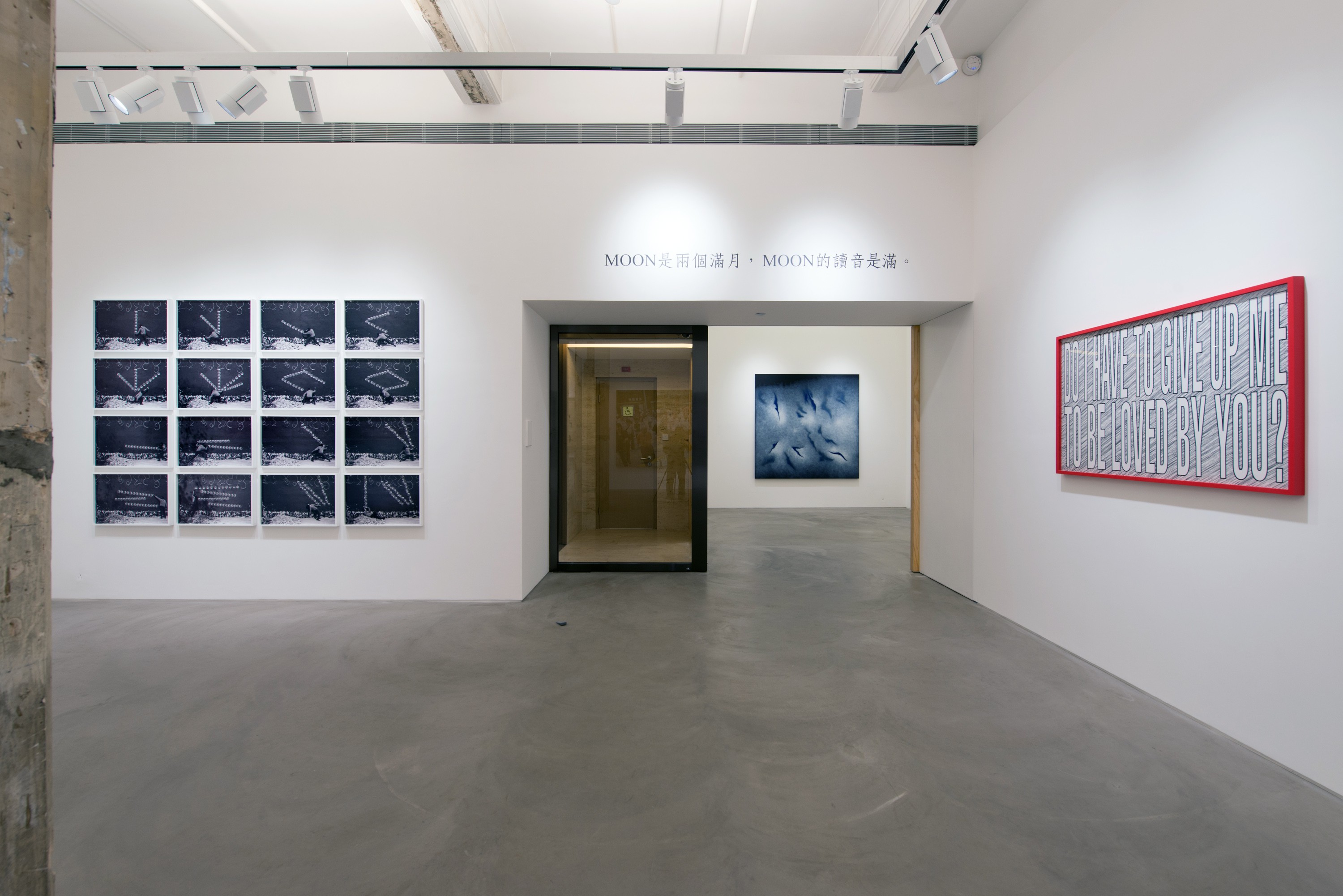
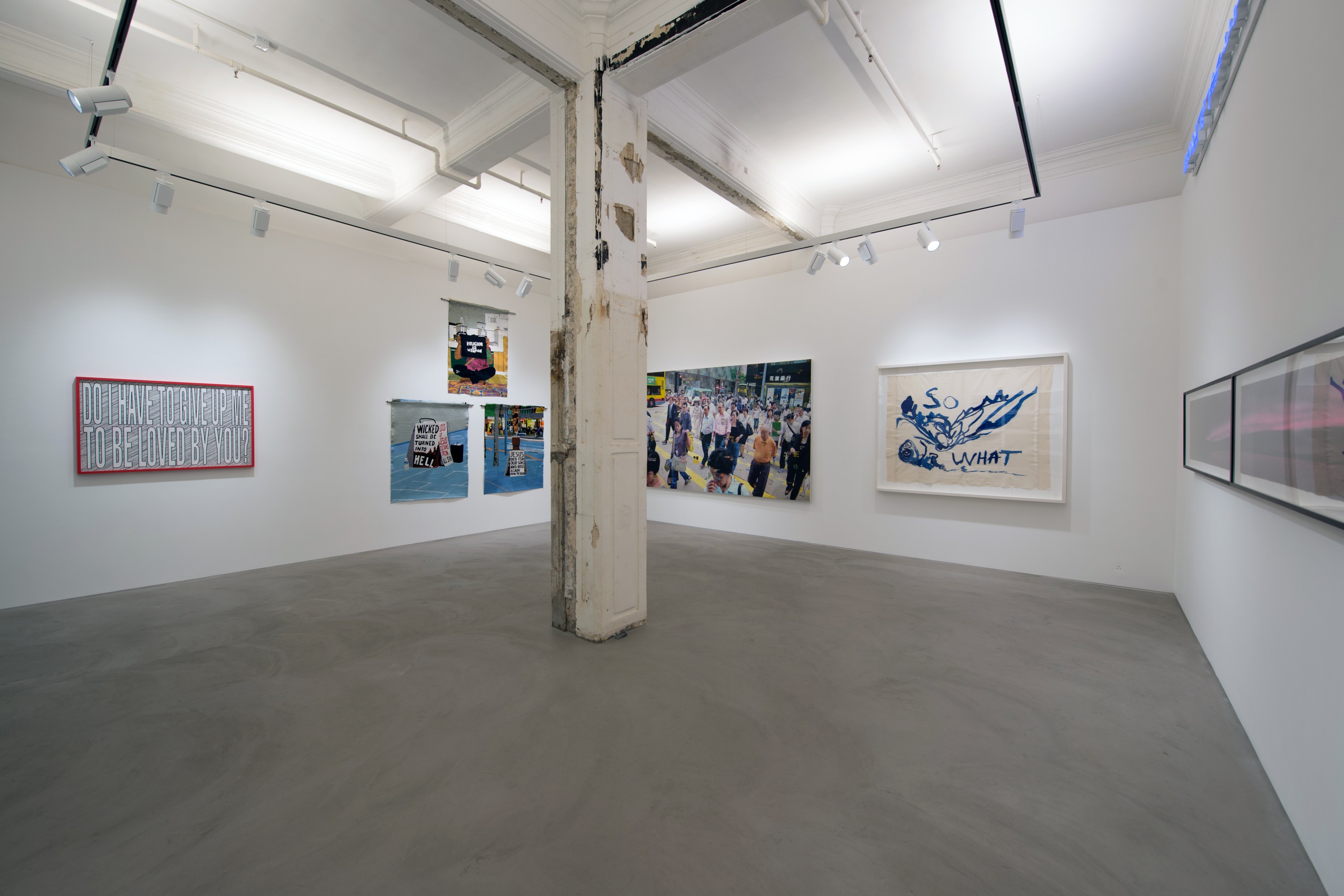
Installation view of Writings Without Borders at Lehmann Maupin Hong Kong

407 Pedder Building, 12 Pedder Street

Central, Hong Kong

Lehmann Maupin, Hong Kong is pleased to announce that renowned international curator Hervé Mikaeloff has organized a dynamic group show featuring a selection of Eastern and Western contemporary artists exploring notions of language. The show, entitled Writings Without Borders, will highlight a wide variety of artistic styles, ranging from painting, drawing, photography, embroidery, and neon, by Tracey Emin, Teresita Fernández, He An, Shirazeh Houshiary, Idris Khan, Barbara Kruger, Eko Nugroho, Pak Sheung Chuen, Robin Rhode, Tsang Kin-wah, and Zheng Guogu. Writings Without Borders will be on view at 407 Pedder Building, 12 Pedder Street, in Central, from 21 May through 24 August 2013.

To write could be defined as the action of transferring a word, a thought, an idea, a story, a dream from an undefined state to the fixity of a graphic sign. Writing can be the expression of a gesture (drawing, painting, dripping…), a way to keep a trace of the past (history and memory), an intimate biographical testimony, or a public announcement. It is also the place of several types of contradictions: civilization of sign and that of the image, mystery and clarity, the indecipherable and the revealed, symbolism and meaning. Writing as language is also a central question in the relationships between different cultures and civilizations, particularly Eastern and Western.

Installation view of Writings Without Borders at Lehmann Maupin Hong Kong
Installation Views: 1 of 6
Installation view of Writings Without Borders at Lehmann Maupin Hong Kong
Installation Views: 1 of 5

Books and Editions

Exhibition Artists

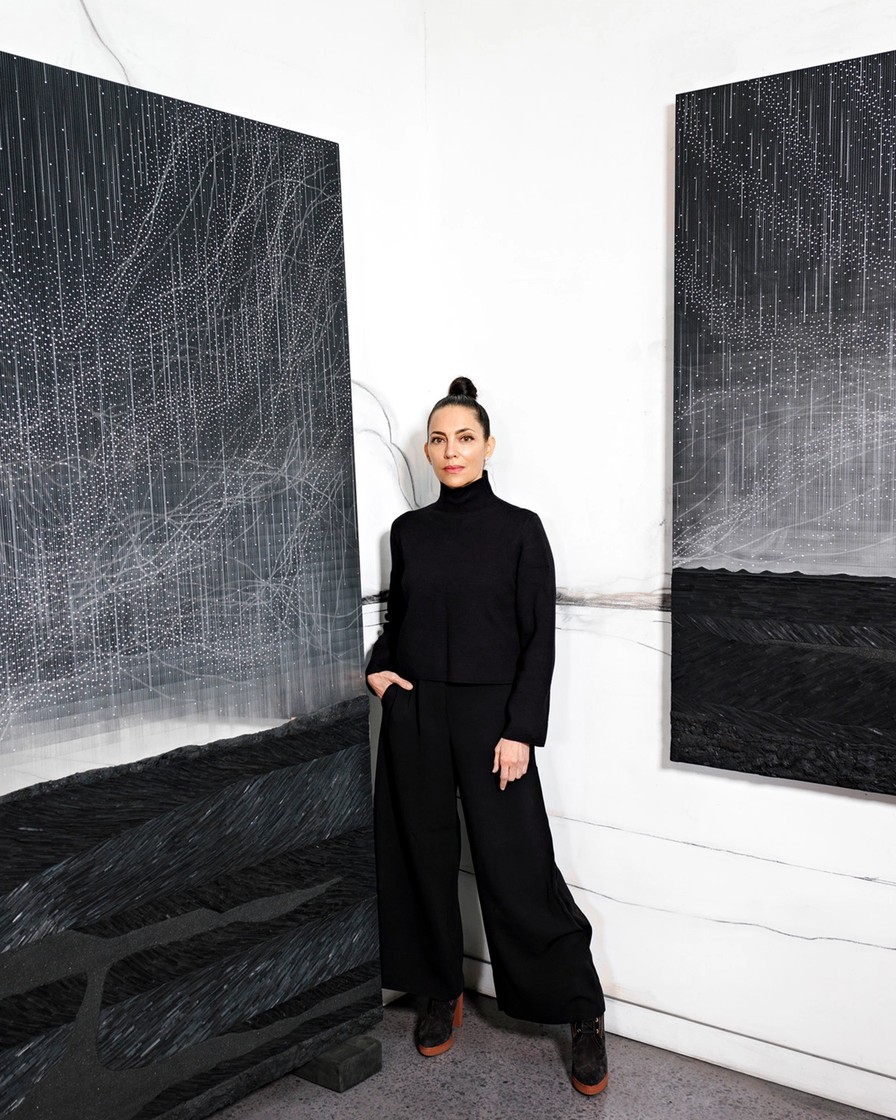
Portrait of Teresita Fernández

Teresita Fernández's work is characterized by an expansive rethinking of what constitutes landscape: from the subterranean to the cosmic, from national borders to the more elusive psychic landscapes we carry within. Fernández unravels the intimacies between matter, human beings, and locations. Her luminous, sculptural works poetically challenge ideas about land and landscape by amplifying the powerful, emotional connection in how we imagine place, and, by extension, one another. Fernández exposes the complex narratives that stem from distorted, colonial histories, elaborating on these themes in subtle ways that insist on intertwining beauty, the socio-political, the intimate, and the immense. Imagining the landscape with reciprocal sentience, Fernández has said “You look at the landscape, but the landscape also looks back at you."

Fernández is a 2005 MacArthur Foundation Fellow and the recipient of numerous awards, including a Creative Capital Award; Guggenheim Fellowship; the Louis Comfort Tiffany Biennial Award; an American Academy of Rome Fellowship (AFAAR); and a National Endowment for the Arts Individual Artist’s Grant in Visual Arts, among others. Her works have been exhibited and collected both nationally and internationally including: The Museum of Modern Art, New York; The Whitney Museum of American Art; the San Francisco Museum of Modern Art; The Menil Collection; Philadelphia Museum of Art; Pérez Art Museum Miami; Modern Art Museum of Fort Worth; Centro de Arte Contemporáneo de Málaga, Spain; The Museum of Fine Arts, Boston; SITE Santa Fe; The Smithsonian Museum of American Art; MASS MoCA; and Castello di Rivoli, Italy, among others. She lives and works in Brooklyn, New York
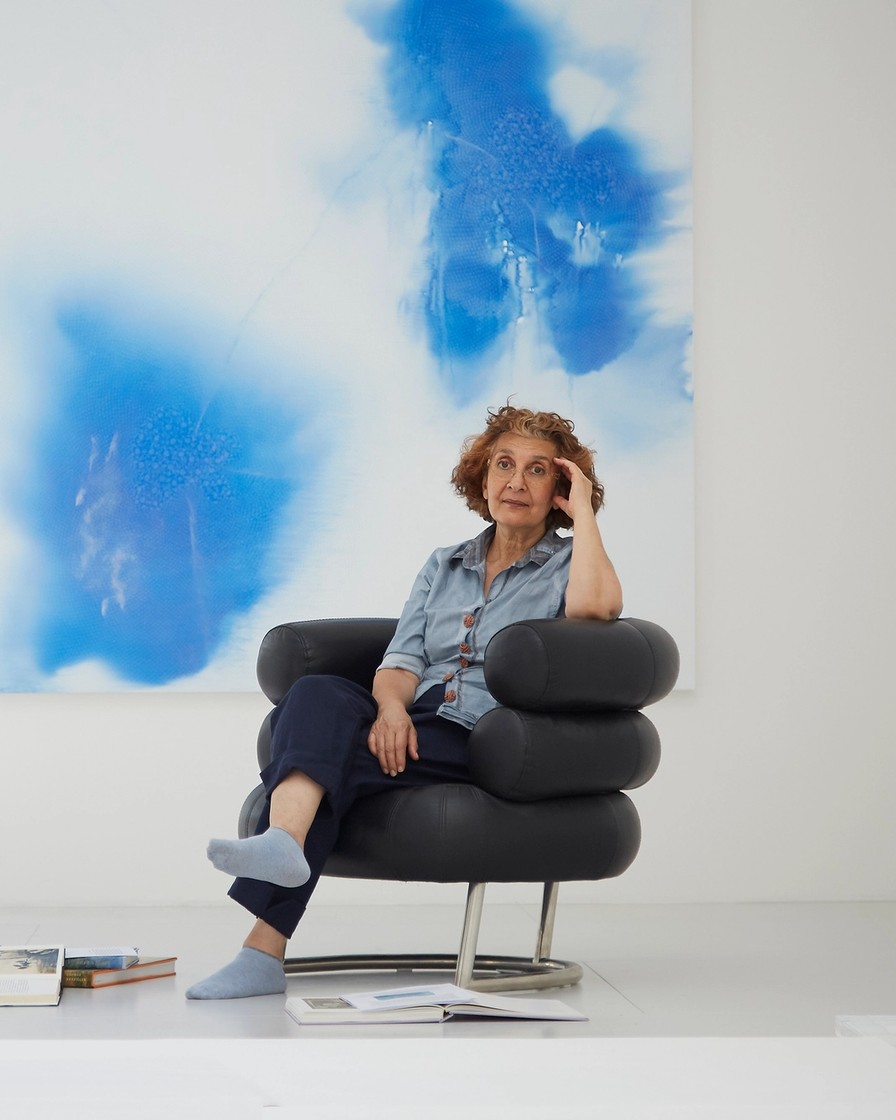
Portrait of Shirazeh Houshiary

Shirazeh Houshiary (b. 1955, Shiraz, Iran; lives and works in London, United Kingdom) makes painting, sculpture, and animation that seek to challenge viewers’ perceptions of time, space, and materiality. Her works often engage opposing ideas and states of being, including transparency and opacity, sound and silence, surface and depth, and presence and absence. From a distance, her paintings are reminiscent of a swirling galaxy, but as the viewer draws closer, the meticulousness, detail, and hidden Arabic letters that make up her amorphous forms begin to unfold. The universe, with its contradiction, paradox, and complexity is a core subject matter in her work. The Arabic words embedded in her compositions are a juxtaposition of the opposing phrases “I am” and “I am not,” oscillating freely between focused and unfocused states, where the meaning of our existence becomes superfluous and lost in Houshiary’s imagined cosmos.

Houshiary’s painting technique involves the successive layering of pigment and line, a laborious process that often takes several months to complete. Her surfaces are composed of intricate patterns that appear to pulse, undulate, and recede into the canvas, like a veil or membrane. She takes a similar methodical approach to her dynamic sculptures, constructing towers out of glass or aluminum bricks that, layer by layer, seem to emerge from the floor. Each vertical plane of bricks echoes the original shape of the structure’s footprint incrementally rotated to the maximum degree the form will allow before the resulting helix shape becomes unstable. For each work, Houshiary attempts to visualize subjects that are inherently intangible—an echo, human breath, or memory.

Portrait of Robin Rhode

With his research-based and socially engaged practice, Robin Rhode (b. 1976, Cape Town, South Africa; lives and works in Berlin, Germany) engages the urban landscape to create complex, symbolically rich narratives that disrupt and transform their environments.

The artist is best known for his multi-panel works that deftly combine photography, performance, wall painting, and drawing. Negotiating the urban landscape, these photographs often depict silhouetted figures interacting with carefully composed wall paintings that the artist paints in public spaces, most often in the city of Johannesburg. In each succession of photographs, the choreographed movements of the individual or group appear to alter the two-dimensional renderings, compressing space and time and morphing the urban landscape into a fictional storyboard. Using the medium of photography to capture his painted and performative actions, Rhode disrupts the fixity of the wall, rendering it a mobile substrate that can be transported into a variety of contexts.

Writings Without Borders | Lehmann Maupin