Skip to content

Multiple Artists

Under the Skin

Hong Kong

Jul 10–Aug 23, 2014

Installation view of Under the Skin at Lehmann Maupin Hong Kong

407 Pedder Building, 12 Pedder Street

Central, Hong Kong

Lehmann Maupin is pleased to present Under the Skin, a group exhibition featuring artworks by gallery artists Tracey Emin, Klara Kristalova, Alex Prager, Robin Rhode, Juergen Teller, and Erwin Wurm. The artists included in this exhibition will present a diverse selection of works that are linked by a shared engagement with figurative representation in contemporary art.

Under the Skin features a selection of Emin’s intimately-scaled monoprints and watercolors, including self-portraits that portray the figure in the classical reclining nude pose. Executed in a style reminiscent of German Expressionism, these works evoke the raw emotion and poignancy typical of Emin’s work, revealing the artist’s innermost hopes, fears, and disappointments.

Installation view of Under the Skin at Lehmann Maupin Hong Kong
Installation Views: 1 of 4
Installation view of Under the Skin at Lehmann Maupin Hong Kong
Installation Views: 1 of 3

Books and Editions

Exhibition Artists

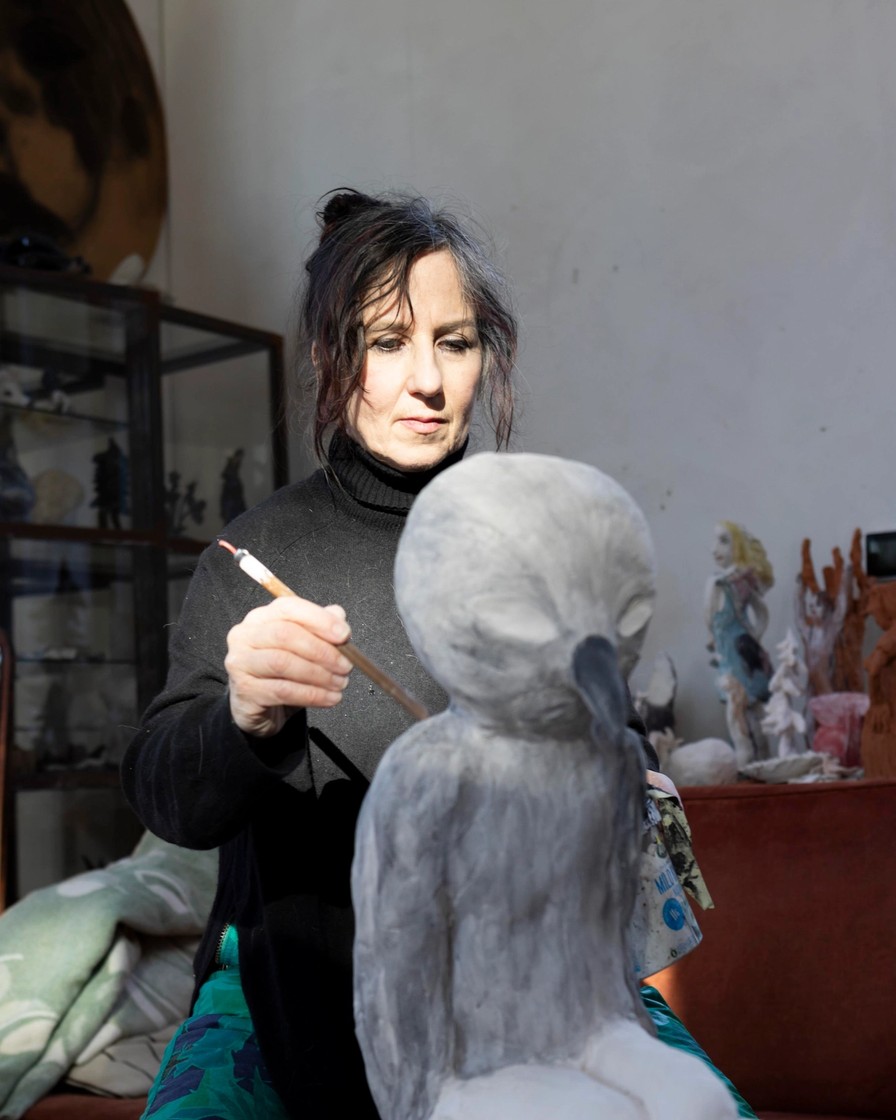
Portrait of Klara Kristalova

Klara Kristalova (b. 1967, Czechoslovakia; lives and works in Norrtälje, Sweden) creates figurative ceramic sculptures that take on hybrid forms. Many of Kristalova’s works incorporate both aspects of the human body and elements of nature, such as animals, insects, flowers, and trees. Infused with uncanny details and observations from her daily life and surroundings, Kristalova’s figures constitute a juxtaposition of scale where minute details reflect the monumental impact of constant change. Her oeuvre is grounded in an exploration of transitional states essential to both human and ecological life, and her sculptures conjure a familiar yet fantastical presence that exudes raw emotion. Building a fictive world that bridges humanity, ecology, and fantasy, Kristalova’s sculptures undergird the omnipresence of change across all forms of life.

Crafted in the artist’s secluded studio in Norrtälje, Sweden, Kristalova’s rugged style evokes a sense of discomfort, mirroring the sensitive and porous emotional landscape one finds themselves in when weathering changes. The figures exist in a liminal state, often possessing both human and anthropomorphic qualities and perhaps challenging such distinctions altogether. In this sense, Kristalova’s rustic style reminds us that the sculptural process is inherently transformative, as natural materials are shaped into static and enduring forms.
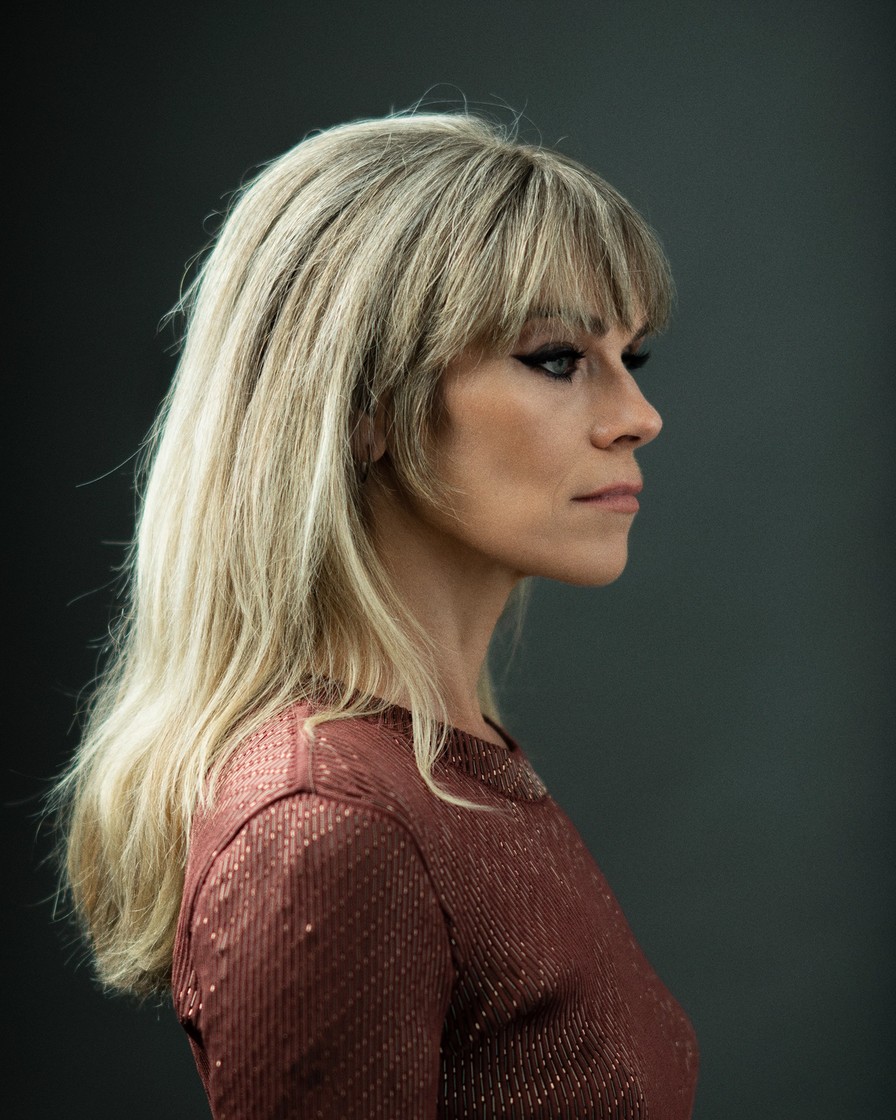
Portrait of Alex Prager

Alex Prager (b. 1979, Los Angeles, CA; lives and works in Los Angeles, CA) is an American artist, director and screenwriter based in Los Angeles. Prager is known for her uncanny images and films that blur the line between artifice and reality to explore the human condition. Prager has spent over two decades honing her signature style, which draws on traditional movie making techniques from golden-era period styles (like film noir and Technicolor), classical mythology, and the allegorical works of Dutch Renaissance painters Hieronymus Bosch and Pieter Brugel. Over time, large-scale productions have become synonymous with her work.

Working simultaneously across film, photography, and sculpture, Prager constructs highly emotional moments that feel like a fabricated memory or dream. Her distinctive use of archetypes, everyday objects, humor, and allegory—along with her signature technicolor facades—allow her to explore dark and complex topics. Existential concerns are central to her practice, including collective and individual identities and the impact of technology on society. Like the psychological works of artists including Alfred Hitchcock, Edward Hopper, Pipilotti Rist, August Sanders, and Bill Viola, Prager’s work invites the viewer to contemplate the human experience by revealing that the extraordinary lurks within the ordinary.

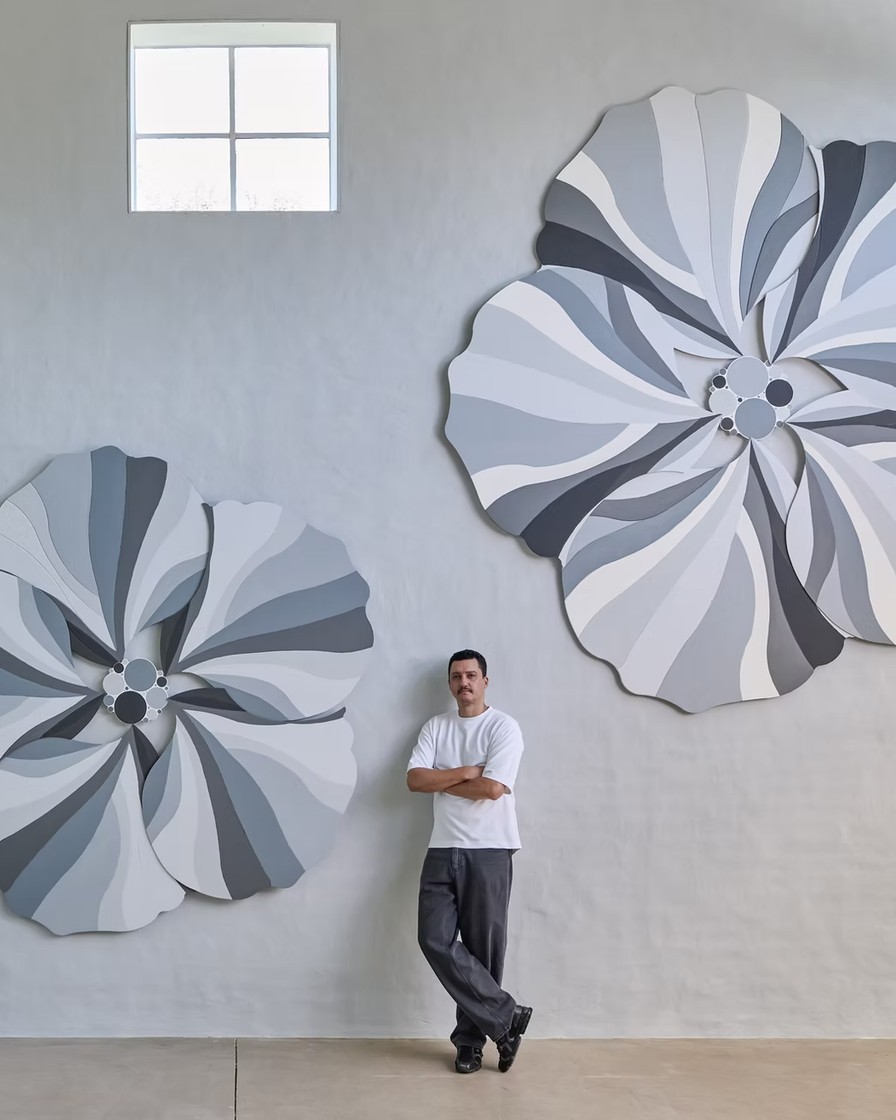
Portrait of Robin Rhode

With his research-based and socially engaged practice, Robin Rhode (b. 1976, Cape Town, South Africa; lives and works in Berlin, Germany) engages the urban landscape to create complex, symbolically rich narratives that disrupt and transform their environments.

The artist is best known for his multi-panel works that deftly combine photography, performance, wall painting, and drawing. Negotiating the urban landscape, these photographs often depict silhouetted figures interacting with carefully composed wall paintings that the artist paints in public spaces, most often in the city of Johannesburg. In each succession of photographs, the choreographed movements of the individual or group appear to alter the two-dimensional renderings, compressing space and time and morphing the urban landscape into a fictional storyboard. Using the medium of photography to capture his painted and performative actions, Rhode disrupts the fixity of the wall, rendering it a mobile substrate that can be transported into a variety of contexts.

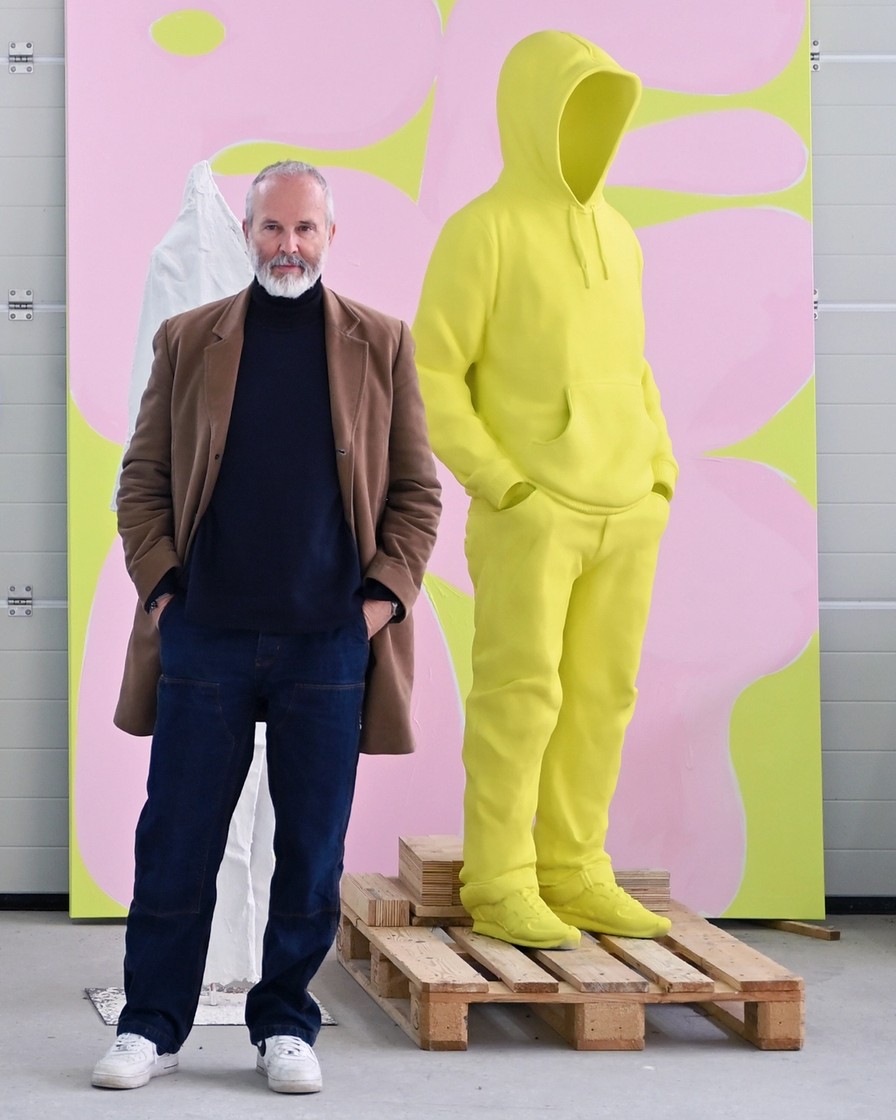
Portrait of Erwin Wurm

Erwin Wurm (b. 1954, Bruck an der Mur/Styria, Austria; lives and works in Vienna and Limberg, Austria) is an Austrian artist whose practice has radically expanded the possibilities of sculpture over the past four decades. Rooted in conceptual questions about what sculpture can be, how it can occupy space, and how the body, everyday objects, and gestures might become sculptural forms, Wurm’s work challenges conventional definitions of the medium. While his oeuvre is filled with larger-than-life-size pickles, anthropomorphic sausages, empty suits, and impossibly proportioned houses, Wurm is best known for his iconic One Minute Sculptures, which provide instructions for participants to create temporary sculptures by performing illogical poses with everyday objects. Through his paradoxical work, Wurm confronts philosophical questions about contemporary society—from obsessions with status and consumerism, to anxieties around traditional value systems, to the complexities of modern psychology. At the same time, the artist explores new possibilities for sculpture through ambitious formal experiments with volume, surface, scale, and duration. While Wurm considers the absurd an important tool, there is always an underlying social critique of contemporary culture. Wurm emphasizes this dichotomy by working within the liminal space between high and low and merging genres to explore what he views as an invented reality.

Under the Skin | Lehmann Maupin