Skip to content

Kader Attia, Mandy El-Sayegh

Disfigurations

London

Sep 21–Nov 4, 2023

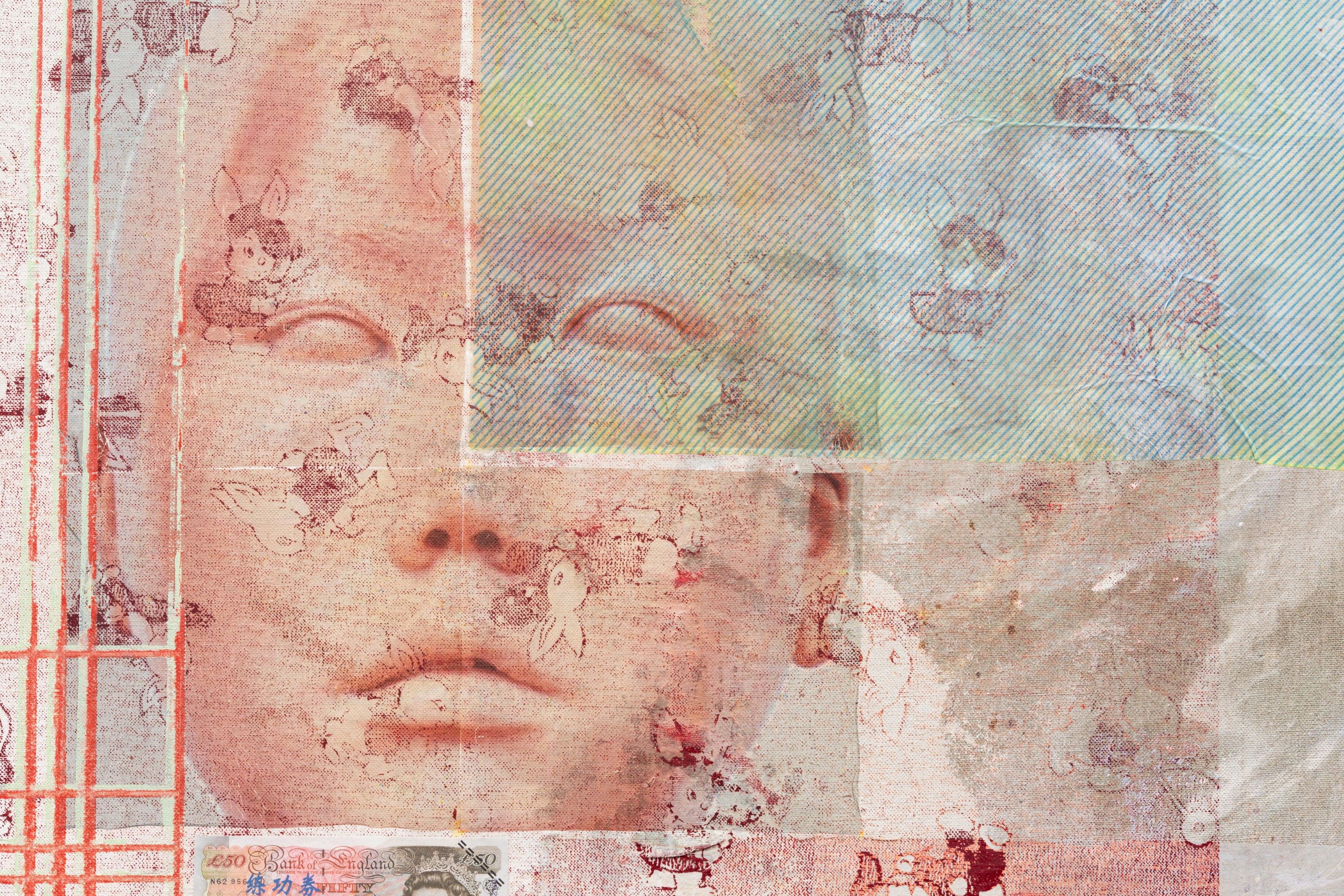
Detail of painting by Mandy El-Sayegh

No.9 Cork Street

Mayfair, London W1S 3LL

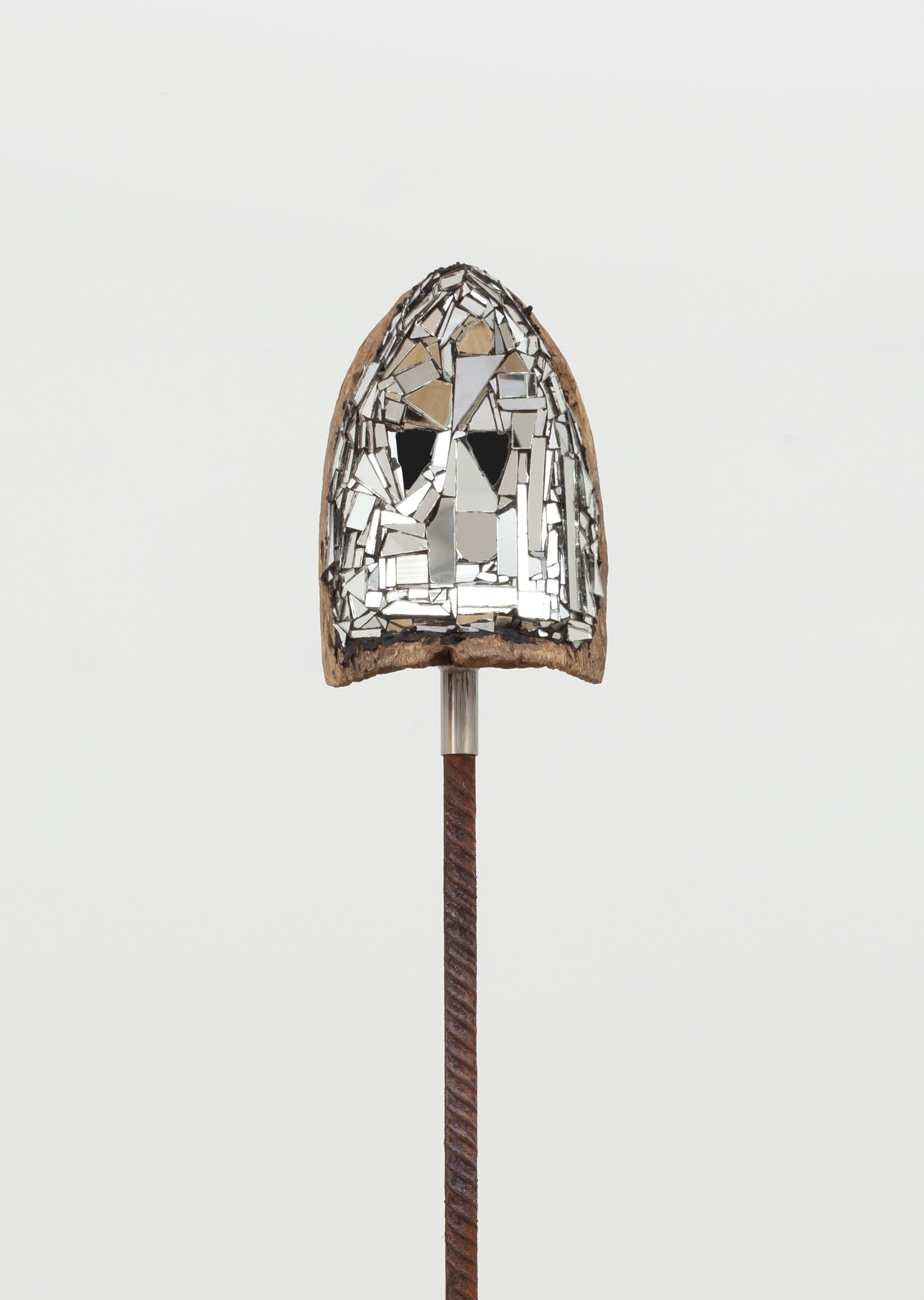
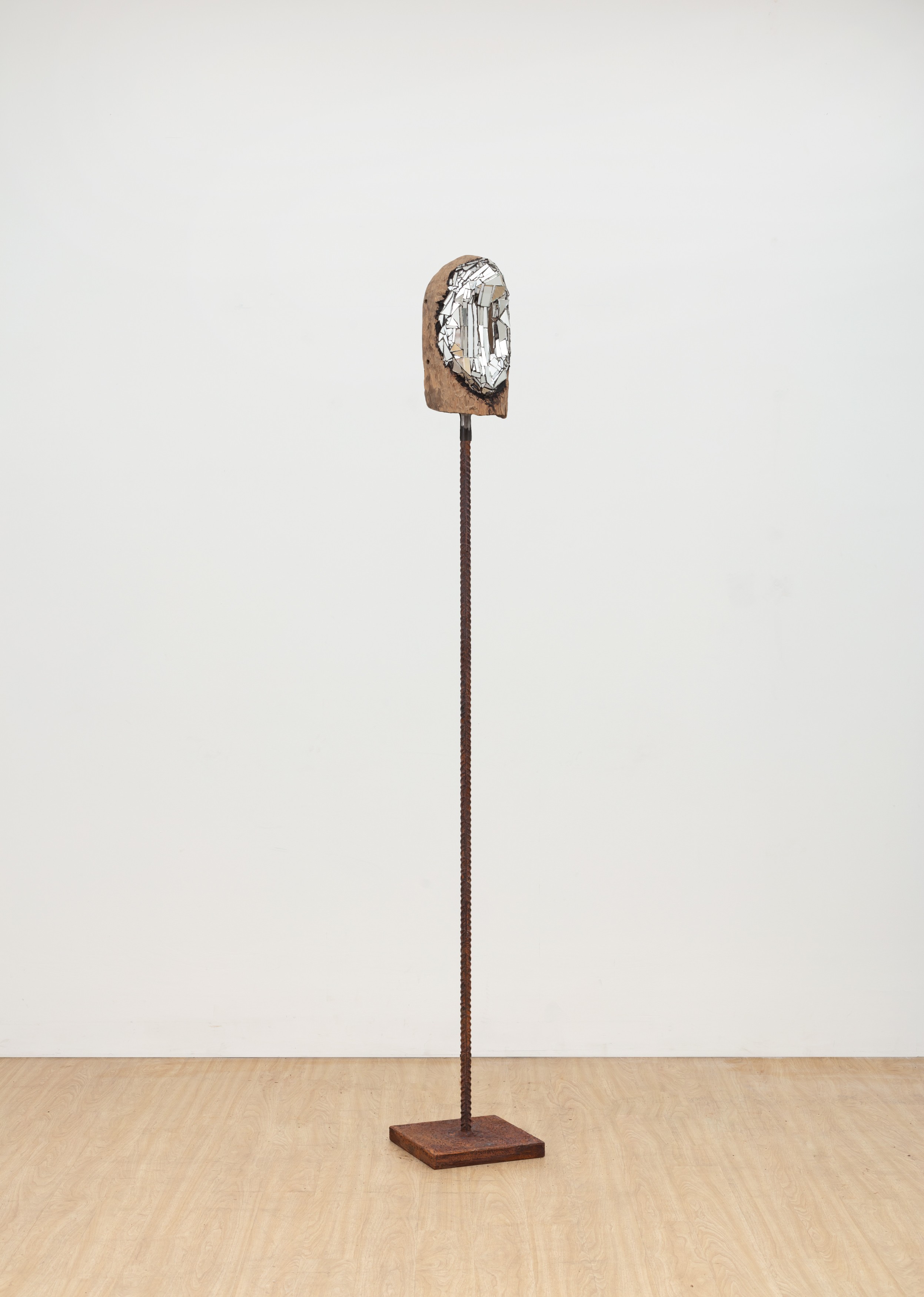
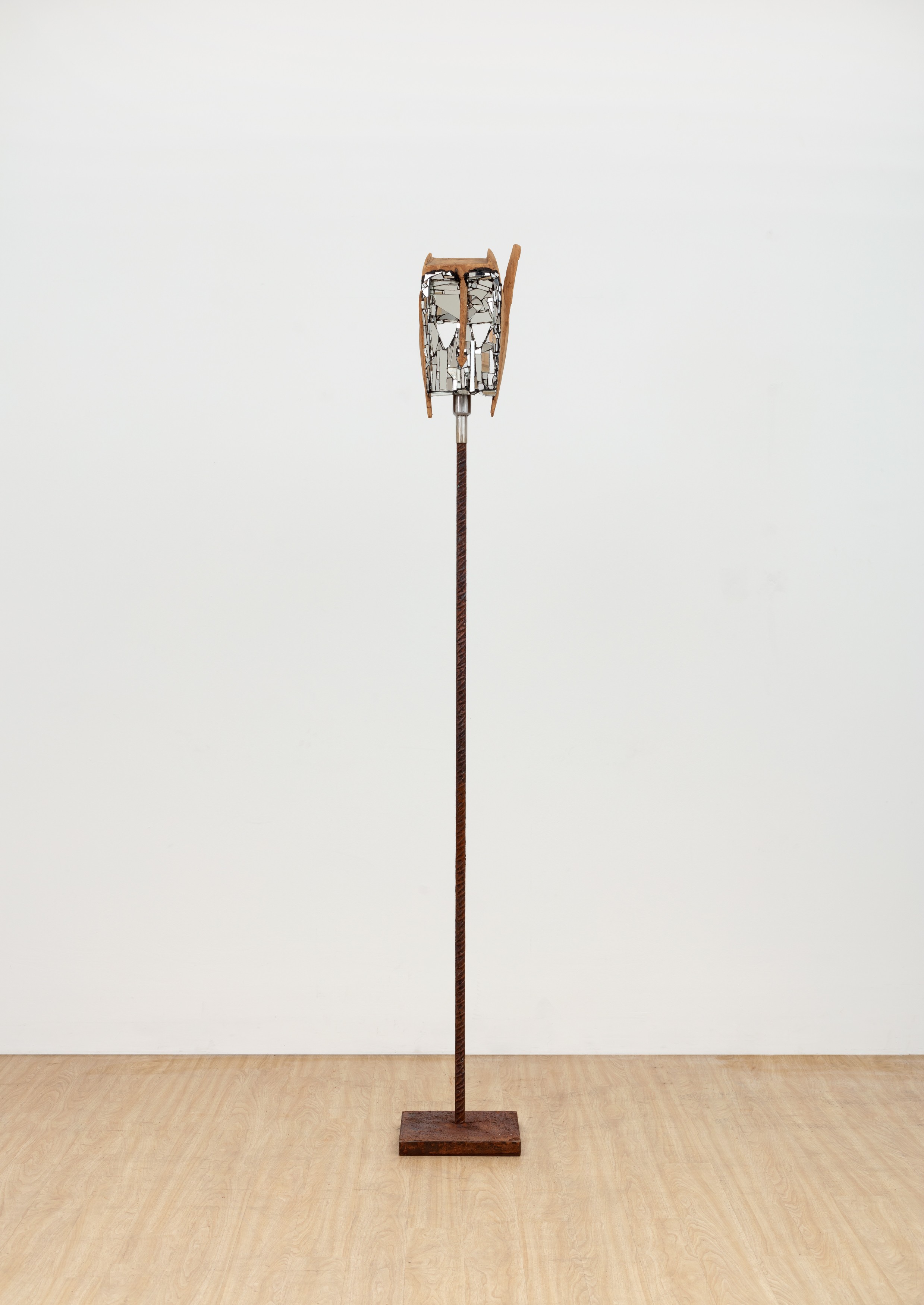
“In 2009, I visited the exhibition Picasso and the Masters at the Grand Palais in Paris, which included works by artists like Caravaggio, El Greco, and Paul Cezanne, all of whom influenced Picasso. But there was not a single African mask. We know that African masks clearly influenced Picasso's Demoiselles d'Avignon and the work of some of his contemporaries such as Georges Braque. Omitting them from this exhibition was an insult to the traditional art of Africa.

In response to this exhibition the first thing I did was to make a work that simply showed to the audience how Cubism was invented. I took an old mask that I found in a market in Dakar—not a Senegalese one but a copy of a traditional Dogan mask. I plastered on mirror pieces following the angles of the mask. After I had put on five pieces, I looked at the mask and saw myself completely fragmented, so I continued to cover the whole surface. This mirror mask is showing everybody who looks at it a Cubist portrait of themselves. Its reference to the influence of African art on Picasso's art is very simple and direct.”

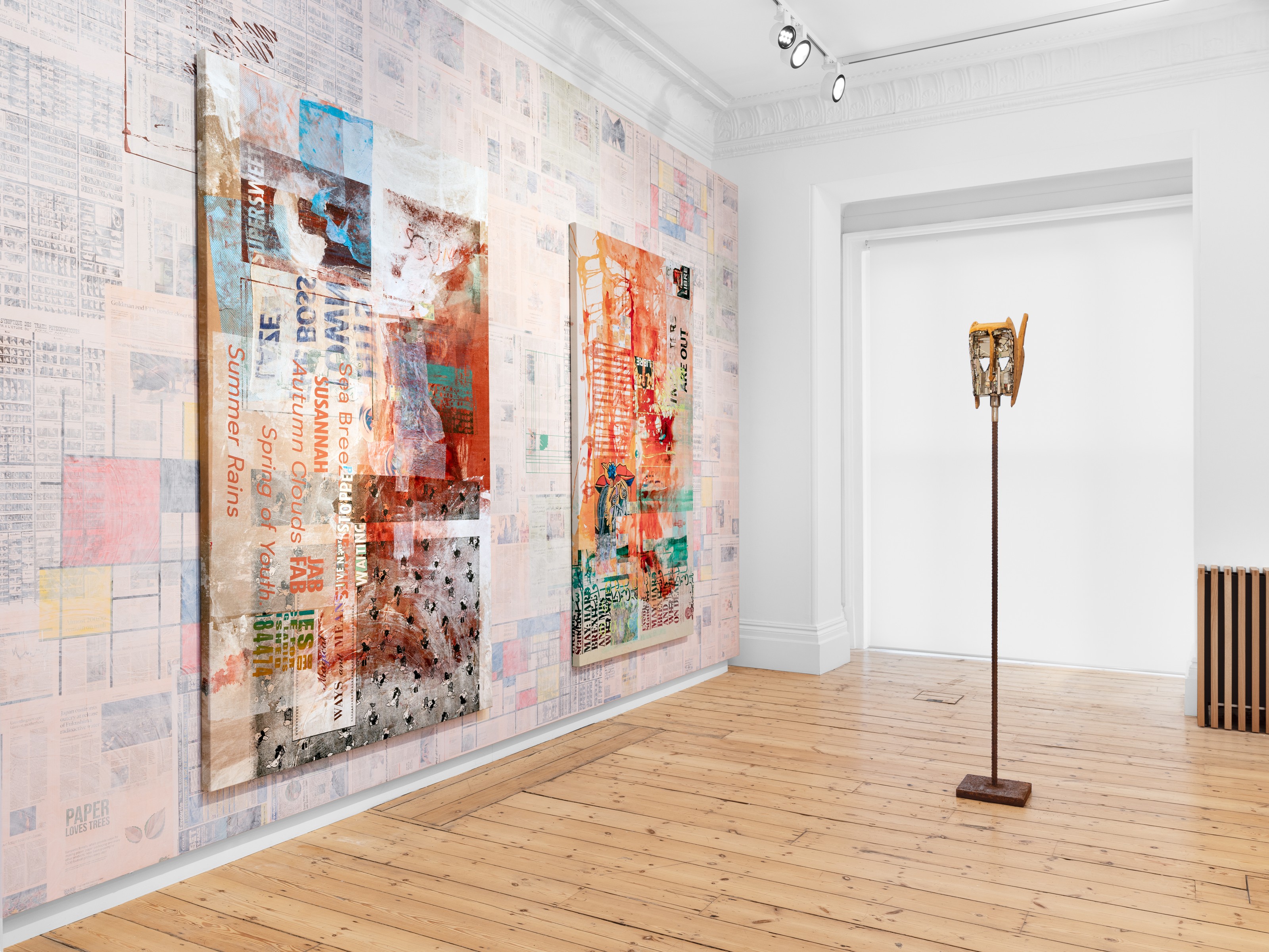
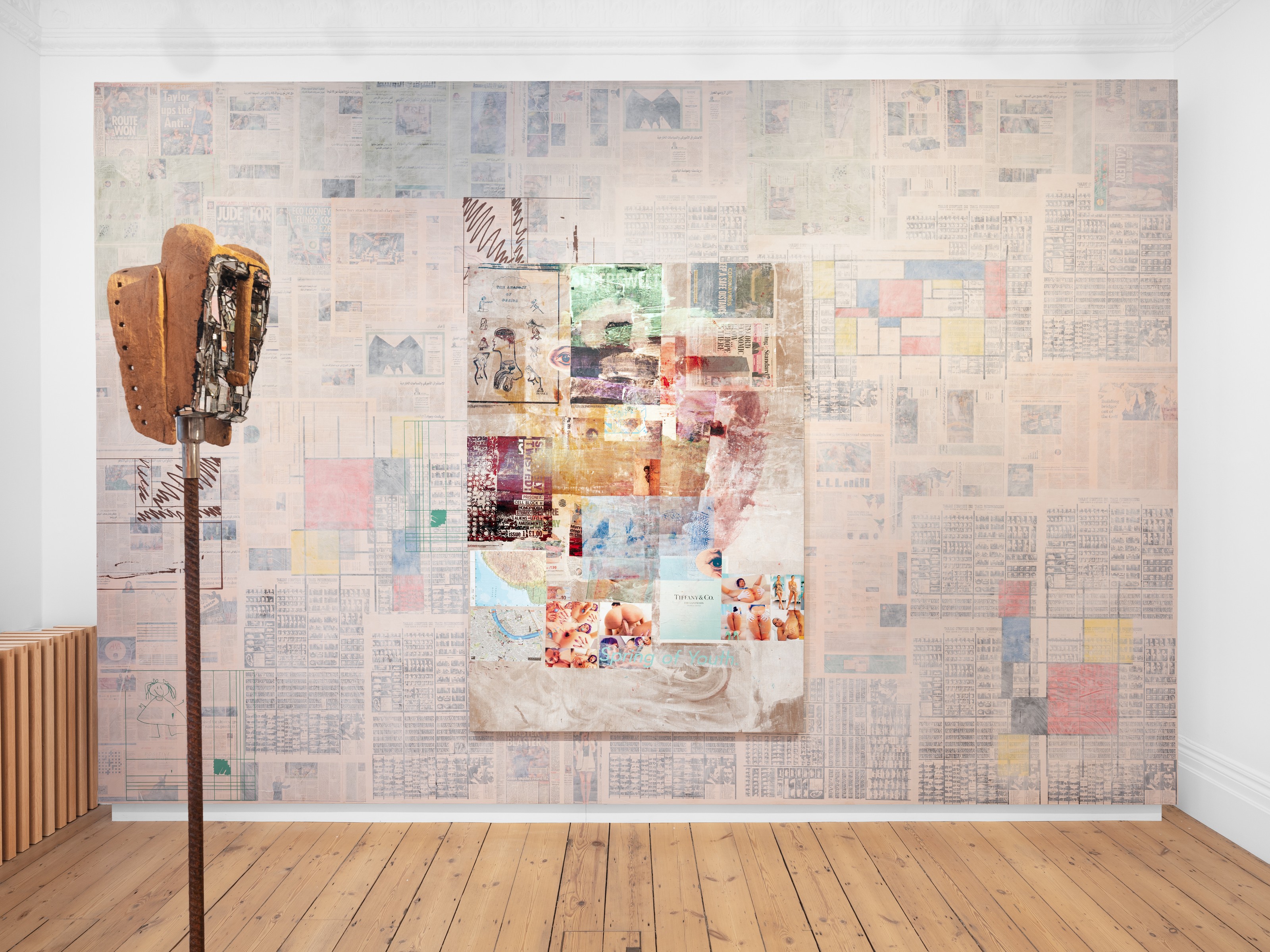
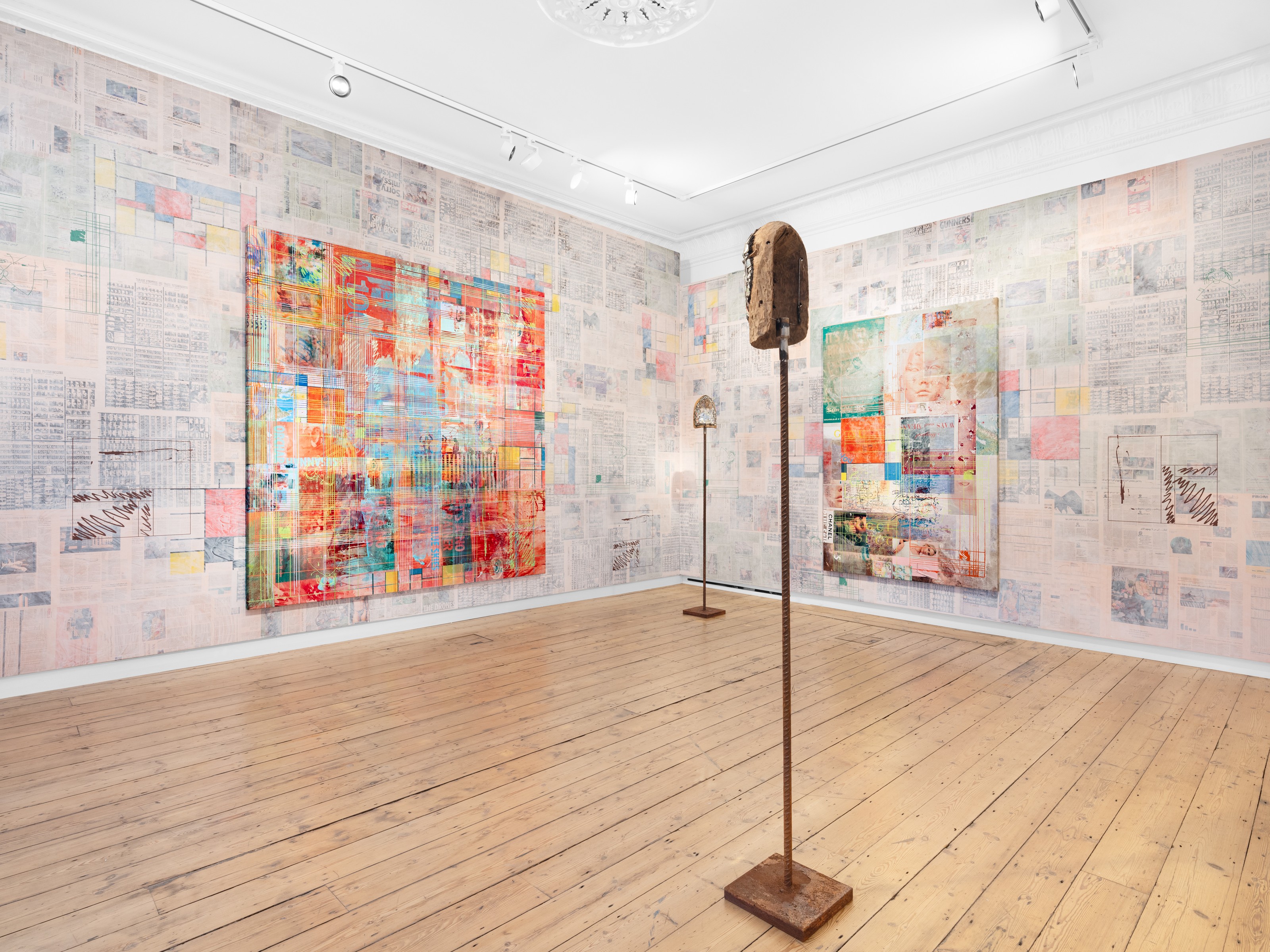
Installation view of Disfigurations at Lehmann Maupin London
Installation Views: 1 of 3
Sculpture by Kader Attia

Kader Attia

Mirrors and Masks, 2023

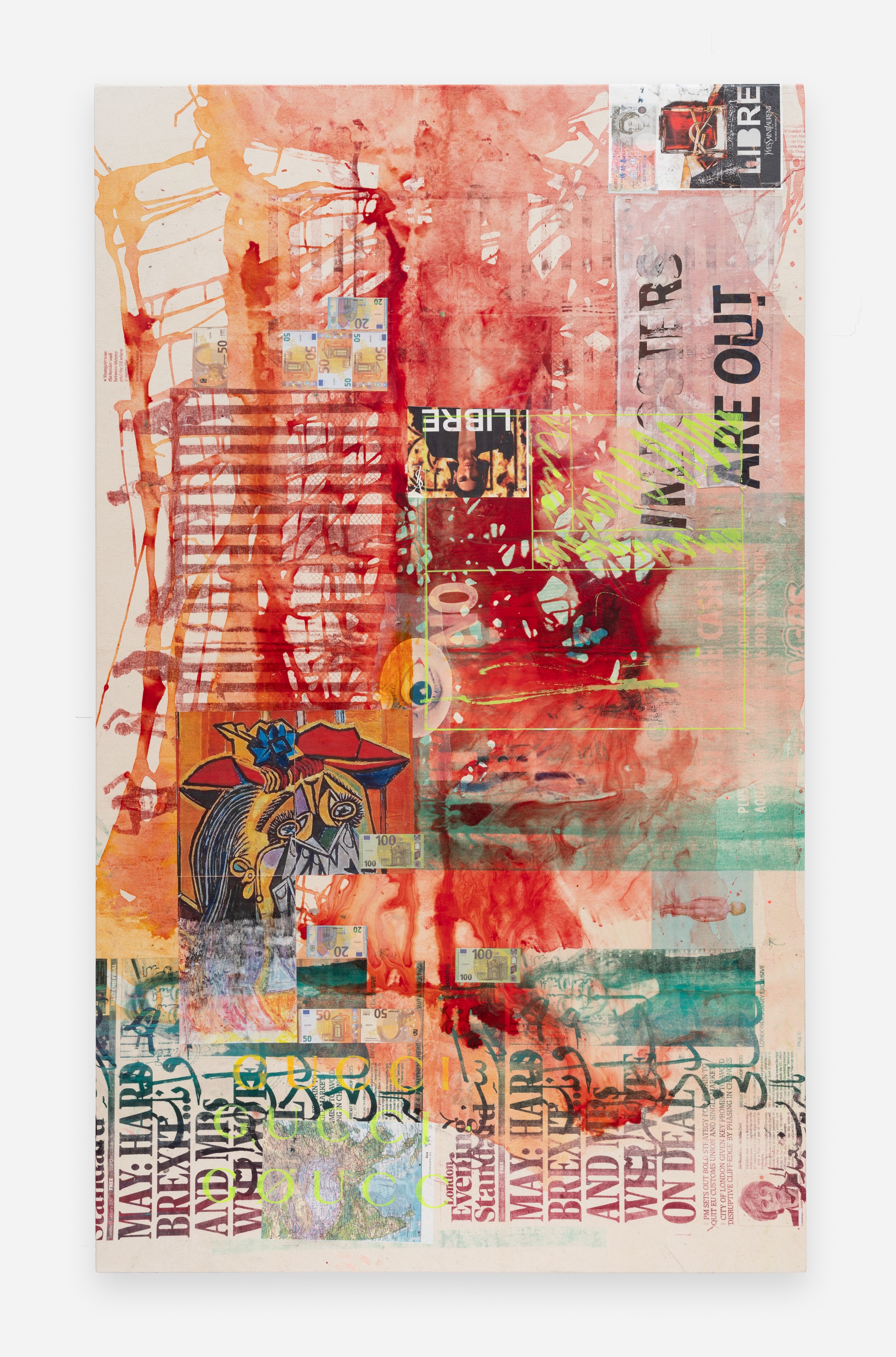
Painting by Mandy El-Sayegh

Mandy El-Sayegh

Piece Painting (free association, it’s a no, imposters, weeping), 2023

Mandy El-Sayegh

Net-Grid (zero point gaza), 2023

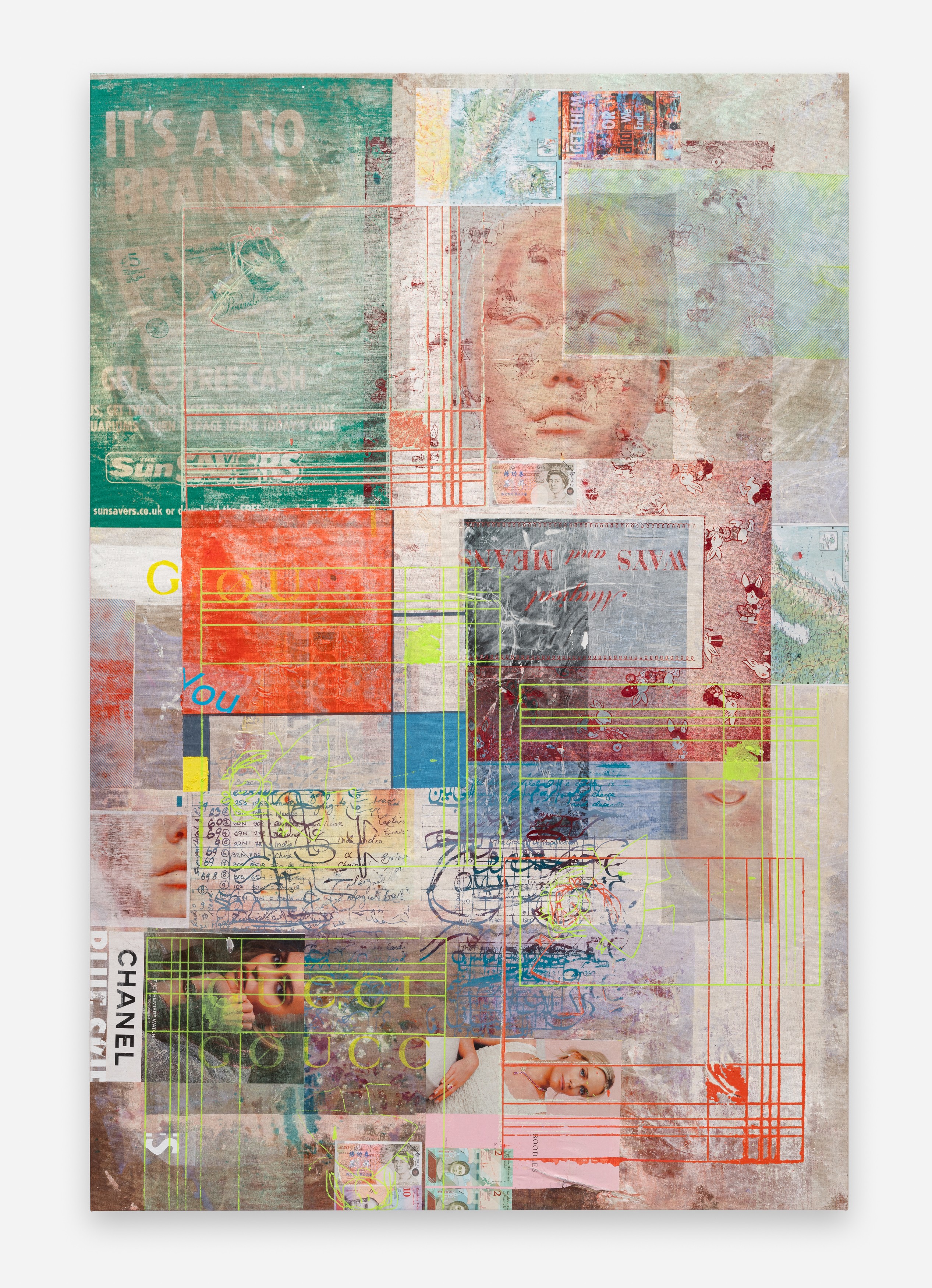
Painting by Mandy El-Sayegh

Mandy El-Sayegh

Piece Painting (free association, I,O,U, in euros), 2023

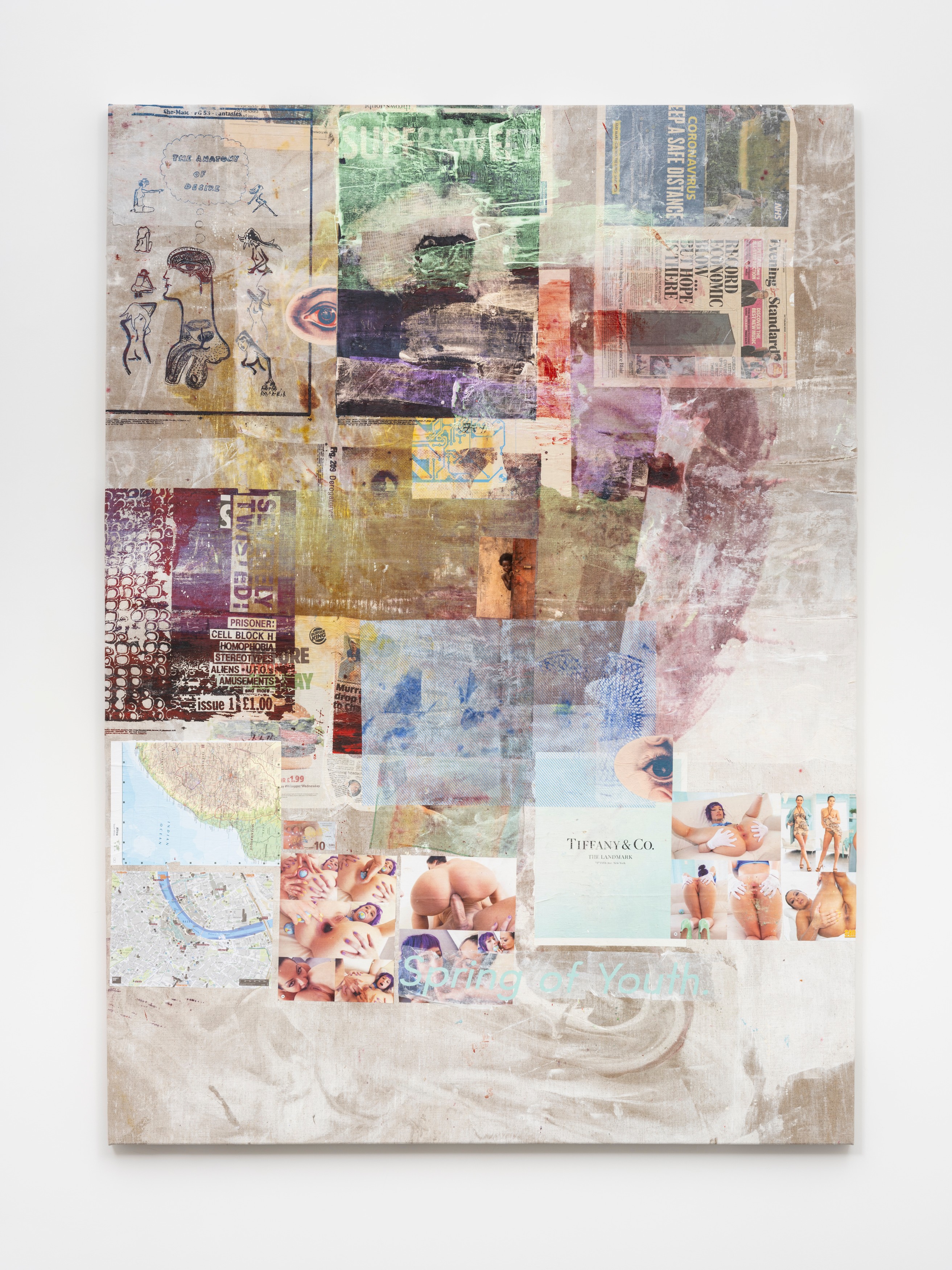
Mandy El-Sayegh

Piece Painting (free association, spring of youth means I’ve never stopped waiting), 2023

Painting by Mandy El-Sayegh

Mandy El-Sayegh

Piece Painting (Le Monde), 2023

Sculpture by Kader Attia

Kader Attia

Mirrors and Masks, 2023

Sculpture by Kader Attia

Kader Attia

Mirrors and Masks, 2023

Press Highlights

Exhibition Artists

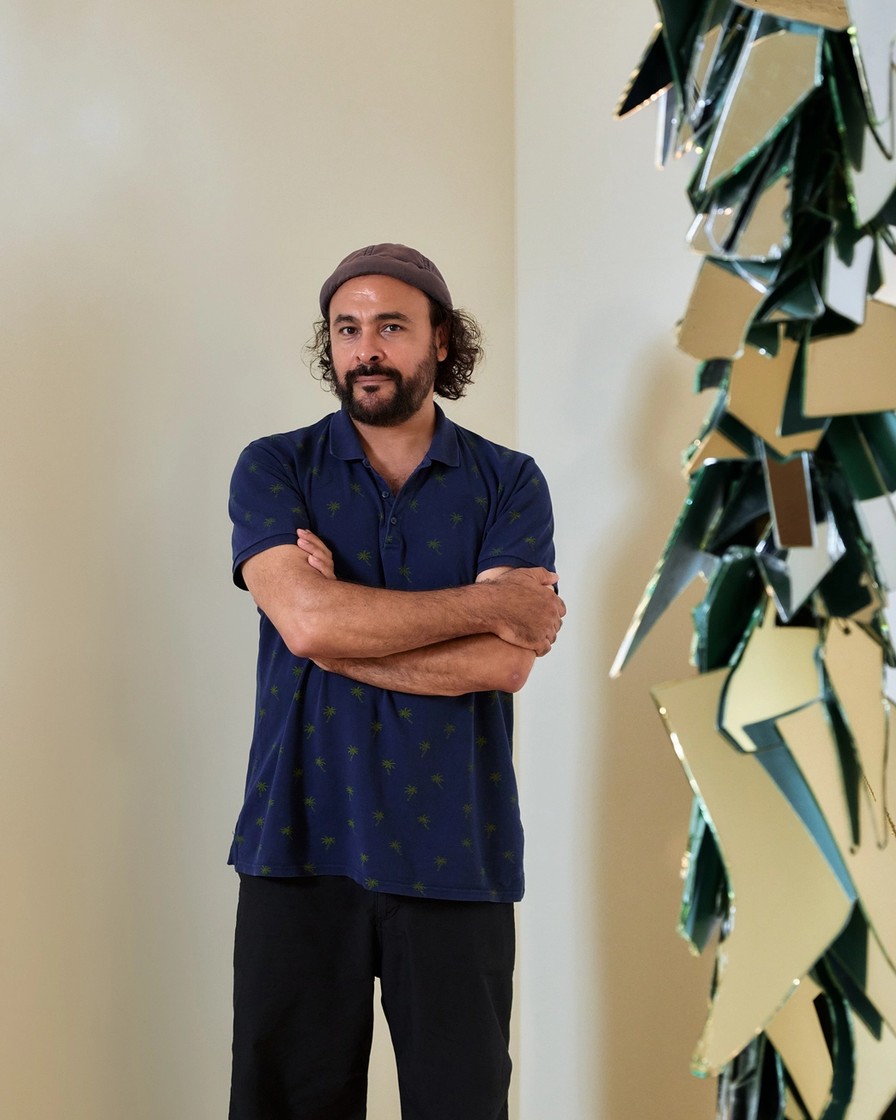
Portrait of Kader Attia

Kader Attia (b. 1970, Seine Saint-Denis, Dugny, France; lives and works in Berlin Germany and Paris, France), grew up in Paris and in Algeria. Preceding his studies at the École Supérieure des Arts Appliqués Duperré and the École Nationale Supérieure des Arts Décoratifs in Paris, and at Escola Massana, Centre d’Art i Disseny in Barcelona, he spent several years in Congo and in South America.The experience with these different cultures, the histories of which over centuries have been characterized by rich trading traditions, colonialism and multi-ethnic societies, has fostered Kader Attia’s intercultural and interdisciplinary approach of research. For many years, he has been exploring the perspective that societies have on their history, especially as regards experiences of deprivation and suppression, violence and loss, and how this affects the evolving of nations and individuals — each of them being connected to collective memory.

His socio-cultural research has led Kader Attia to the notion of Repair, a concept he has been developing philosophically in his writings and symbolically in his oeuvre as a visual artist. With the principle of Repair being a constant in nature — thus also in humanity —, any system, social institution or cultural tradition can be considered as an infinite process of Repair, which is closely linked to loss and wounds, to recuperation and re-appropriation. Repair reaches far beyond the subject and connects the individual to gender, philosophy, science, and architecture, and also involves it in evolutionary processes in nature, culture, myth and history.
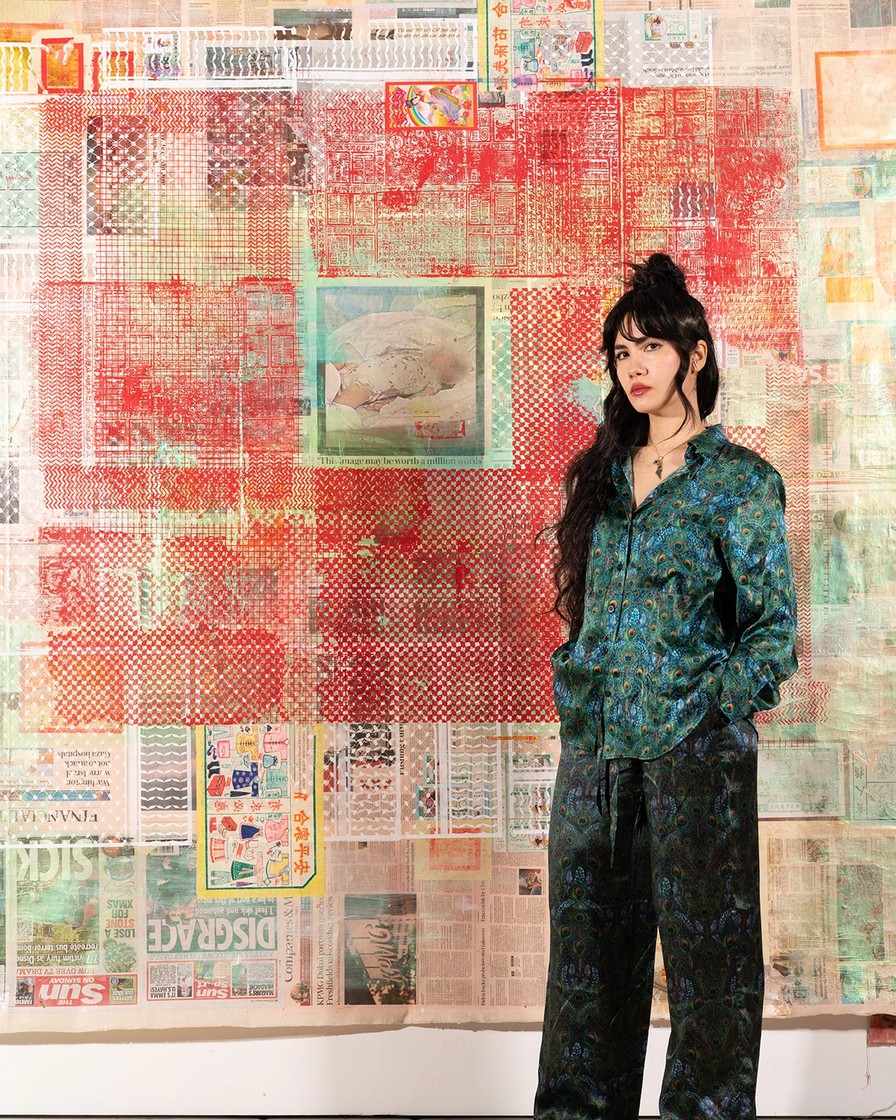
Portrait of Mandy El-Sayegh

Mandy El-Sayegh’s (b. 1985, lives and works in London, United Kingdom) highly process-driven practice is rooted in an exploration of material and language. Executed in a wide range of media, including densely layered paintings, sculpture, installation, diagrams, and sound and video, El-Sayegh’s work investigates the formation and break-down of systems of order, be they bodily, linguistic, or political. She is particularly interested in exploring the Part-Whole relationship–how something significant yet unpremeditated emerges and comes into being through various smaller, micro-interactions or repetitions. She physically demonstrates this by collaging disparate fragments, text, and found imagery, and layering them with materials like latex, rubber, and clay. Through simple, repetitive patterns such as a hand-painted grid or geometric molds, formal and narrative synthesis occurs that is not consciously intended or anticipated.

El-Sayegh likens her exploratory, observational process to the occurrence of contemporary social and political events, which unfold in highly chaotic and often disturbing ways. Justifications or explanations for such events typically appear after the fact; they are devised in an effort to impose order on an inherently subjective and incomplete set of social, cultural, and political processes. The artist’s work aims to remove the veil of these superimposed structures and reveal the intricacies of growth and decay as they happen in real time. El-Sayegh is interested in the observation of process and she believes that through such observation, one can better understand how the social and political phenomena that shape our world exist in a constant state of flux.

Disfigurations | Lehmann Maupin