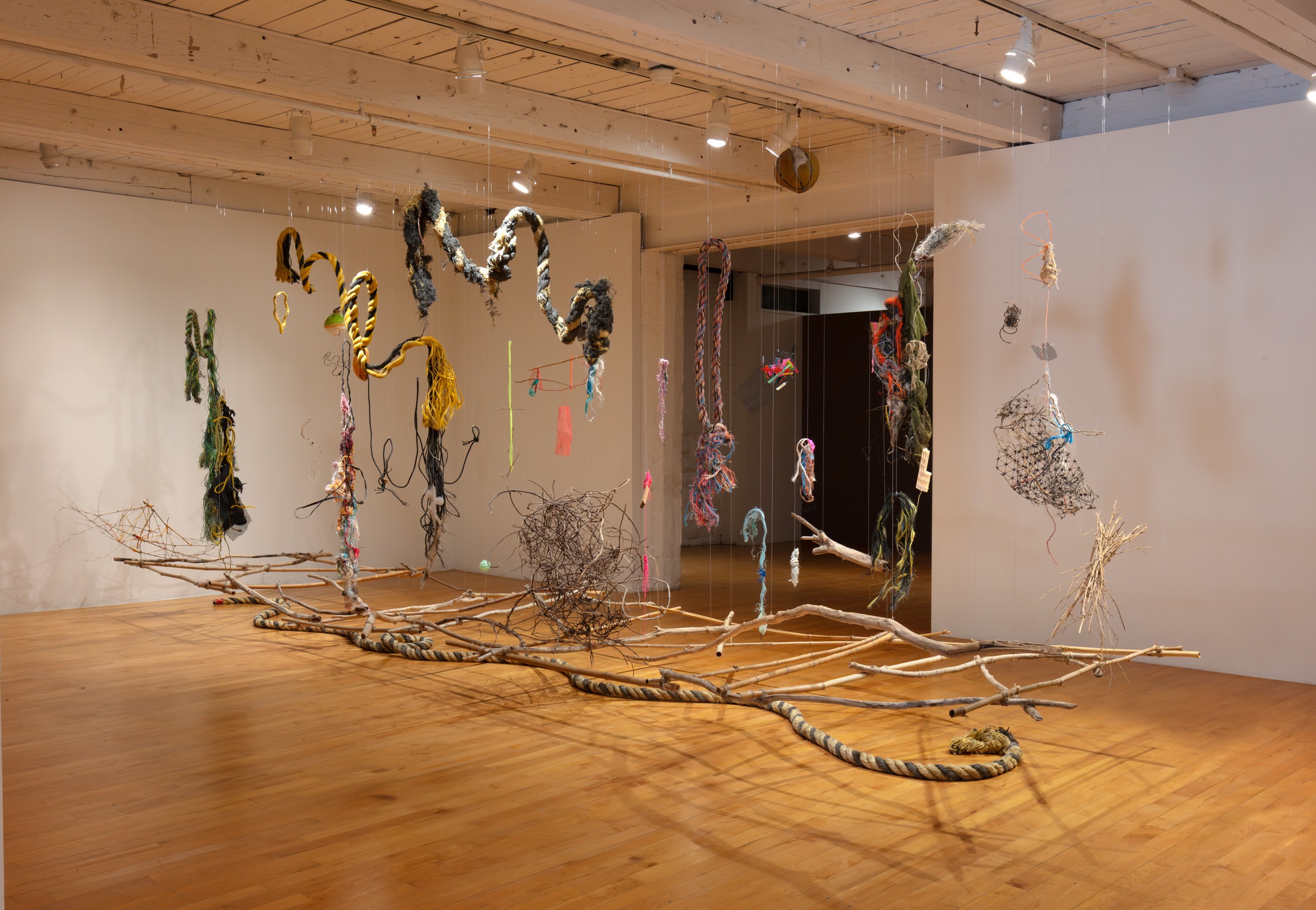
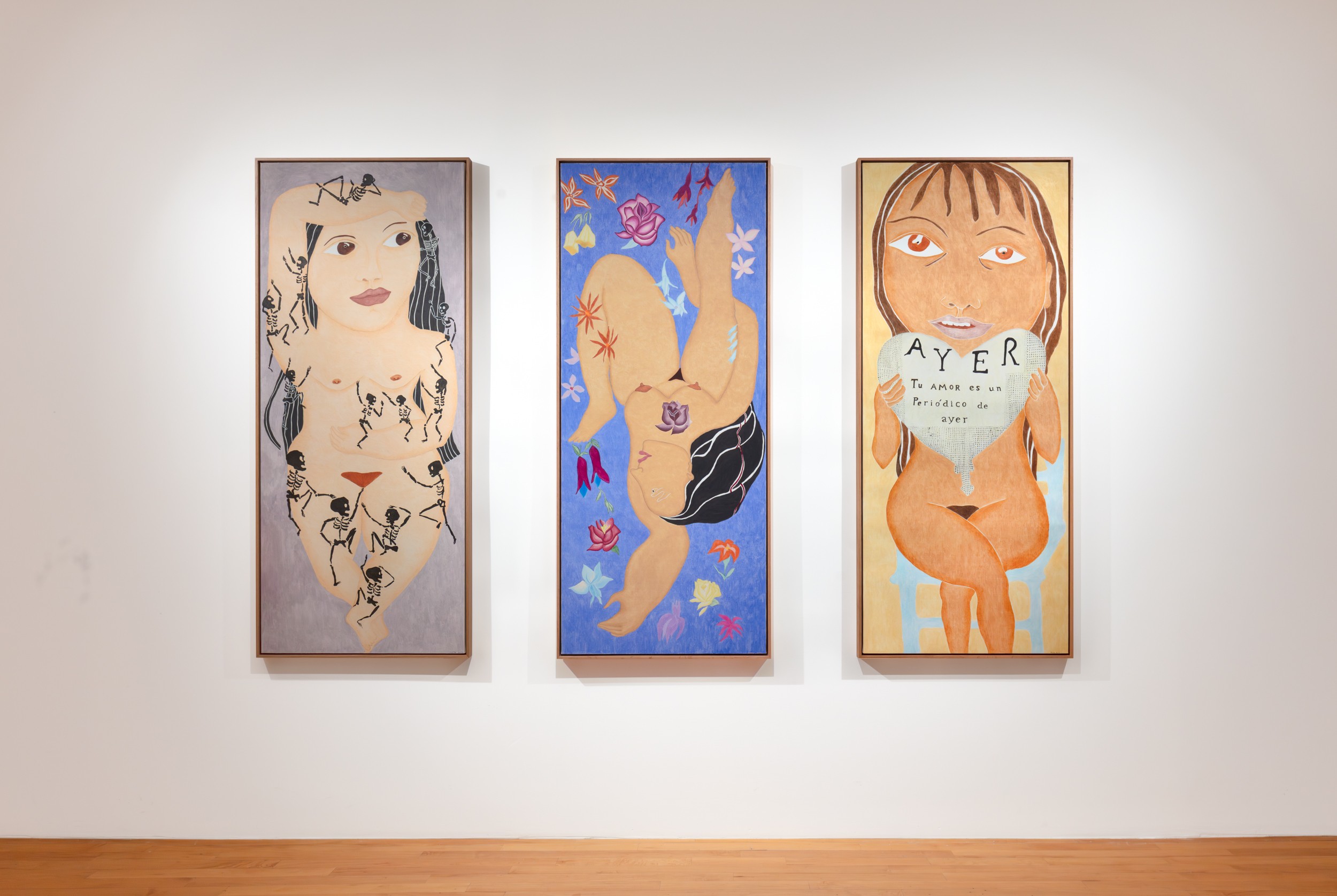
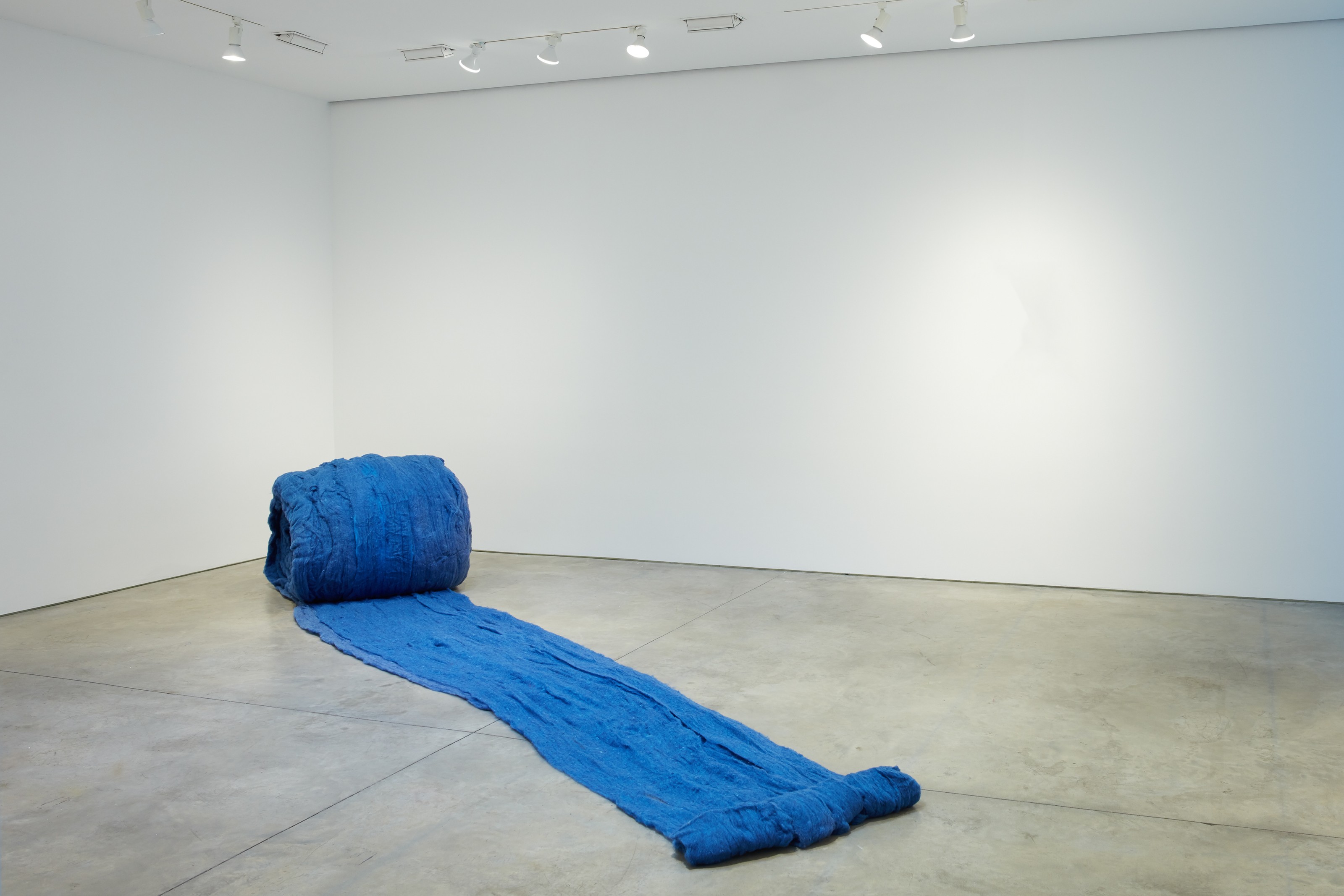
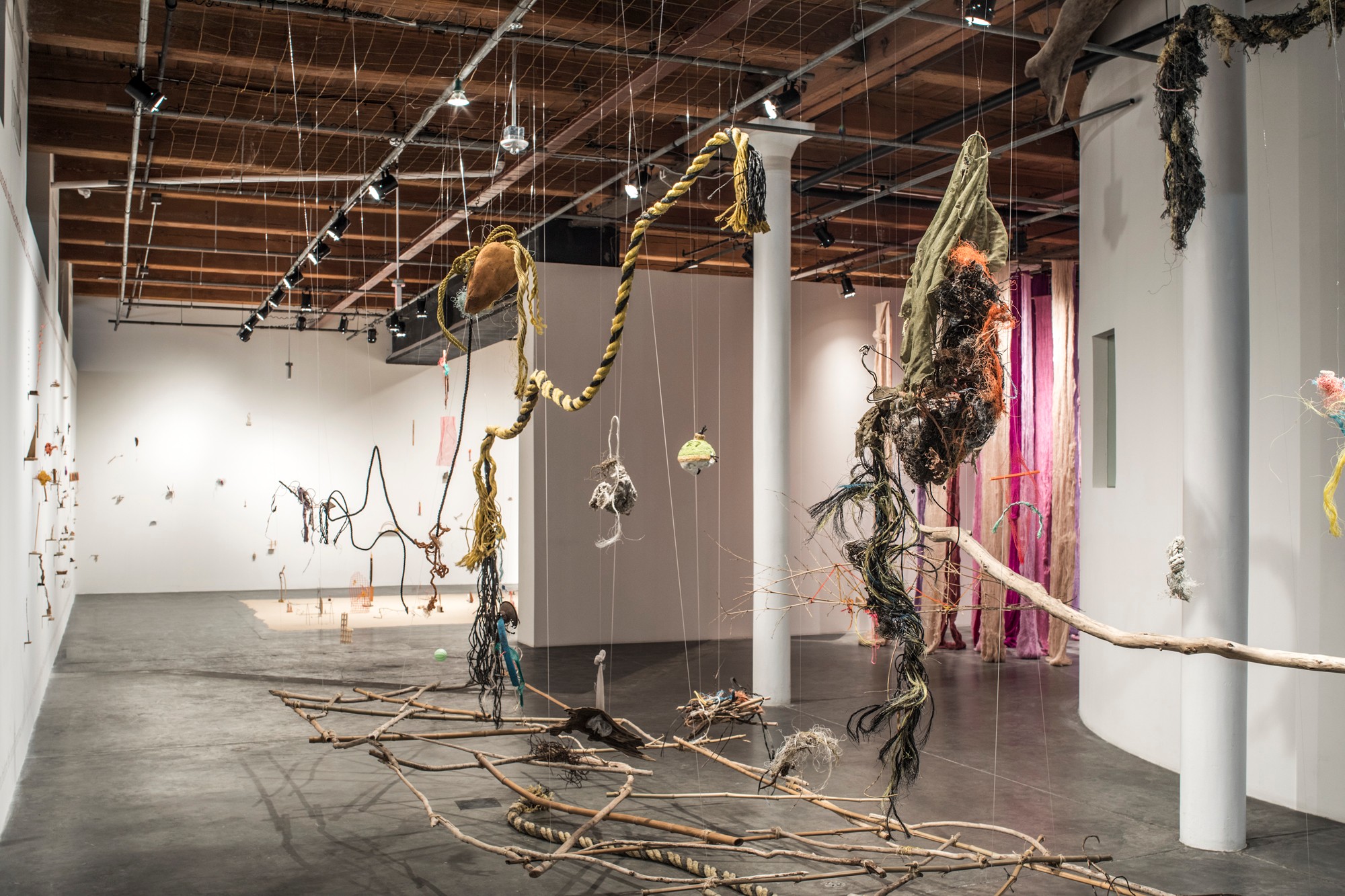
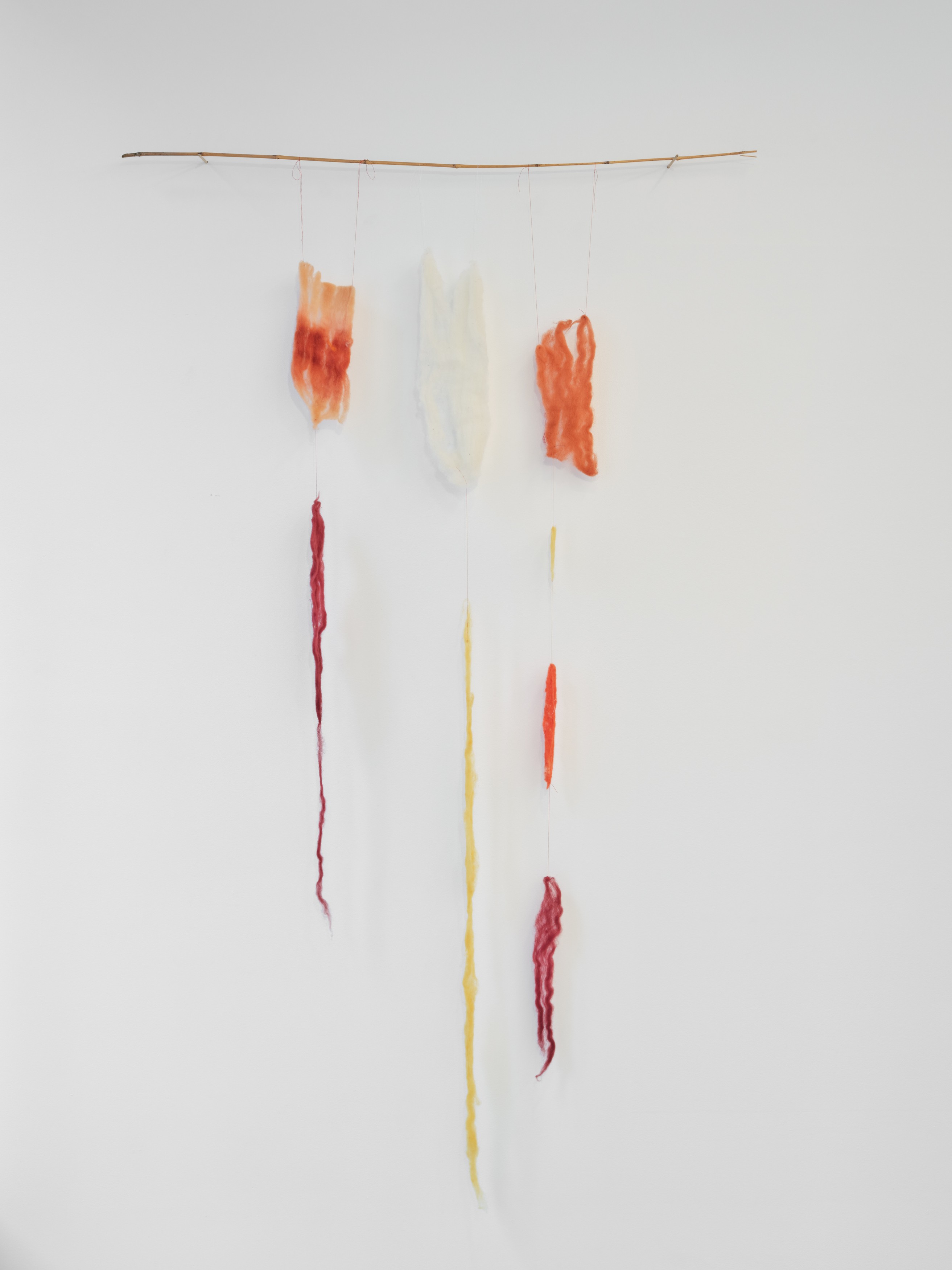
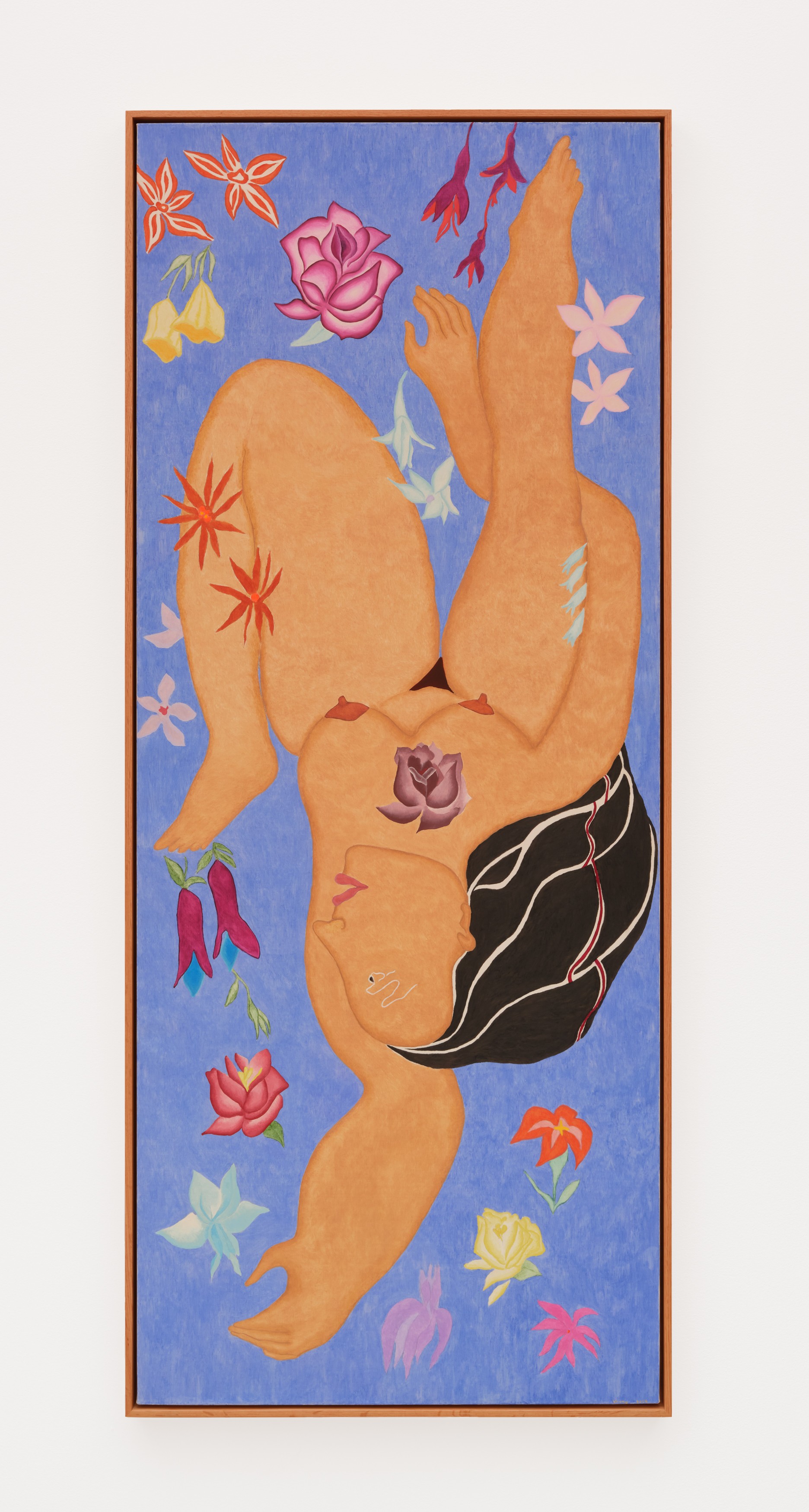
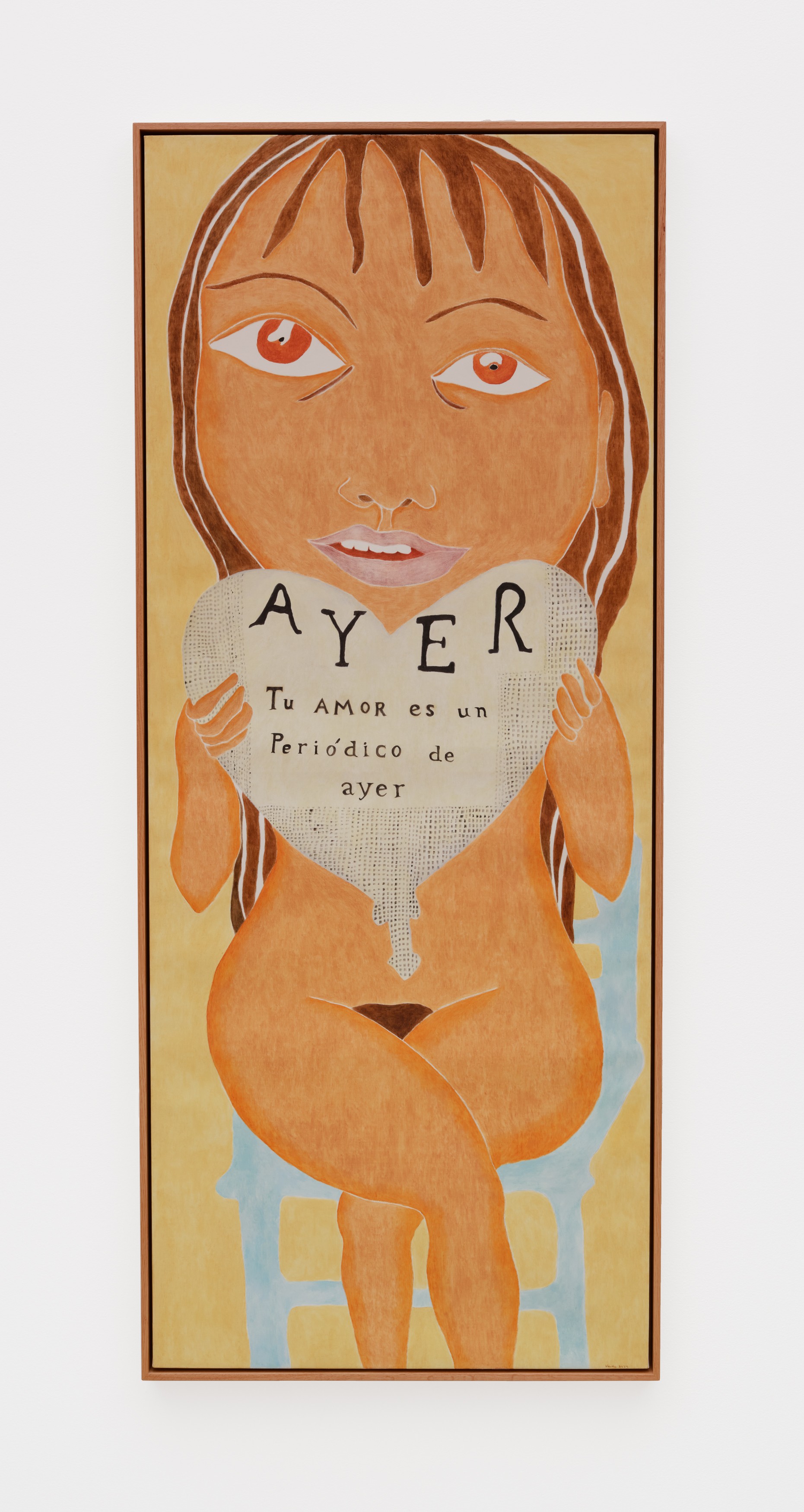
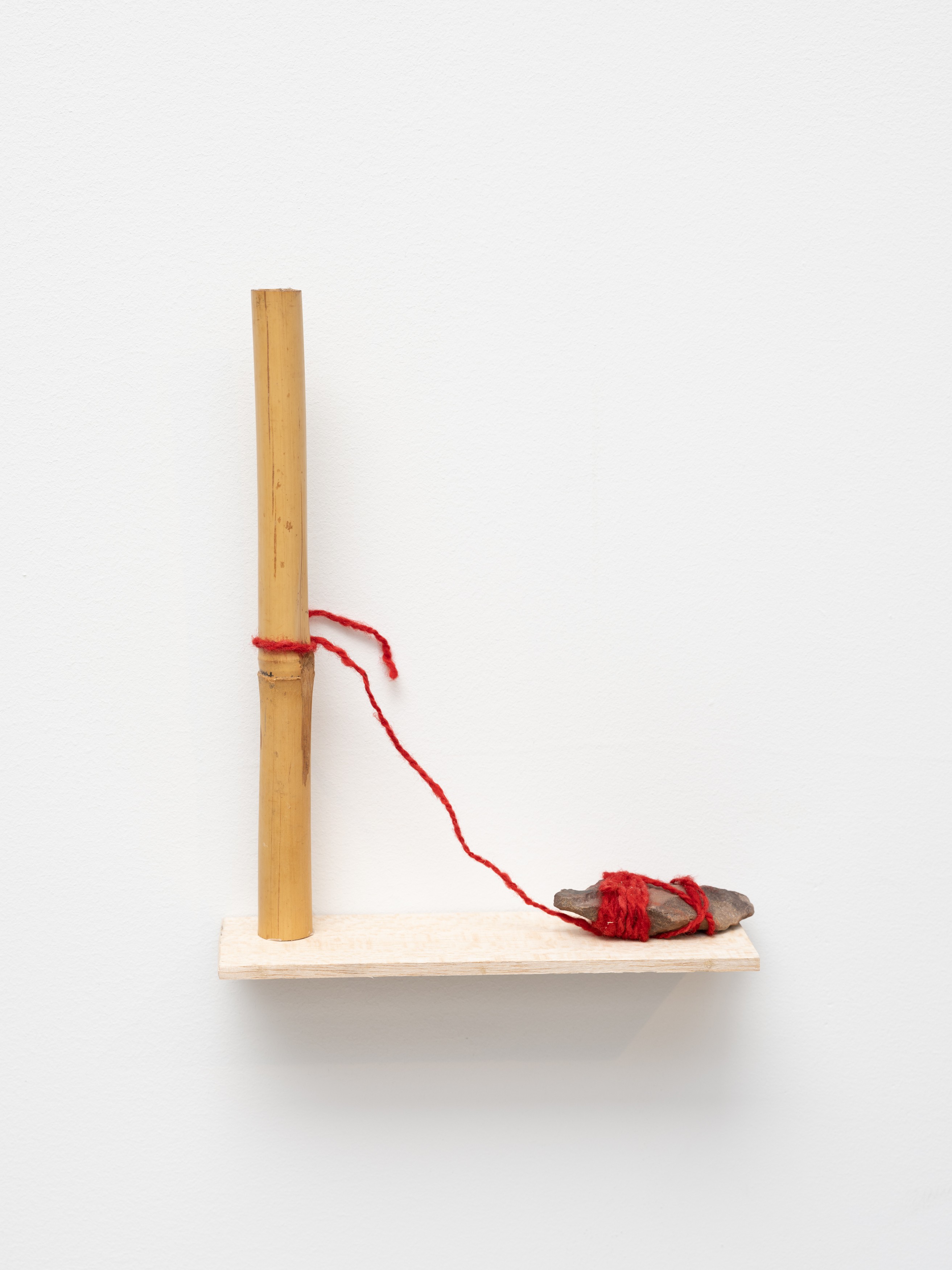
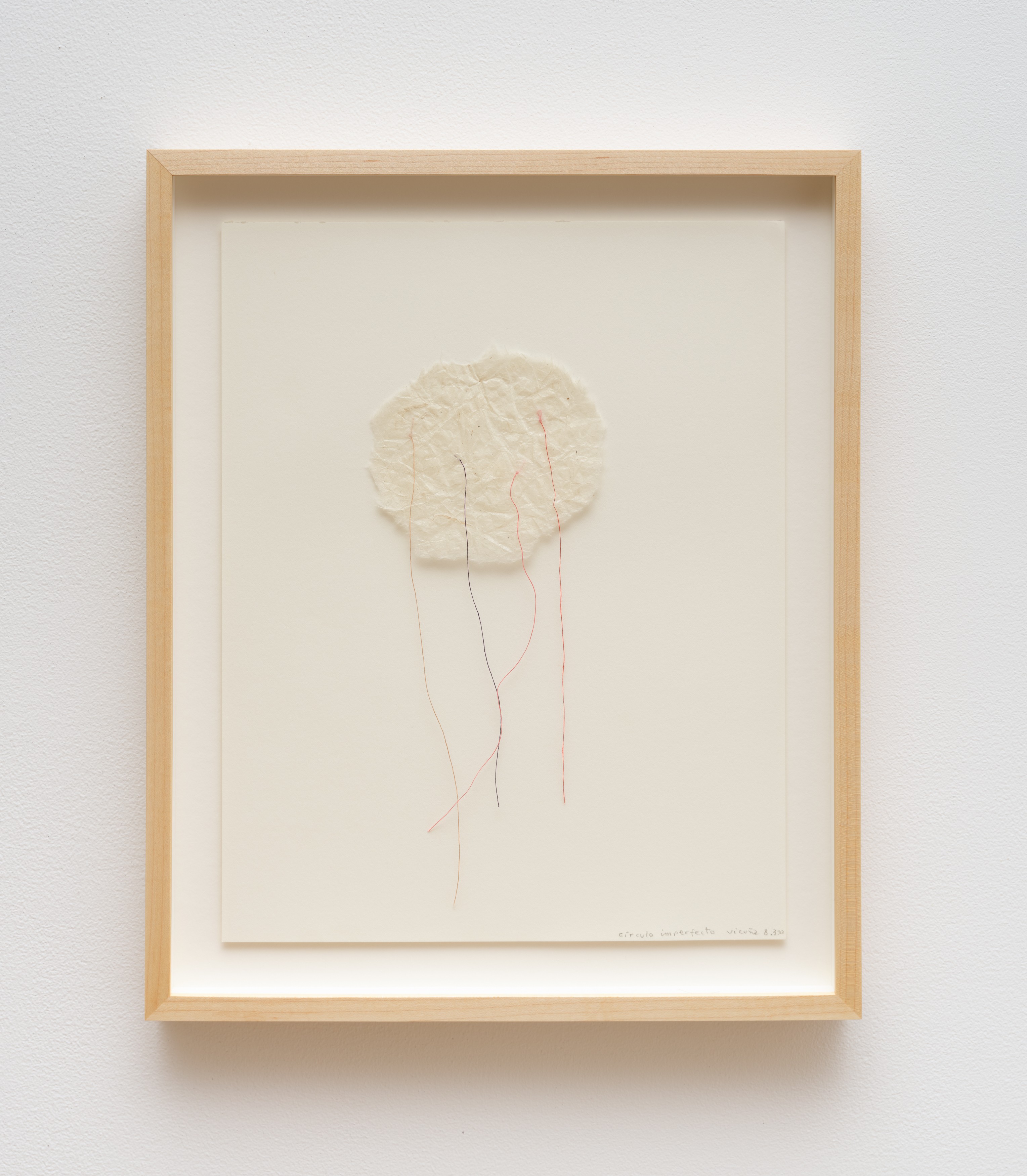
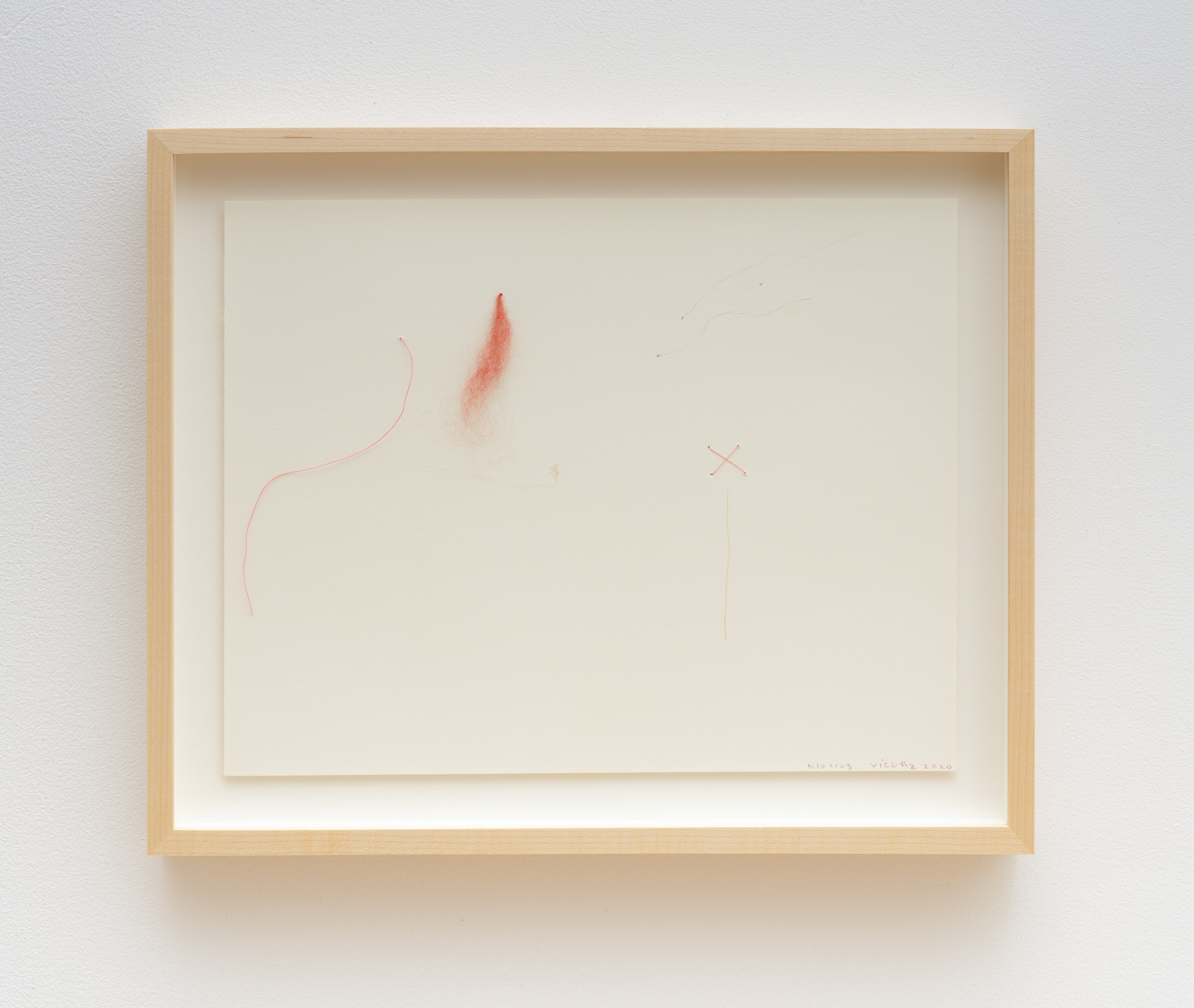
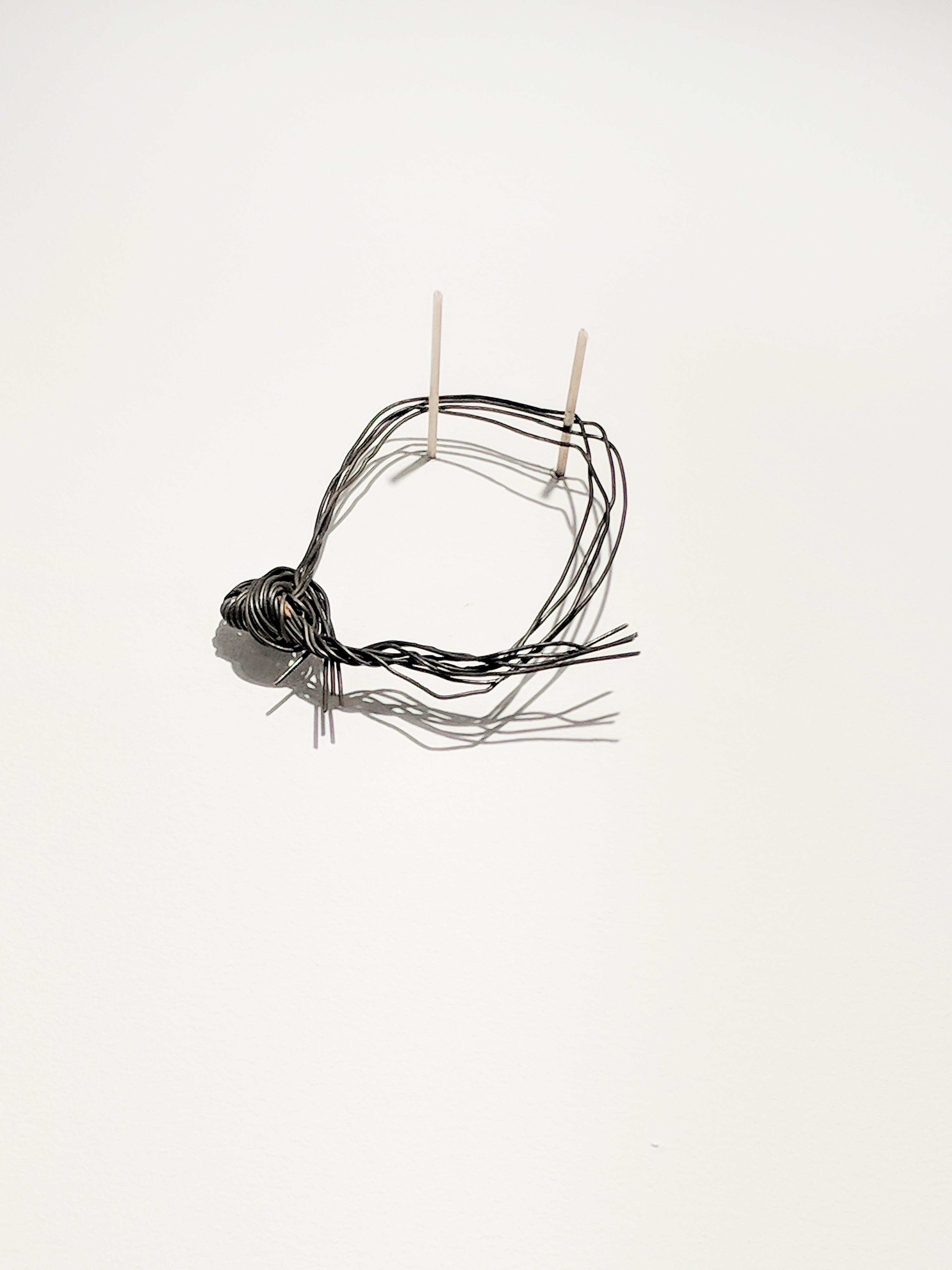
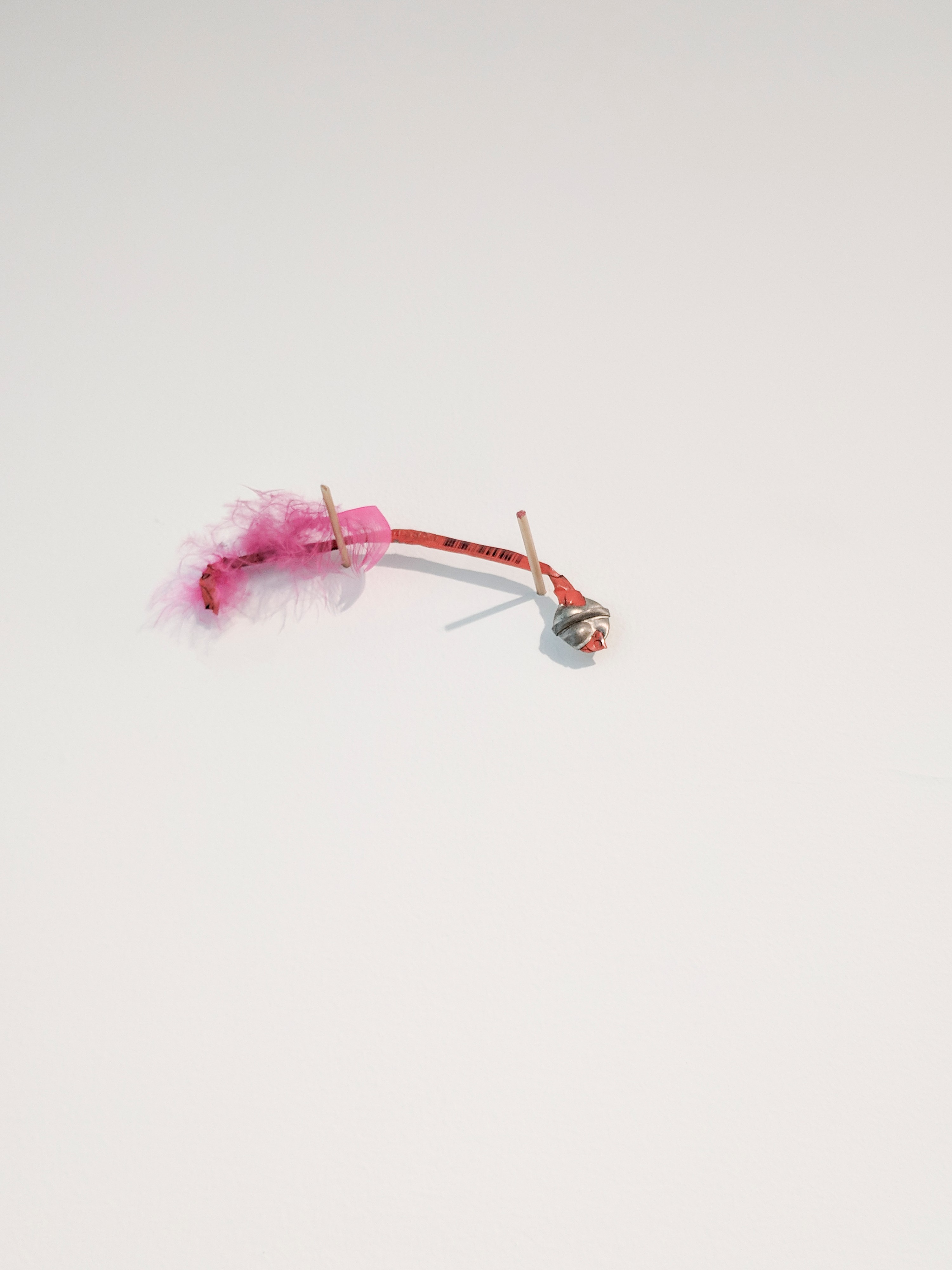
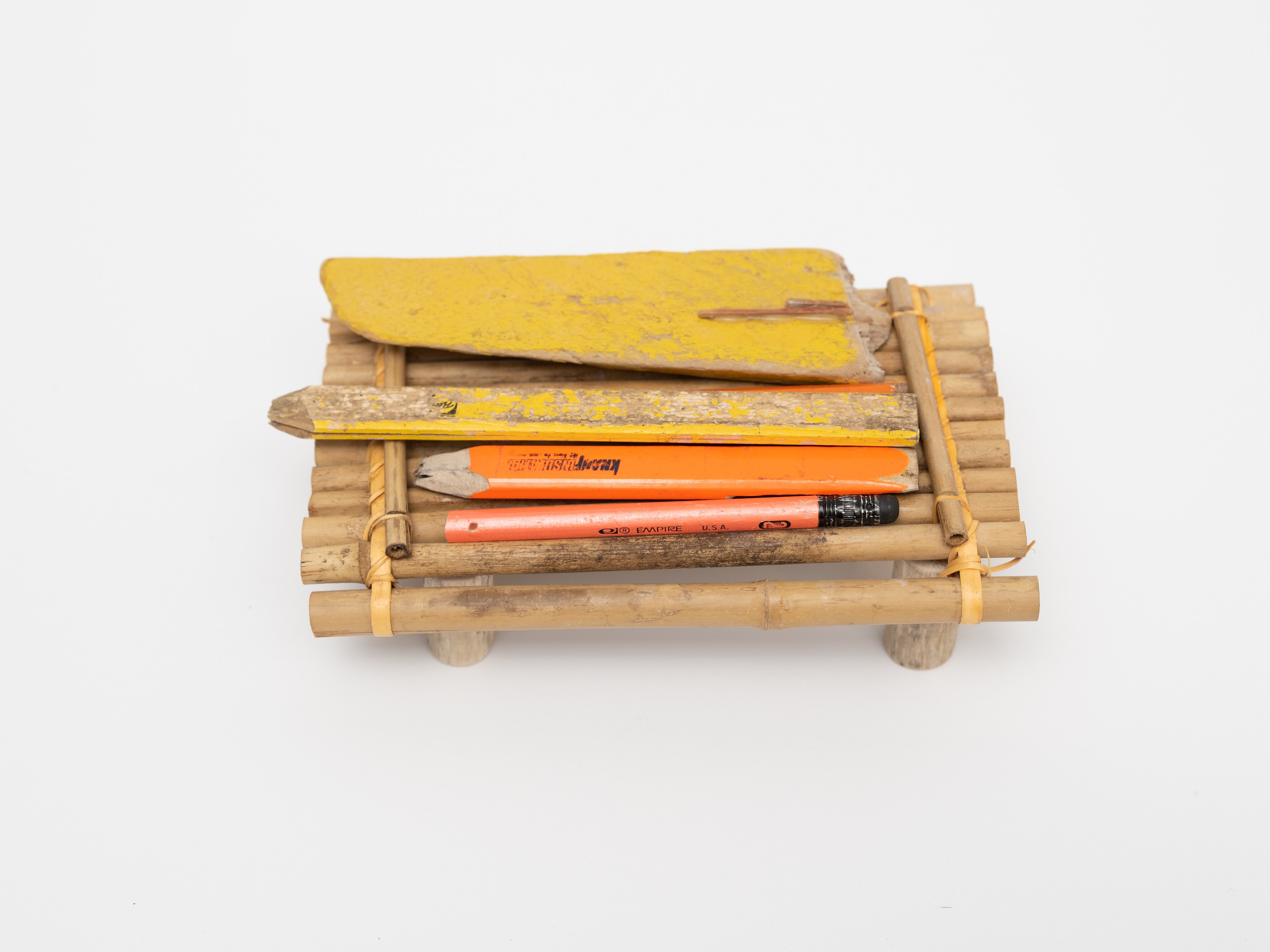
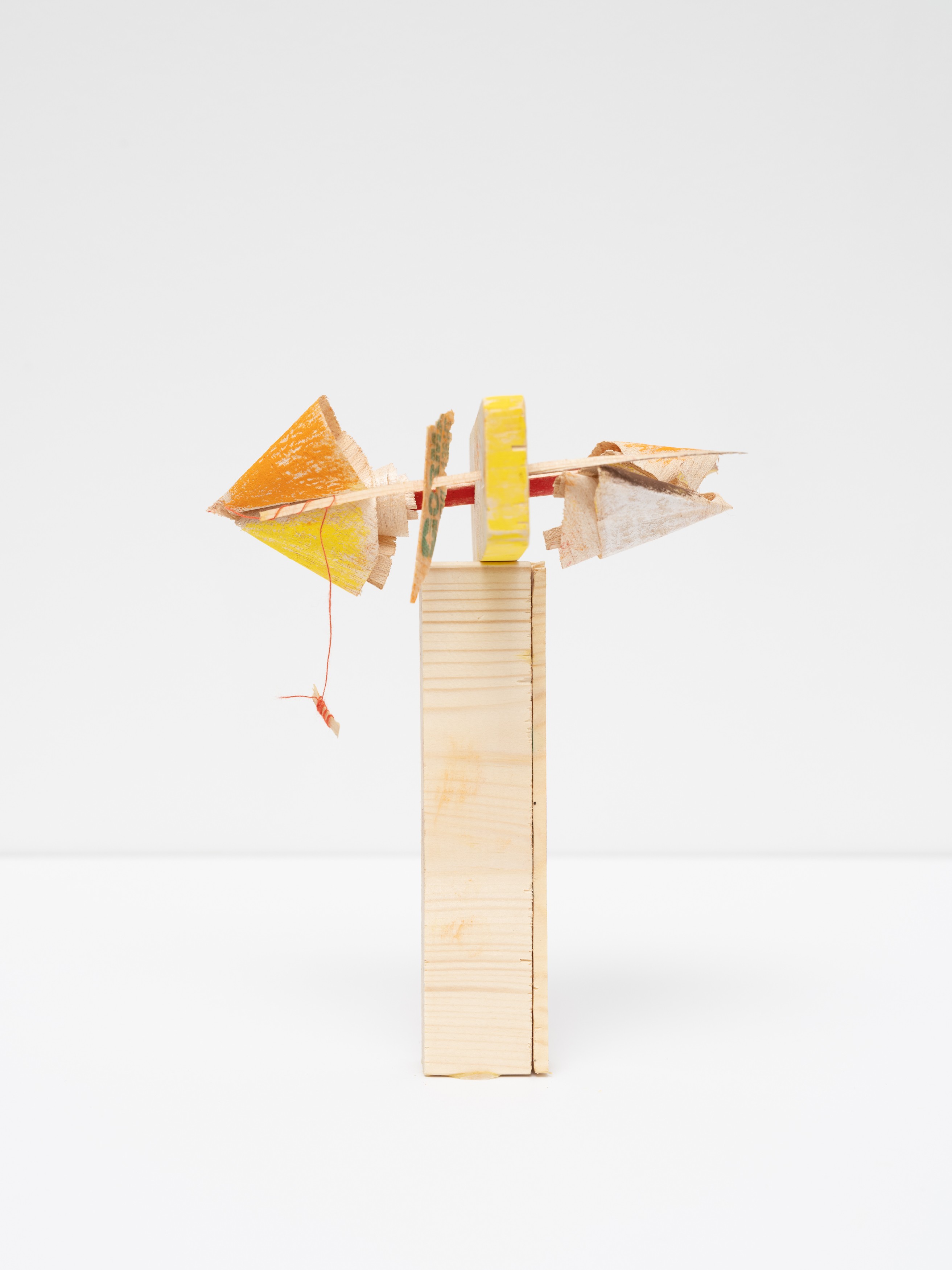
Cecilia Vicuña: union of three is rooted in the artist’s 60-year art practice of ‘precarios’ or ‘Arte Precario’—small assemblages made from discarded and fragmented materials conceptually foregrounded in ephemerality, intangibility, and evanescence. Born in 1948 in Santiago, Chile, and based in New York City, the pioneering visual artist, poet, filmmaker, and activist has focused on various political issues, from the fascist Pinochet era of Chile to the present environmental destruction. Cecilia Vicuña: union of three presents a selection of ‘precario’ and quipu sculptures, including her monumental Quipu Desaparecido 2 / Disappeared Quipu 2 (2018) and Balsa Snake Raft to Escape the Flood (2017), alongside films, texts, and sound.
The core of Cecilia Vicuña: union of three rests in Vicuña’s humble act of ‘precarios,’ where she wove into the wet sand of the beach with sticks and debris in Con cón, Chile. Her physical prayer transformed into evocations of memory and actions of the minutiae, which hold the possibility of what was, is, and could be. Vicuña’s conceptual gesture foregrounded the vulnerability of contemporary political situations through overlooked detritus materials. This action introduced notions of interconnectedness by embracing organic trash forms and revaluing them with meaning.
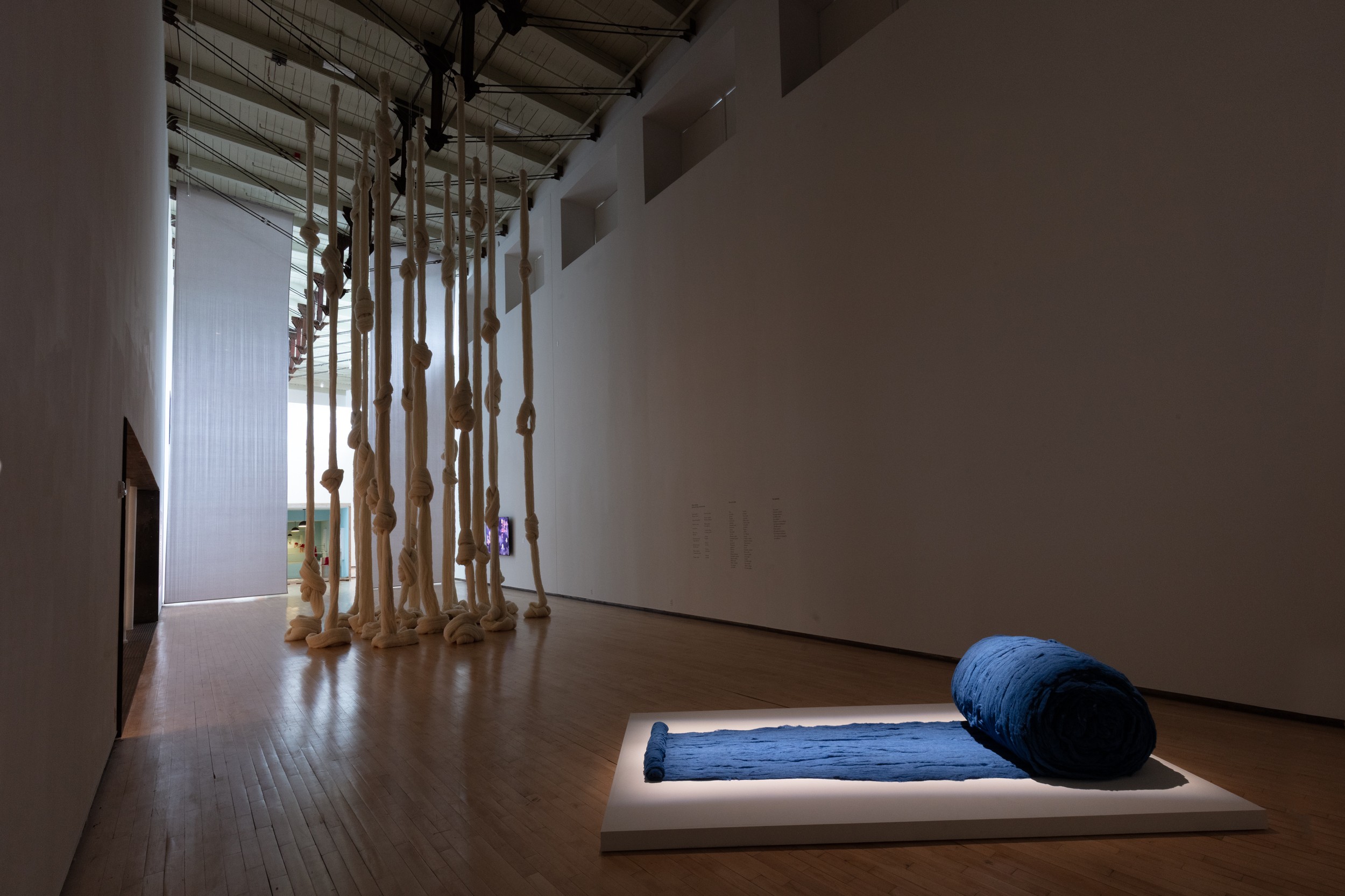
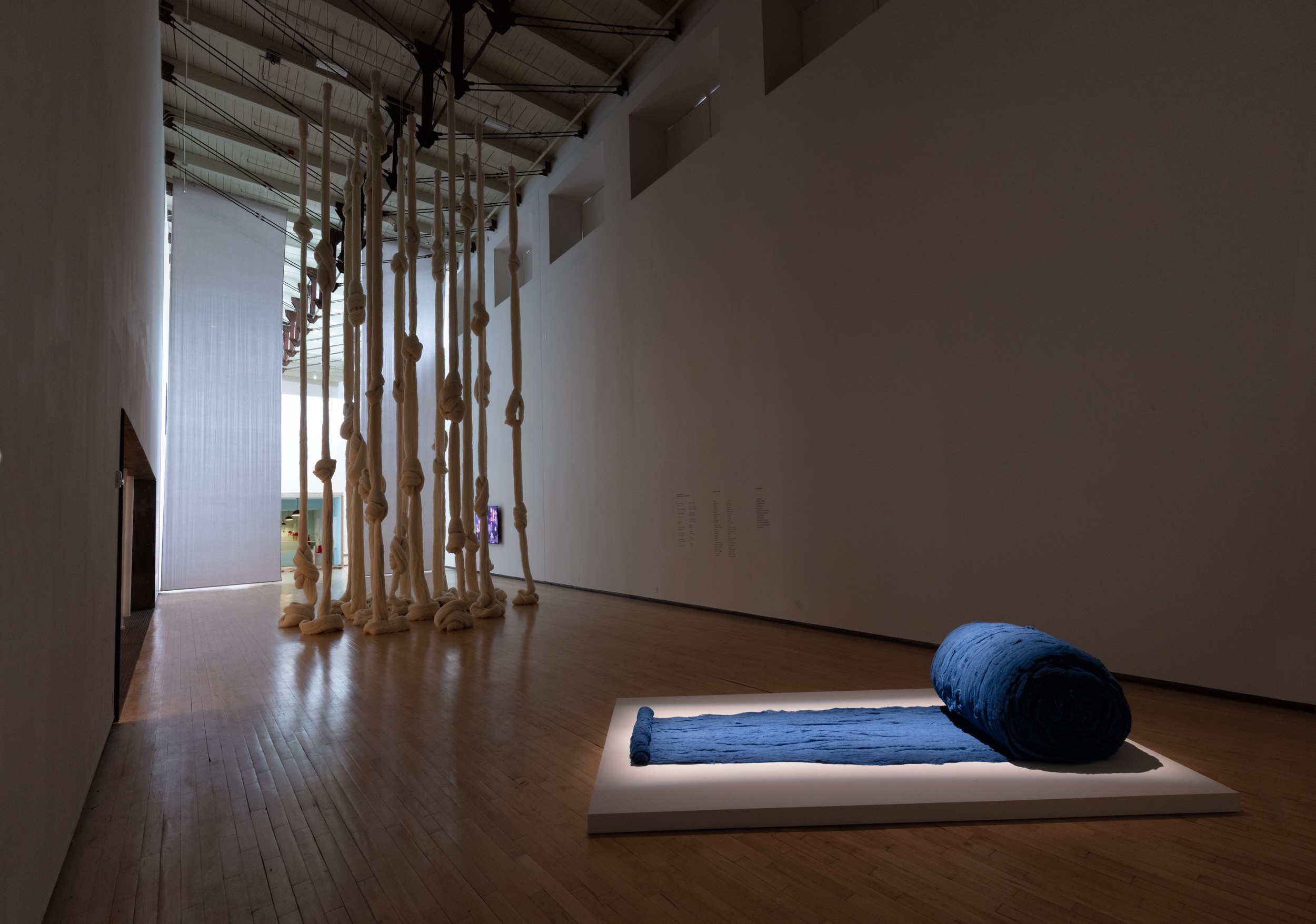
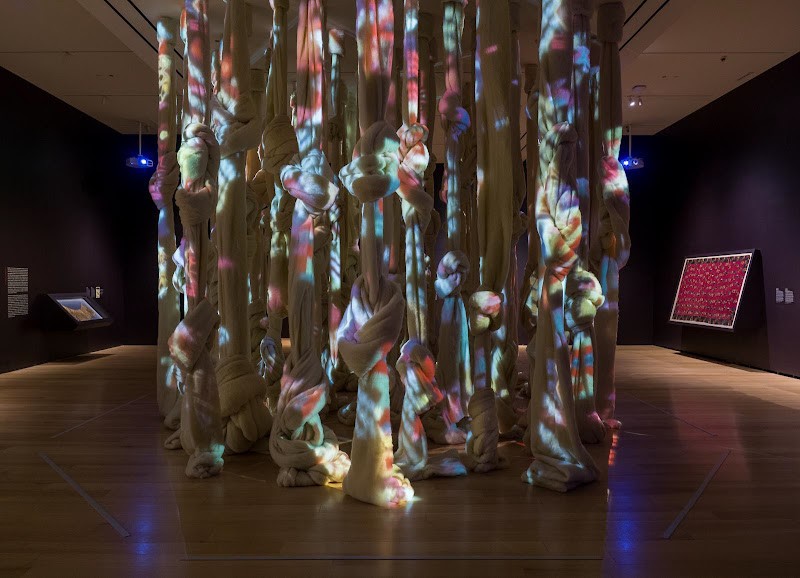
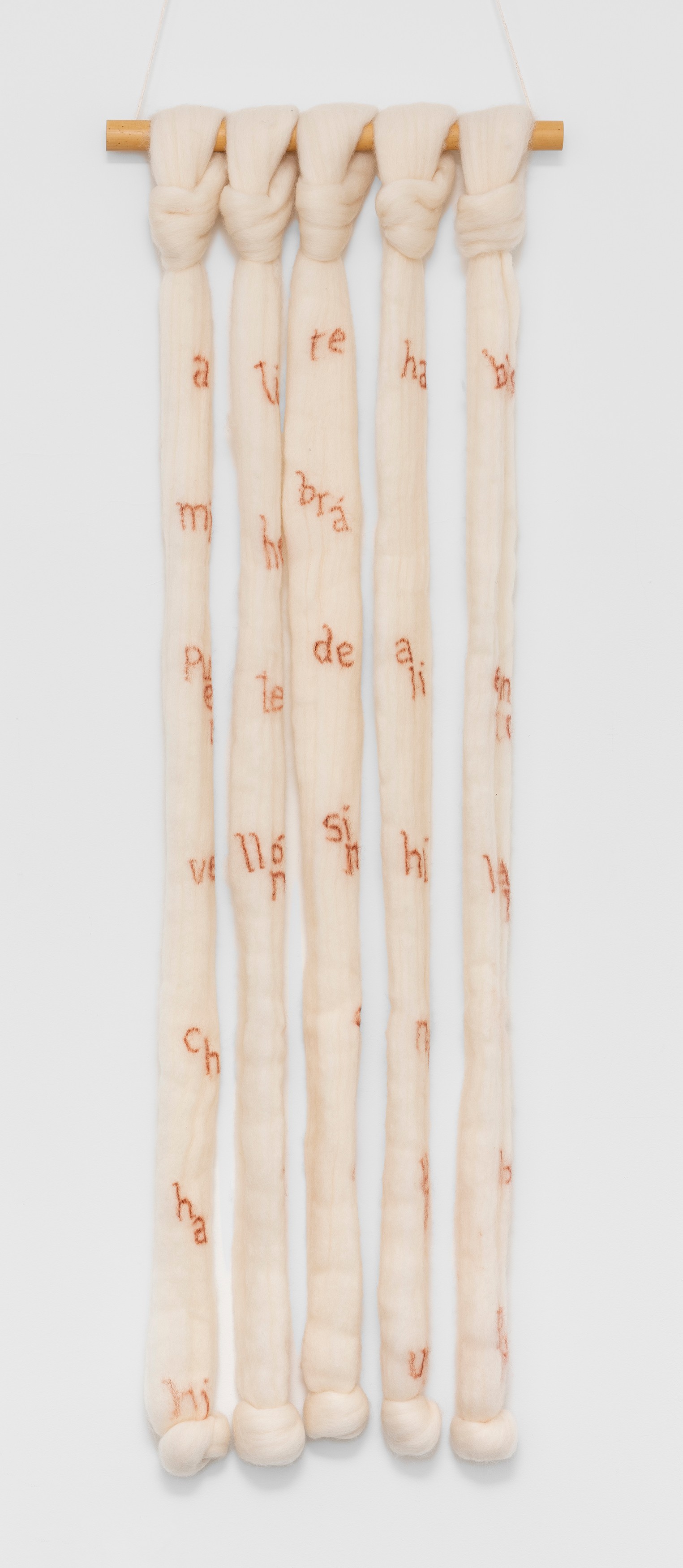
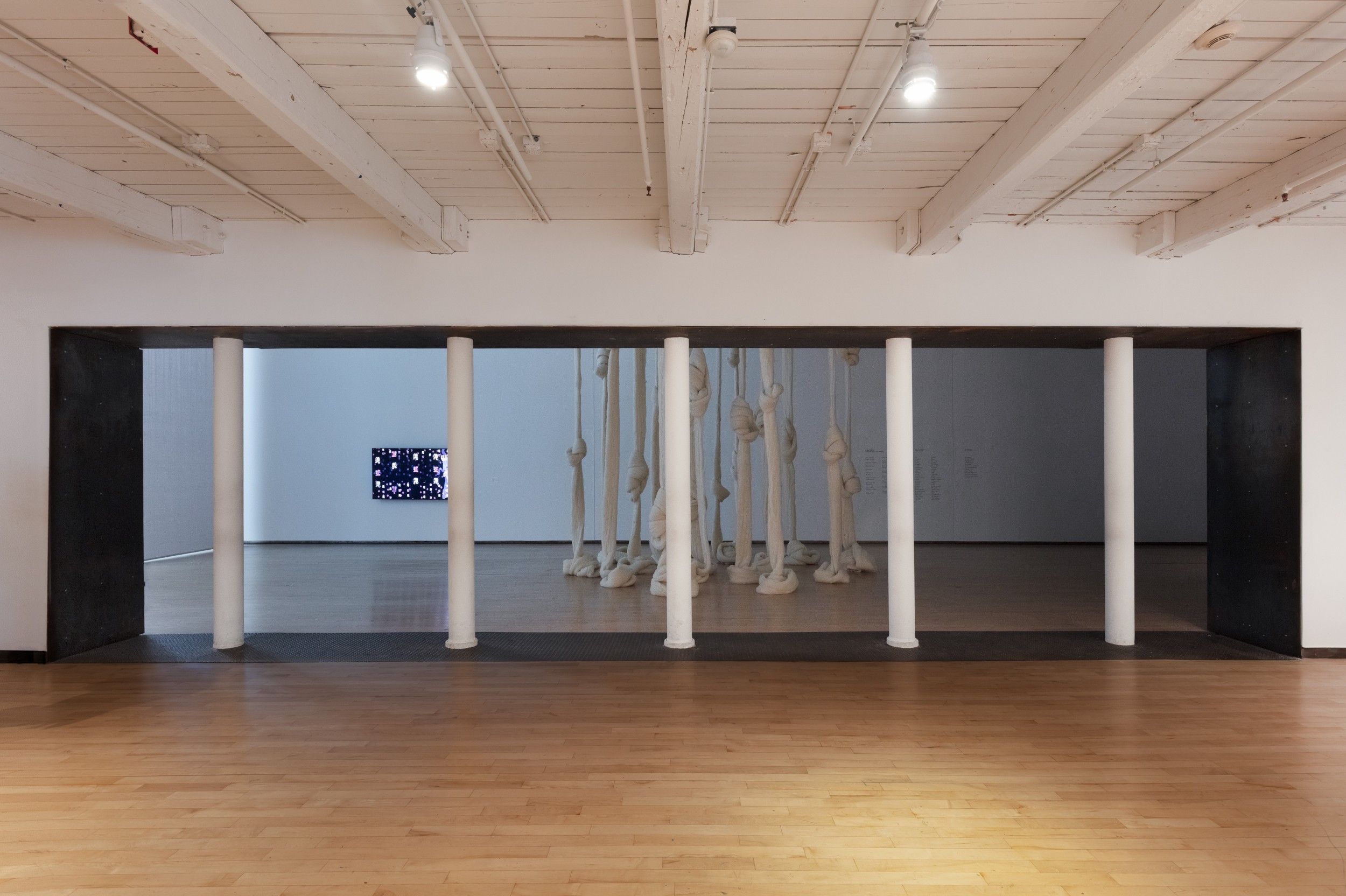
Much of Vicuña’s practice has channeled Andean epistemology, histories, and knowledge of reciprocal love and wisdom in relation to the environment. Vicuña’s Quipu Desaparecido 2 / Disappeared Quipu 2 (2018), an installation of natural white unspun wool with sound and video, consists of the artist’s chants, poems, and photographic imagery of Andean textiles spanning fourteen hundred years selected by Vicuña from the Brooklyn Museum and Museum of Fine Arts Boston’s Andean textile Collections. This work is part of the series “quipus for the future,” which honors Andean culture and resilience against colonialism. Historically, the quipu was an ancient Andean communication device made of knotted spun string used to record the everyday history, data, and narratives of Indigenous societies. Forbidden and, at times, destroyed by Spanish colonial rule, the quipus persevered in secret as a fugitive act of resistance to colonialism’s domination and violence.