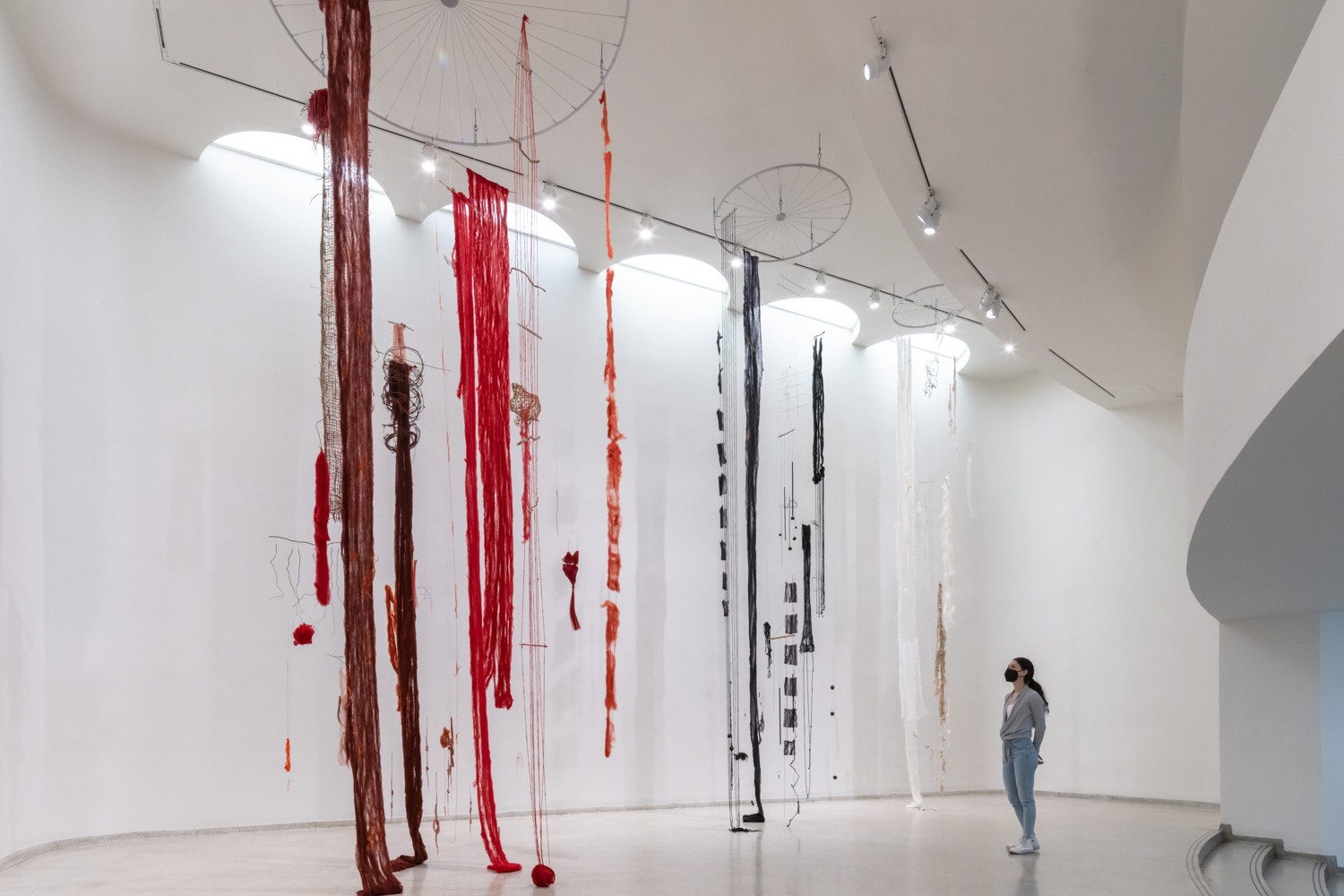
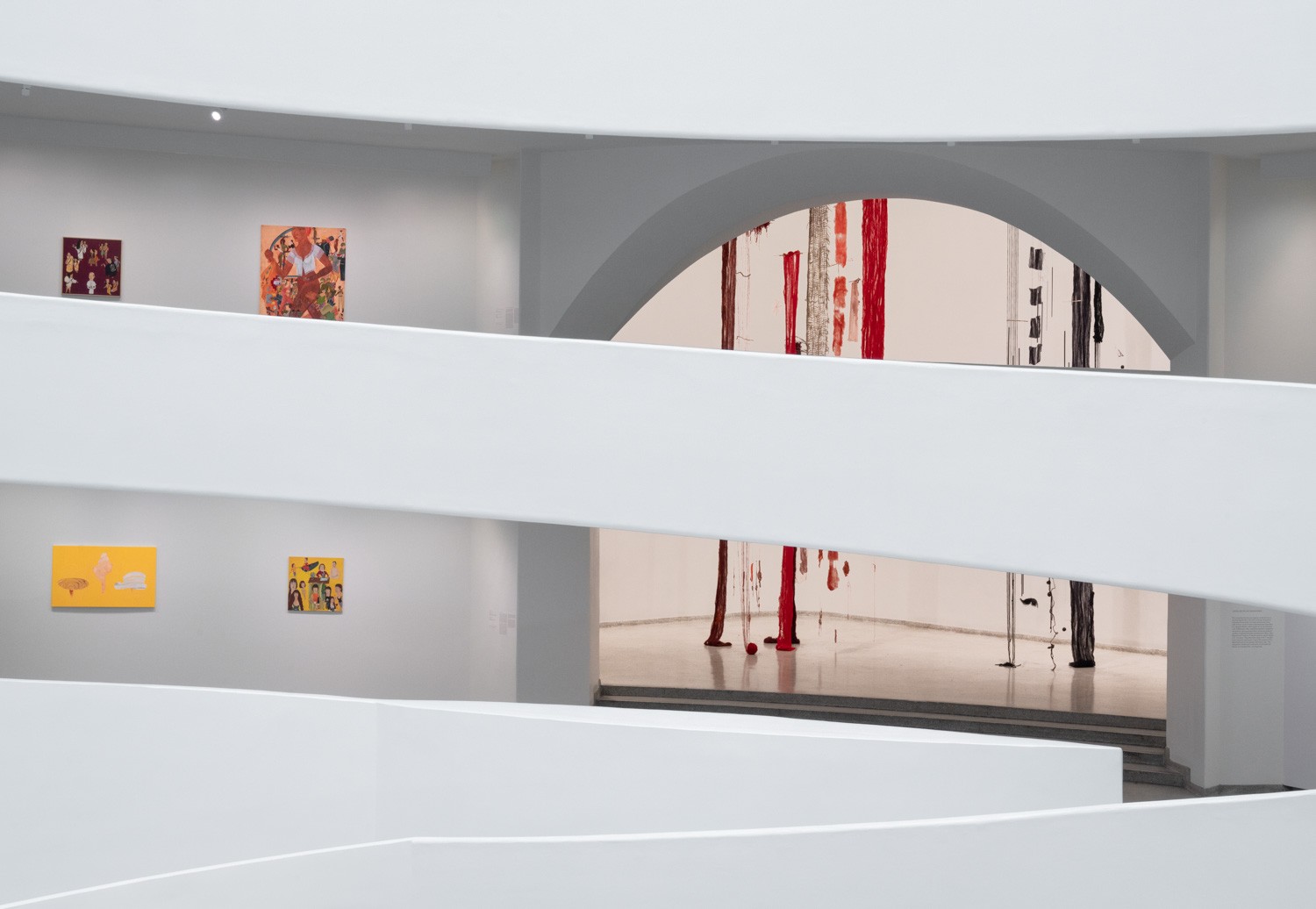
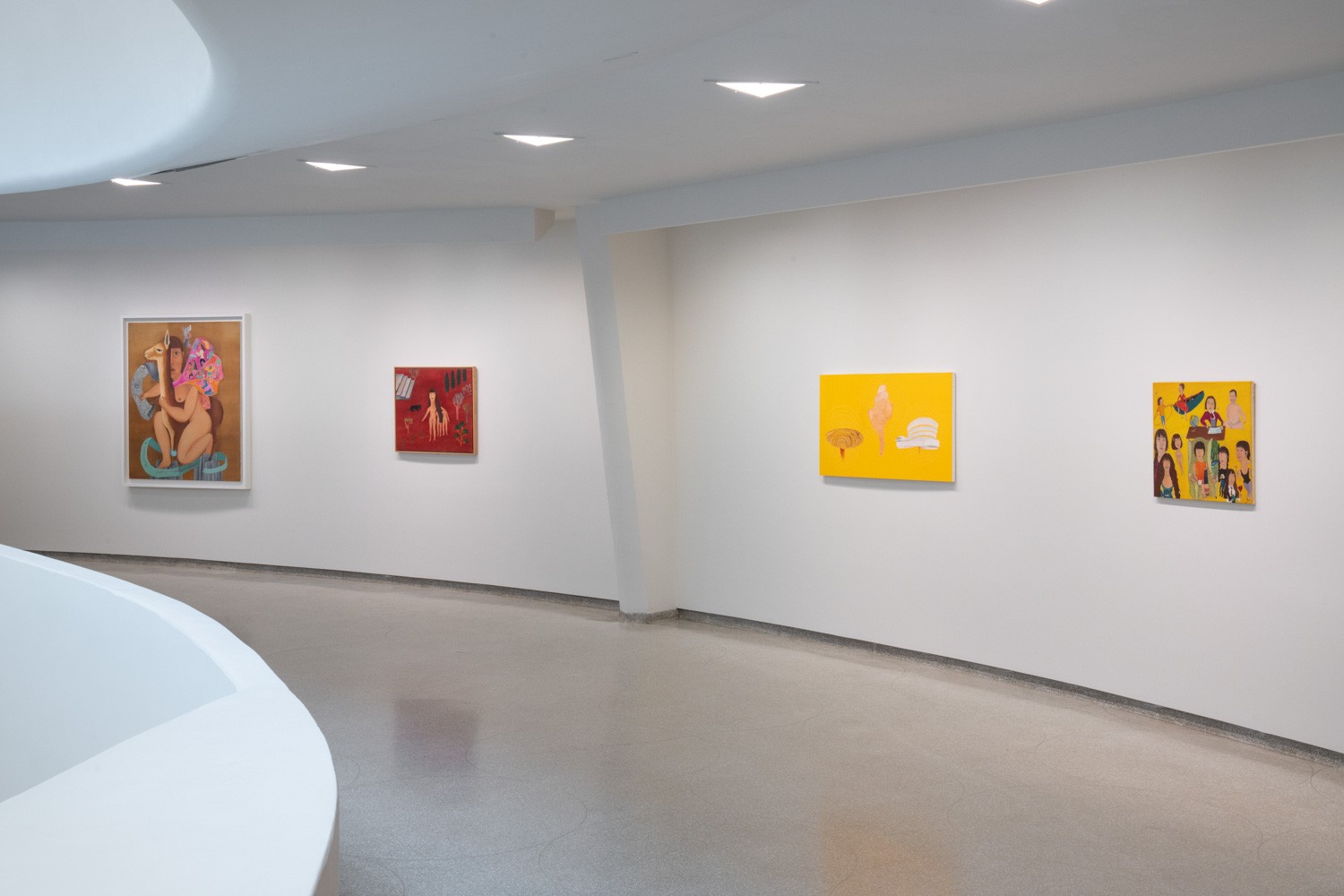
Cecilia Vicuña: Spin Spin Triangulene was the first solo exhibition in a New York museum for the pioneering contemporary Chilean artist, poet, activist, and filmmaker Cecilia Vicuña (b. 1948, Santiago). Showcasing Vicuña’s artistic production from the late 1960s to today, this exhibition featured the breadth of her multidisciplinary practice, including paintings, works on paper, textiles, films, a site-specific Quipu (Knot) installation, a one-time performance of a “living” Quipu, and new paintings and works on paper created specifically for this presentation. The title Spin Spin Triangulene is a poetic creation based on new scientific discoveries that the artist relates to the Guggenheim’s spiral rotunda and the quipu, to stress the connection between science and Indigenous knowledge Vicuña has observed since her early encounter with cybernetics as a young student in Chile.
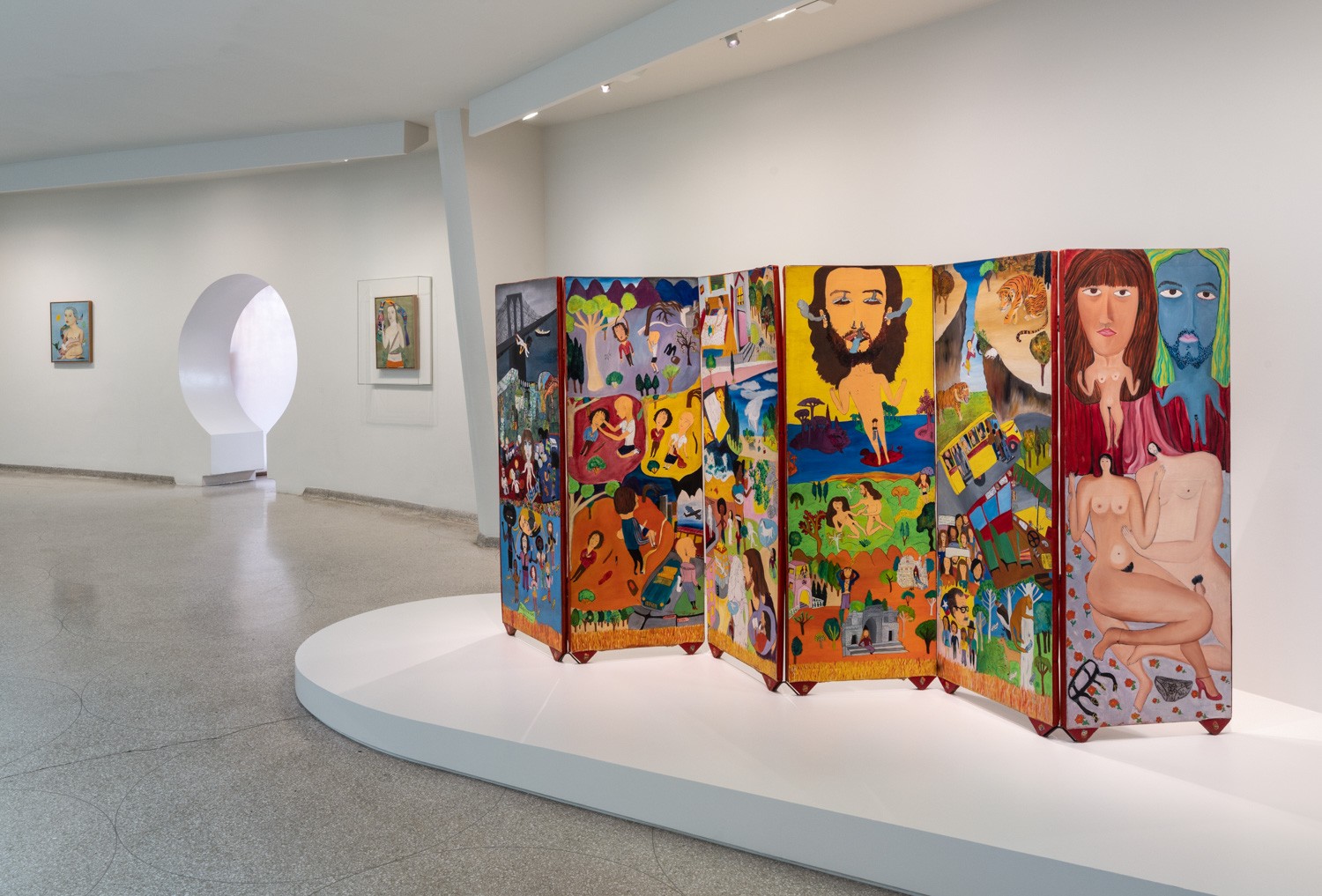
Vicuña explores themes of memory, language, science, and Indigenous spirituality and knowledge across her practice. Her early figurative paintings in this exhibition were conceived as a decolonizing act to subvert the oil tradition imposed on Indigenous culture by the European conquest. These works interweave her biography with the story of the rise of socialism. Following the 1973 Chilean military coup that ushered in the dictatorship of Augusto Pinochet, Vicuña self-exiled in London, settling in New York City in 1980. As the political activism of her art intensified, revolutionary icons and influences—ranging from Karl Marx and Chilean folk singer and social activist Violeta Parra, to Andean popular art, animism, and Indigeneity— became poignant symbols of what was under attack. Also on view in textiles, film, and works on paper were Vicuña’s language-based Palabrarmas, or “word weapons,” which are politically engaged, metaphorical riddles and poems displaying her conception of language as a living entity.
塞西莉亞·維庫納
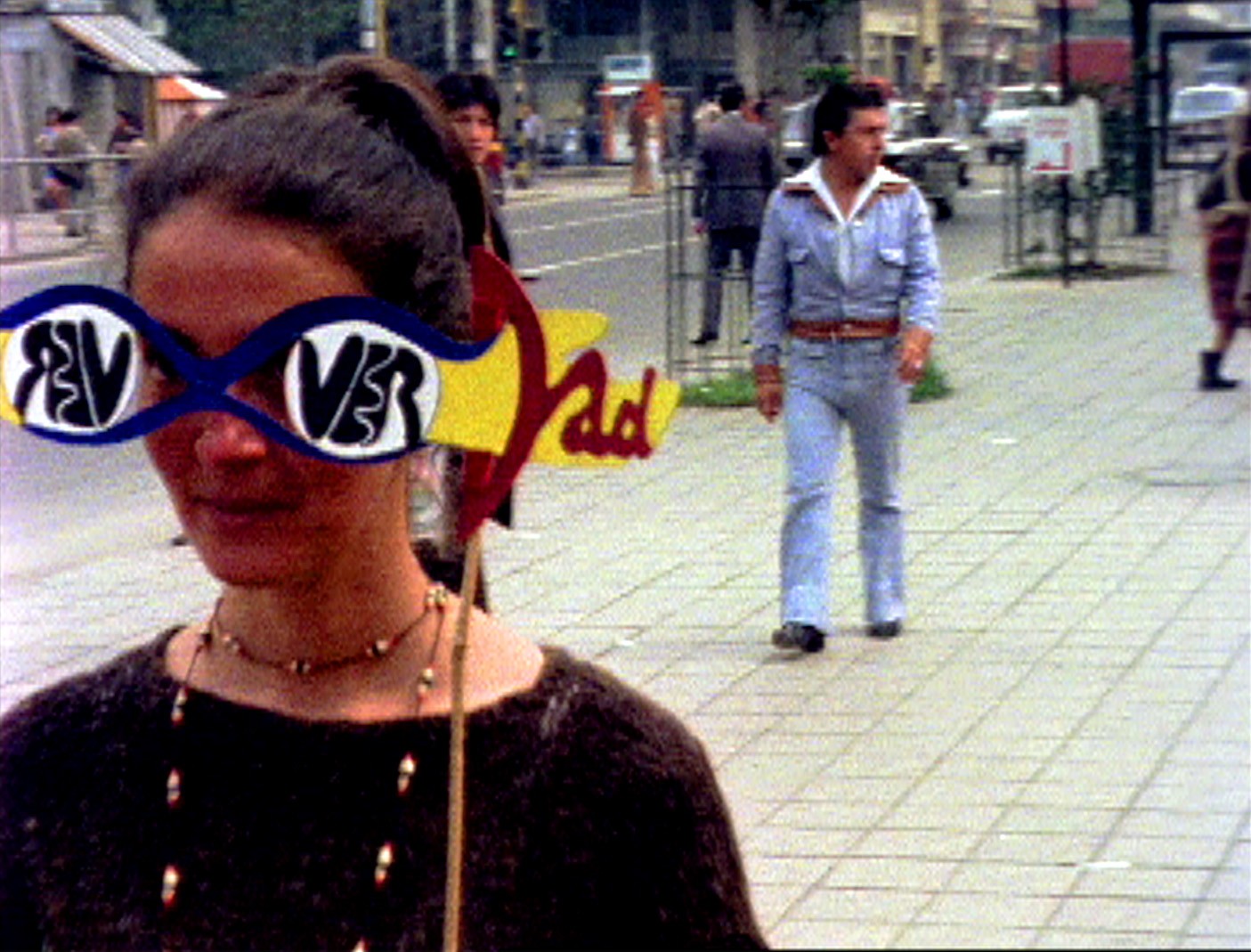
Sol y dar y dad: Una palabra bailada (Solidarity: To Give and Give Sun), 1980
塞西莉亞·維庫納
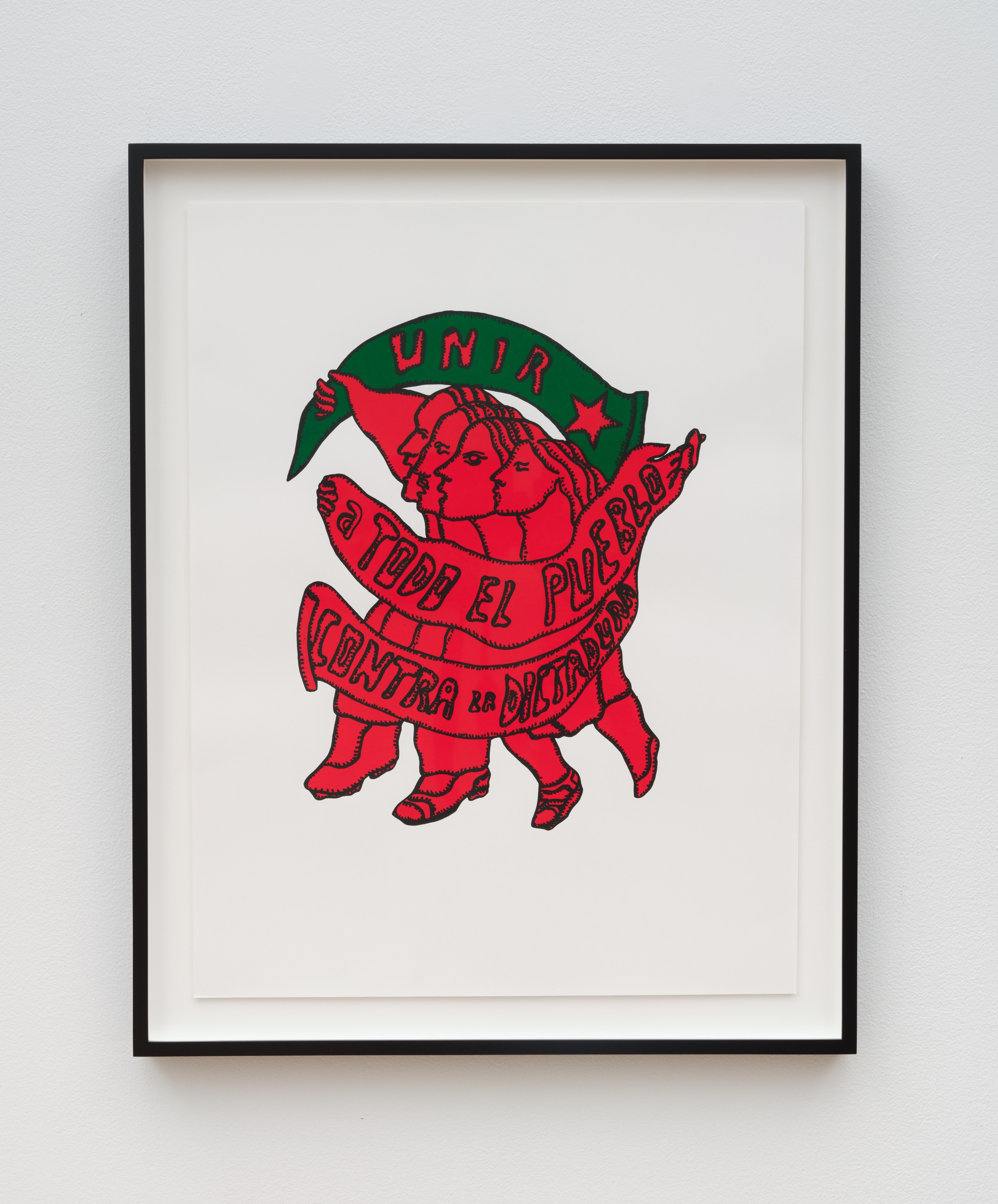
Unir a todo el pueblo contra la dictadura (Unite All the People against the Dictatorship), 1978/2020