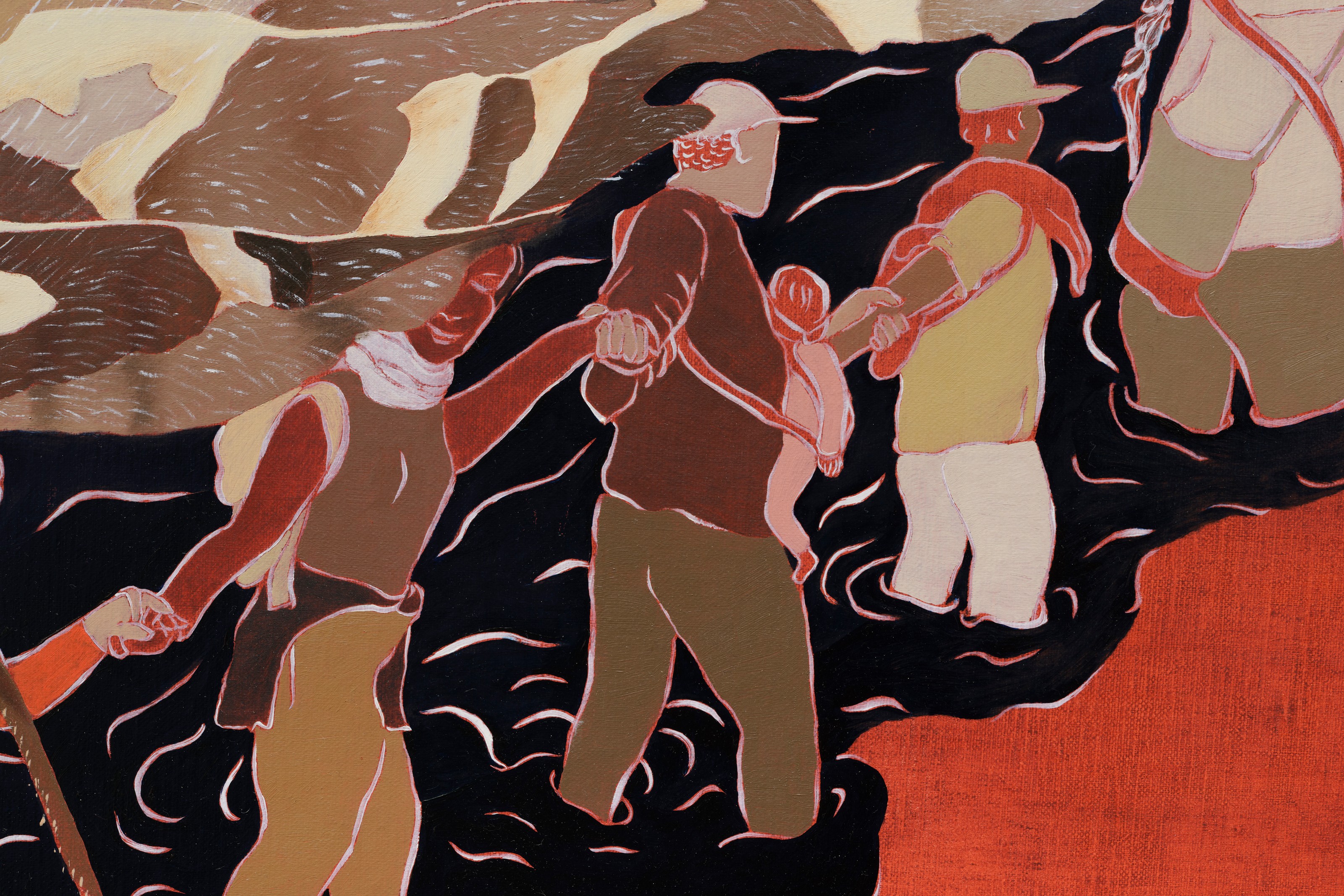
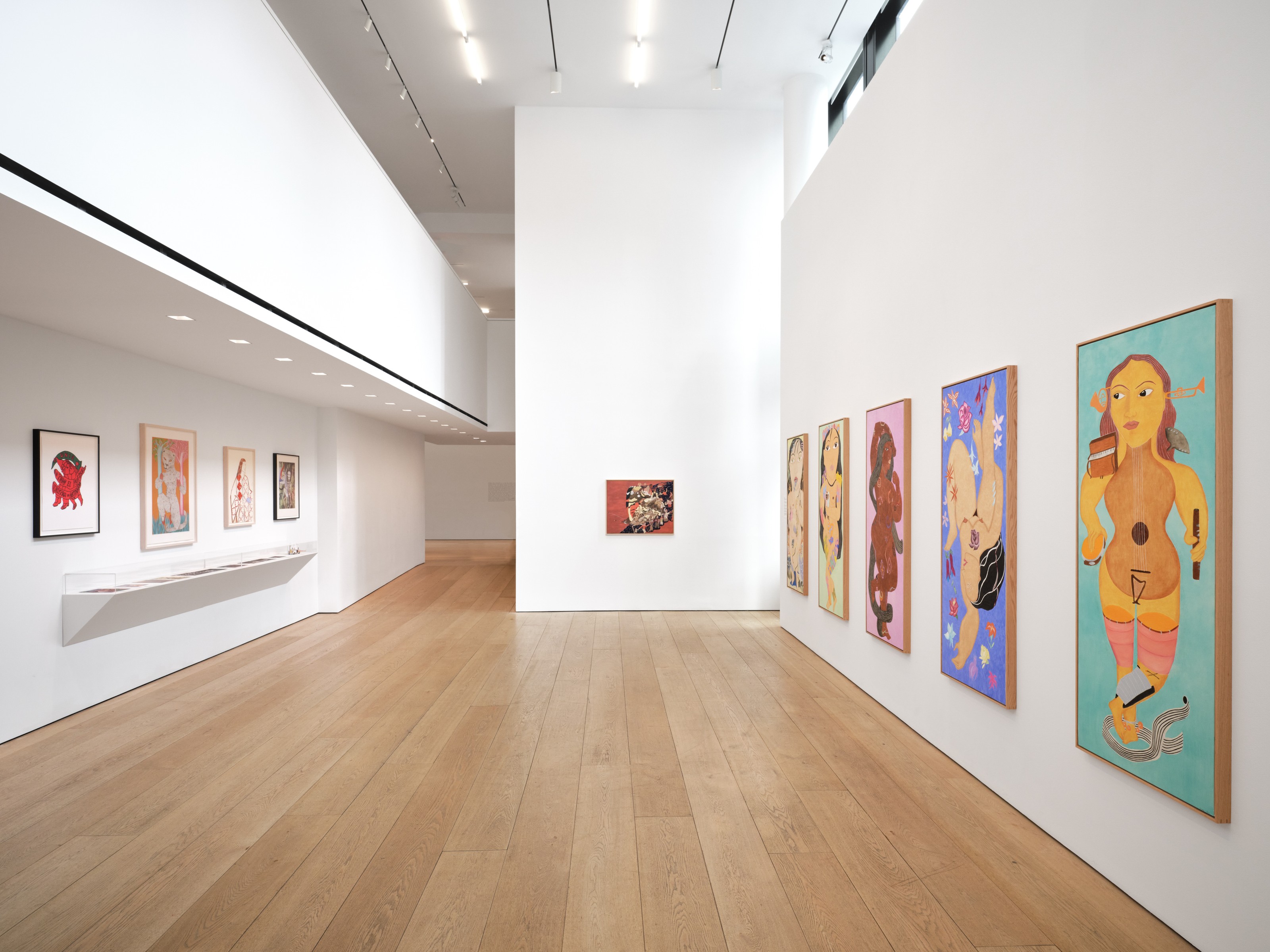
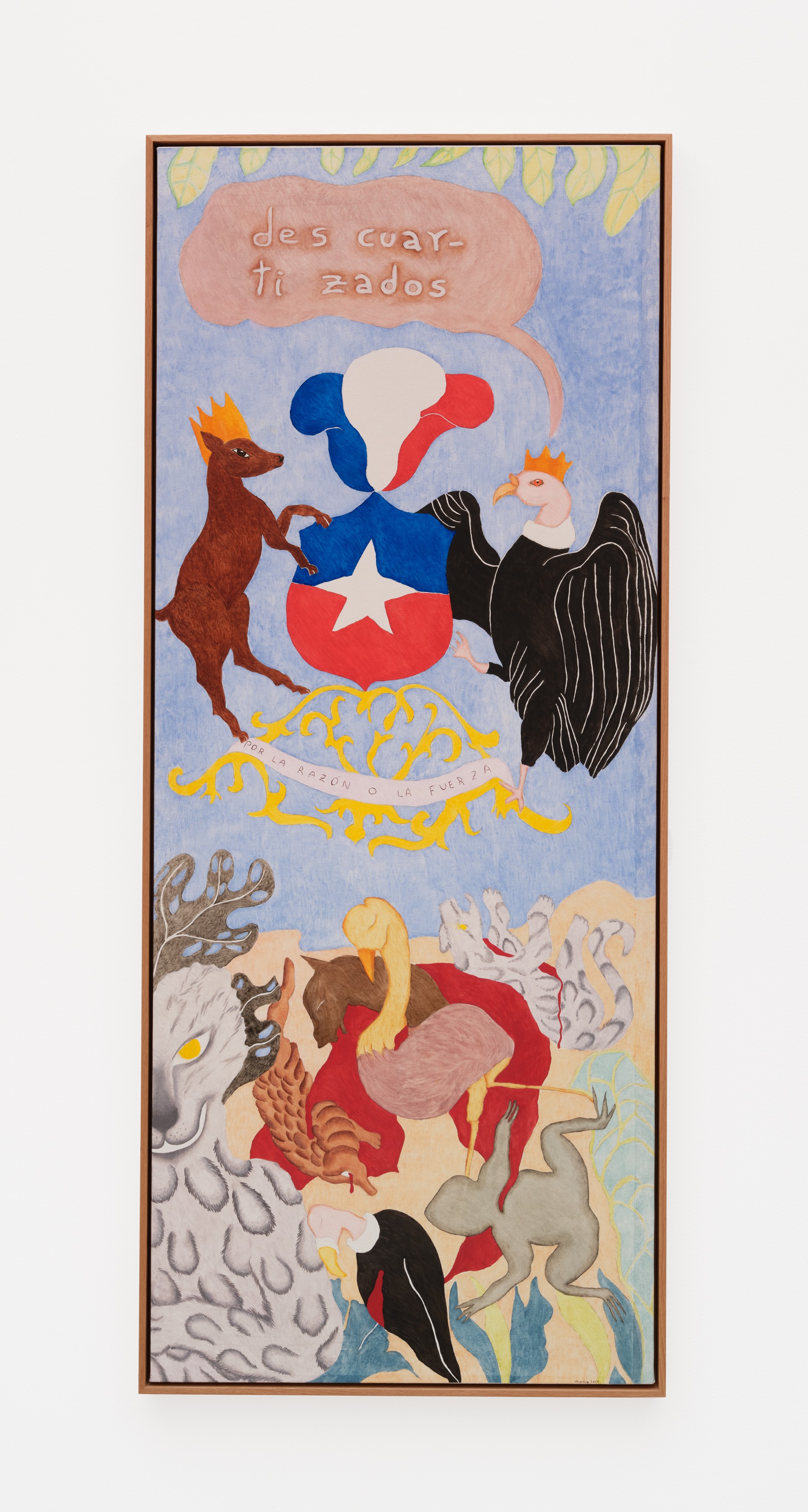
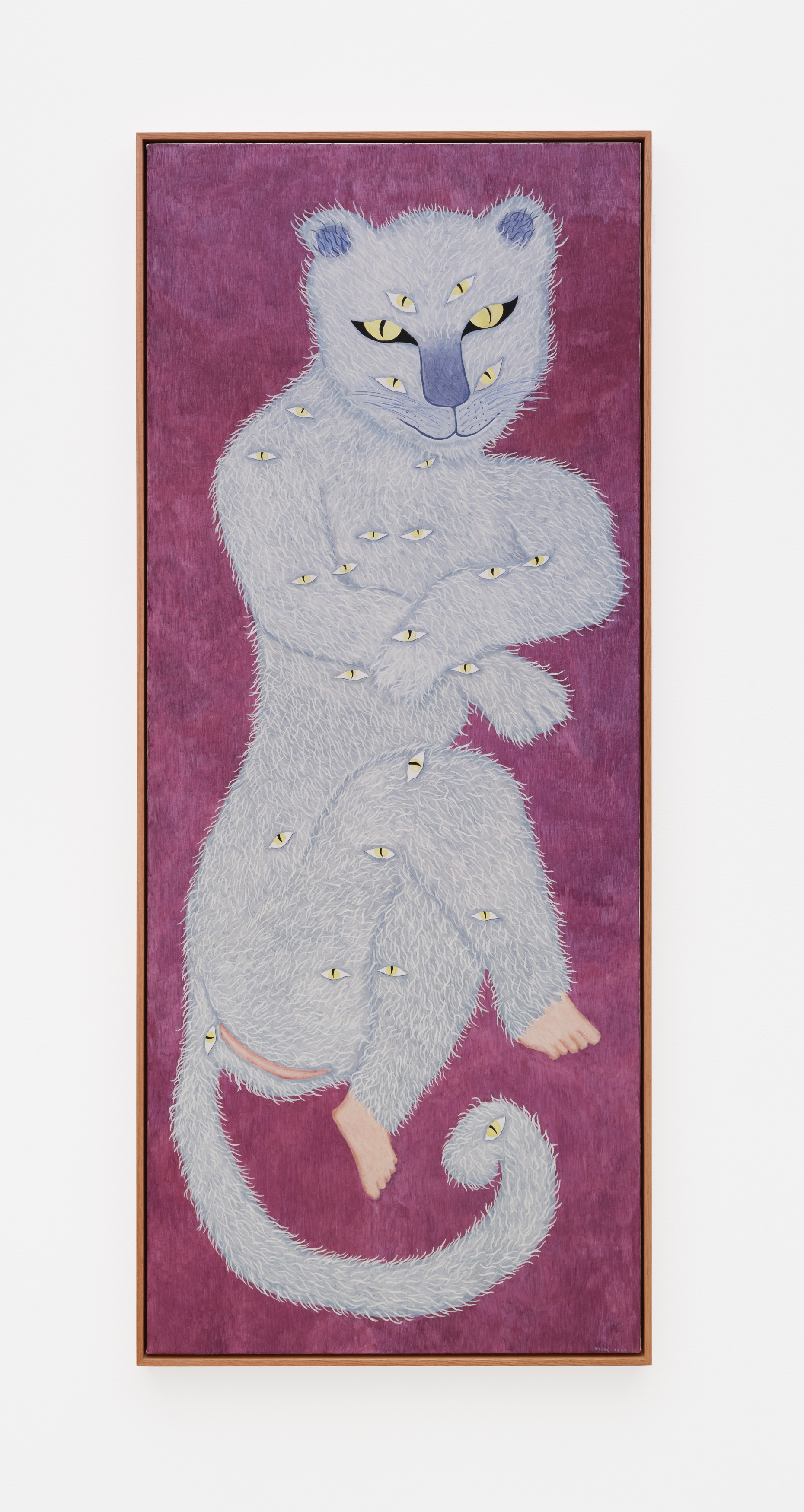
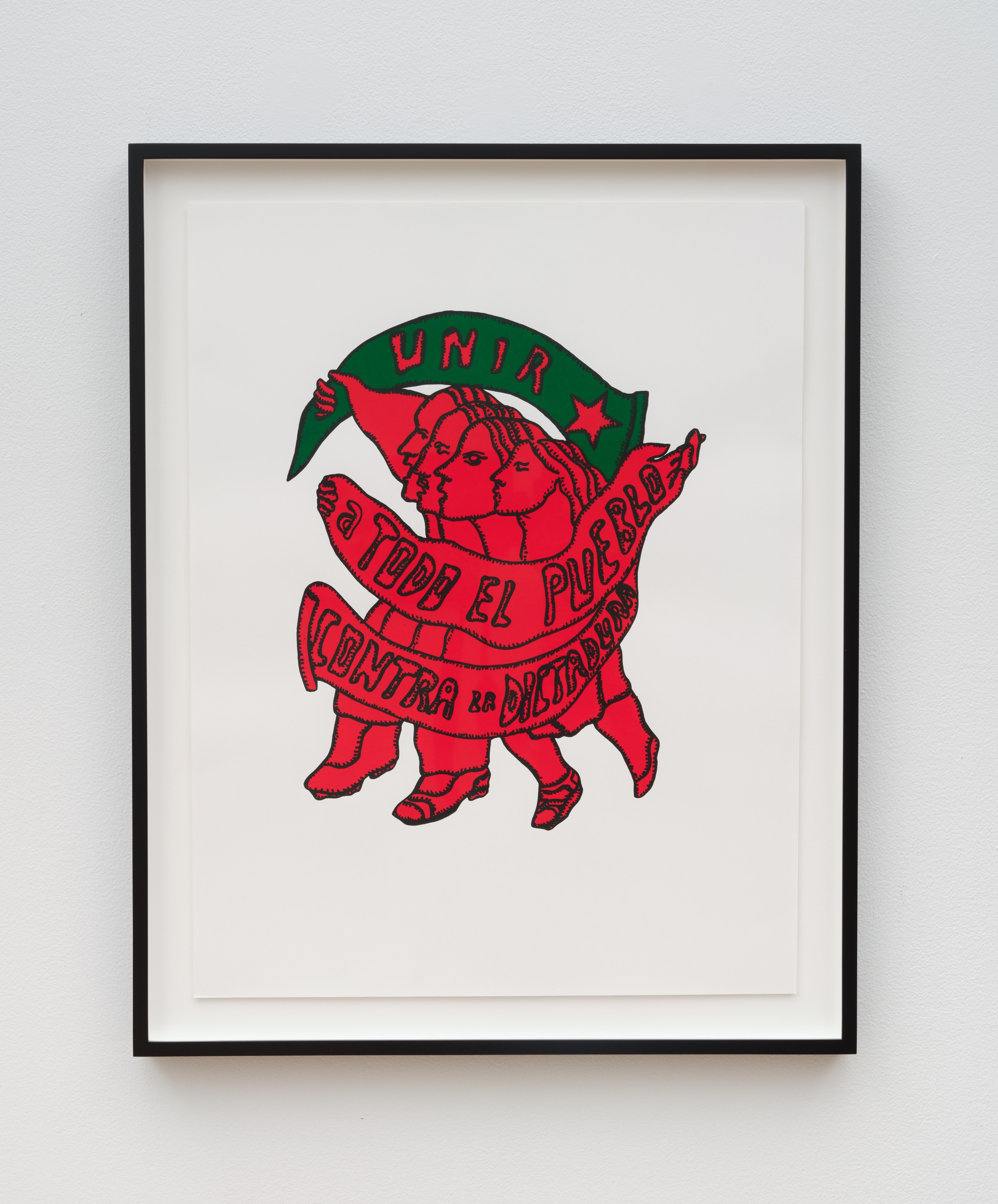
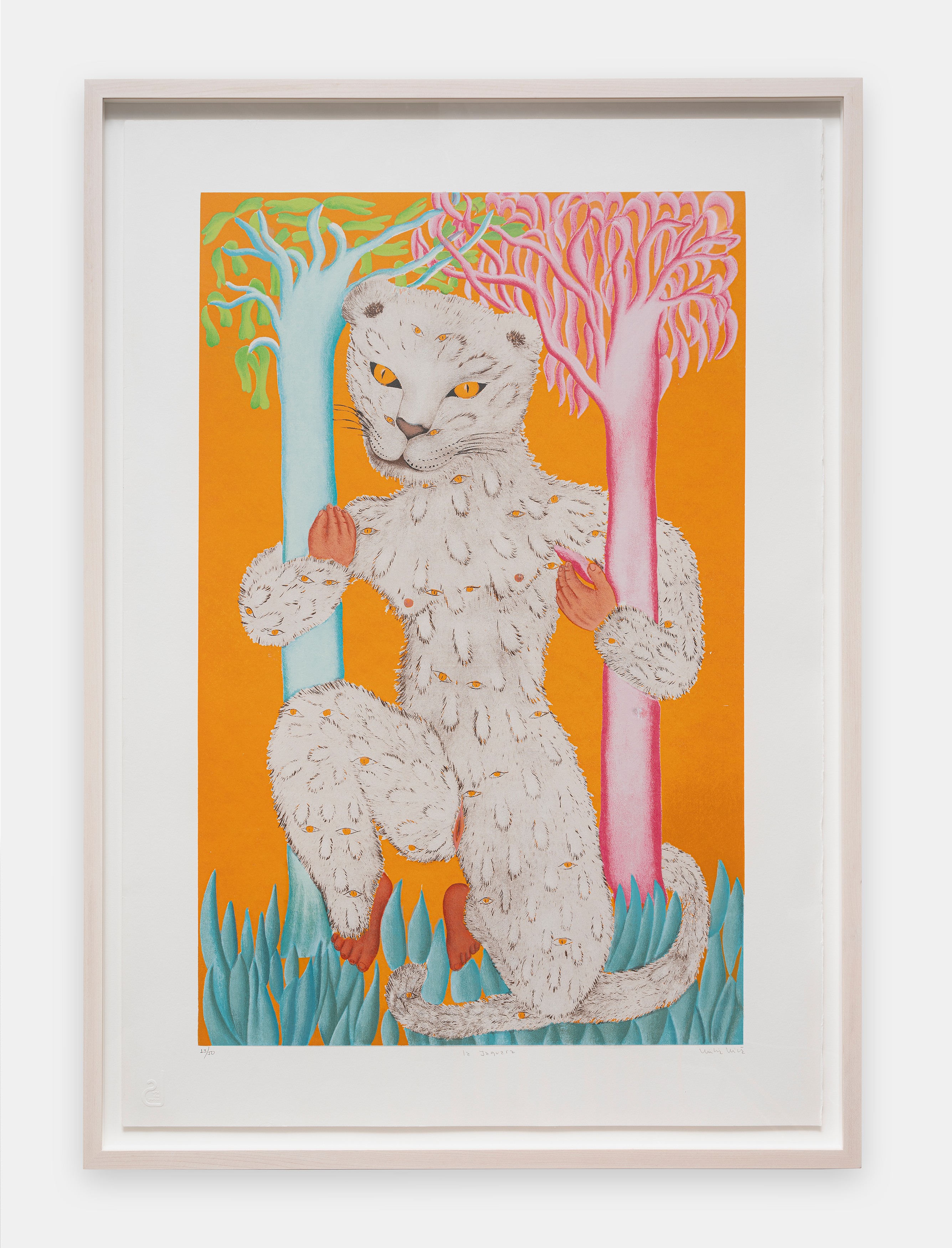
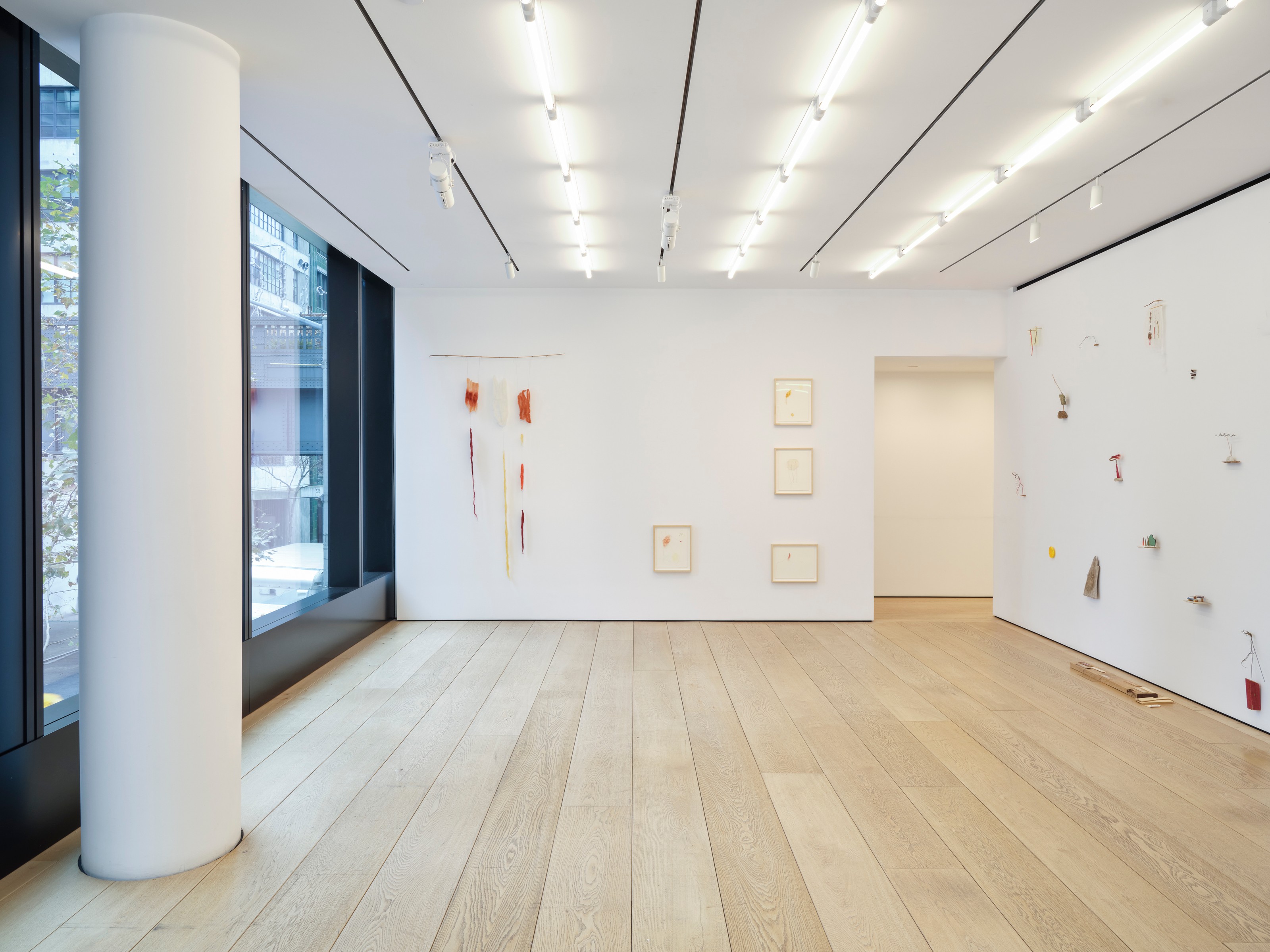
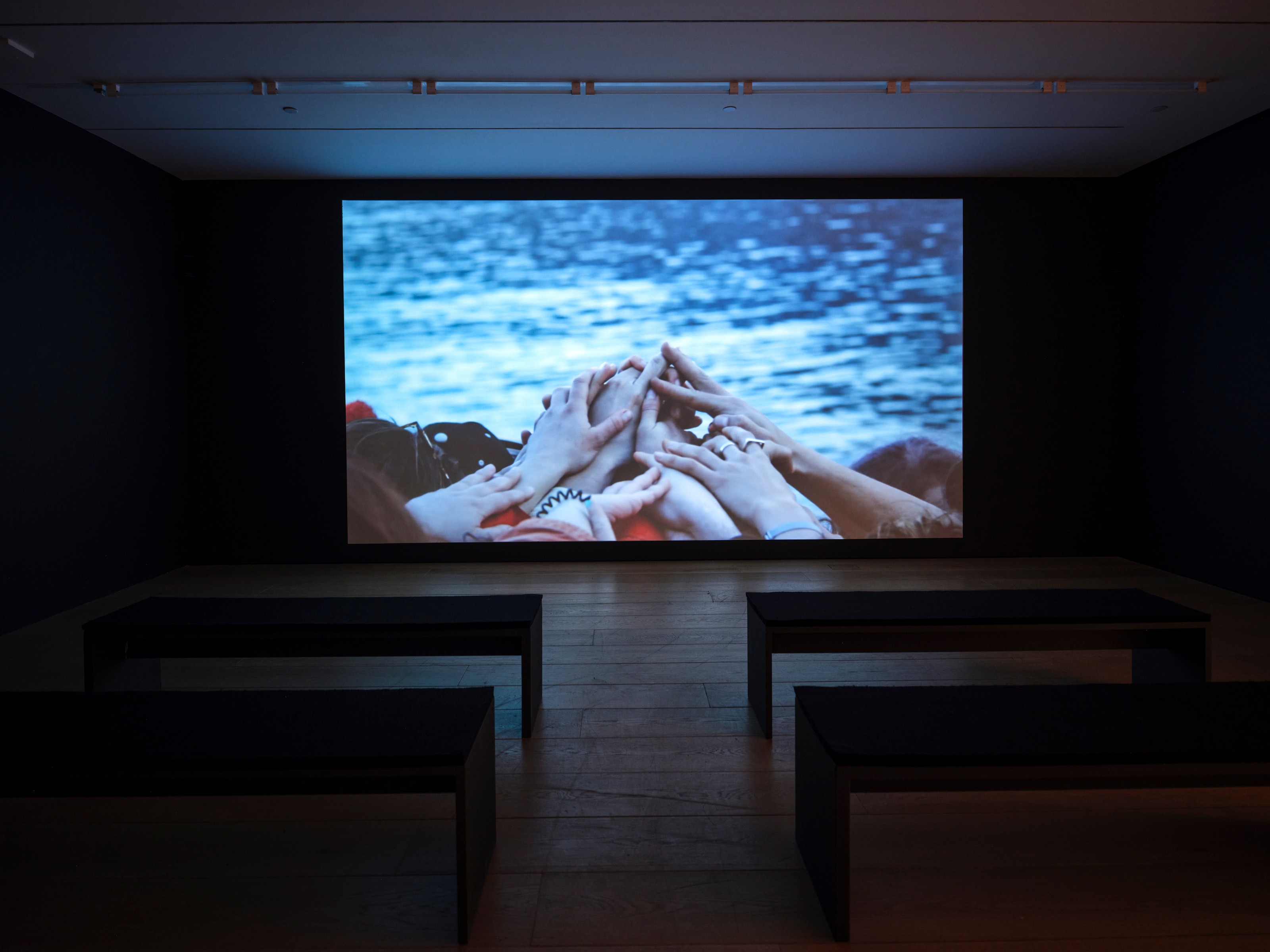
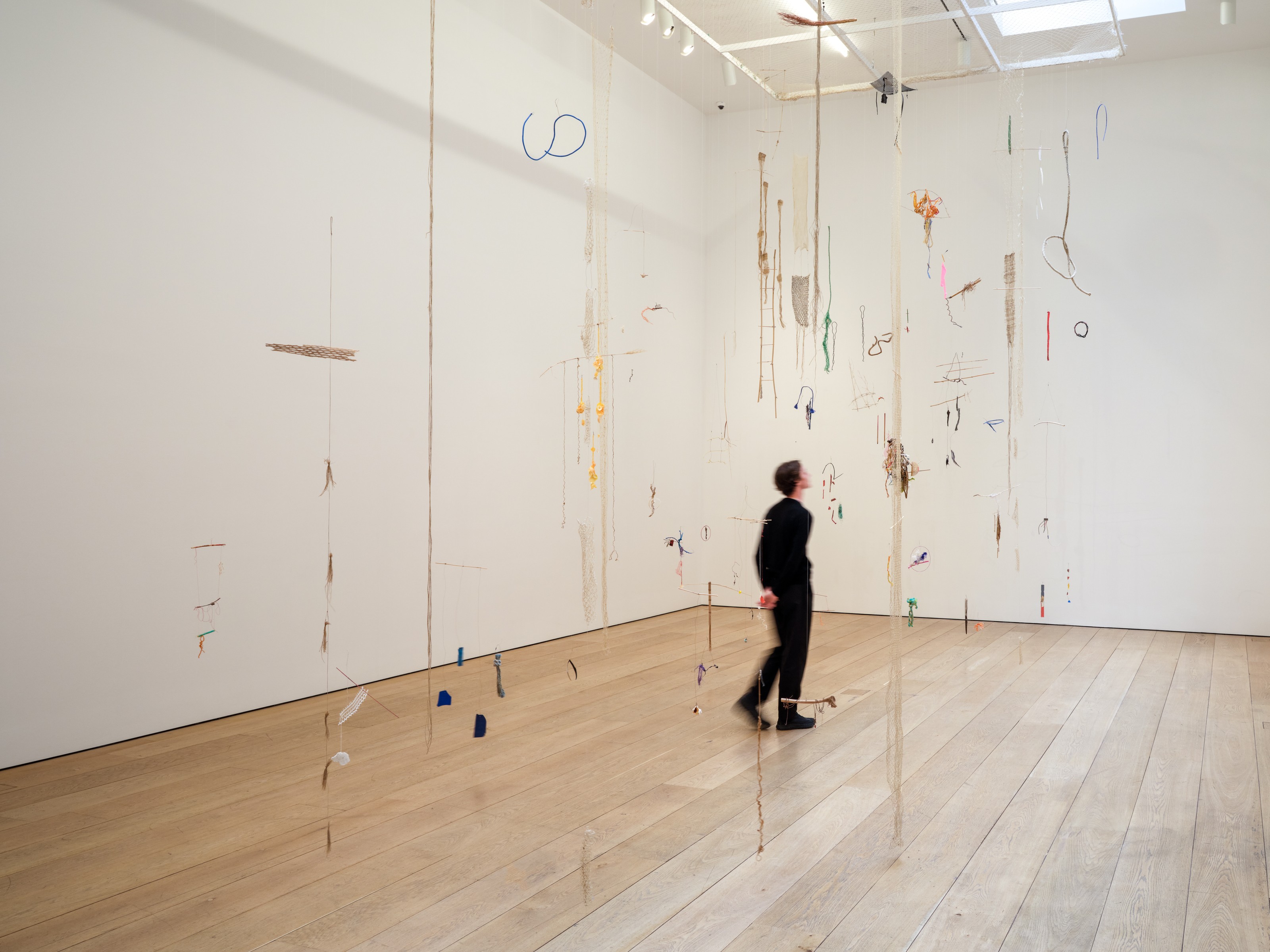
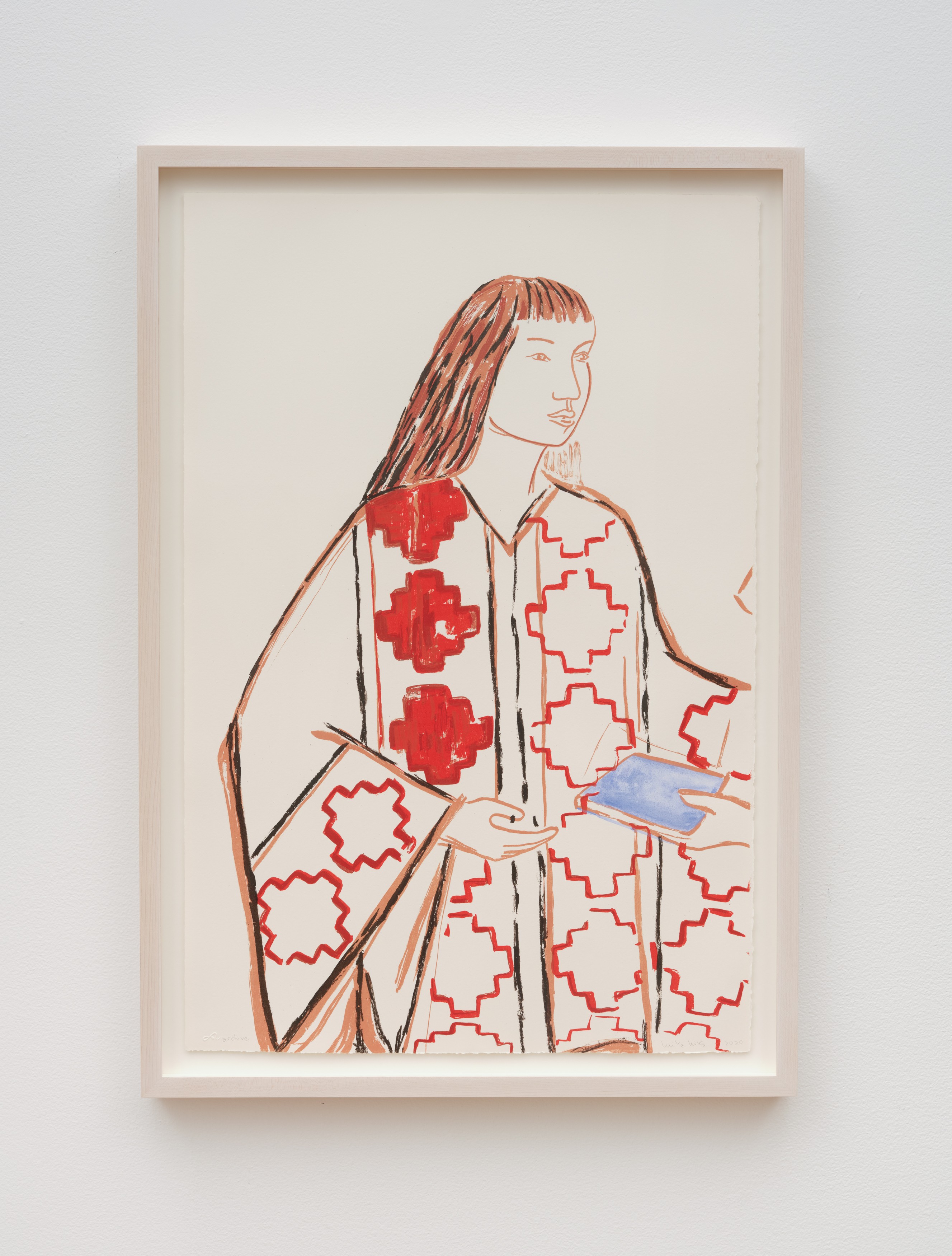
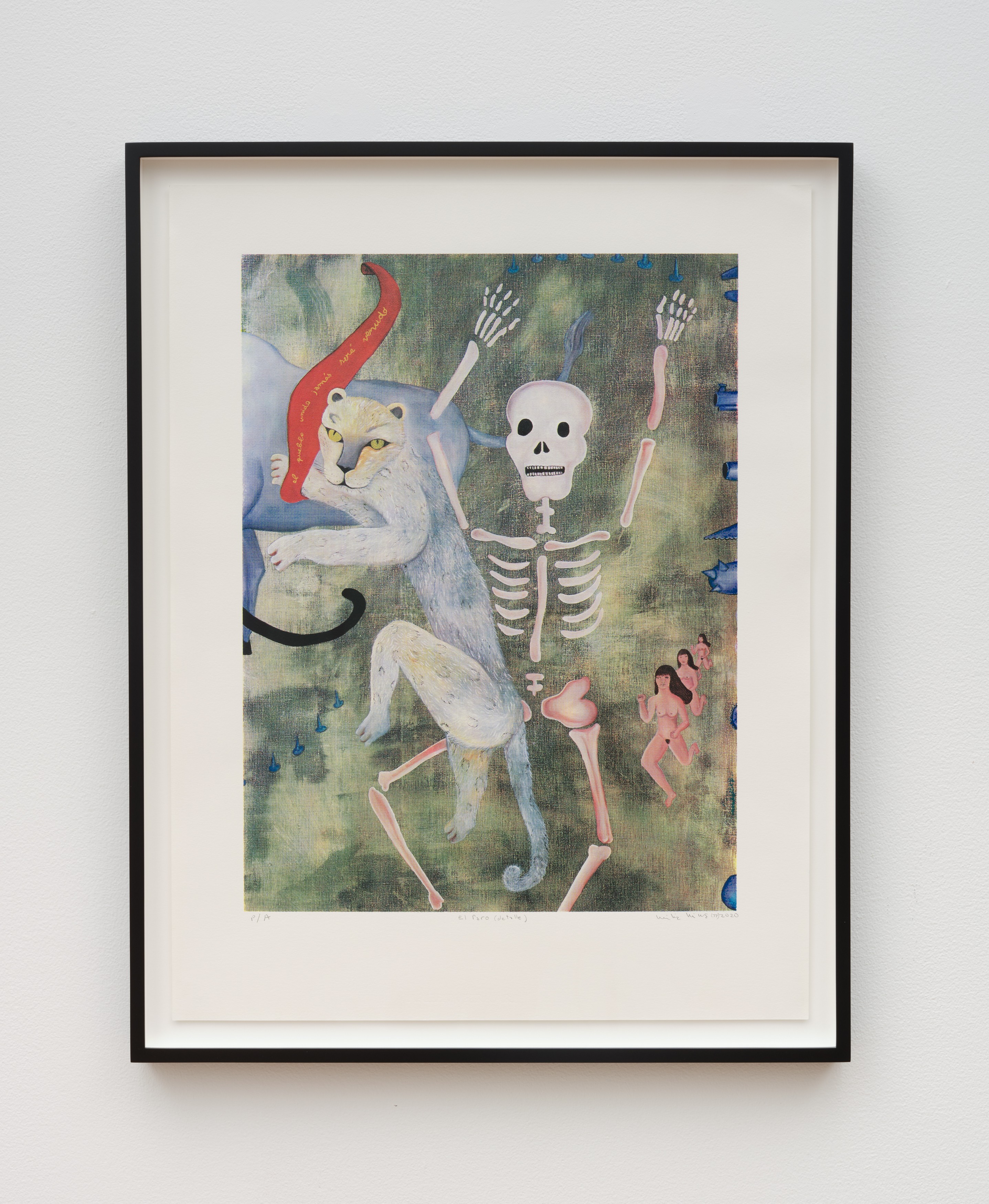
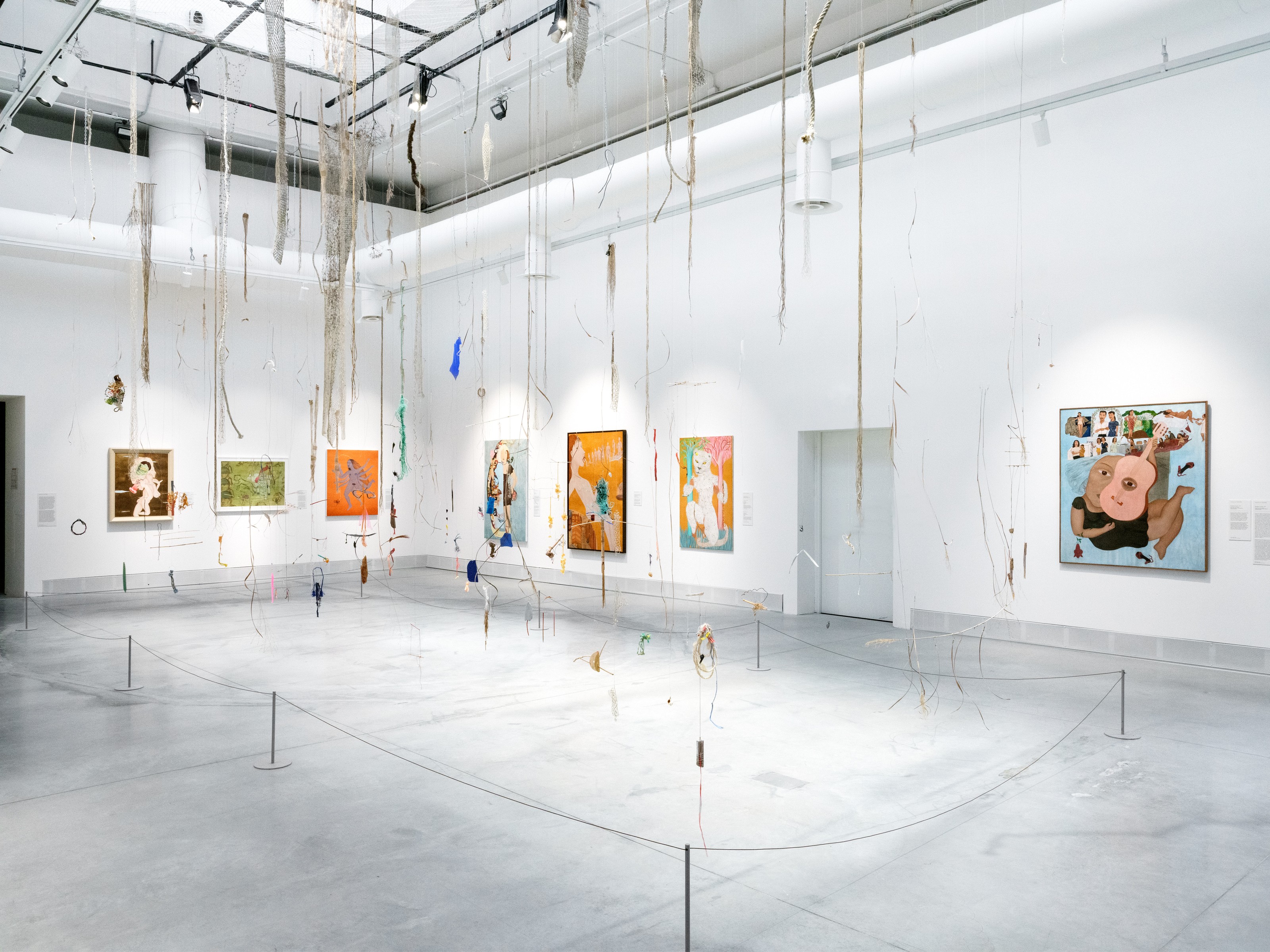
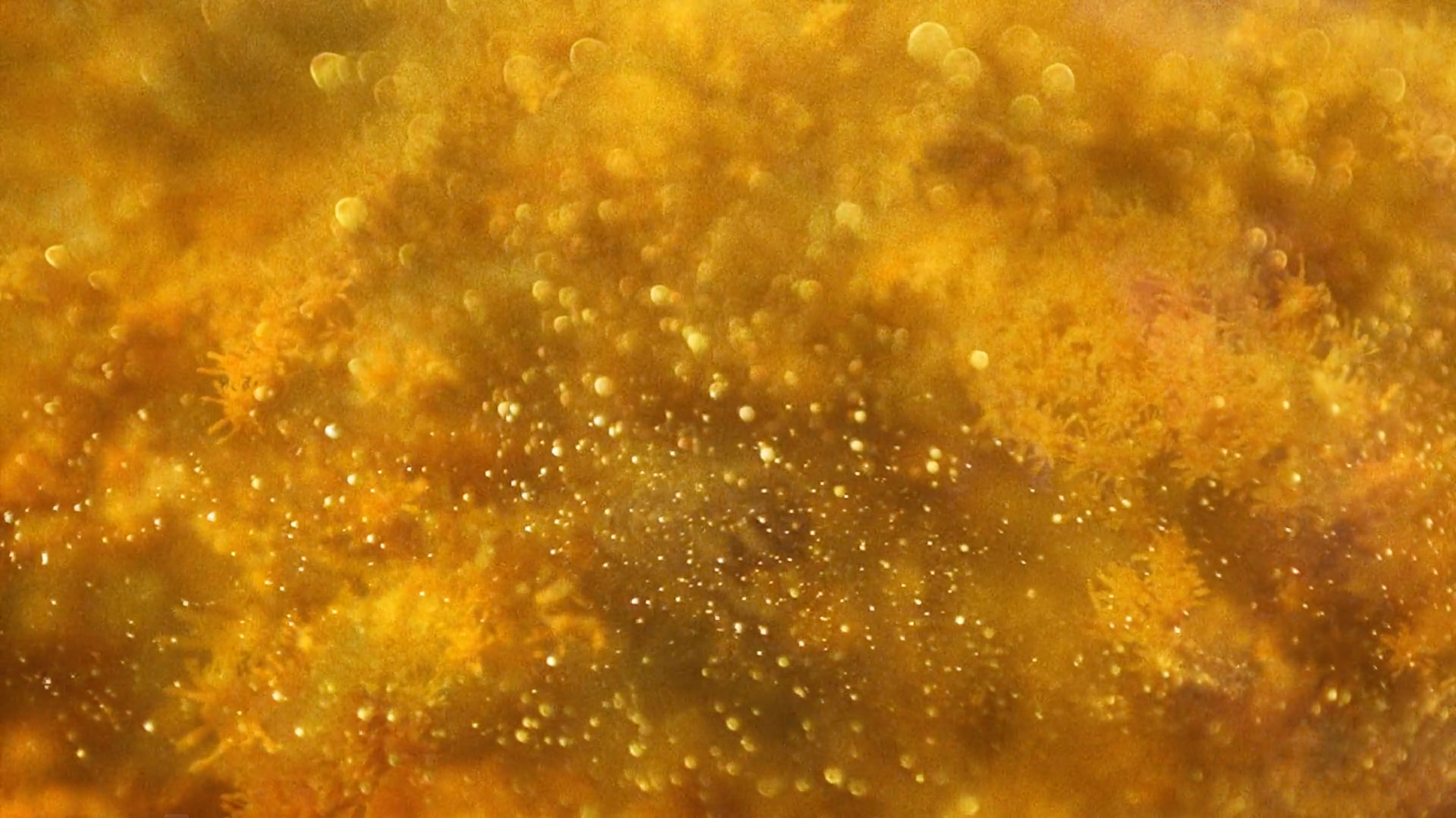
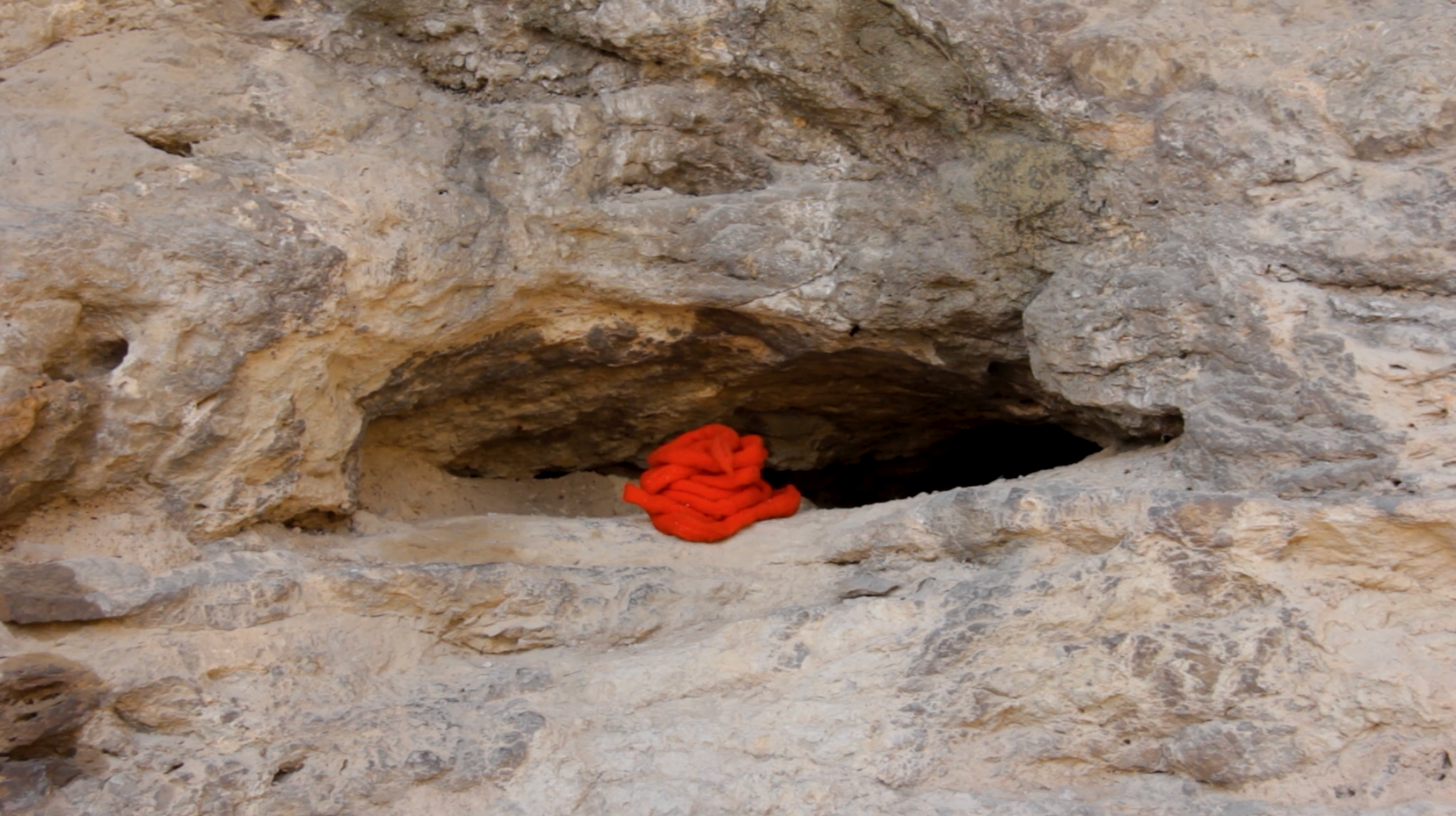
Lehmann Maupin is pleased to present La Migranta Blue Nipple, the gallery’s second solo exhibition in New York by Cecilia Vicuña. Born in Santiago, Chile and based in New York City, the visual artist, poet, filmmaker, and activist presents a series of new paintings, a selection of her “precario” sculptures, and a suite of drawings. The exhibition, encompassing all three floors of the gallery, also includes the first US presentation of Vicuña’s monumental quipu, NAUFraga (2022), since its premiere at the 59th Venice Biennale, as well as a new film based on unseen footage shot while participating in Documenta 14 in Athens, Greece. The works on display are informed conceptually by the principles of “Arte Precario,” or Precarious Art, the artist’s own autonomous aesthetic system that foregrounds ephemerality, intangibility, and that which disappears. As an artistic corollary to the instability and shakiness that abounds in our political climate, Vicuña’s precariousness allows her to grapple with issues ranging from immigration to environmental destruction. At the same time, her syncretic visual vocabulary prompts speculation on alternative possible futures, or worlds capable of realizing political, feminist, ecological, and conceptual reparation.
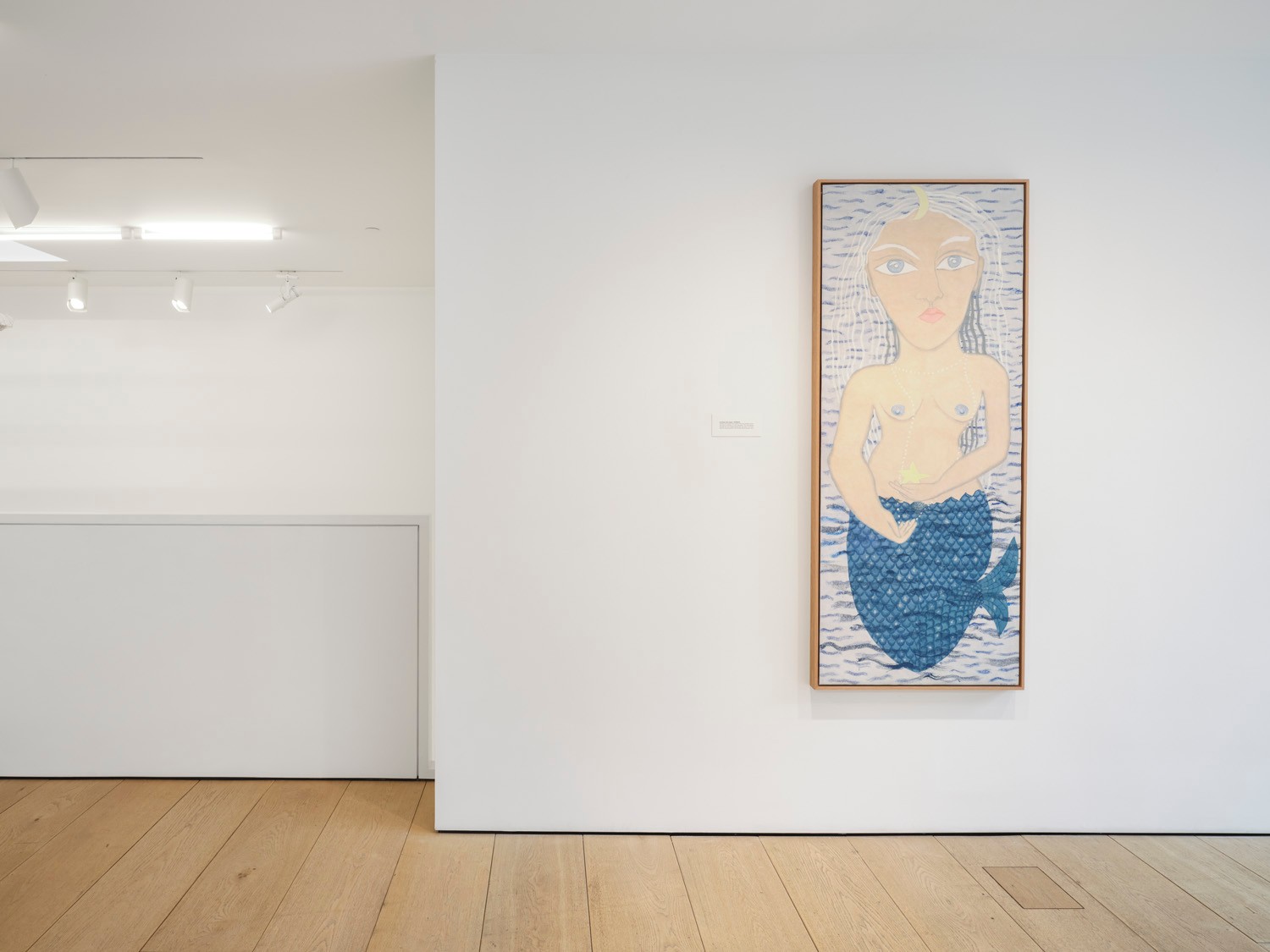
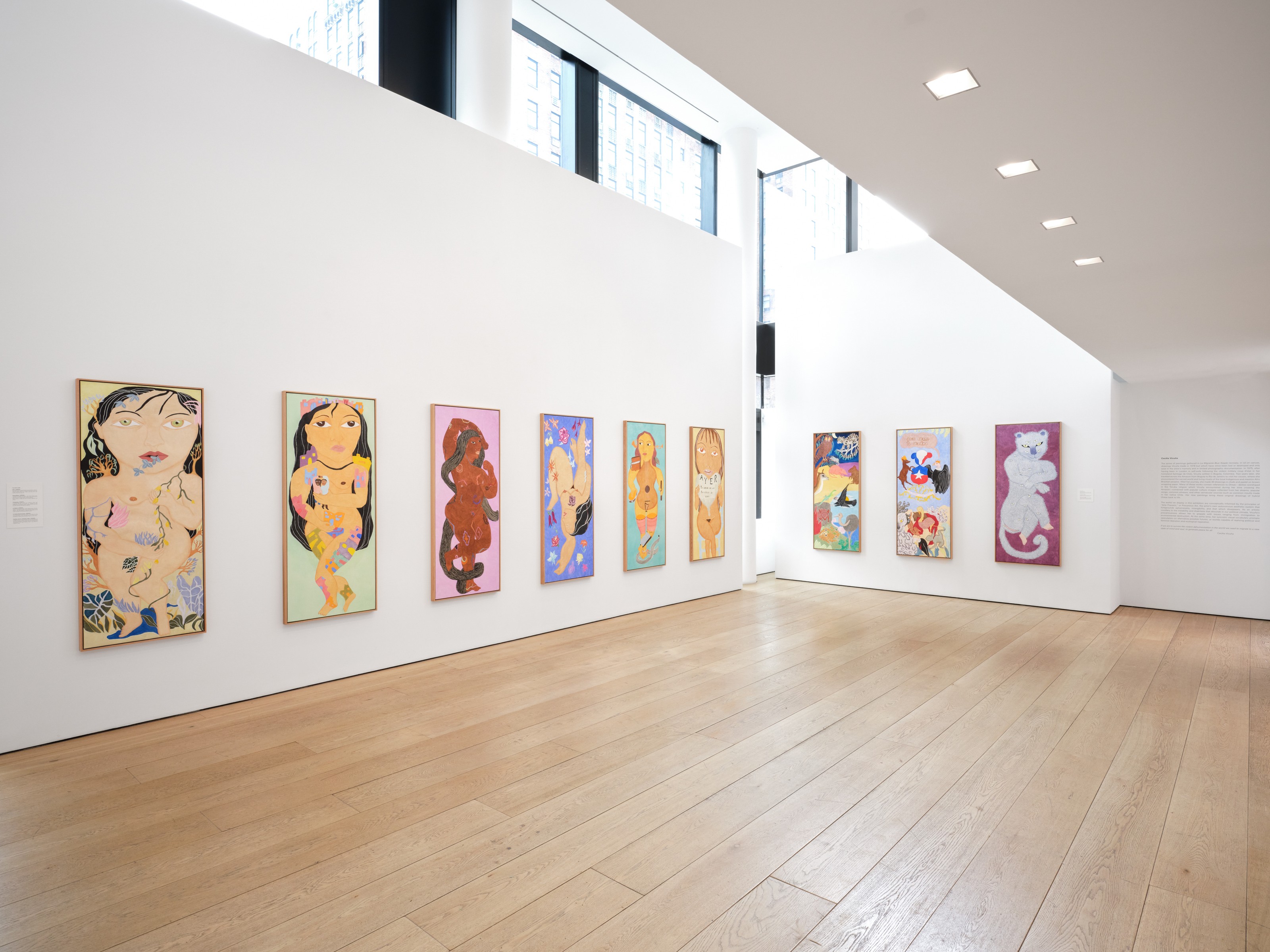
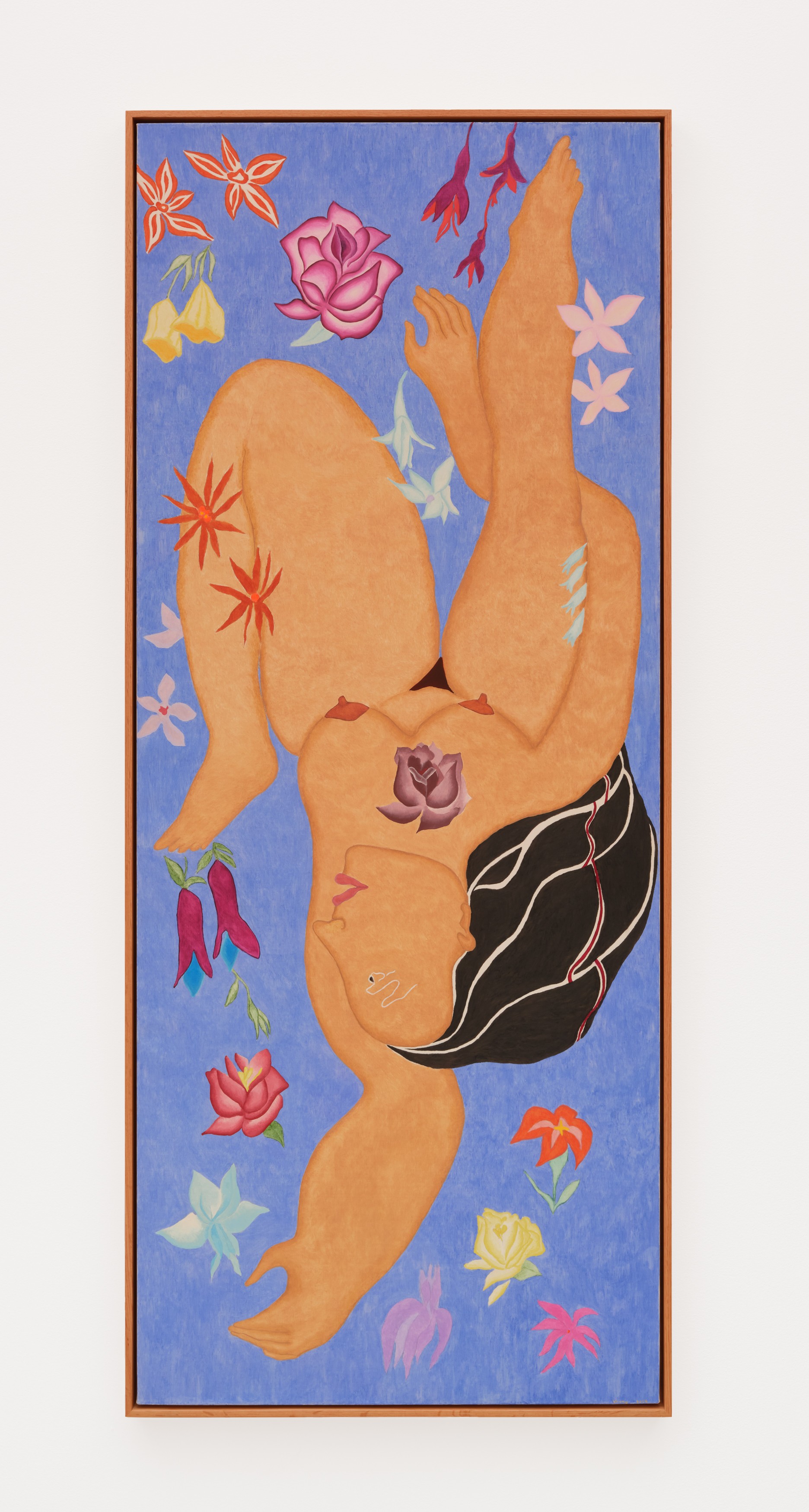
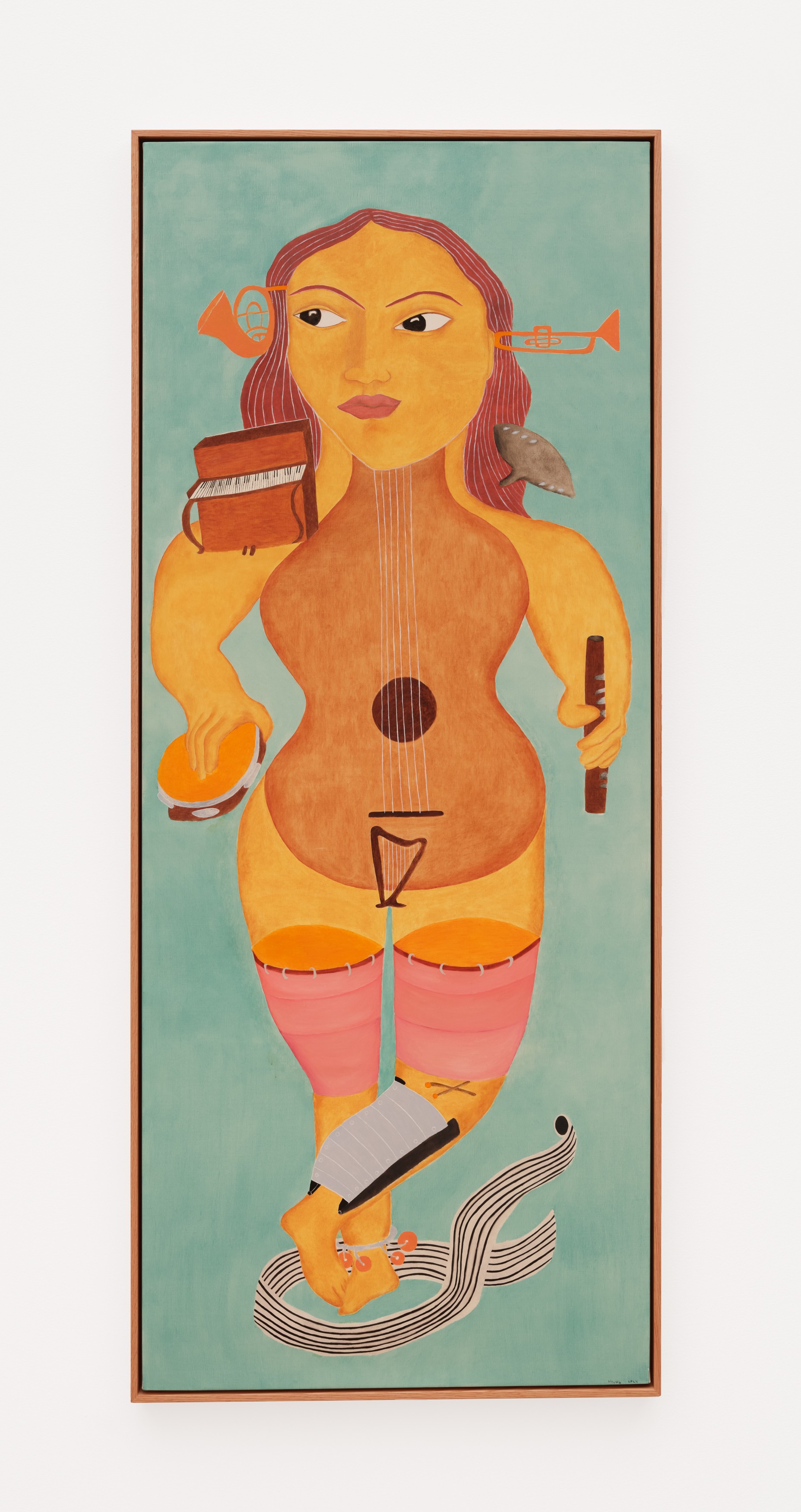
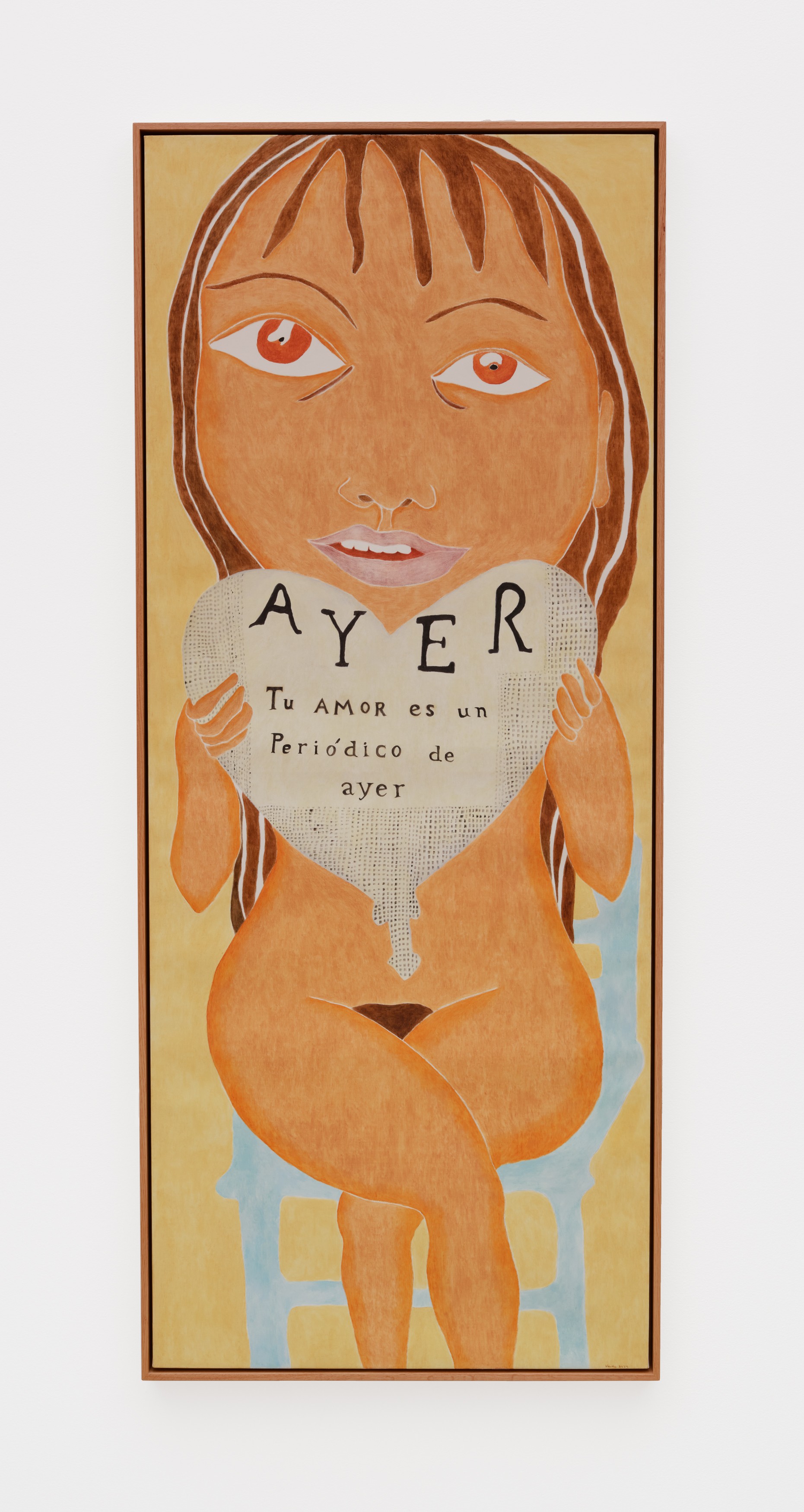
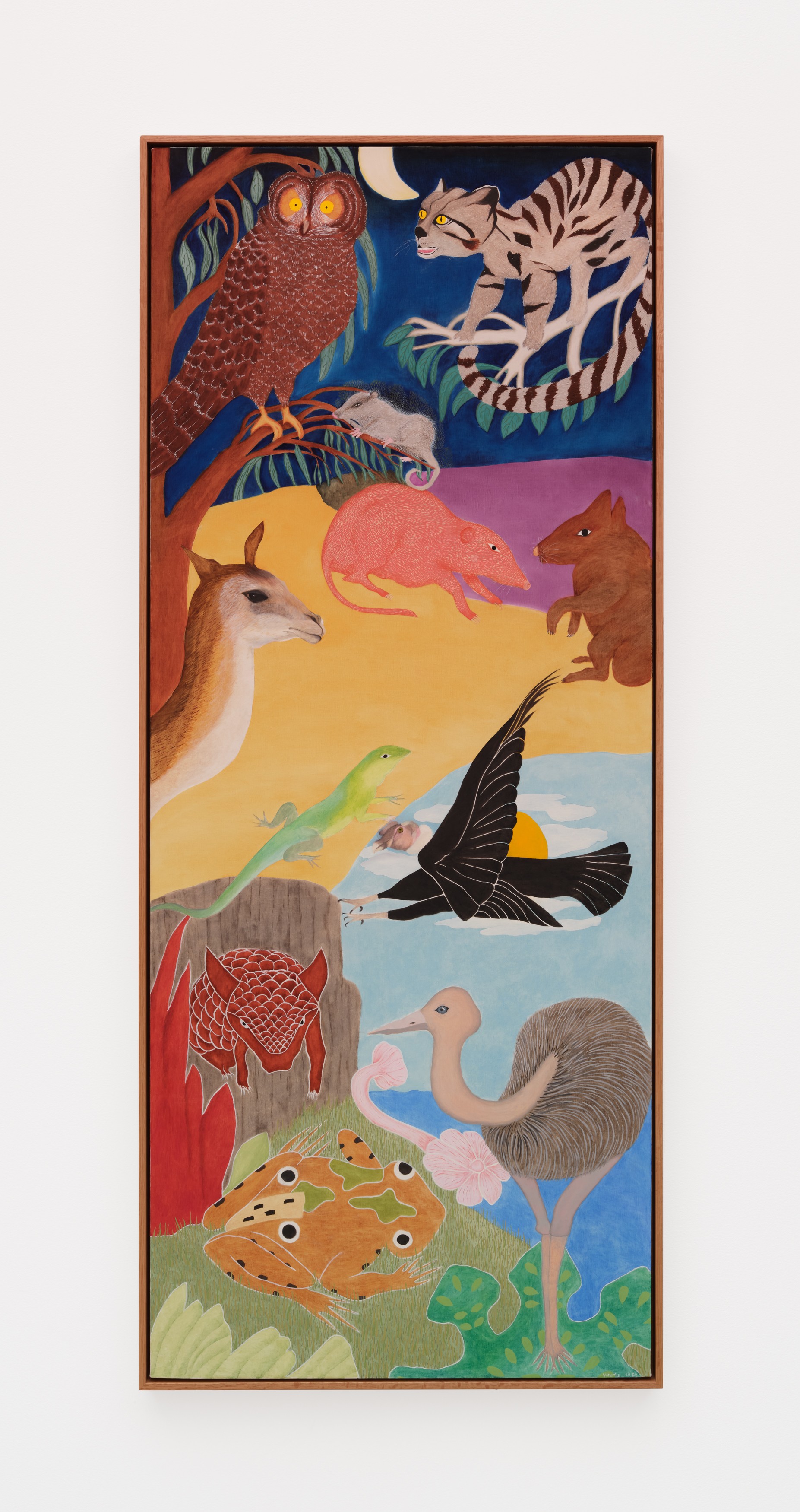
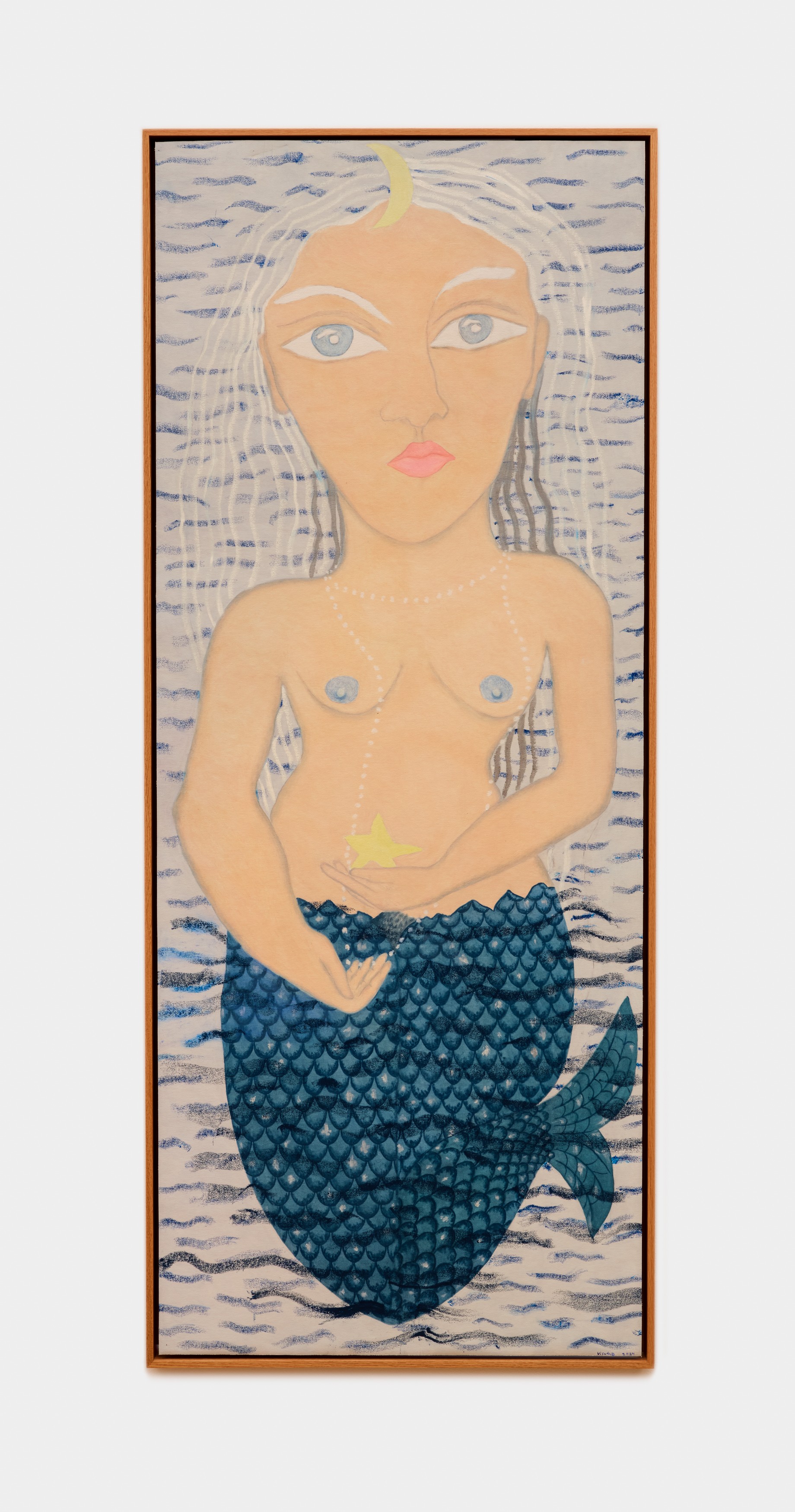
The title of the exhibition, La Migranta Blue Nipple, makes reference to Vicuña’s personal experience with migration and to the brutal treatment of migrant and immigrant communities that she has witnessed while living in this country. Visitors to the exhibition will first encounter a series of paintings completed this year that recreate, in oil on canvas, drawings Vicuña made in 1978 but which have since been lost or destroyed, existing only in the artist’s memory and in limited photographic documentation. In 1975, after having been in London in self-exile following the violent military coup d'etat in her homeland Santiago de Chile, Vicuña settled in Bogota, Colombia. Two years later, she traveled from Bogota to Rio de Janeiro, across the Amazon, to visit her cousin, where she encountered the sacred world and living rituals of the local Indigenous and mestizo Afro Brazilian peoples. In response to her journey, she made 30 drawings in chalk and pastel on brown wrapping paper. Many of these works contain references to Orixás––deities worshiped in the Yoruba religion which Vicuña learned of during her time crossing the Amazon––combined with popular culture images collected from her dreams, popular songs, common phrases, and other vernacular sources such as common insults used in her native Chile. Her new paintings bring these original drawings of hybrid Orixás back to life in forms that embody mermaids (Iemanjá), Pachamama (Incan earth mother / mother of space & time), Santa Bárbara (mother of the home), La música latinoamericana (goddess of Latin American music), Flora (goddess of fertility), and San Martin de Porres (patron saint of social justice, racial harmony, and mixed-race people), among many others.