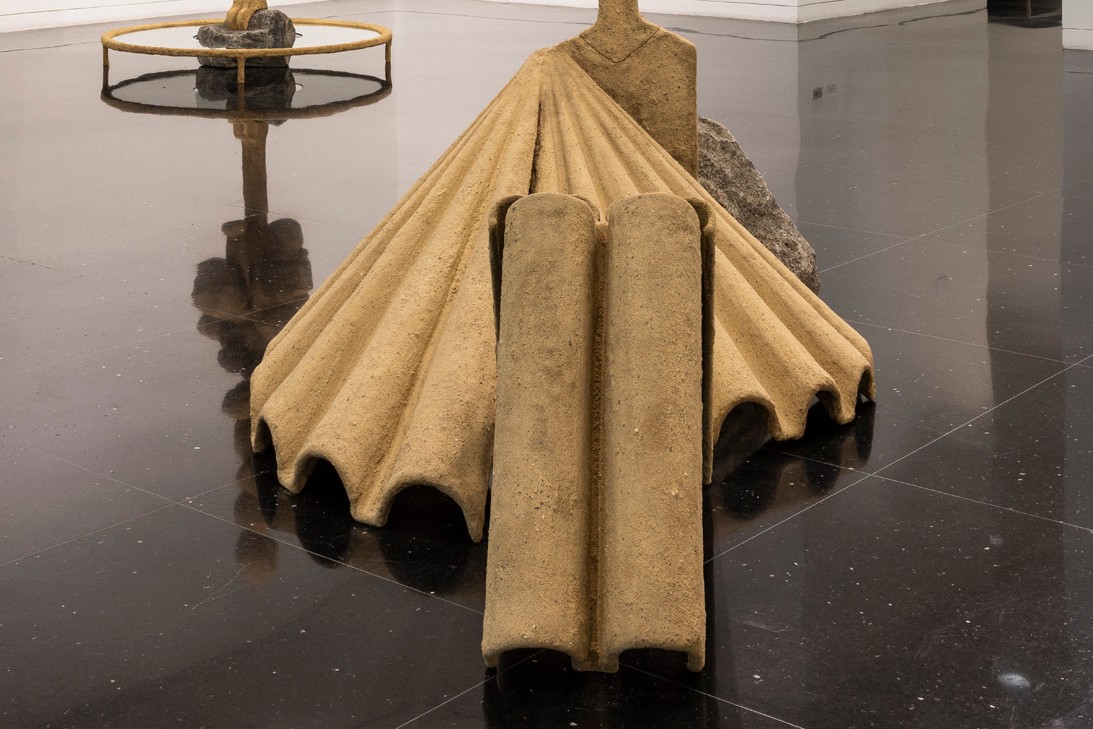
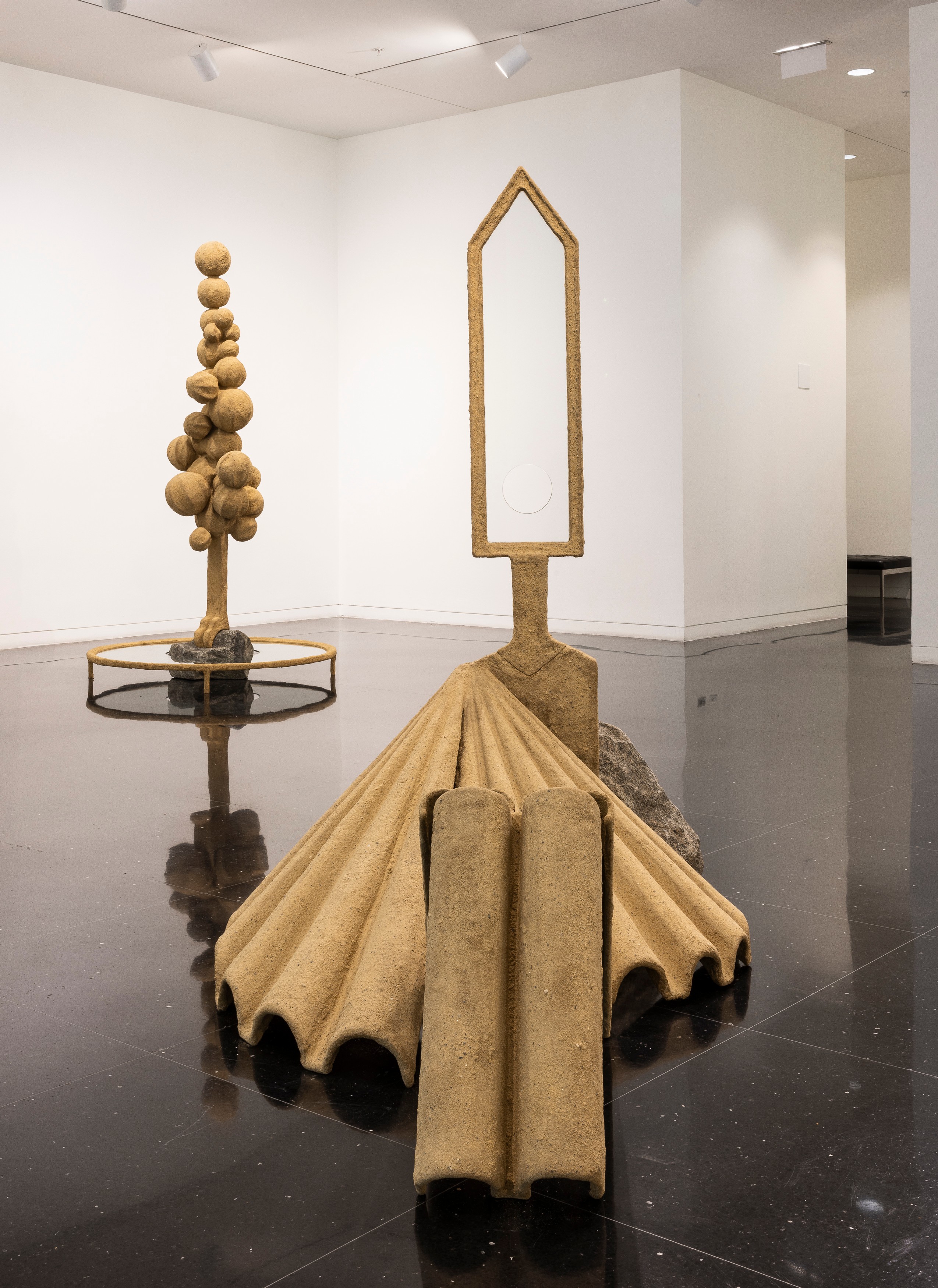
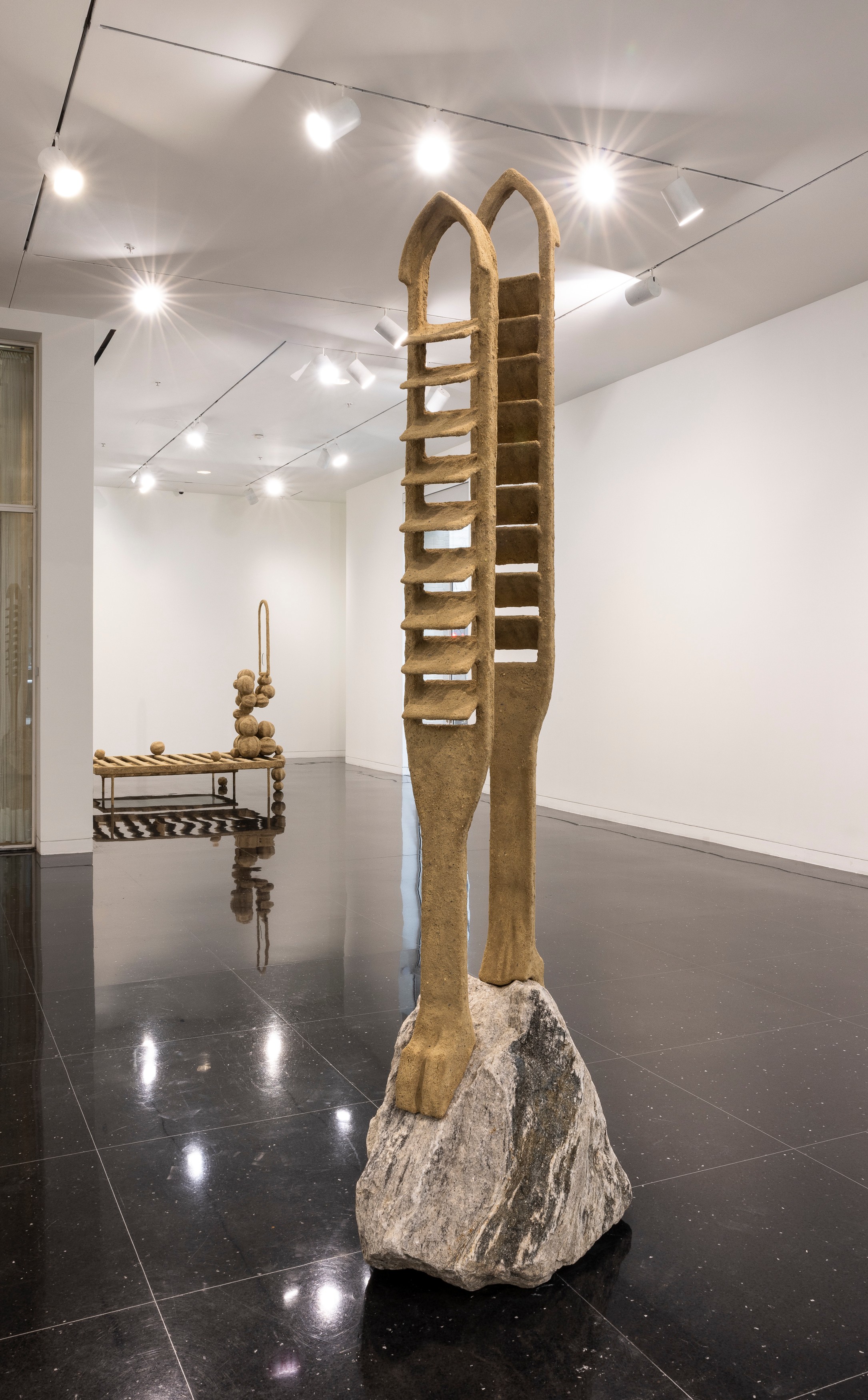
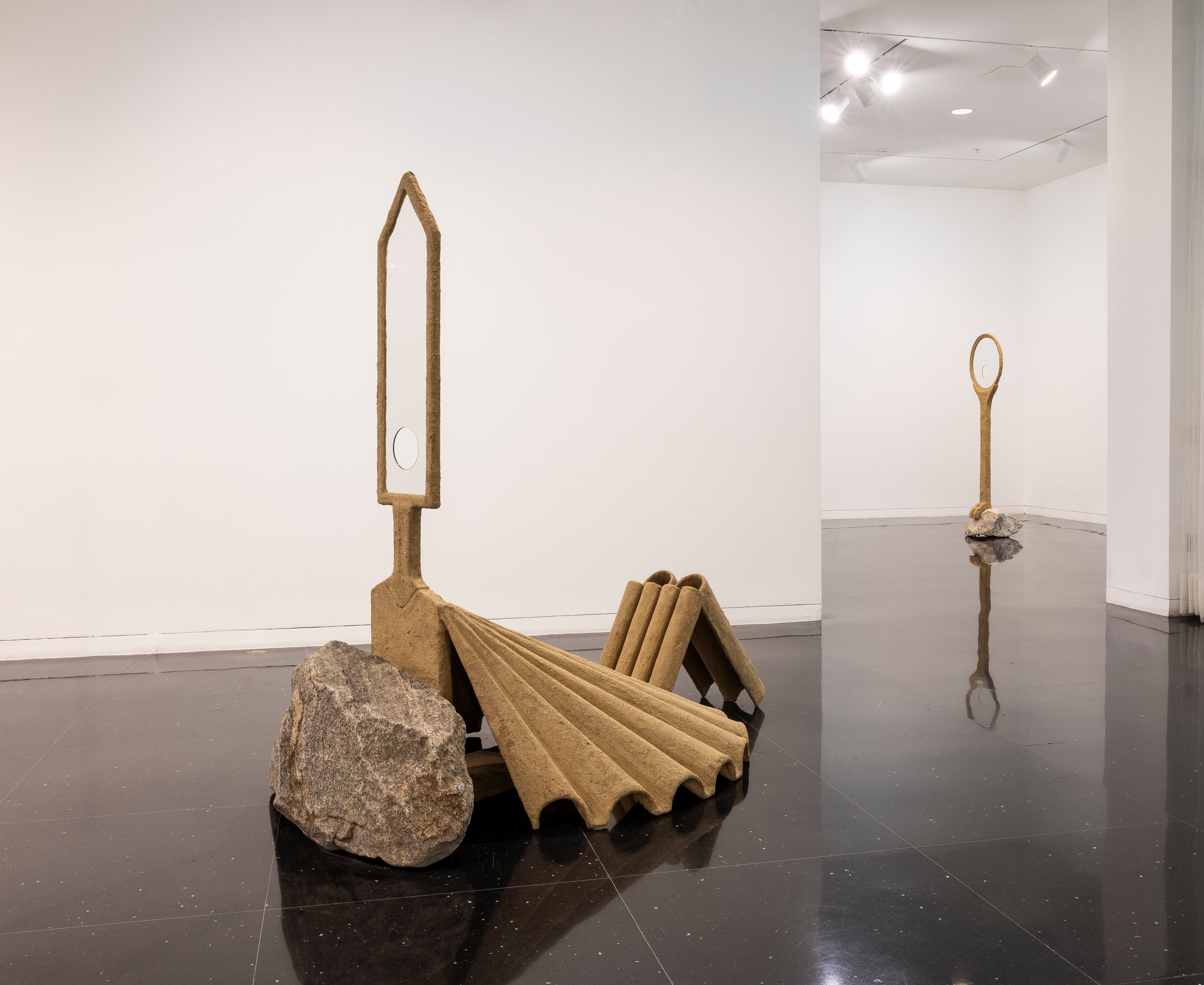
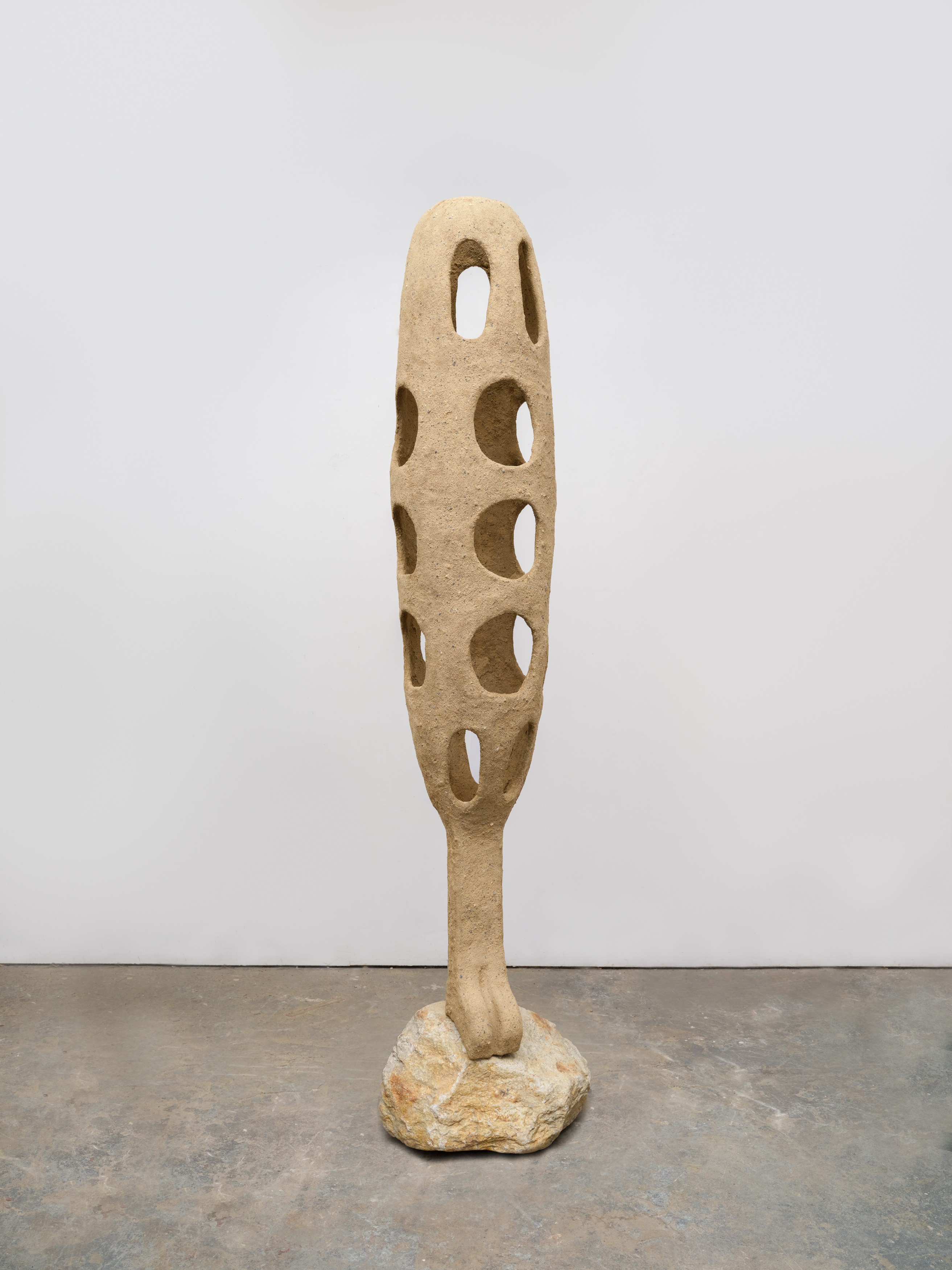

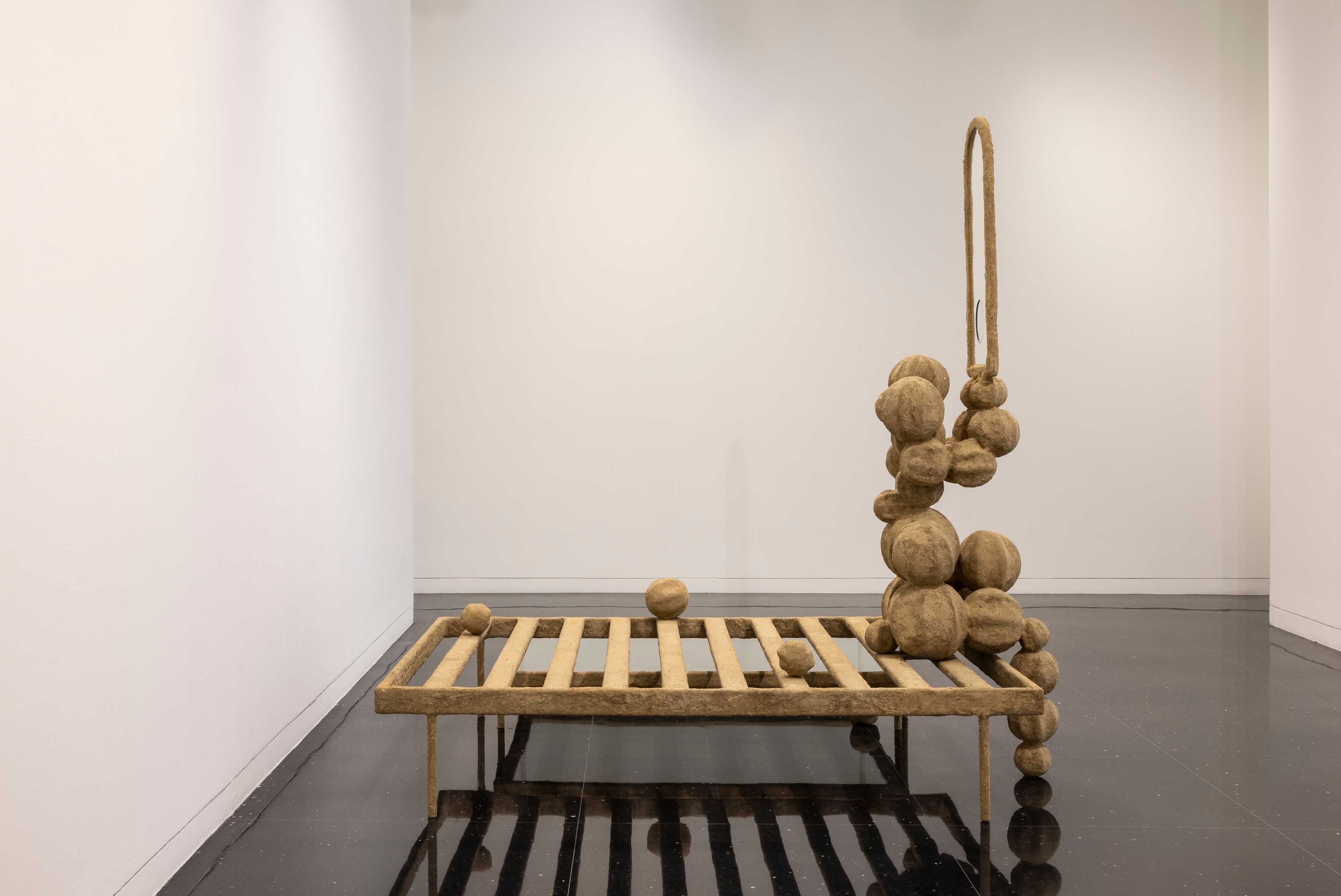
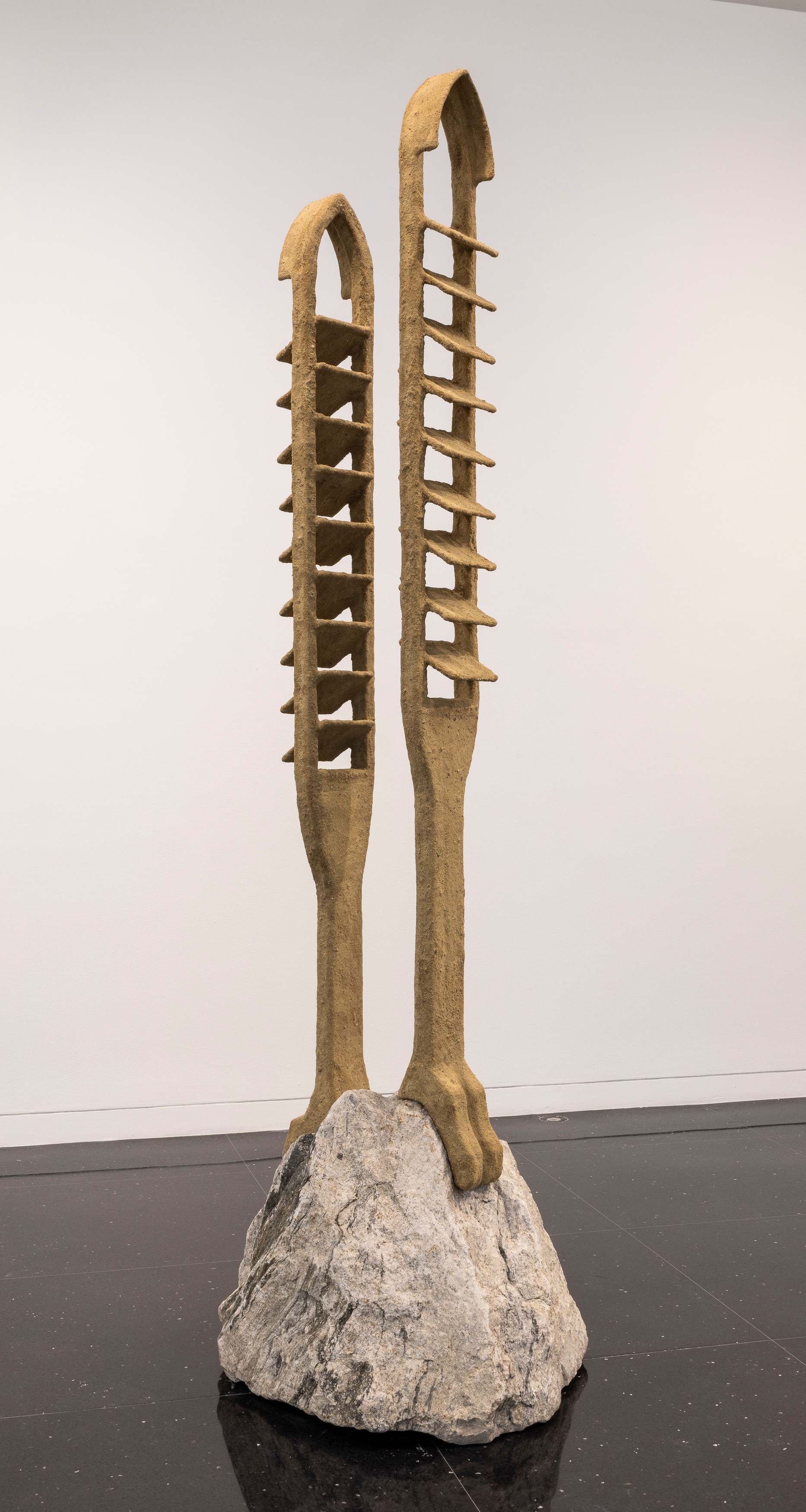

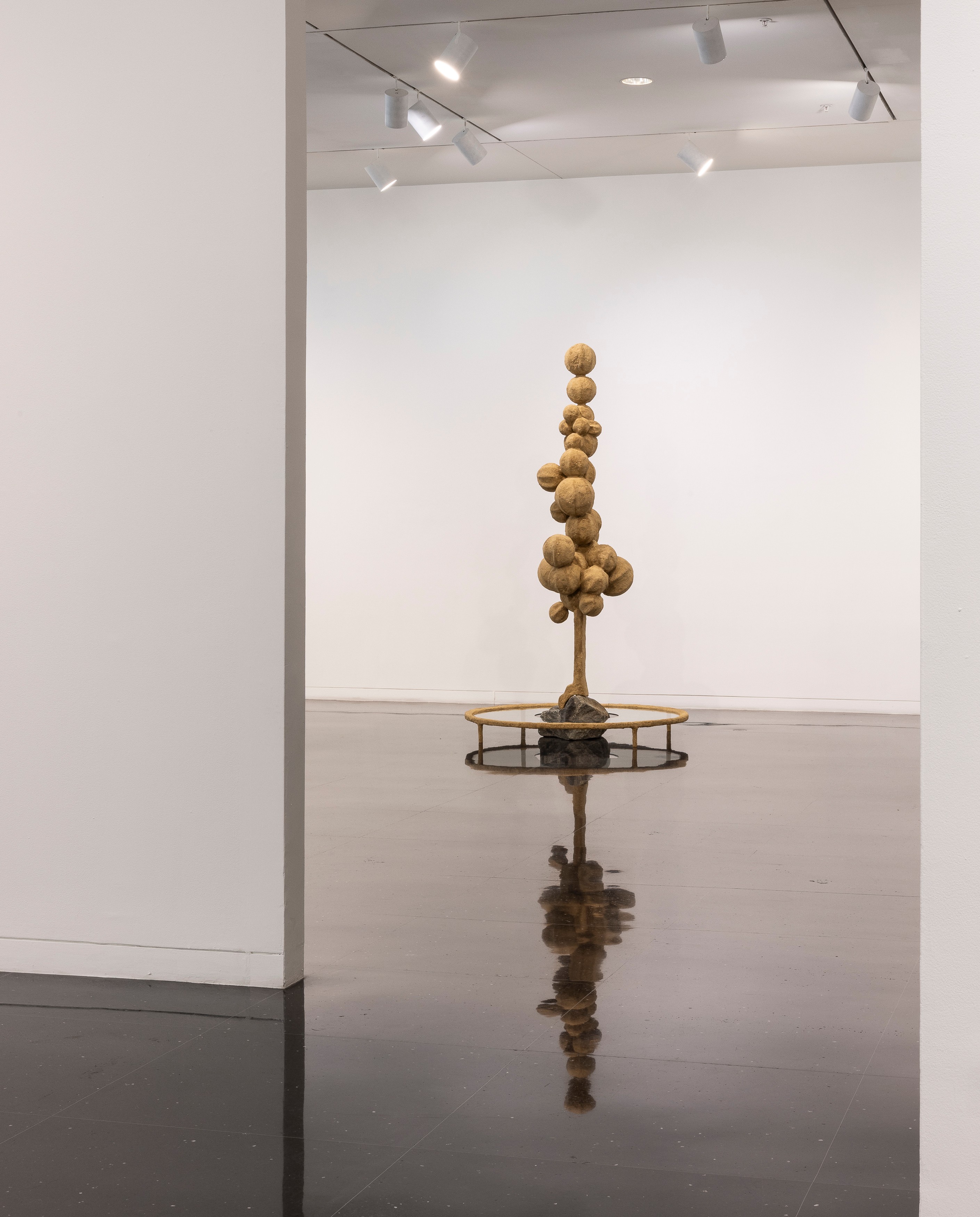
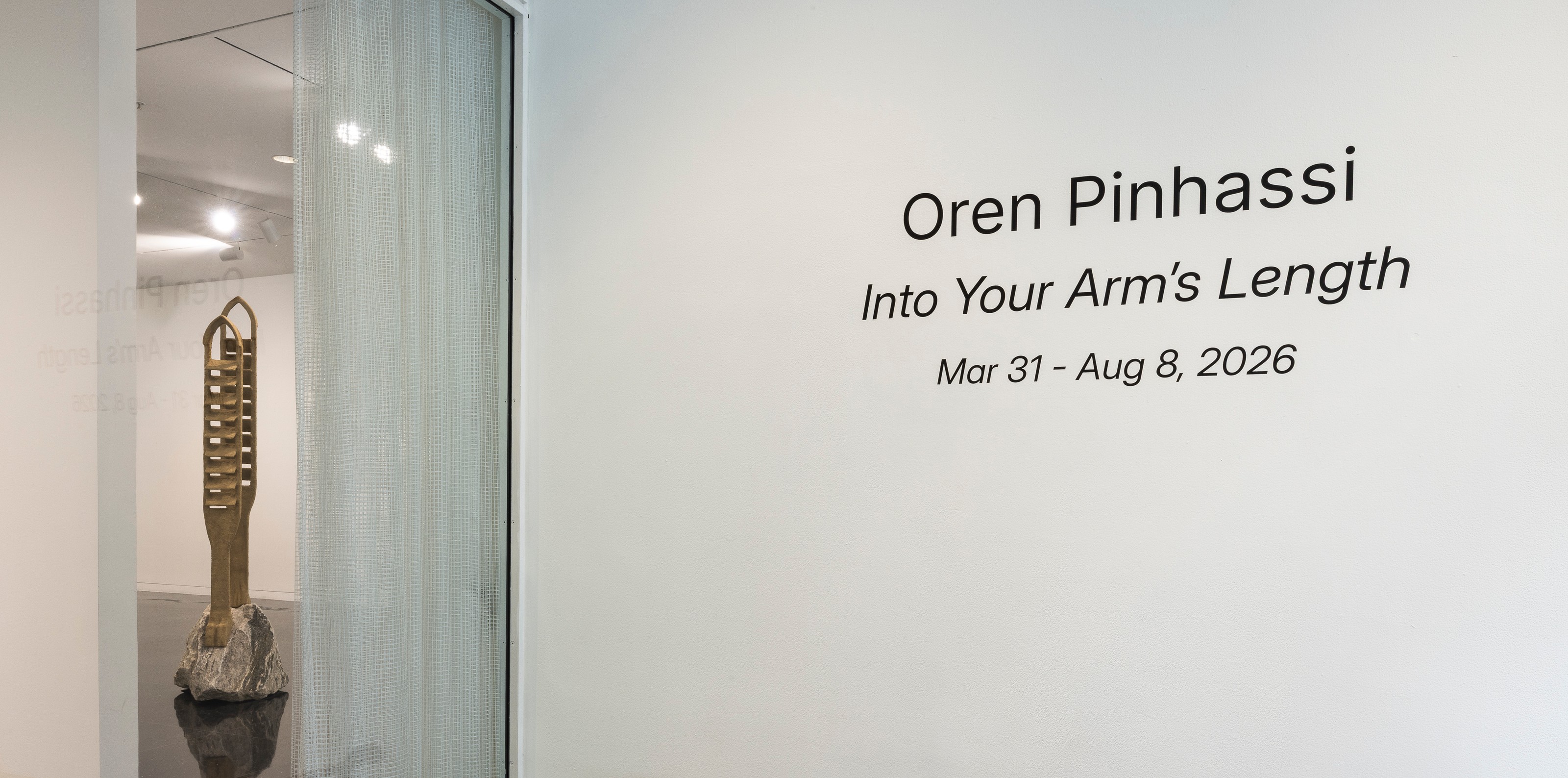
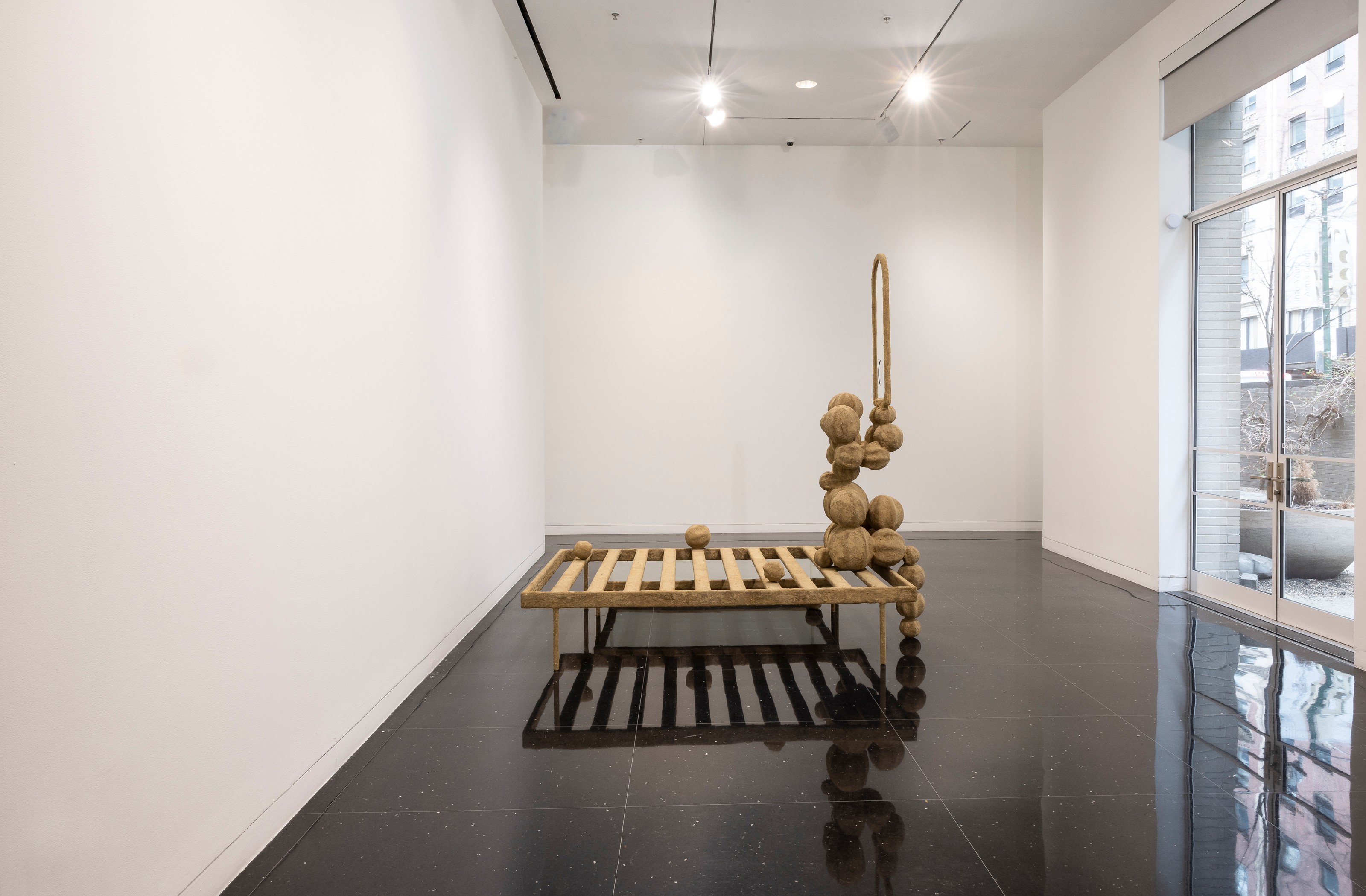
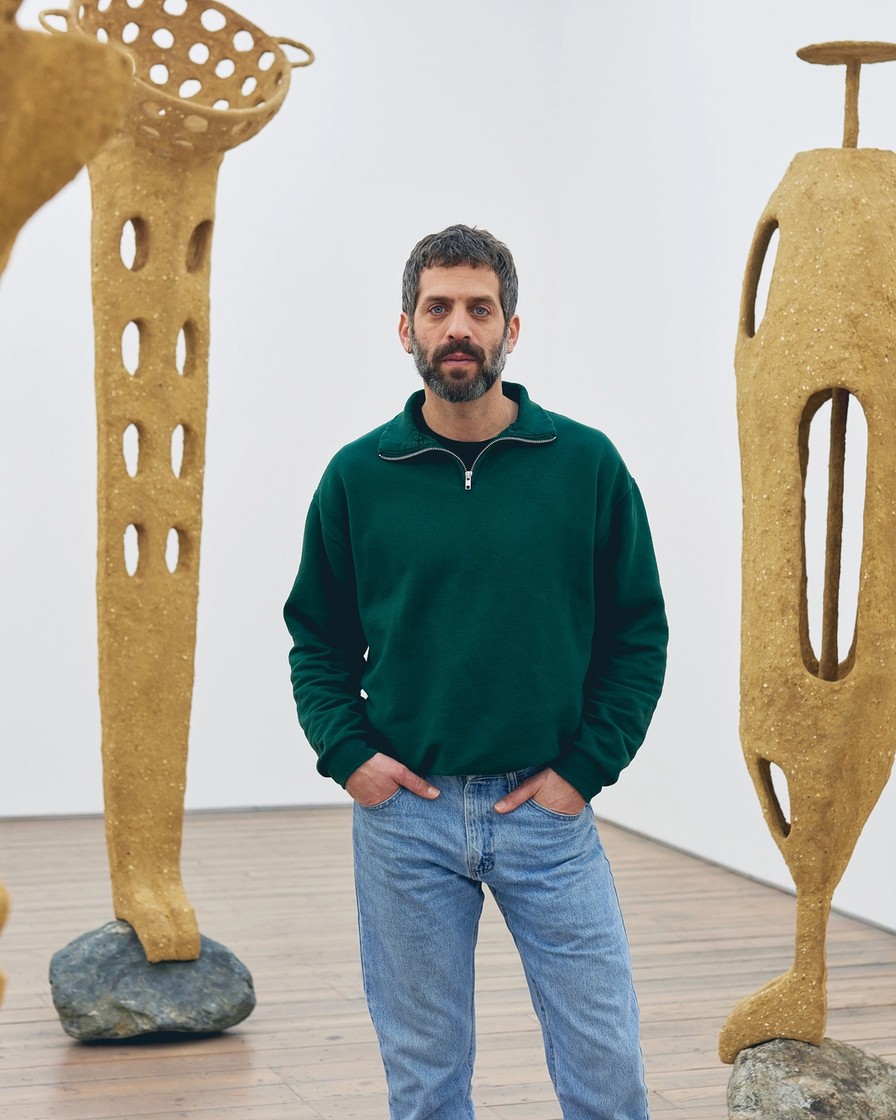
New York-based artist Oren Pinhassi (b. 1985, Tel Aviv, Israel; lives and works in New York, NY) creates sensuous sculptures and large-scale installations that explore the politics of architectural spaces as they relate to the human body. His anthropomorphic sculptures, often standing up to eight feet in height, examine individual vulnerability and fluidity within the built environment, probing new possibilities for coexistence. Pinhassi’s haptic and immersive spaces redefine the relationship between viewer and environment, provoking a visceral interaction with the art object that yields a heightened awareness of humankind’s place within larger socio-political ecosystems.
Pinhassi has developed a distinct visual language that combines the superfluous and ergonomic with the utopian. Mimicking familiar images—such as a palm tree, a shower, or a chaise lounge—Pinhassi’s sculptures break down binary categories between people and objects. This implied borderless polyamory carries a pattern of erotic transmutation that guides the formation of new understandings in which object, architecture, and the body flow seamlessly into one another in free association. Pinhassi is drawn to organic materials for their shape-shifting potential and works primarily with sand and plaster. Akin to the work of Arte Povera artists, this use of non-traditional materials is an integral part of Pinhassi’s practice. Part of his sculpting process consists of the repetitive layering of burlap, plaster, and sand over welded steel skeletons, revealing the touch of the artist’s hand across every piece. The results are totemic-like figures that collapse preconceived notions of private and public space and our agency within them, heralding a futuristic hybridity.