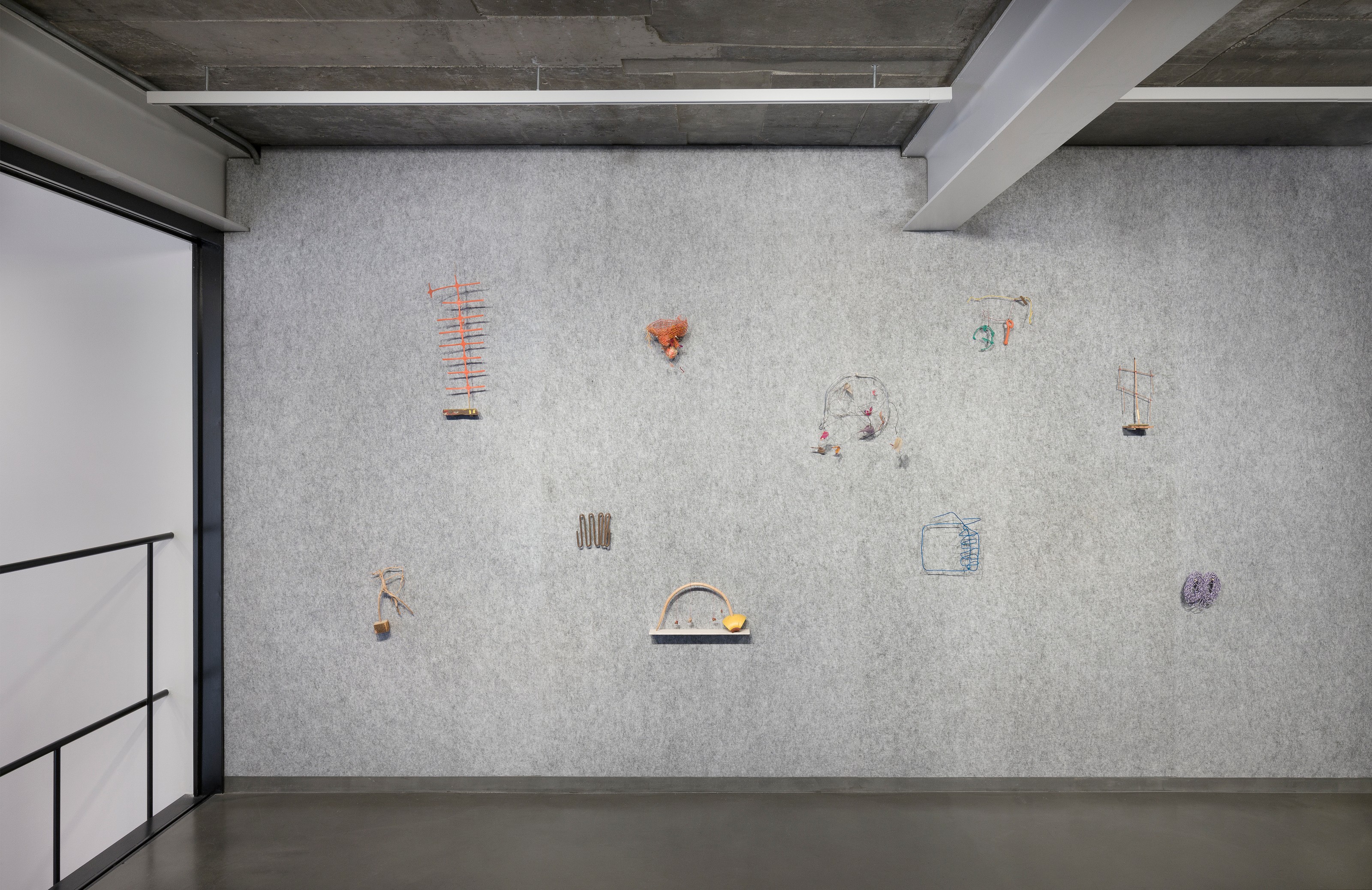
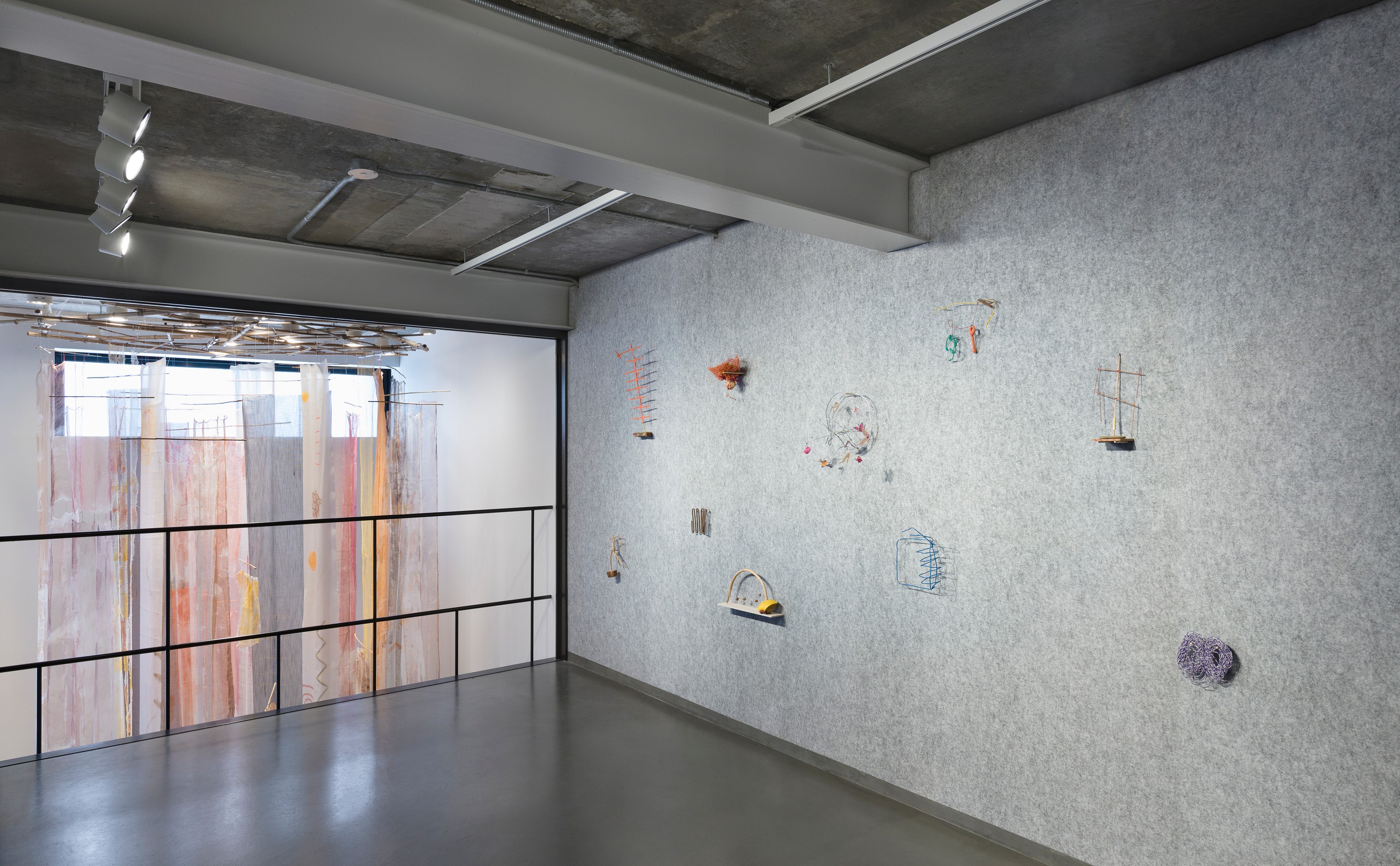
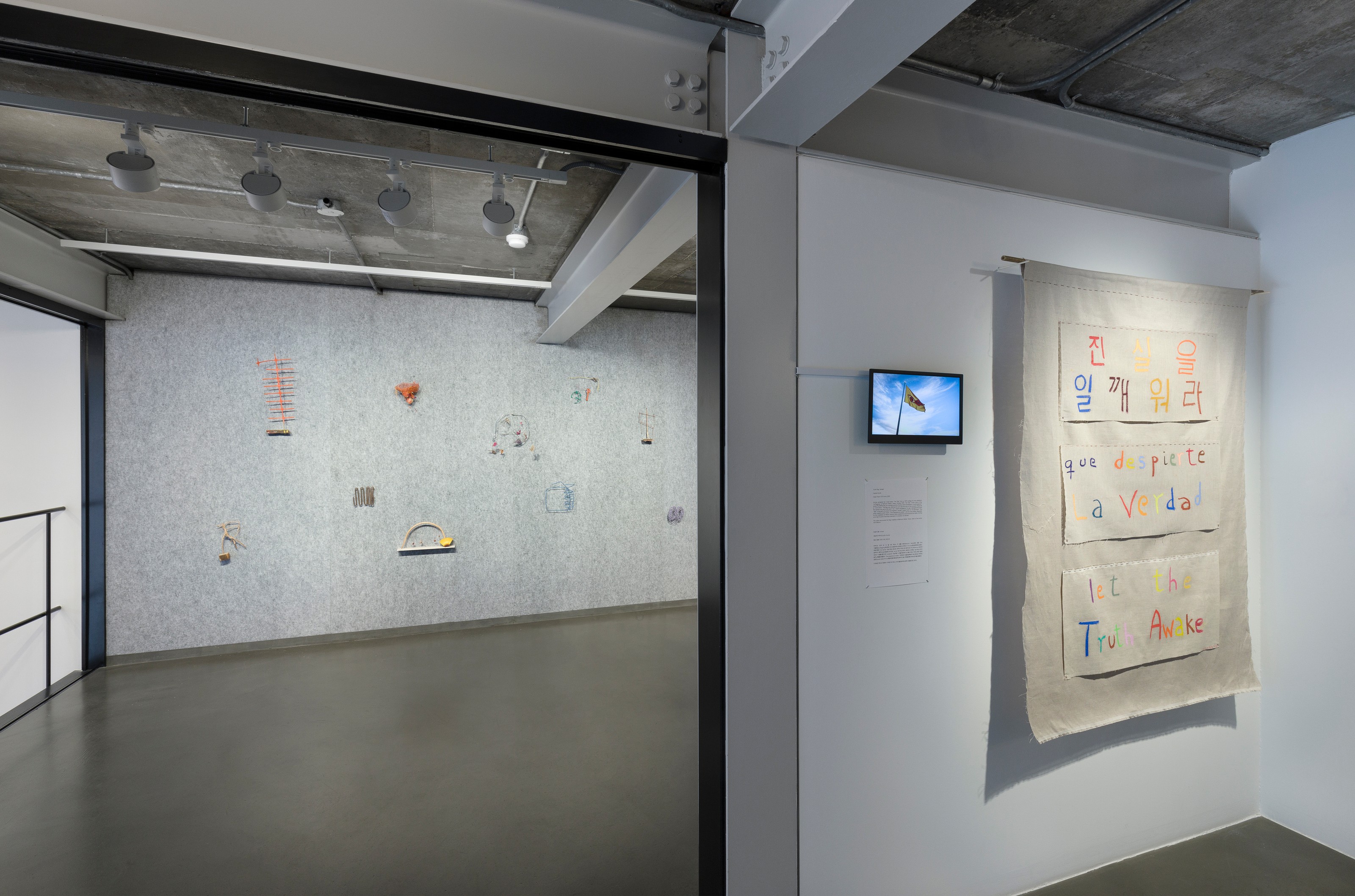
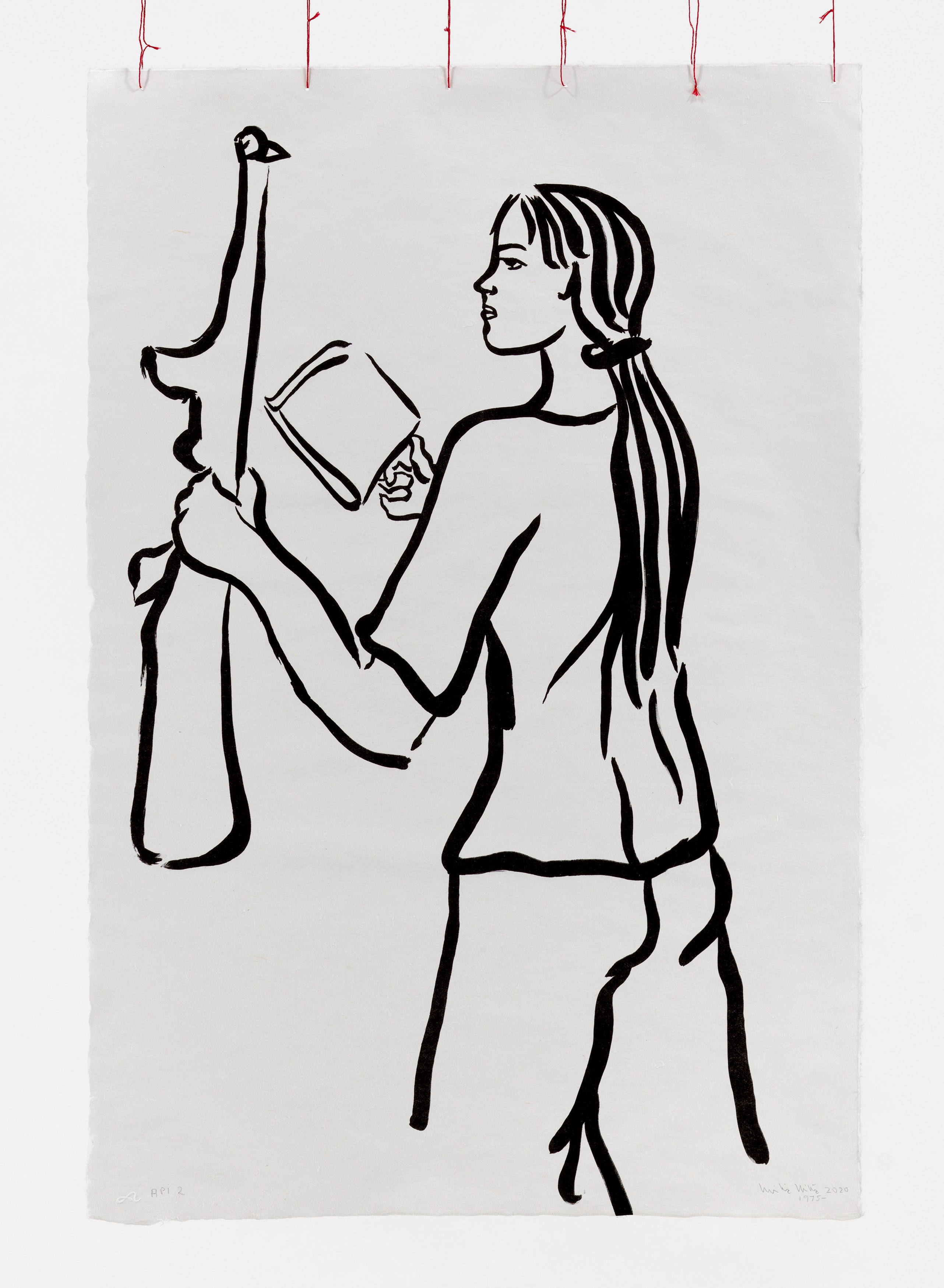
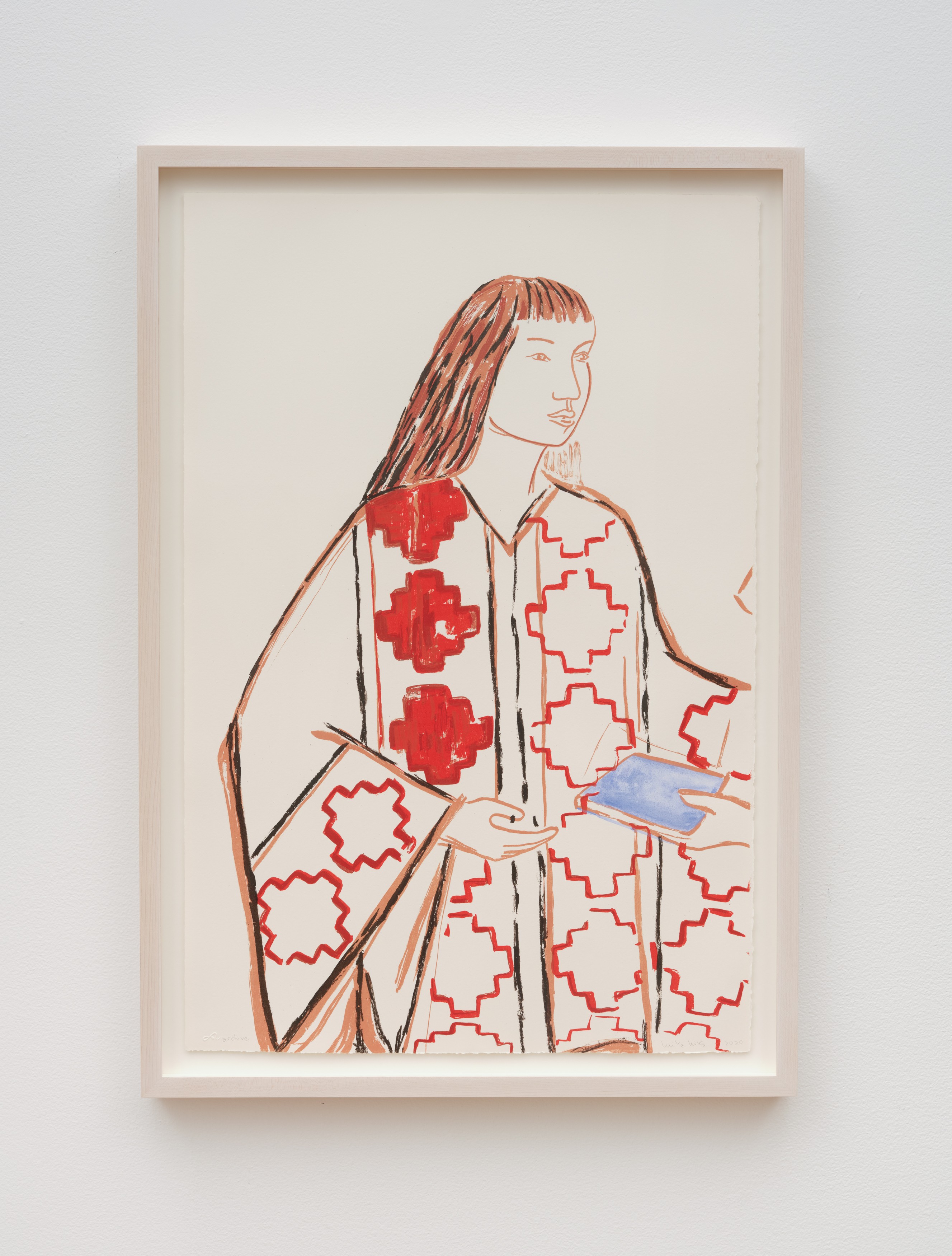
Lehmann Maupin is pleased to announce Quipu Girok, an exhibition of new work by Chilean artist Cecilia Vicuña featuring her first “painted” quipu, a recent video, hand-painted prints, drawings, and an installation of precarios that will engage a dialogue between Korean and Andean textile traditions and techniques. An artist, filmmaker, poet, and activist based in New York, Vicuña’s work ranges from performance, to painting, to poetry, to large-scale installations that address pressing concerns of the modern world, including ecological destruction, human rights, and cultural homogenization. The exhibition marks Vicuña’s second with the gallery and is her first solo presentation in Asia. Quipu Girok will coincide with the Gwangju Biennale, which will feature a selection of Vicuña’s paintings from the 1970s and a number of textile prints. These prints are a recreation of a series of paintings on fabric that the artist produced from 1975-1977 as an homage to the women who served in the Vietnam War.
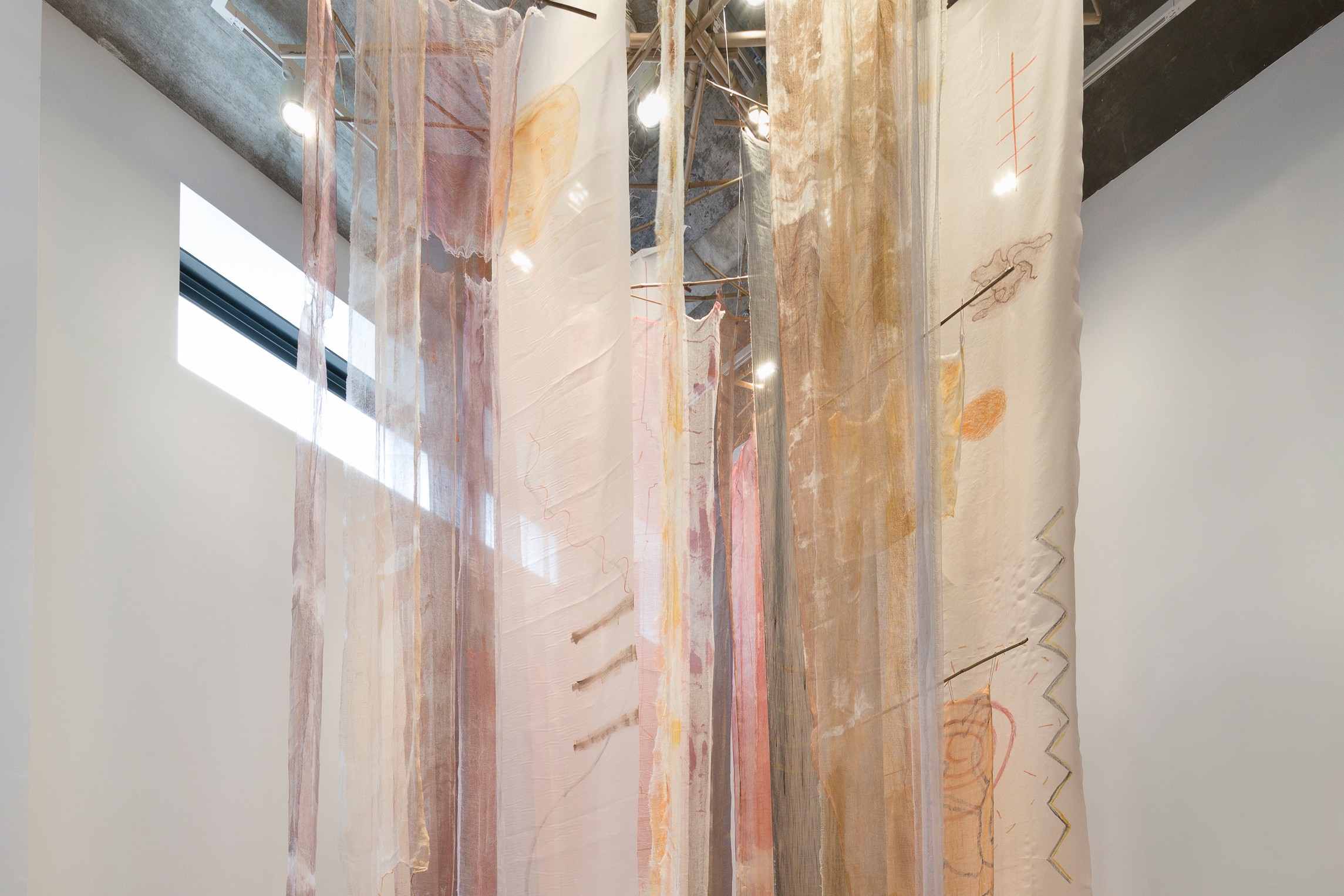
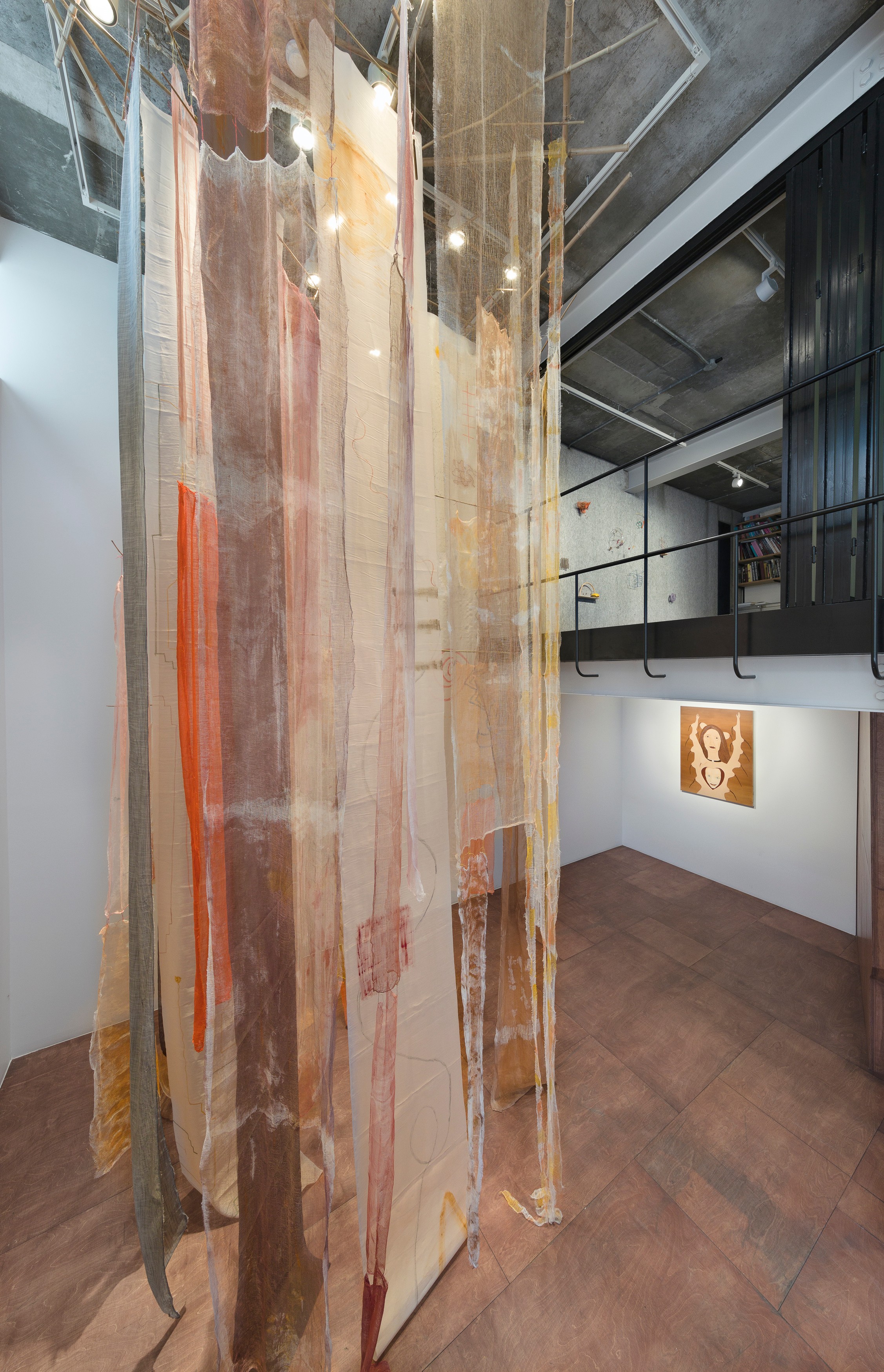
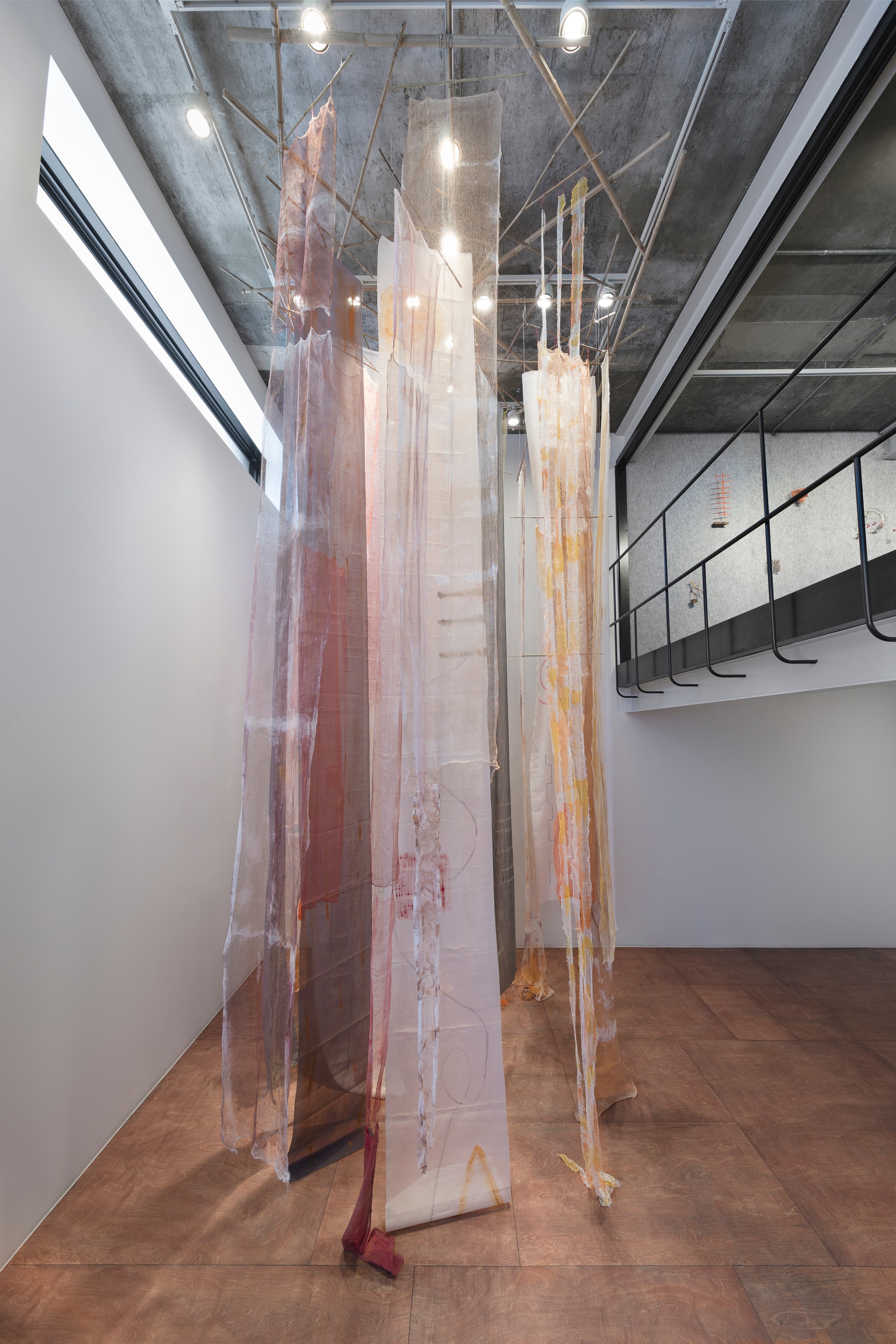
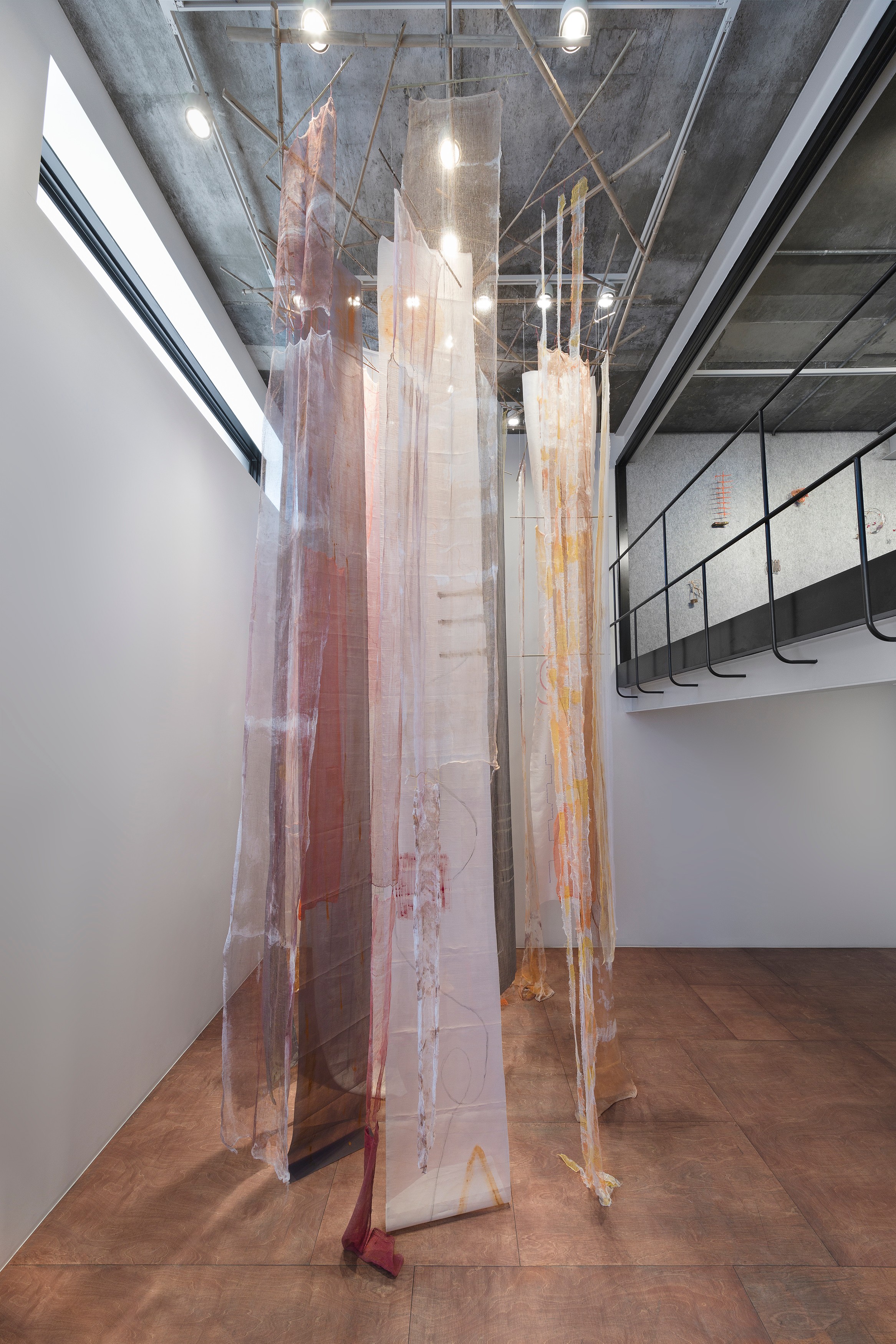
The title Quipu Girok combines ancient Andean language and Korean, loosely translating to Knot (quipu) Record (girok). The quipu—an Andean method of visual-tactile communication and recordkeeping system involving the knotting of colored strings—has featured prominently throughout Vicuña’s oeuvre since the 1960s and 70s. In the artist’s varied renditions, the quipu becomes a conceptual and performative poem in space, an act of resistance based on Vicuña’s desire to recover the lost history of this ancient form of writing. The centerpiece of the exhibition, from which it takes its name, is Quipu Girok—a large-scale quipu installation comprised of columns of painted gauze (reminiscent of ancient forms of indigenous painting on weaving), silk polyester (hanbok), and cotton (used in traditional Korean textiles) that hang vertically from uneven bamboo sticks. Each panel of transparent fabric is painted using pigment and pastel crayon to create a multi-layered work inspired by a series of Solar paintings the artist created during the 1970s. These paintings, like the installation Quipu Girok, feature simplified marks and geometric signs and symbols that recall the very beginning of painting on textiles in the pre-Columbian Andes. For Vicuña, these early artworks (forms of visual communication) are “abstract in a very profound sense.” As with poetry, there is a general sense of what the image signifies while its specific reference point remains unknown.
세실리아 비쿠냐
Quipu Girok, 2021
세실리아 비쿠냐
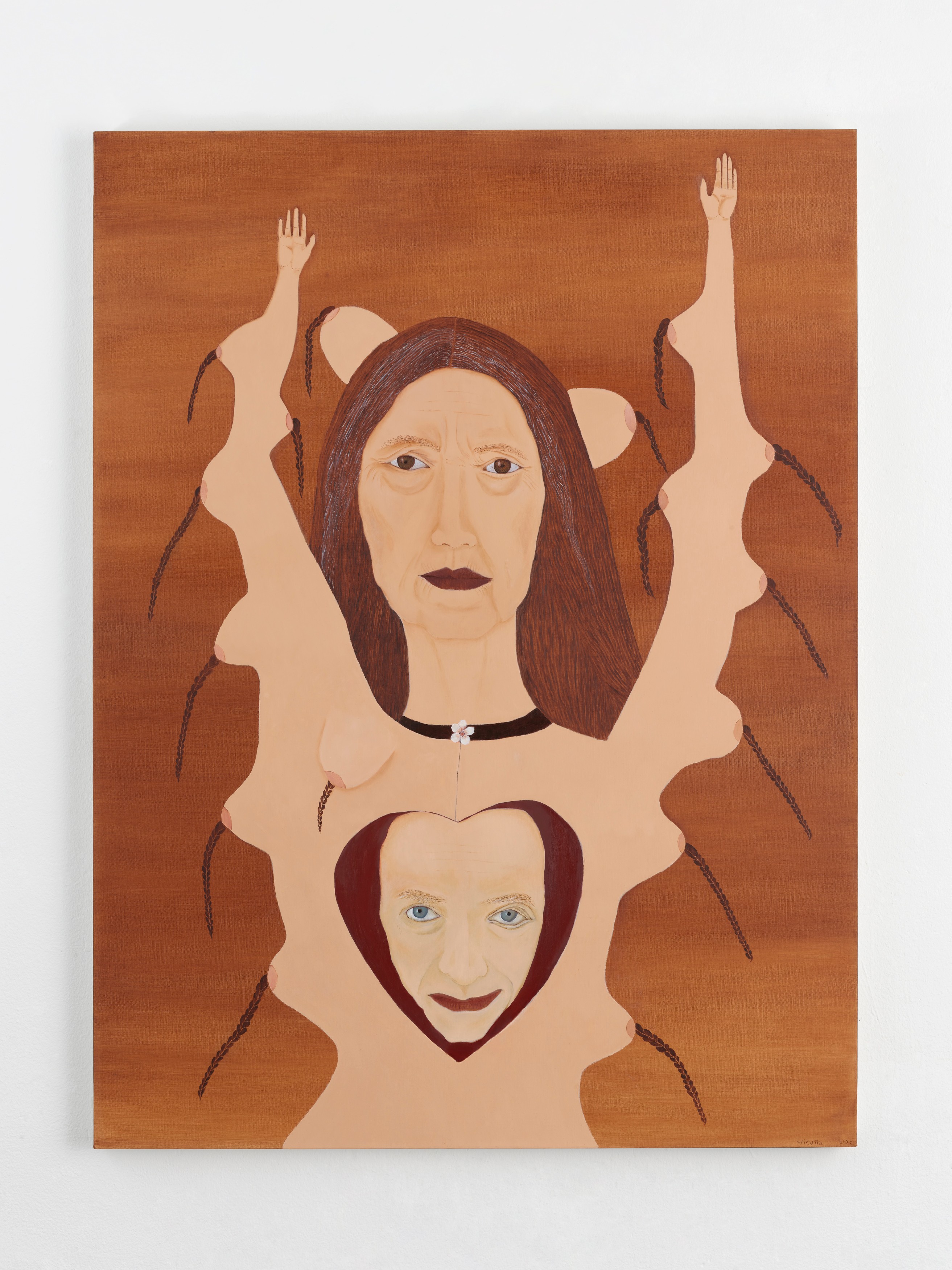
Self Portrait with Humps, 2021
세실리아 비쿠냐
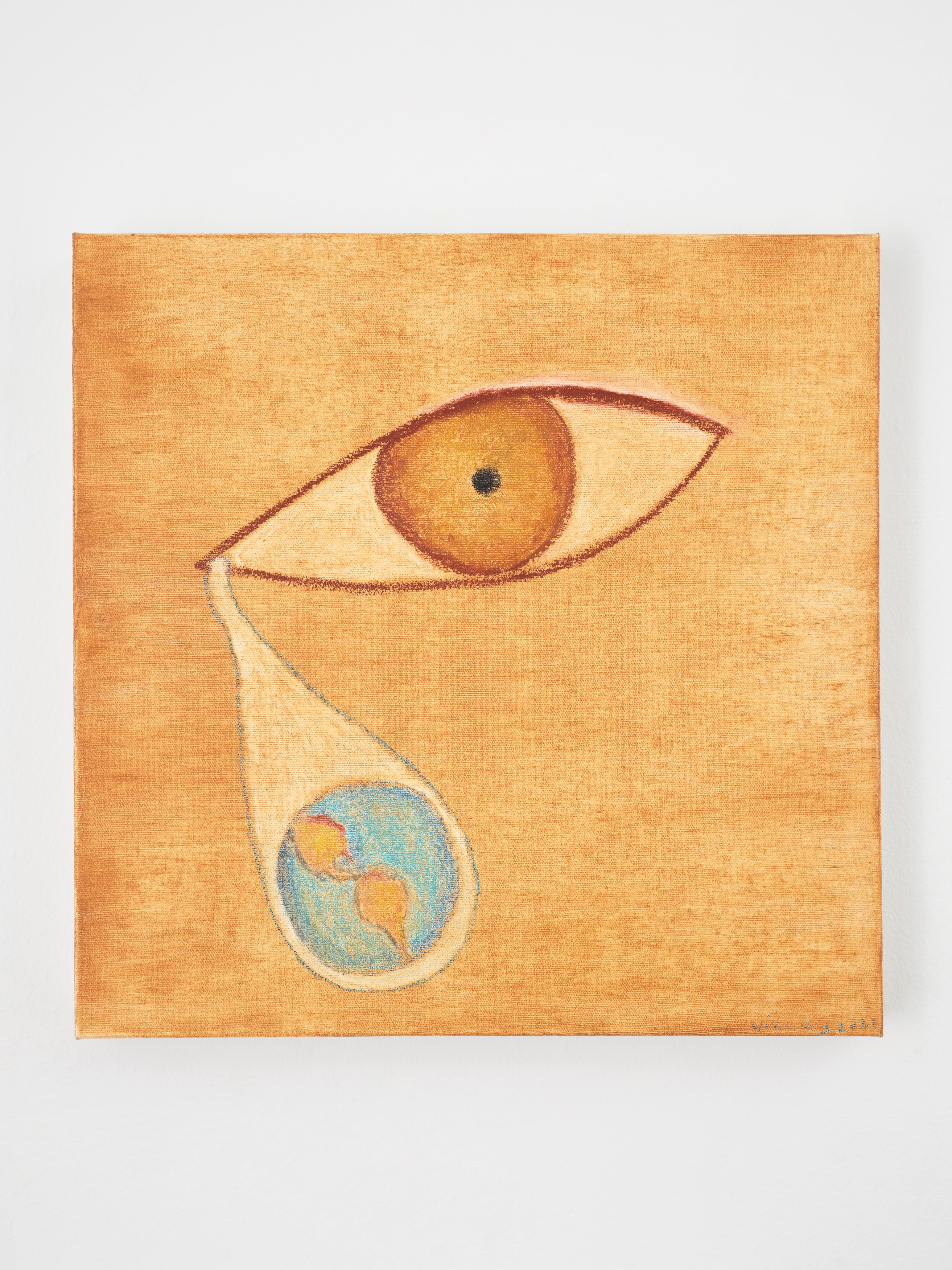
Tara's Tears (A Prayer for the World), 2021
세실리아 비쿠냐
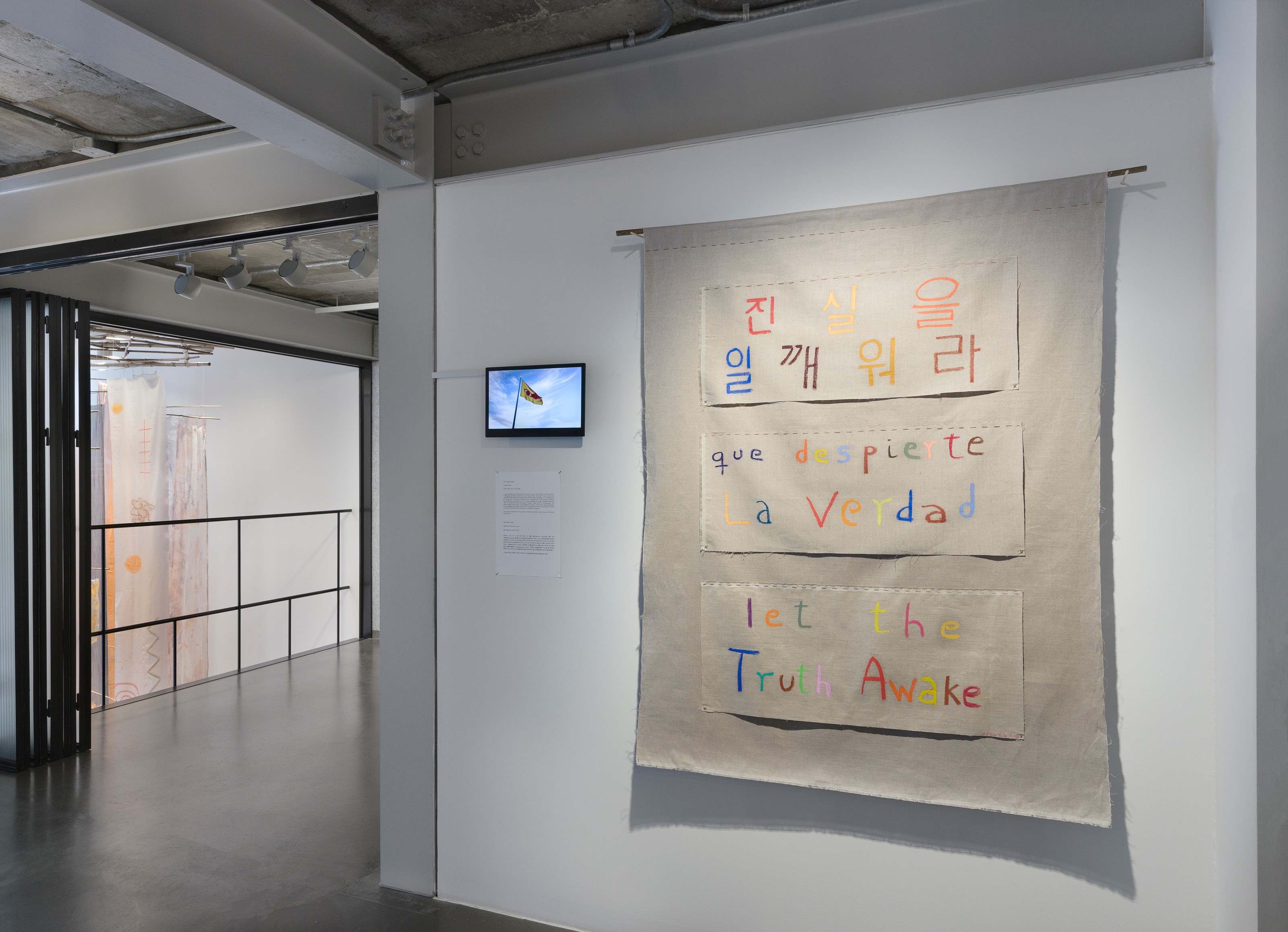
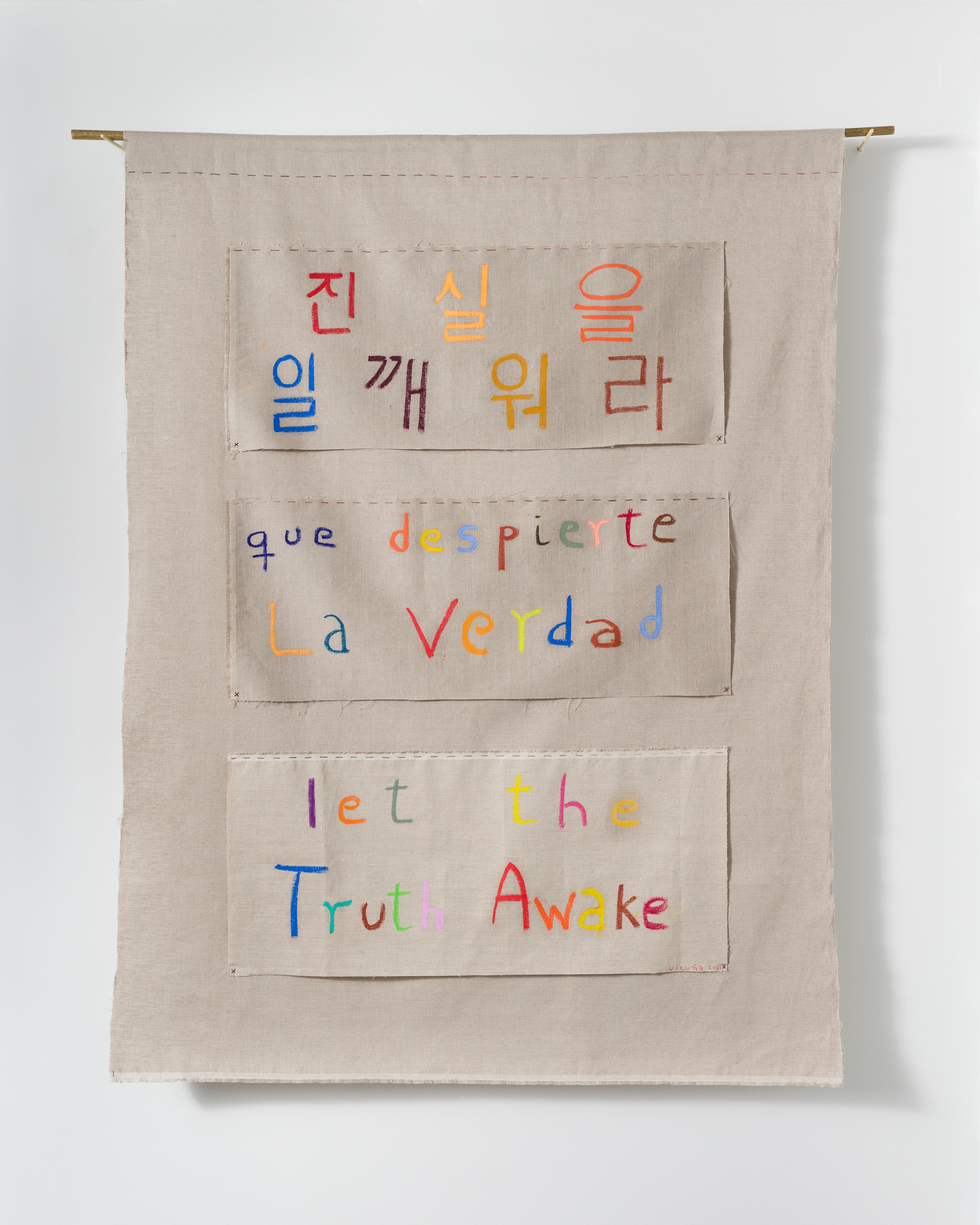
Let The Truth Awake, 2021
세실리아 비쿠냐
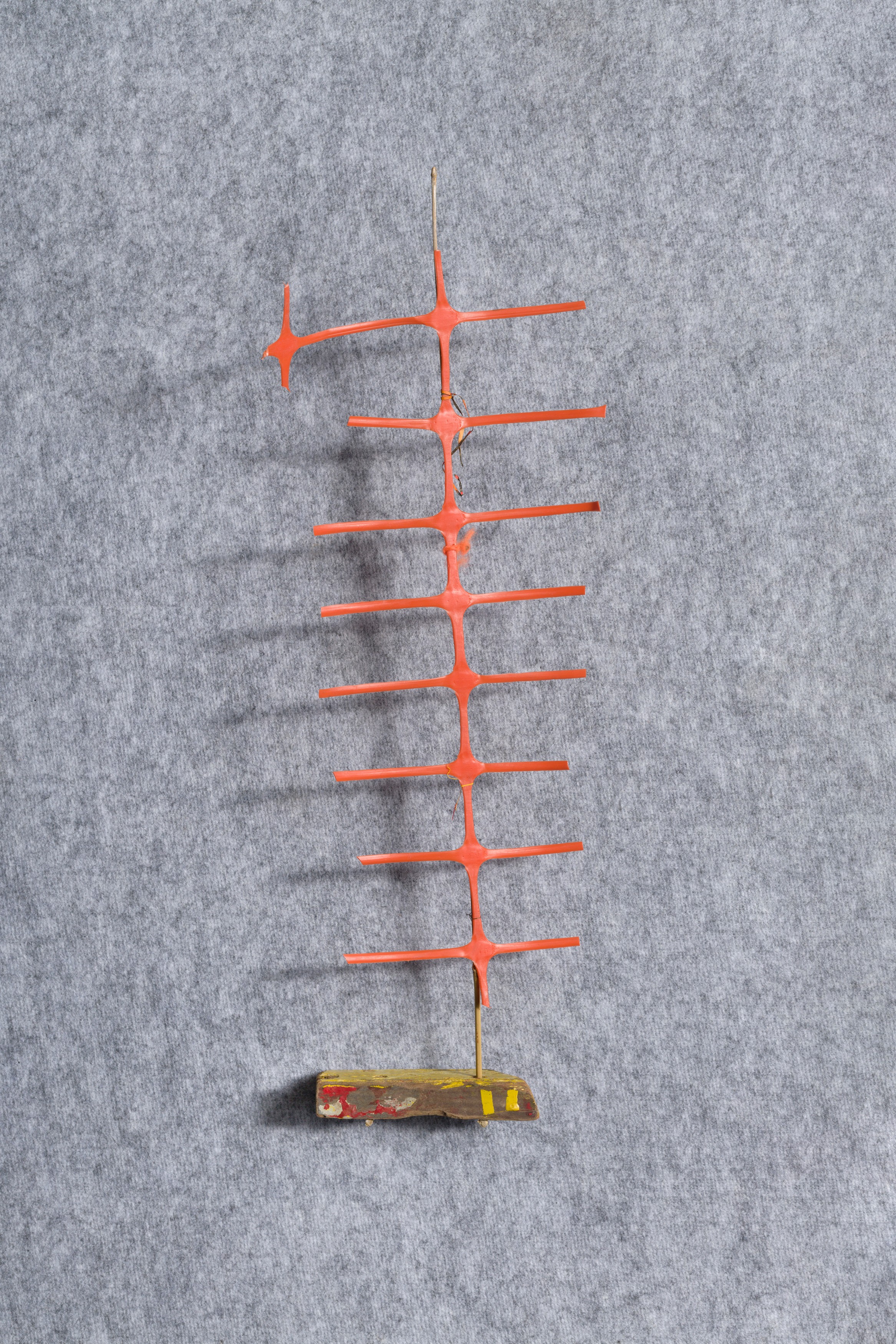
Alto Naranja, 1999
세실리아 비쿠냐
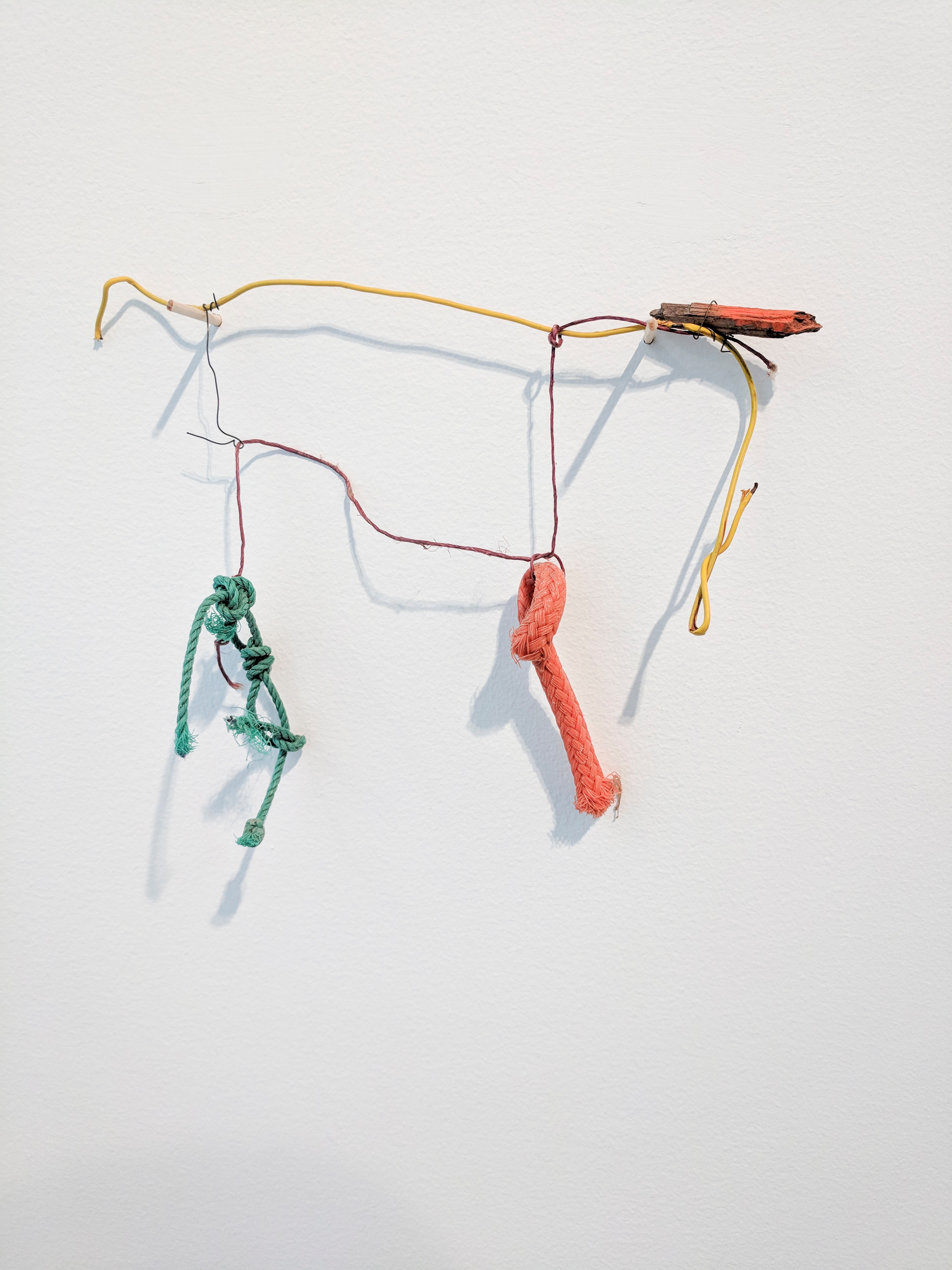
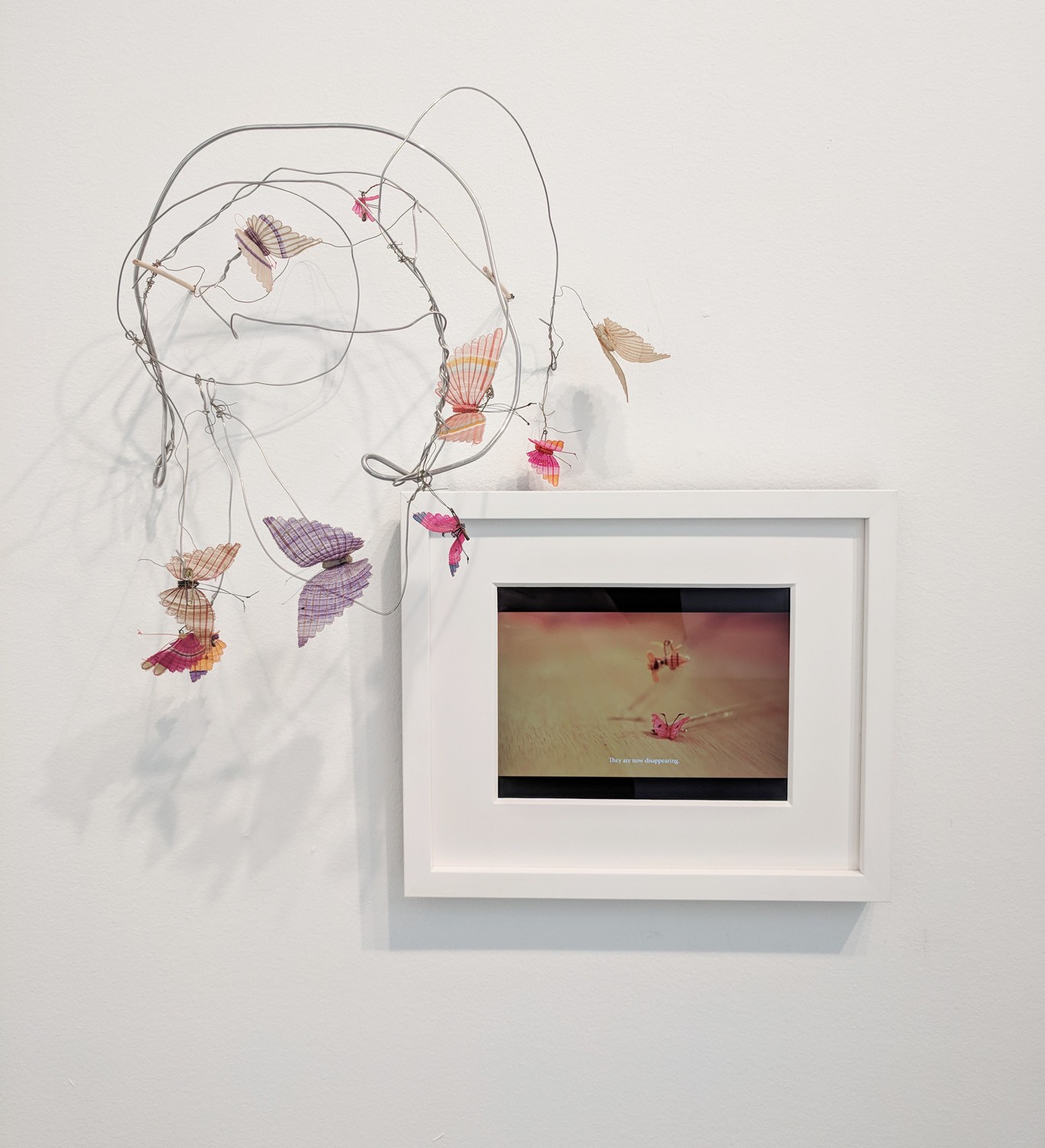
Cable aplastado (Precarios), 2014
세실리아 비쿠냐
Chiloé 2 (Precarios), 2014
세실리아 비쿠냐
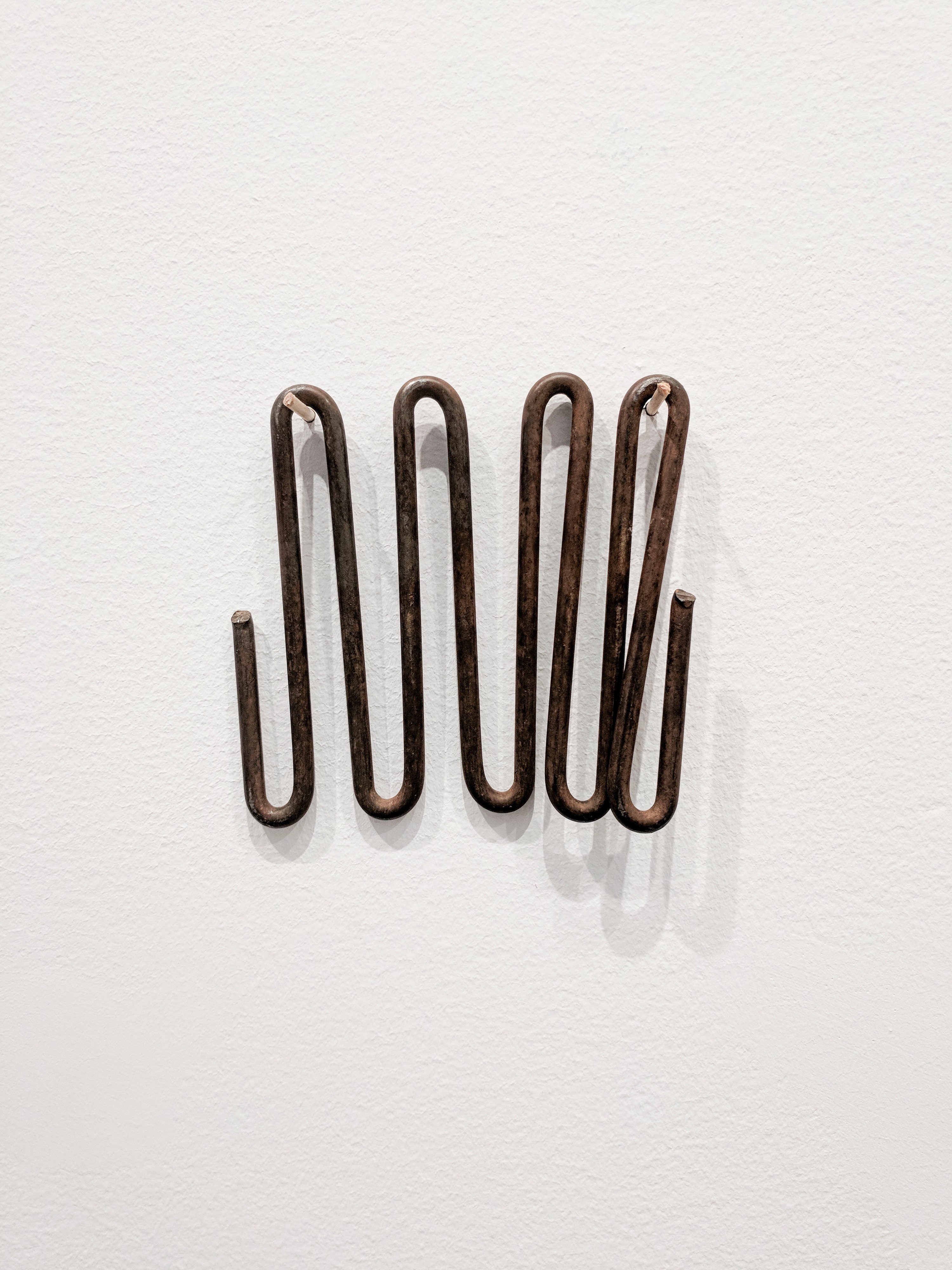
Hilo de fierro (Precarios), 2014
세실리아 비쿠냐
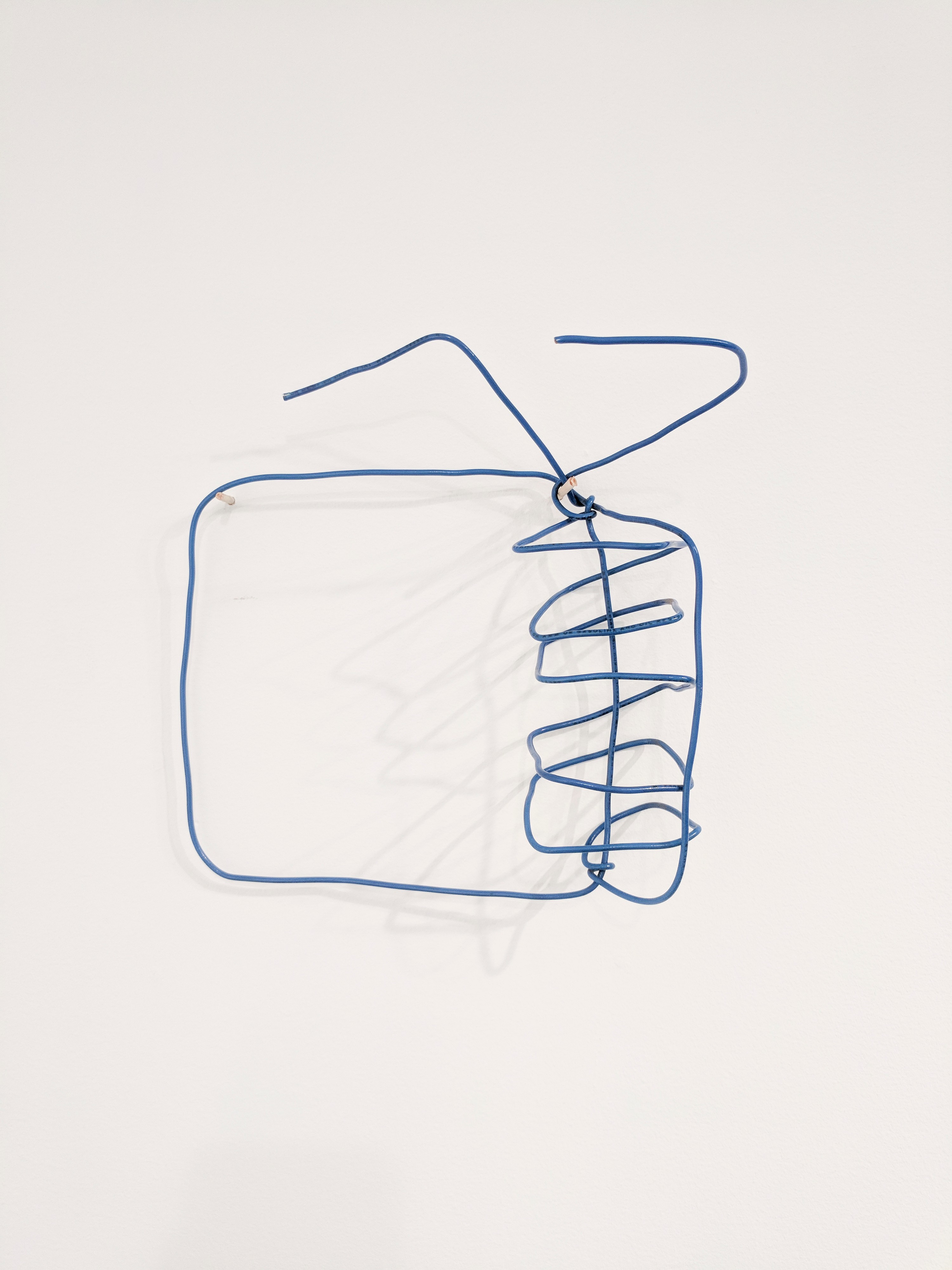
Nudo azul (Precarios), 2014
세실리아 비쿠냐
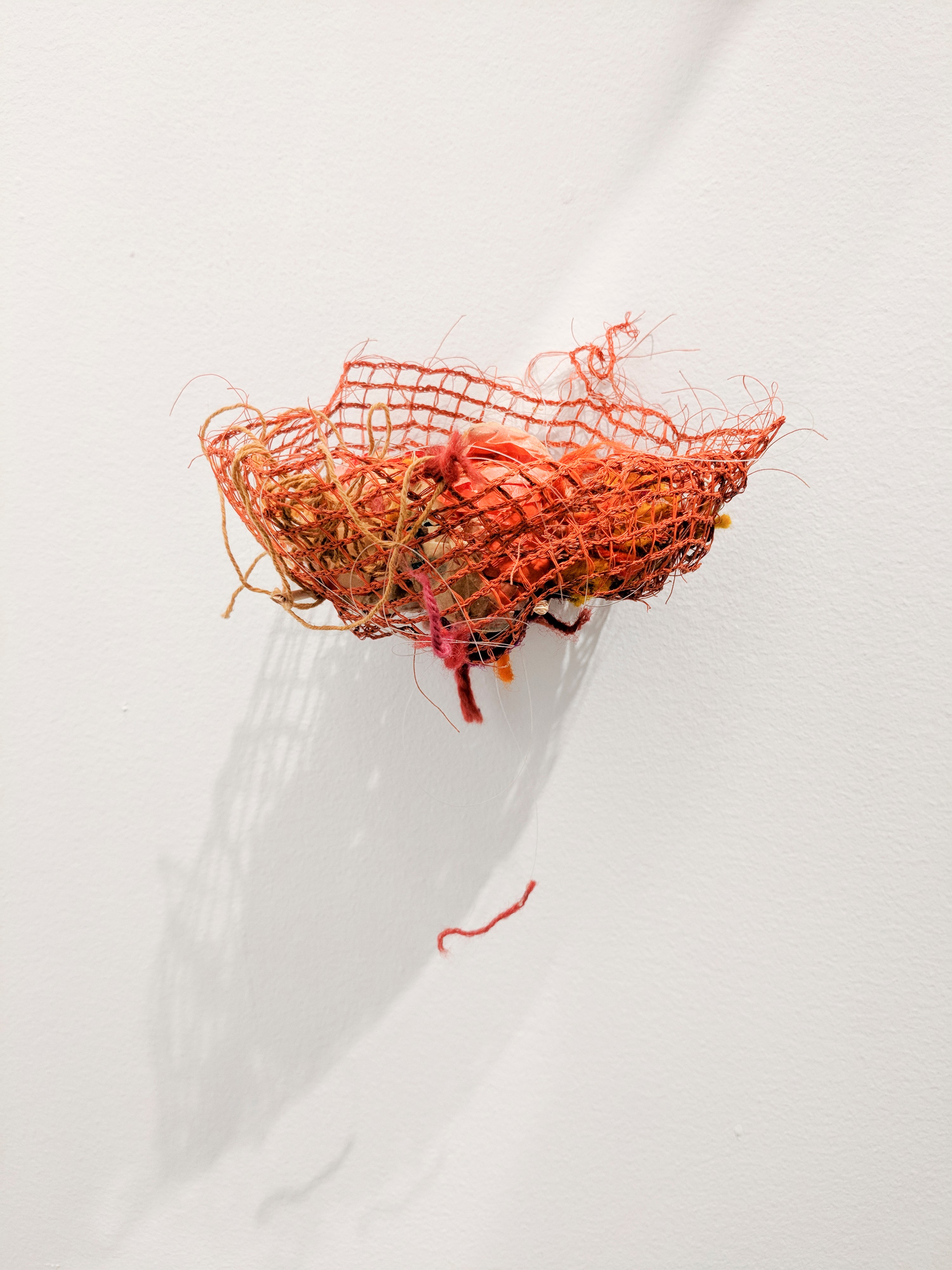
Nido plástico (Precarios), 2014
세실리아 비쿠냐
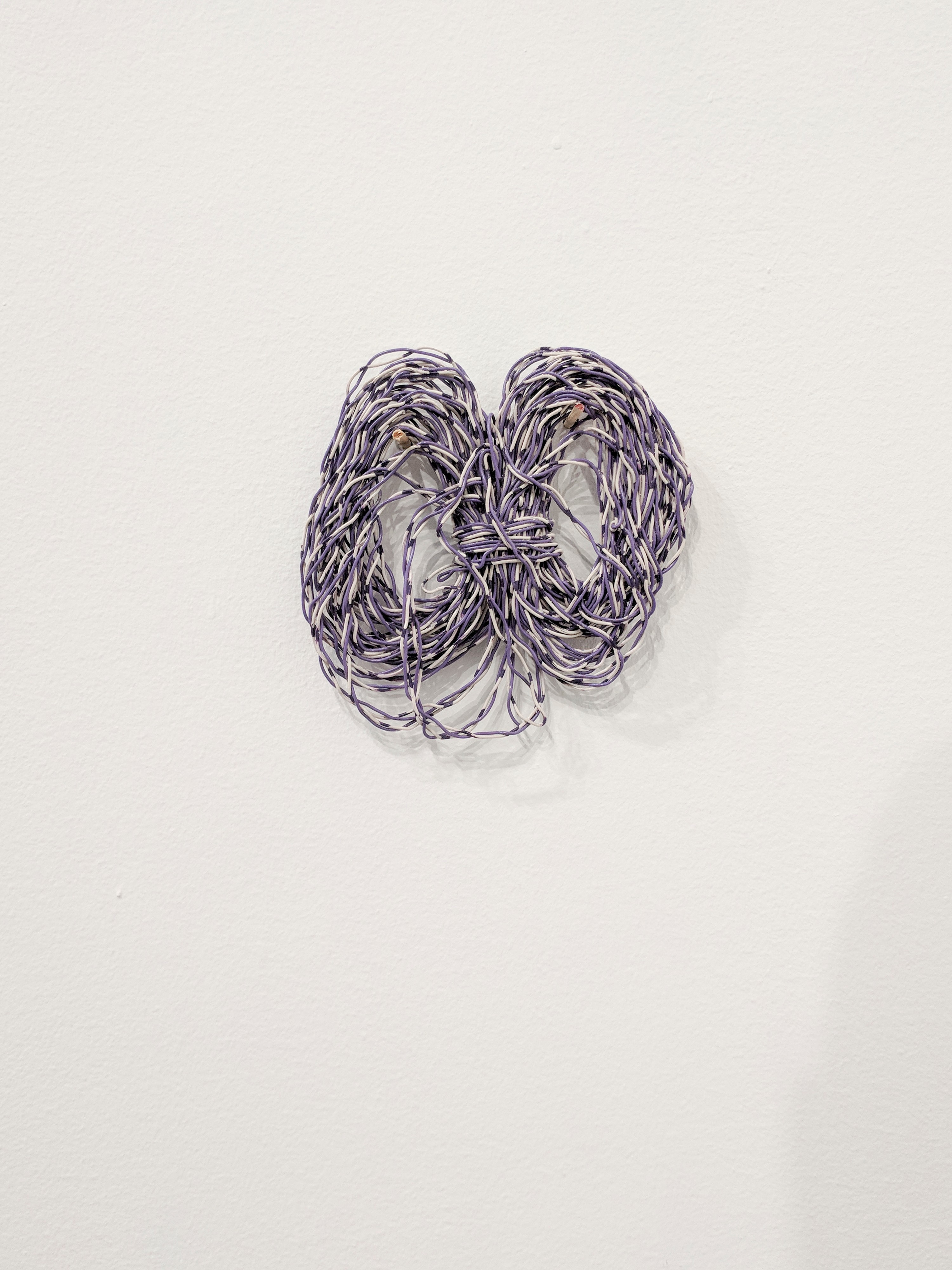
Cerebro Rari (Precarios), 2014
세실리아 비쿠냐
Girl with Book and Gun, 1975-2021
세실리아 비쿠냐
Niña Mapuche, 1975-2021
세실리아 비쿠냐
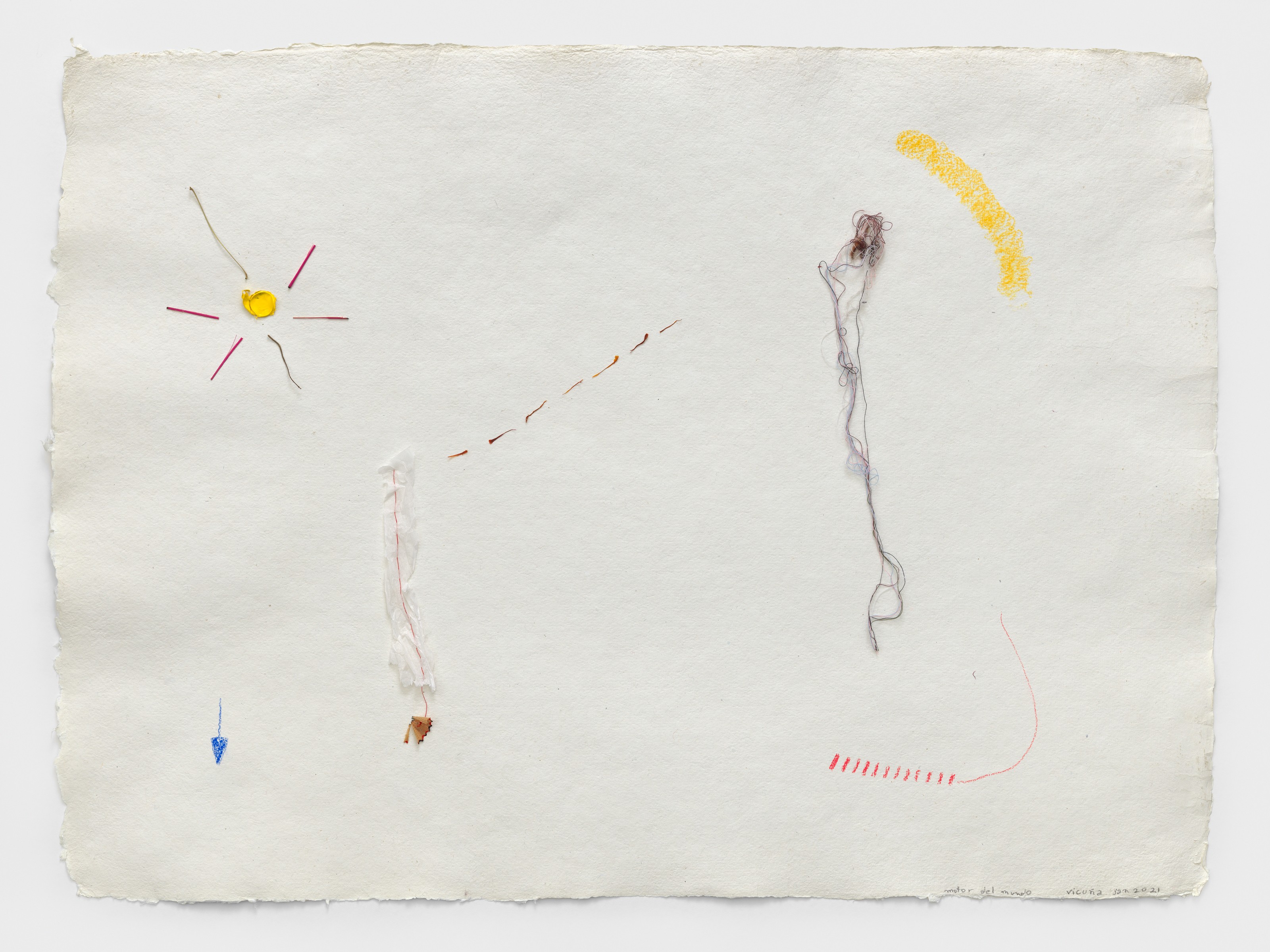
Motor del mundo, 2021
세실리아 비쿠냐 (1948년 칠레 산티아고 출생, 현재 뉴욕과 산티아고 거주 및 작업 중)는 시, 퍼포먼스, 개념미술과 직물 공예를 통해 생태계 파괴, 인권, 문화 획일화와 같은 현대 사회의 긴급한 문제들을 대한 우려를 표출한다. 산티아고에서 태어나고 자란 그녀는 1970년대 초, 살바도르 아옌데 대통령에 대한 폭력적인 군사 쿠데타 이후 망명 되었다. 이러한 불안정한 정치와 칠레의 고유문화를 보존하고 기리고자 하는 욕망은 그녀의 경력 전반에 걸쳐 작업 특징으로 삼고 있다.
1960년대 중반 칠레에 살면서, 비쿠냐는 깃털, 돌, 플라스틱, 나무, 철사, 조개껍질, 천, 그리고 인공적인 잔해들을 결합하여 만든 공간적 시(poem), '프레카리오스(precarios)'라고 부르는 일련의 작은 조각 작품 시리즈를 작업하기 시작했다. 이 작은 조각들은 종종 끈으로 느슨하게 묶여 있어 재료들이 자연스럽게 모인 것처럼 보이기도 한다. 이러한 작품들은 그 자체로 연약하고 일시적이며, 비쿠냐는 프레카리오스를 바다의 가장자리에 배치하여 밀물에 의해 자연스럽게 지워지도록 의도했다. 프레카리오스를 작업하던 비슷한 시기에 비쿠냐는 색깔이 있는 끈을 매듭지어 소통하고 기록하는 안데스의 고대 키푸스(quipus)에도 관심을 가지기 시작했다. 그녀의 첫 공간적 직조는 1970년대 초반에 시작되었으며, 그녀는 방적되지 않은 양털로 자신의 키푸스를 만들기 시작했다. 이러한 일시적이고 장소 특정적인 설치 작품들은 직조와 방적의 촉각적인 의식을 집합체, 시, 그리고 공연과 결합했다. 1970년대 작업한 비쿠냐의 초현실적인 구상 회화는 그녀의 다른 작품들에 비해 개인적이고 정치적이며, 칠레의 불안과 그로 인한 망명에 직접 반응하여 창작되었다. 이 회화들은 스페인 정복 이후, 16세기 라틴 아메리카의 원주민 예술가들이 가톨릭 교회를 위해 천사와 성인을 그리도록 강요받았던 시기에 제작된 미묘하게 전복적인 이미지들을 참조하기도 한다. 비쿠냐의 회화에서는 종교적 아이콘이 개인적, 정치적, 문학적 인물로 대체되어 예술가에 의해 기념되고 신화화된다.