Skip to content

Nicholas Hlobo

Nicholas Hlobo

Seoul

Mar 21–May 18, 2019

Installation view of Nicholas Hlobo at Lehmann Maupin Seoul

213 Itaewon-ro, Yongsan-gu

Seoul, 04349

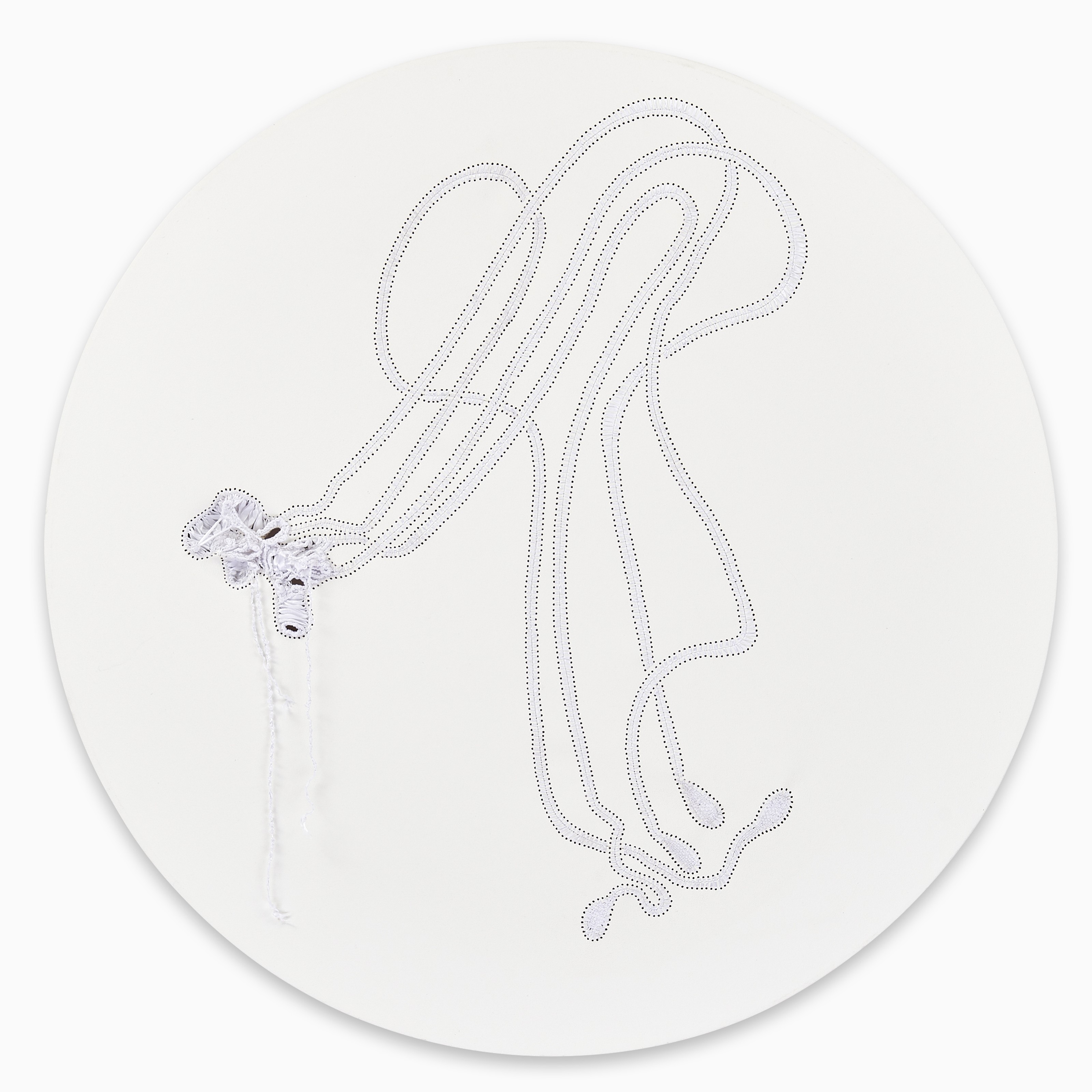
Lehmann Maupin is pleased to announce South African artist Nicholas Hlobo’s first exhibition in Seoul. The show will feature new and recent paintings by Hlobo, who has garnered acclaim for his works composed with his signature materials of ribbon, leather, wood, and rubber, employed with conceptual specificity to address complex issues of identity. Also included in the show is a new sculpture, Dyumpu (2019), made from copper piping—a new addition to his material repertoire—which is prominently featured in his current exhibition at SCAD Museum of Art in the United States. The gallery will host an opening reception with the artist in attendance on Thursday, March 21, at 74-18, Yulgok-ro 3-gil, from 5 to 7 PM.

At the core of Hlobo’s practice is the exploration of his own identity, as he attempts to ascertain qualities that exist outside of codifying labels associated with gender, sexuality, and ethnicity. In order to challenge the restrictive terminology typically used surrounding identity, Hlobo incorporates visual tropes that relate to his ethnic and cultural background, while also questioning the shifting and subjective nature inherent in these signifiers. Language and narrative specifically play both a formal and conceptual role in Hlobo’s work. As a descendent of one of South Africa’s largest indigenous communities, the Xhosa, Hlobo always titles his work in the Xhosa language, imbuing the piece with a subtle personal narrative about his experience of creating, which he often references in his titles. Hlobo titles his work in Xhosa as a way to challenge the generic term of “South African” from being used to describe his work, and also to assert the potency of his cultural identity. Moreover, this is a strategy to engage his audience in the act of cultural translation, which initiates the excavation of the works’ layered meanings.

Installation view of Nicholas Hlobo at Lehmann Maupin Seoul
Installation Views: 1 of 3
Wall work by Nicholas Hlobo

Nicholas Hlobo

Itywina, 2019

Wall work by Nicholas Hlobo

Nicholas Hlobo

Ibuthathaka, 2019

Installation view of Nicholas Hlobo at Lehmann Maupin Seoul
Installation Views: 1 of 2
Wall work by Nicholas Hlobo

Nicholas Hlobo

Uzuko lwengcwele uIgnatius, 2019

Sculpture by Nicholas Hlobo

Nicholas Hlobo

Dyumpu, 2019

Wall work by Nicholas Hlobo

Nicholas Hlobo

Yila, 2019

Wall work by Nicholas Hlobo

Nicholas Hlobo

Ibele, 2018

Wall work by Nicholas Hlobo

Nicholas Hlobo

Ixhegokazi, 2017

Wall work by Nicholas Hlobo

Nicholas Hlobo

Ingqimba yokukhanya esisiqalo, 2017

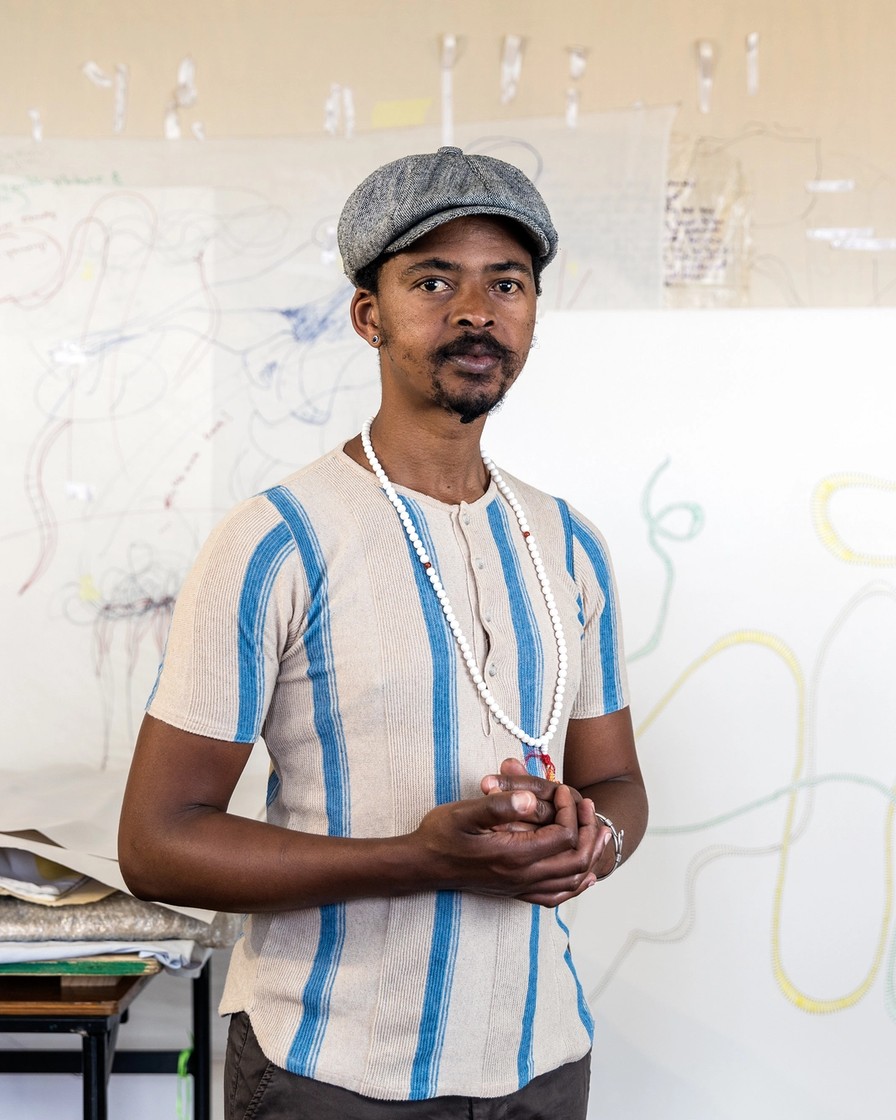
Portrait of Nicholas Hlobo

Nicholas Hlobo (b. 1975, Cape Town, South Africa; lives and works in Johannesburg, South Africa) began his career around the end of apartheid in 1994, when there was a new sense of freedom and national pride in South Africa. With the eradication of legalized and enforced discrimination and segregation, Hlobo and his peers were empowered to openly voice their opinions and ideas under the protection of new laws, and Hlobo’s subtle commentary on the democratic realities of his home country and concerns with the changing international discourse of art formed a foundational tenet of his practice.

Hlobo uses metaphorically charged materials such as ribbon, leather, wood, and rubber detritus, which he melds and weaves together to create two- and three-dimensional hybrid objects that are intricate and seductively tactile. Each material holds a particular association with cultural, gendered, sexual, or ethnic identities, and the works form complex visual narratives that reflect the various dichotomies present within the artist’s home country, as well as those that exist around the world. The results are highly evocative, and the artist combines anthropomorphic imagery with cultural symbols and traditions to create amalgamated forms that feel at once familiar, alien, and ancient. At its core, Hlobo’s practice engages themes of self-discovery and explores the intersections of race, gender, and cultural and sexual identity within the context of his South African heritage.

Learn about the artist