Skip to content

Nari Ward

Breathing Directions

New York

Sep 9–Nov 1, 2015

Installation by Nari Ward

201 Chrystie St

New York, NY 10002

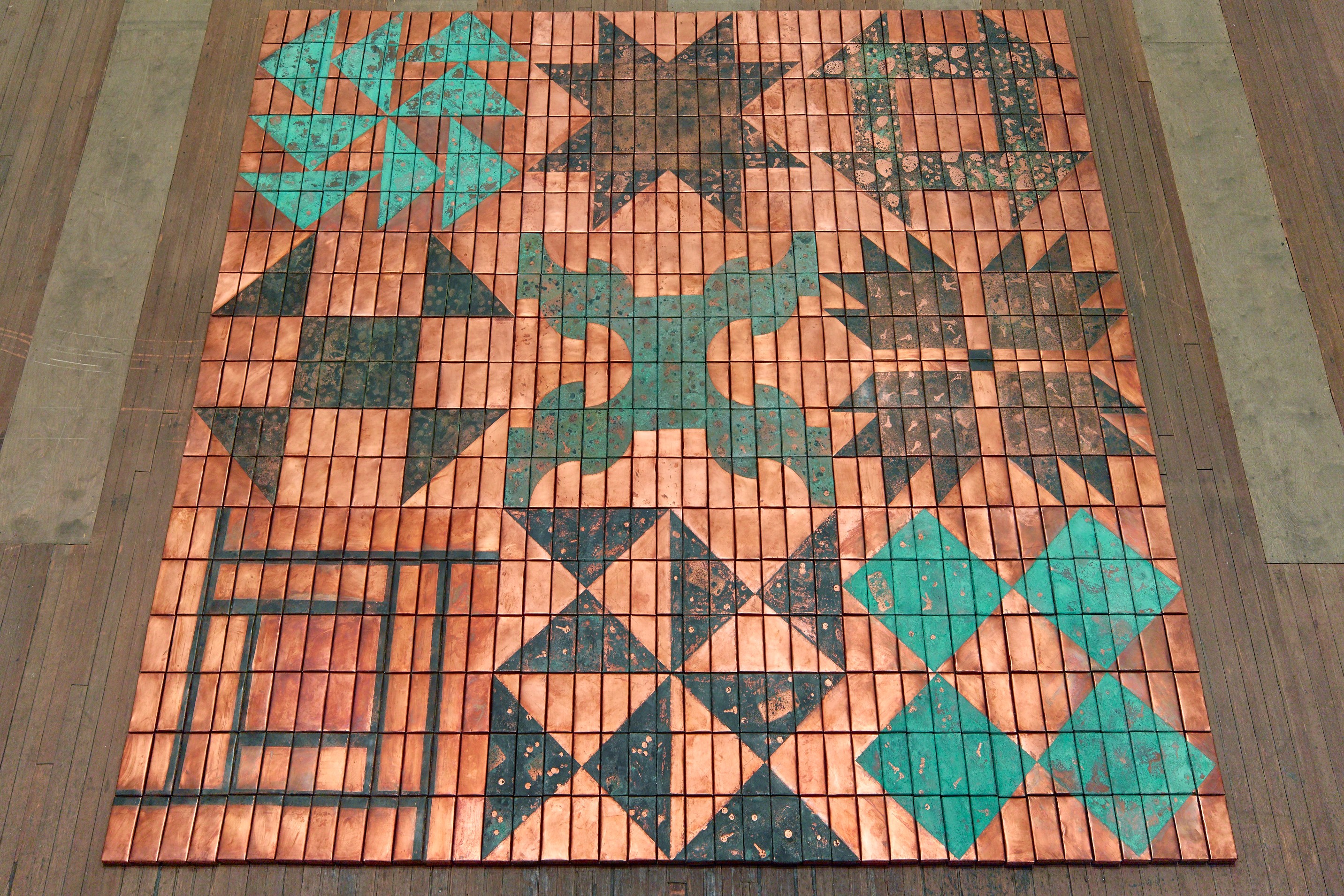
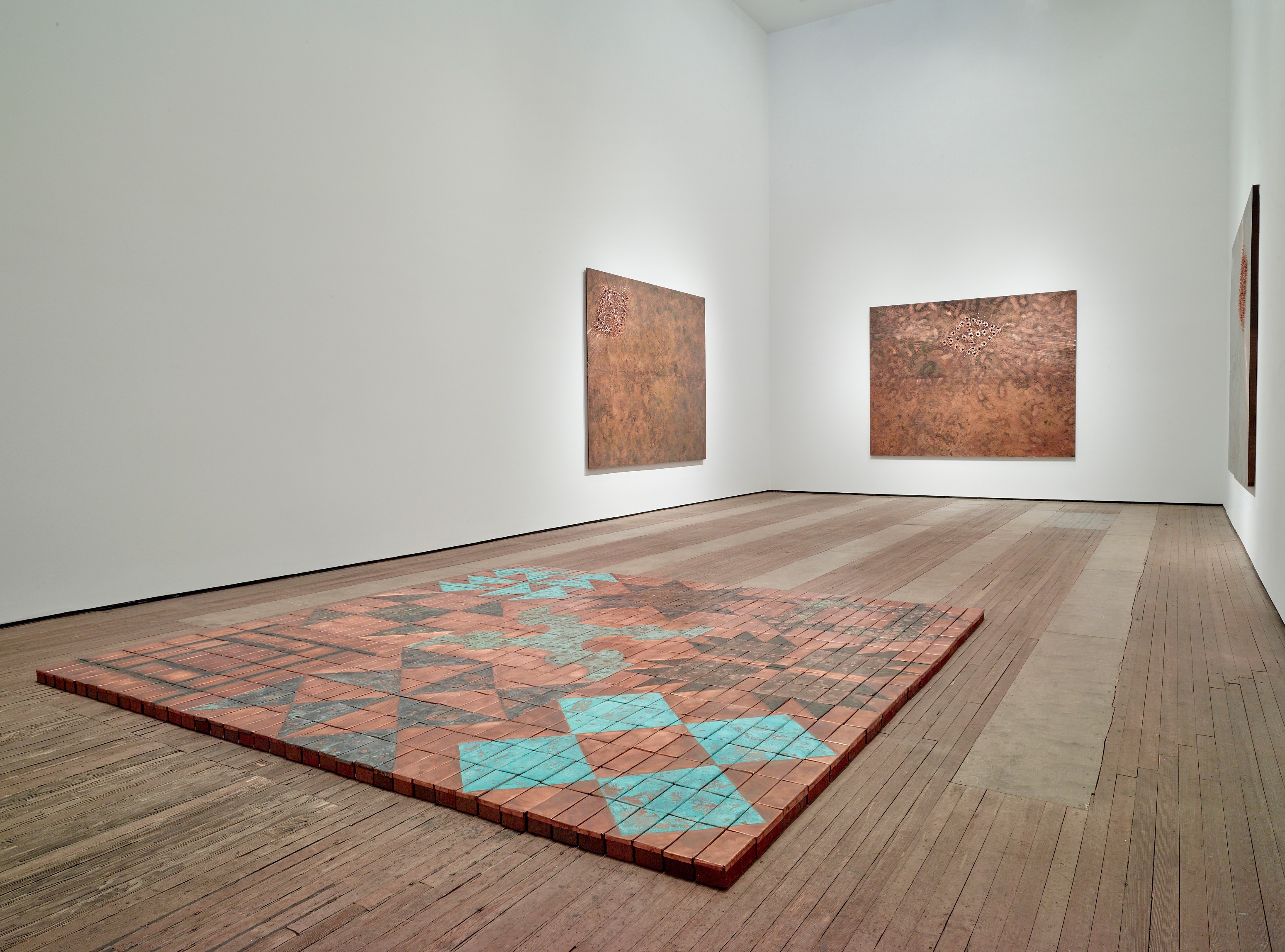
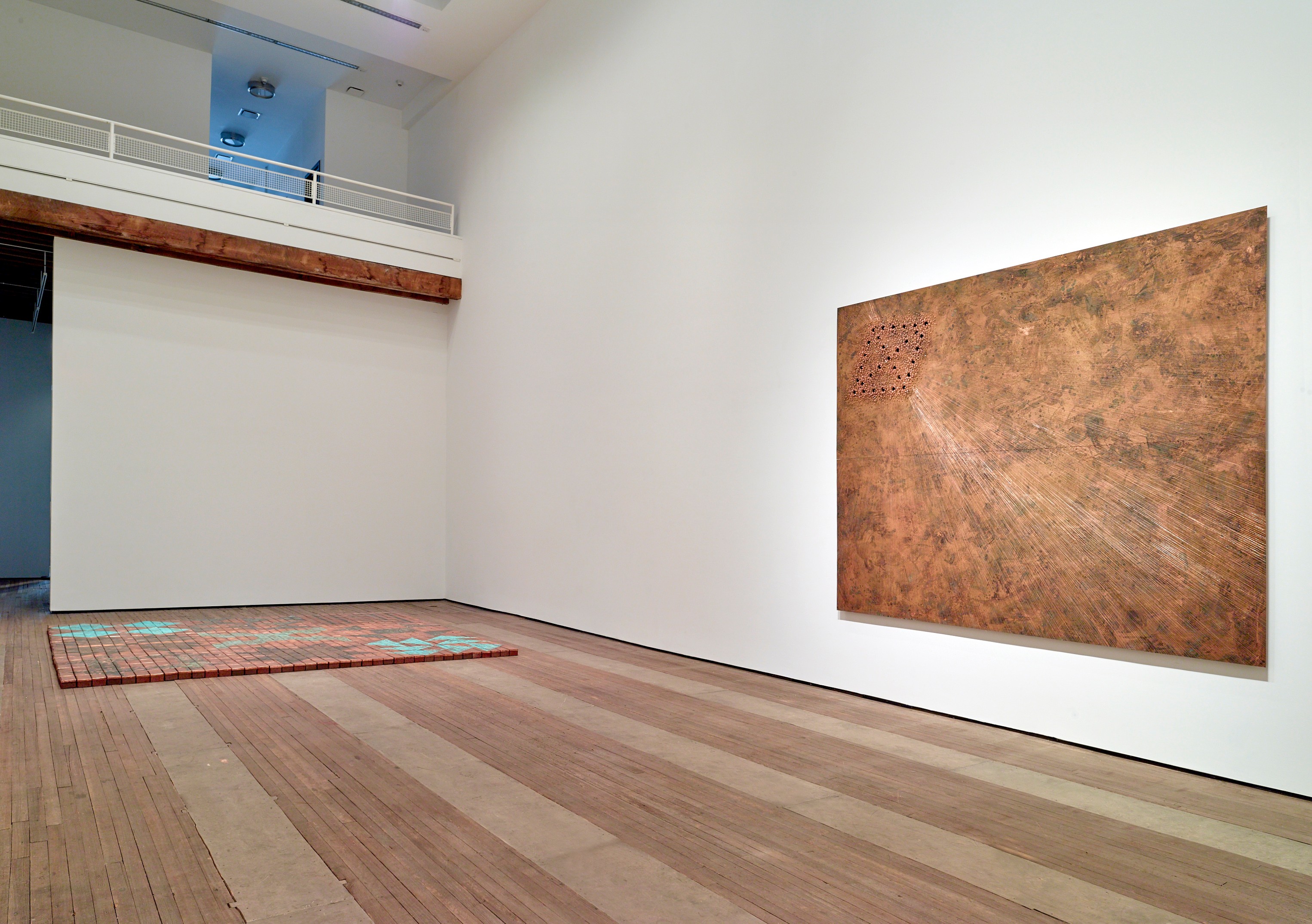
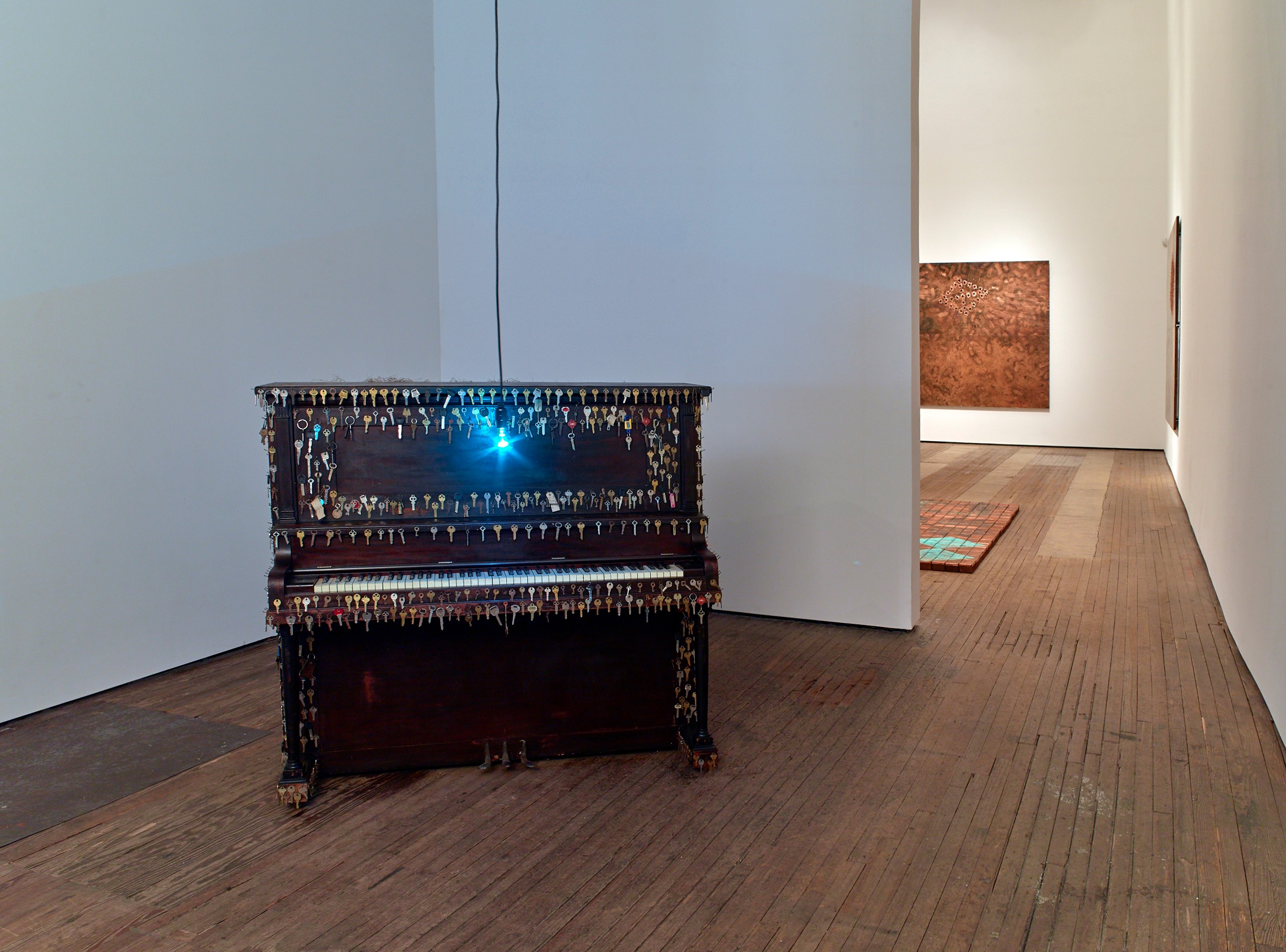
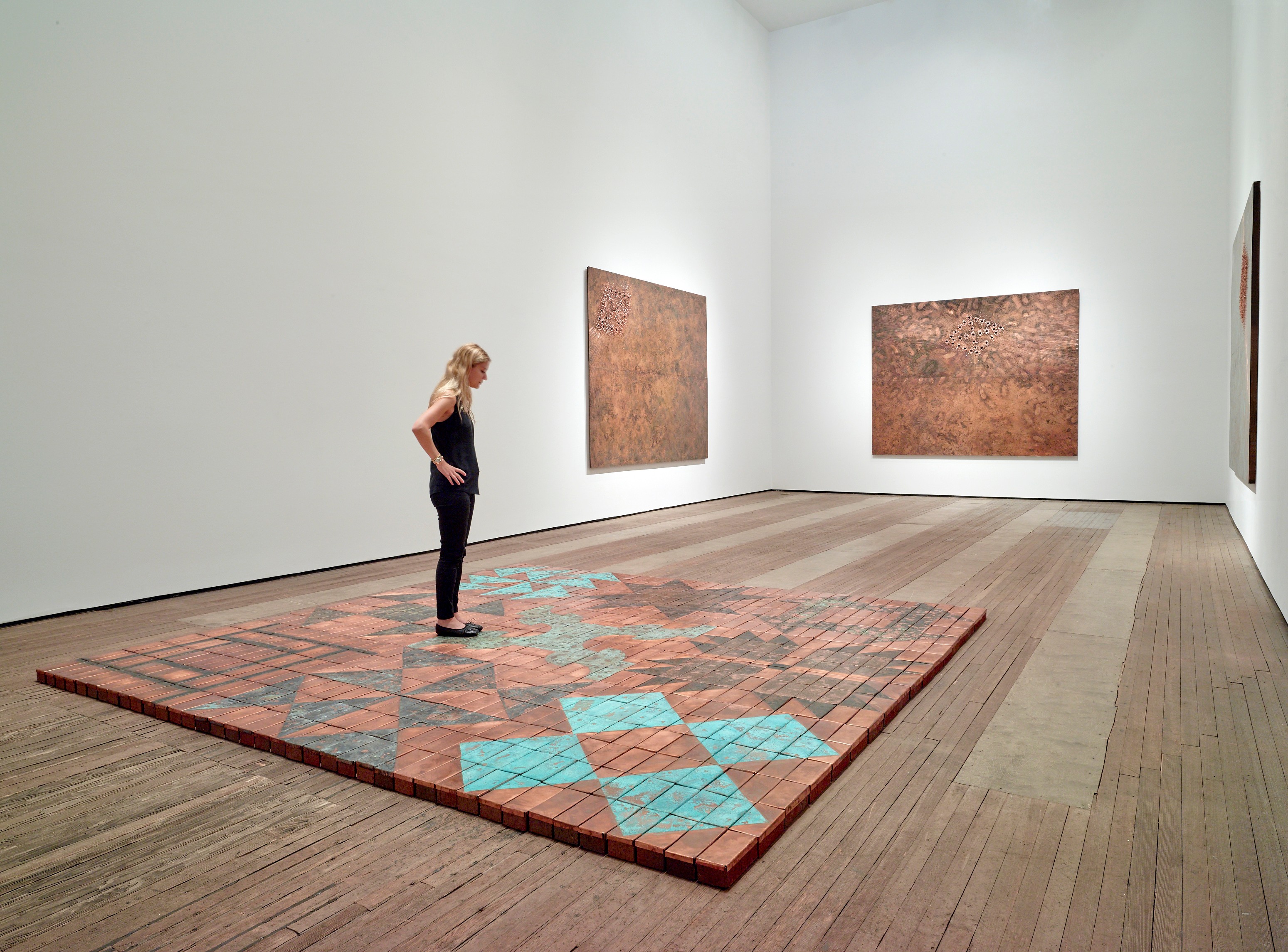
Lehmann Maupin is pleased to present Breathing Directions, Nari Ward’s third solo show with the gallery, on view at 201 Chrystie Street from September 9-November 1, 2015. Showcasing the artist’s new “Breathing Panels,” among other works, this exhibition continues Ward’s longstanding interest in the context and history of places in which he works, as well as the materials, objects, and phenomena he finds in those locations. In the works included in this exhibition the artist traces the meaning of various symbols, histories, and personal journeys, investigating how such signs can be at once present and visible, yet concealed to viewers unaware of their meaning.

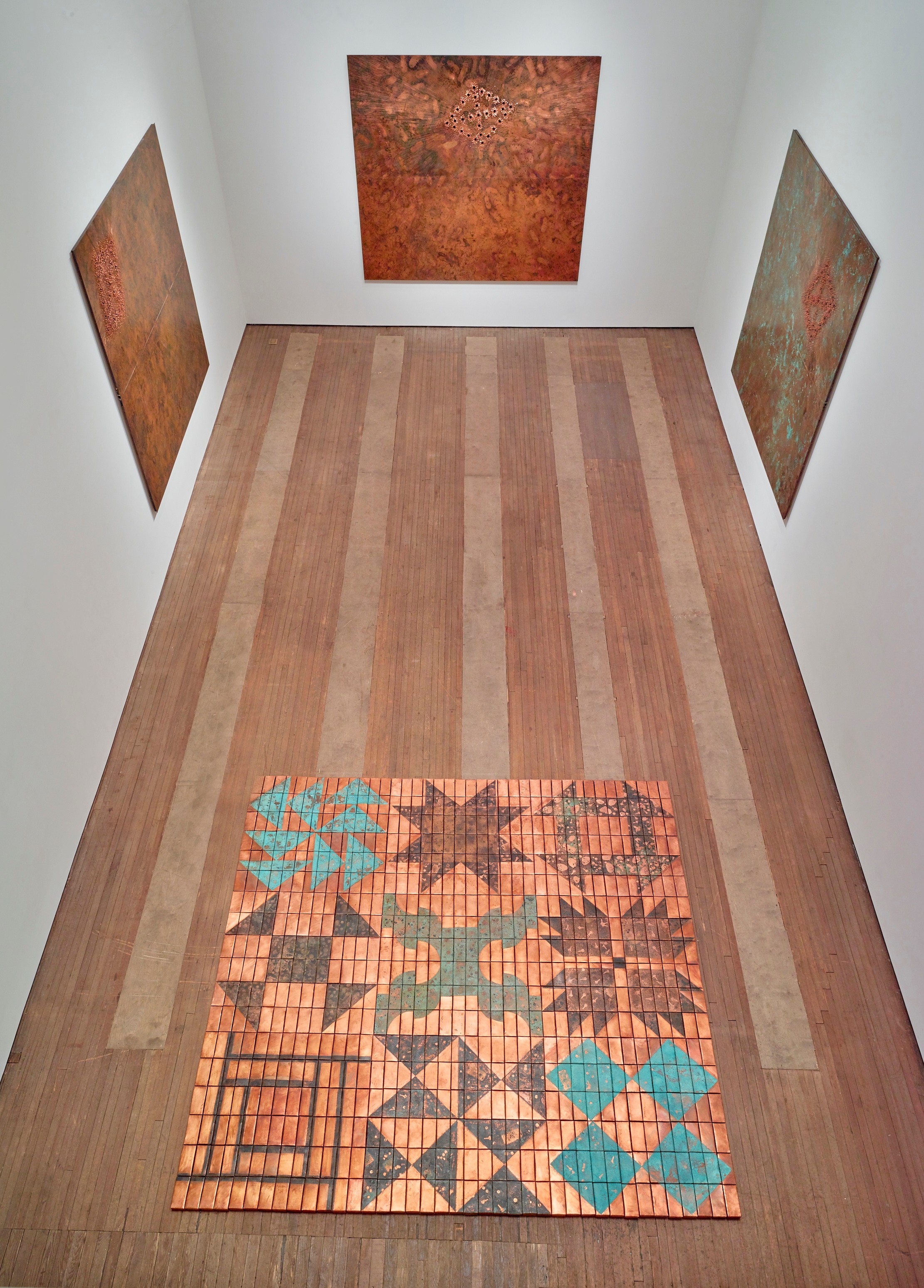
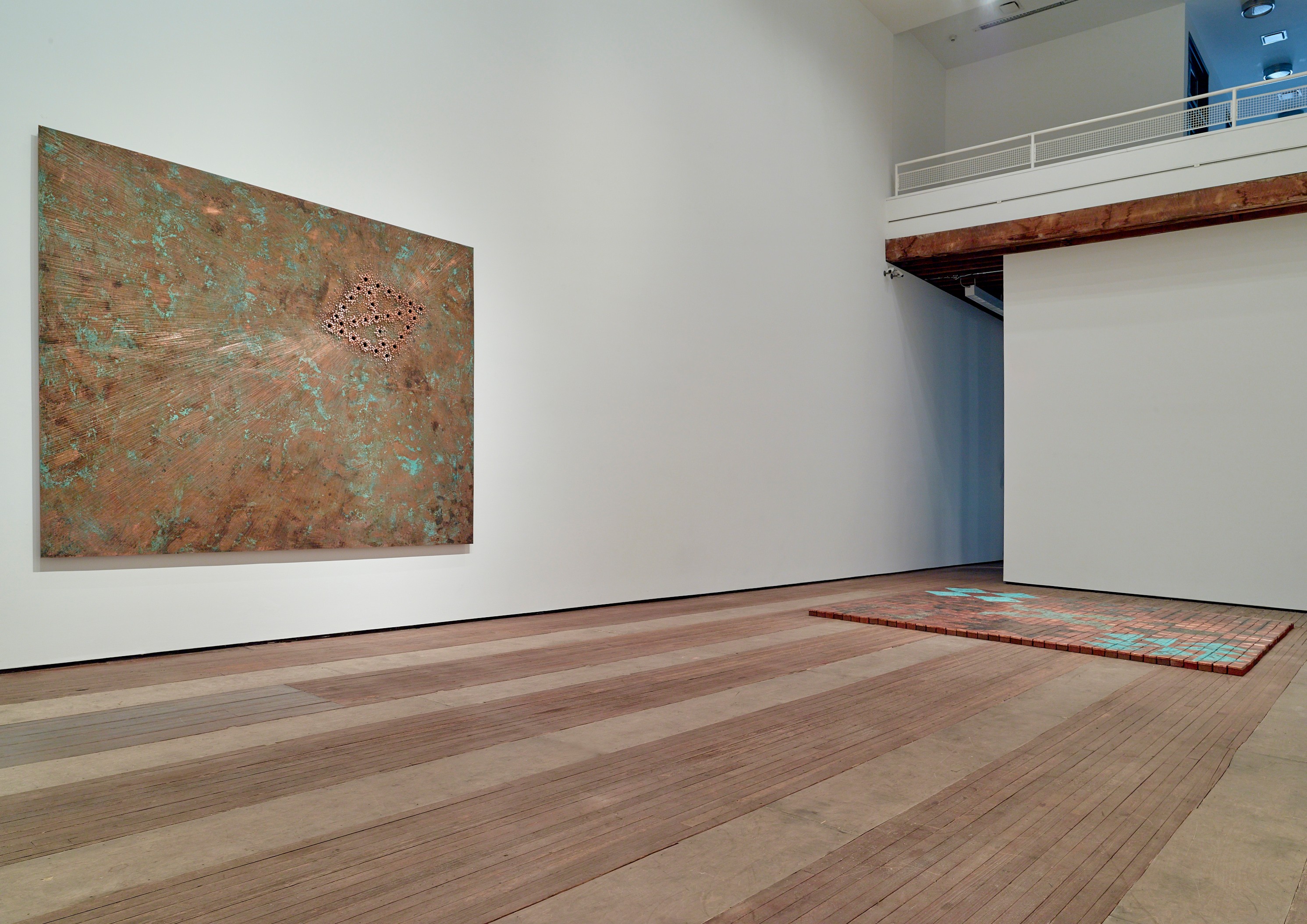
The “Breathing Panels” are large-scale abstract works on copper that include the imprint of the artist’s making: Ward creates them by applying darkening patina to the bottom of his shoes and stepping on the copper panels, leaving a trace of his performative gesture. Ward has also punctured geometric patterns into each panel, which reference traditional Congolese “cosmograms,” an ancient prayer symbol that represents the cycle of birth, death, and rebirth. Ward first came across these symbols during a visit to the First African Baptist Church in Savannah, Georgia, which was part of the Underground Railroad, and where he came upon 26 distinct sets of patterns. At the church, holes were cut in the floorboards to allow escaping slaves to breathe as they moved clandestinely under the church. In his "Breathing Panels," Ward surrounds this pattern with copper nails and thin lines excised into the copper sheets, both reflecting light and drawing the viewer’s attention to the seemingly deep voids. Copper recurs as a fundamental material for Ward, who alludes to its resilience, conductivity, and association in some cultures with healing and restorative properties. The three panels in the exhibition act together as a sort of compass, with each “cosmogram” oriented in a different direction, referencing the escaping slaves’ northern journeys. In this work Ward utilizes visceral, thought-provoking imagery—including juxtapositions of hard, industrial materials with the evocation of a hunted person’s baited breath and the artist’s own footsteps—to poignantly call attention to American history as well as issues of race, identity and politics that remain relevant in this country today.

Installation view of Breathing Directions at Lehmann Maupin New York
Installation Views: 1 of 3
Installation view of Breathing Directions at Lehmann Maupin New York
Installation Views: 1 of 3

Books and Editions

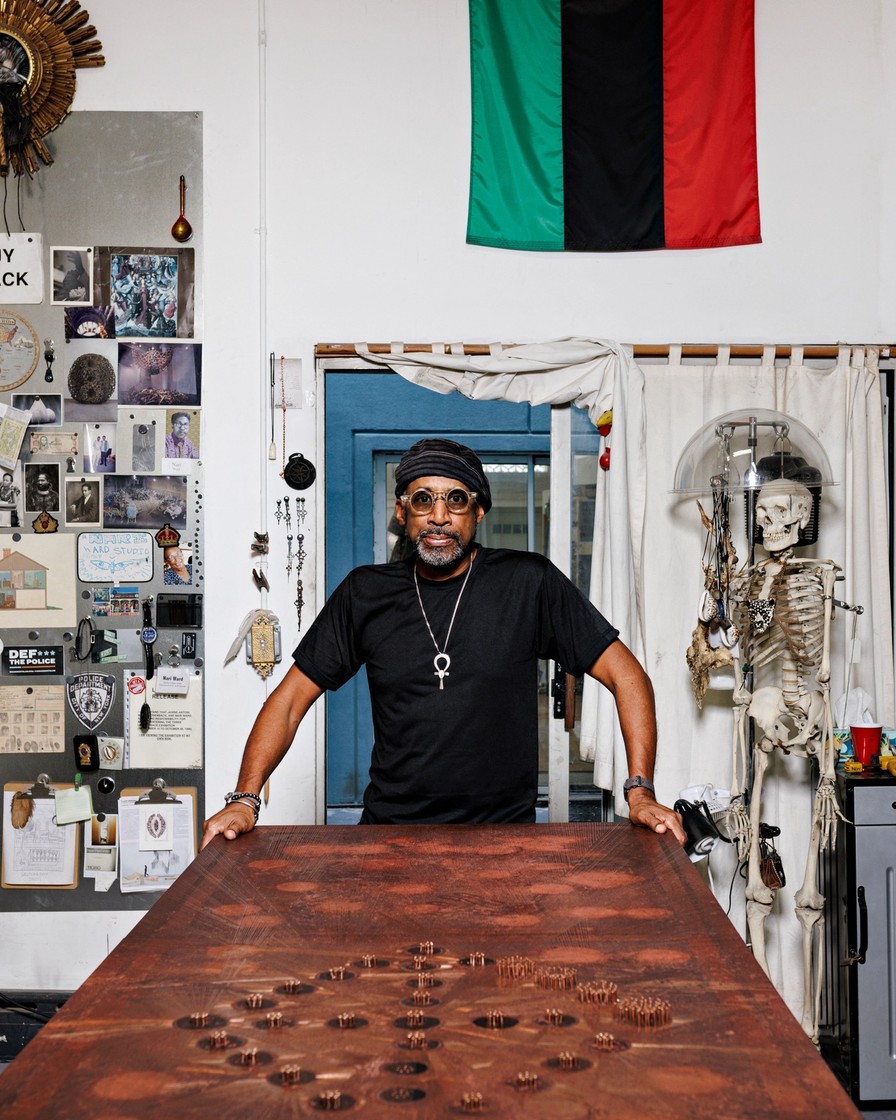
Portrait of Nari Ward

In a career spanning over three decades, artist Nari Ward (b. 1963, St. Andrew, Jamaica; lives and works in New York, NY) has gained recognition for an interdisciplinary and multimedia practice that engages historical and contemporary discourse around race, migration, democracy, identity, and community. Ward is best known for his wall and installation-based sculptural works created primarily from materials found and collected throughout Harlem, his longtime neighborhood in New York. These objects imbue his work with a sense of intimacy, reflecting the shared experience of community. Combining materials to re-contextualize their original meanings, Ward’s assemblages probe a range of spiritual and conceptual issues through literal and metaphorical juxtaposition.

Materially specific but conceptually ambiguous, Ward’s multimedia and performance works unfold into many possible interpretations—as materials and movements accumulate, so too do signifiers. Each found object—including baseball bats, strollers, shoelaces, cash registers, bottles, and shopping carts—contains a multiplicity of meanings and histories that speak to both collective experience and individual memory. The intentional synthesis of such objects, combined with the more traditional disciplines of painting, sculpture, and performance, allows for varied interpretations, inviting viewers to project their own associations and transcend the specific context of any given work. At the same time, Ward’s art reflects on the complexities of contemporary society, transforming overlooked material through artmaking to foreground forgotten histories or marginalized communities.