Skip to content

Kader Attia

Mirrors of Emotion

New York

Sep 10–Oct 26, 2019

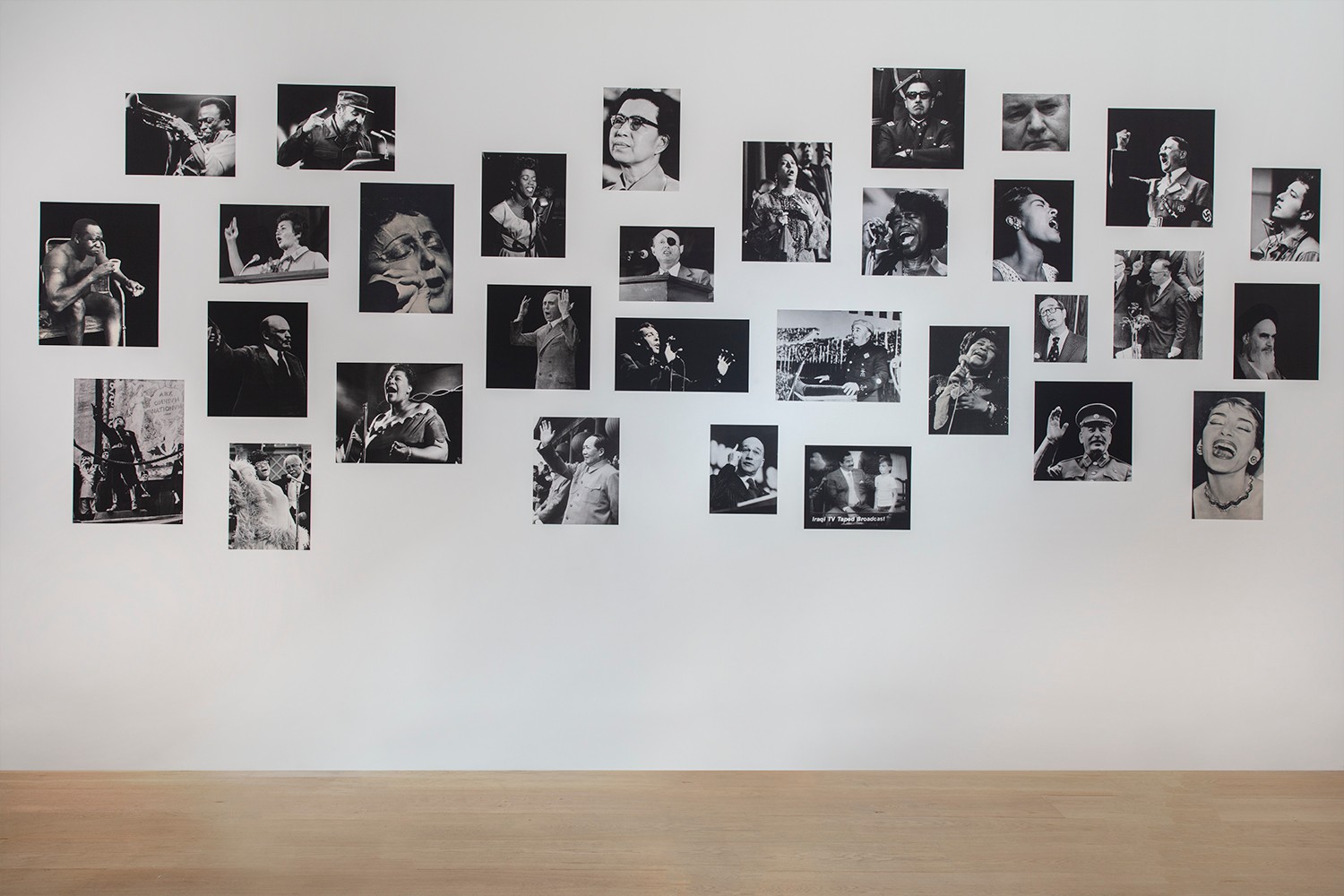
Installation view of Kader Attia at Lehmann Maupin New York

501 West 24th Street

New York, NY 10011

Lehmann Maupin is pleased to announce Mirrors of Emotion, an exhibition of new and recent work by Kader Attia. Conceived as a continuation of Attia’s recent, critically lauded The Museum of Emotion exhibition at the Hayward Gallery, London, this exhibition presents a sequence of rooms dedicated to examining the complexities of emotional experience through the lens of collective, individual, and psychoanalytic perspectives. The exhibition will feature two video works, including Attia’s 2016 Marcel Duchamp Prize winning film, Reflecting Memory (2016; 46 minutes) alongside new sculpture, drawings, and an installation of large-scale glass works. There will be an opening reception for the artist on Tuesday, September 10, from 6 to 8 PM at 501 West 24th Street.

Attia grew up in both Paris and Algeria in the decade following the dissolution of French Algeria in 1962, and has devoted his work to examining the wide-ranging effects of colonialism and the repercussions of Western hegemony on non-Western cultures. The exhibition’s title Mirrors of Emotion is inspired by the French philosopher Etienne de la Boétie’s theory that describes how a tyrant will create visual omnipresence within society—by appearing constantly in public space and therefore becoming internalized by the people—not only as a reminder of their power, but also to allow the populace to see themselves reflected in the tyrant. French psychoanalyst and psychiatrist Jacques Lacan coined the term hainamoration to capture the fusion of hatred and enamoration that results. In this way, a tyrant becomes a mirror of emotions for the population and individual. Attia contends that we live in an era where emotional reaction to demographic change and economic inequality propels a new populism, appropriated as a form of catharsis. This emotional response characterized by collective and individual victimization is represented in Attia’s works through research that links individual histories with collective ones.

Installation view of Kader Attia at Lehmann Maupin New York
Installation Views: 1 of 3
Installation view of Kader Attia at Lehmann Maupin New York
Installation Views: 1 of 3
The Field of Emotion

Kader Attia

The Field of Emotion, 2018

Sculpture by Kader Attia

Kader Attia

The Ruins of Revolution, 2019

Sculpture by Kader Attia

Kader Attia

Red Modernity 1, 2019

Film still by Kader Attia

Kader Attia

The Body's Legacies, Part 2: The Postcolonial Body, 2018

Wall work by Kader Attia

Kader Attia

The Light Goes Through No Matter What, 2019

Wall work by Kader Attia

Kader Attia

Broken Obscurity 1, 2019

Wall work by Kader Attia

Kader Attia

Broken Obscurity 2, 2019

Wall work by Kader Attia

Kader Attia

Broken Obscurity 3, 2019

Film still by Kader Attia

Kader Attia

A Thread of Light, 2019

Sculpture by Kader Attia

Kader Attia

Untitled (Matlouh), 2019

Sculpture by Kader Attia

Kader Attia

The Embrace, 2019

Sculpture by Kader Attia

Kader Attia

Immaterial Wound, 2019

Film still by Kader Attia

Kader Attia

Réfléchir la Mémoire / Reflecting Memory, 2016

Sculpture by Kader Attia

Kader Attia

Untitled , 2019

Sculpture by Kader Attia

Kader Attia

Untitled , 2019

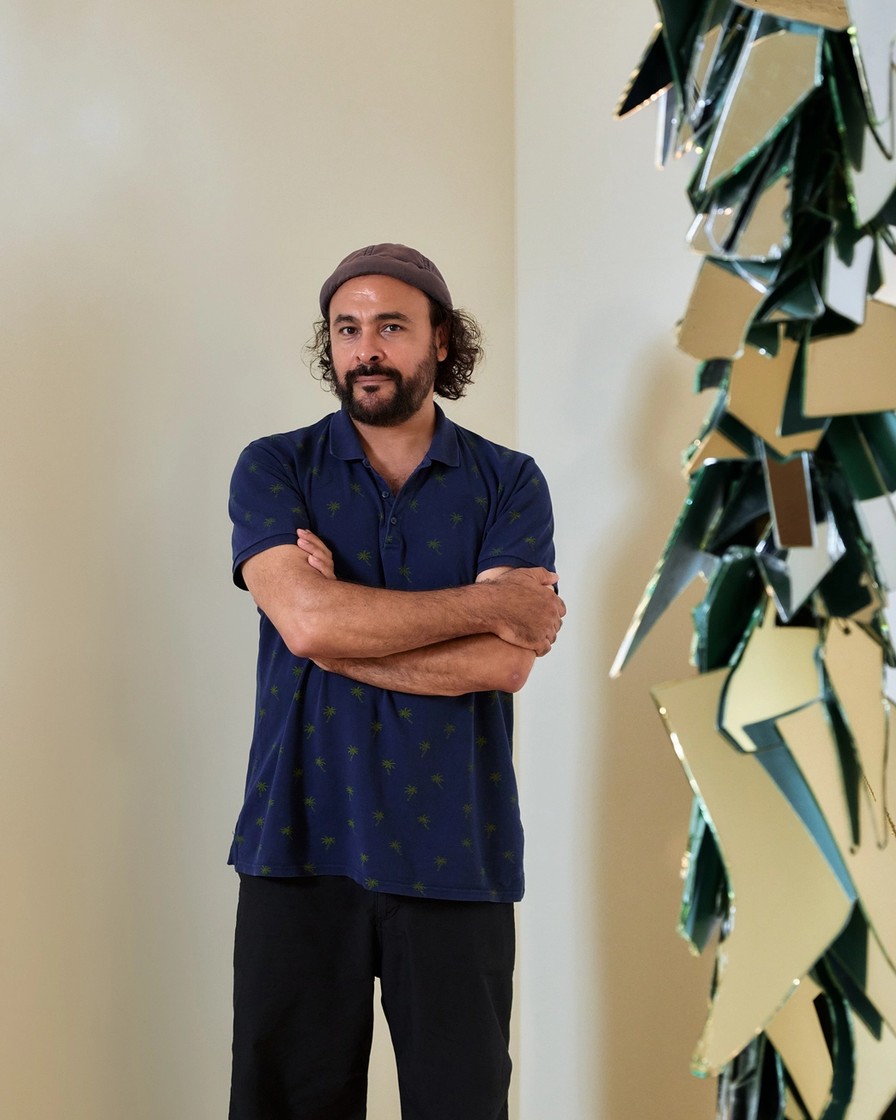
Portrait of Kader Attia

Kader Attia (b. 1970, Seine Saint-Denis, Dugny, France; lives and works in Berlin Germany and Paris, France), grew up in Paris and in Algeria. Preceding his studies at the École Supérieure des Arts Appliqués Duperré and the École Nationale Supérieure des Arts Décoratifs in Paris, and at Escola Massana, Centre d’Art i Disseny in Barcelona, he spent several years in Congo and in South America.The experience with these different cultures, the histories of which over centuries have been characterized by rich trading traditions, colonialism and multi-ethnic societies, has fostered Kader Attia’s intercultural and interdisciplinary approach of research. For many years, he has been exploring the perspective that societies have on their history, especially as regards experiences of deprivation and suppression, violence and loss, and how this affects the evolving of nations and individuals — each of them being connected to collective memory.

His socio-cultural research has led Kader Attia to the notion of Repair, a concept he has been developing philosophically in his writings and symbolically in his oeuvre as a visual artist. With the principle of Repair being a constant in nature — thus also in humanity —, any system, social institution or cultural tradition can be considered as an infinite process of Repair, which is closely linked to loss and wounds, to recuperation and re-appropriation. Repair reaches far beyond the subject and connects the individual to gender, philosophy, science, and architecture, and also involves it in evolutionary processes in nature, culture, myth and history.

Learn about the artist
Mirrors of Emotion | Lehmann Maupin