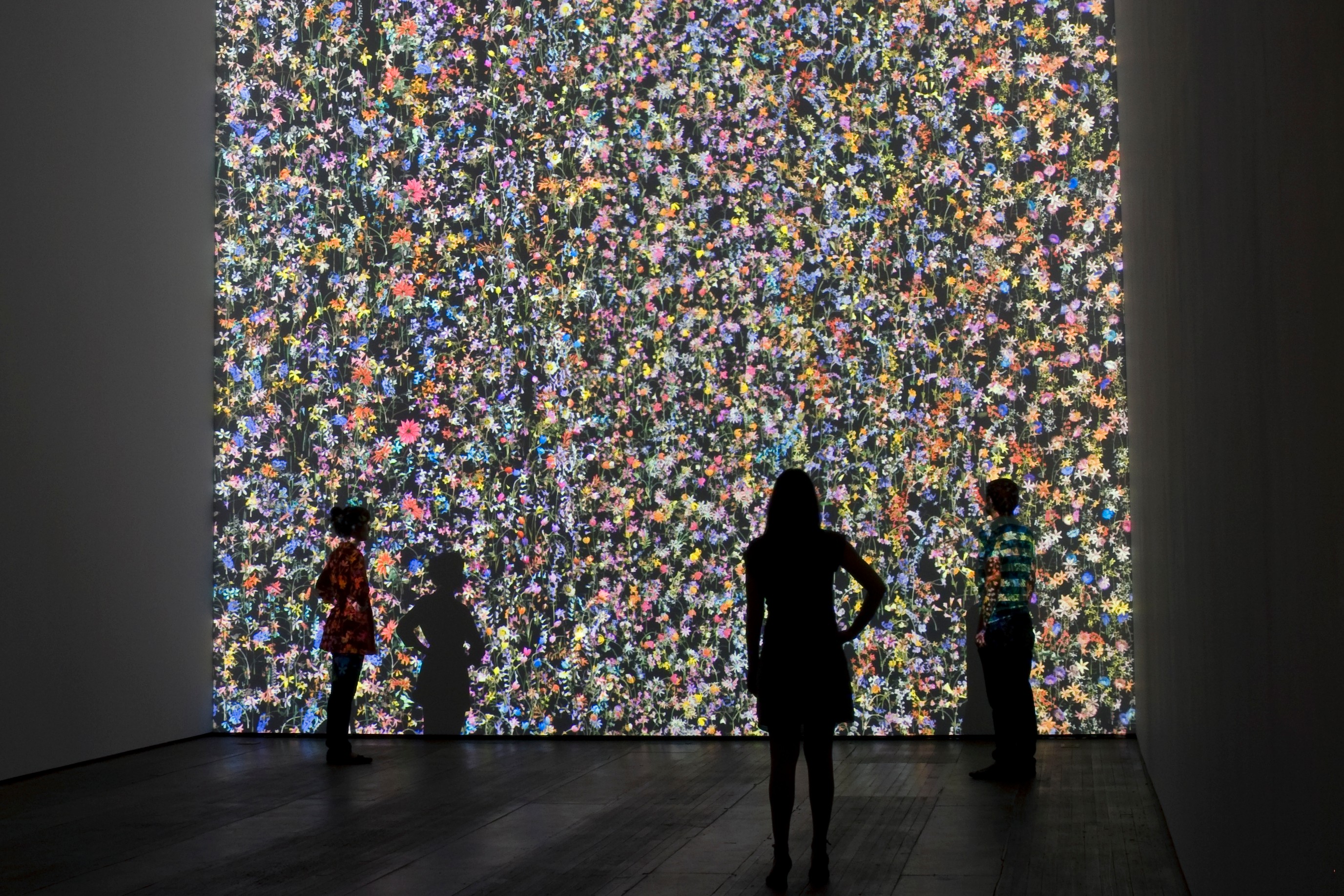
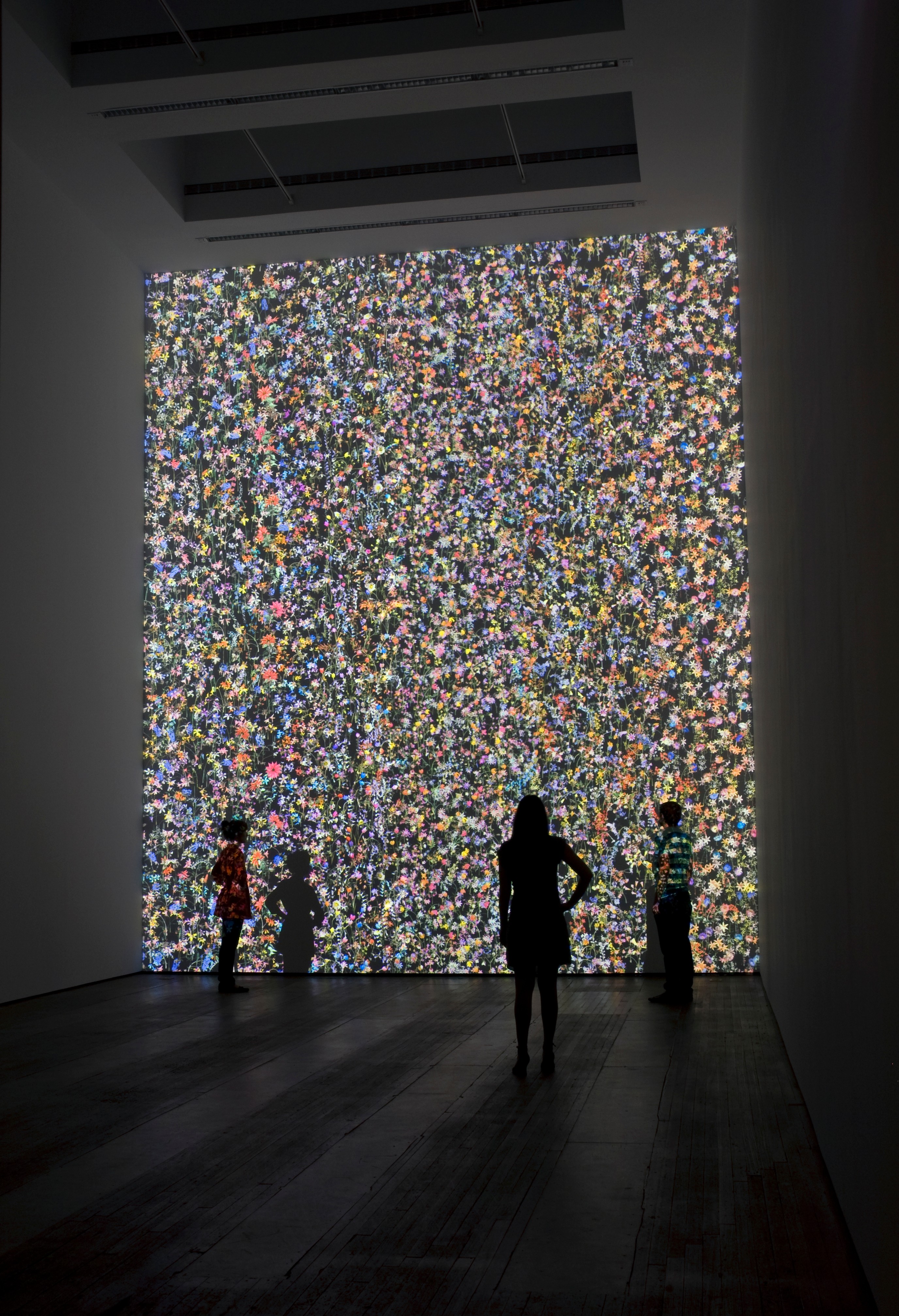
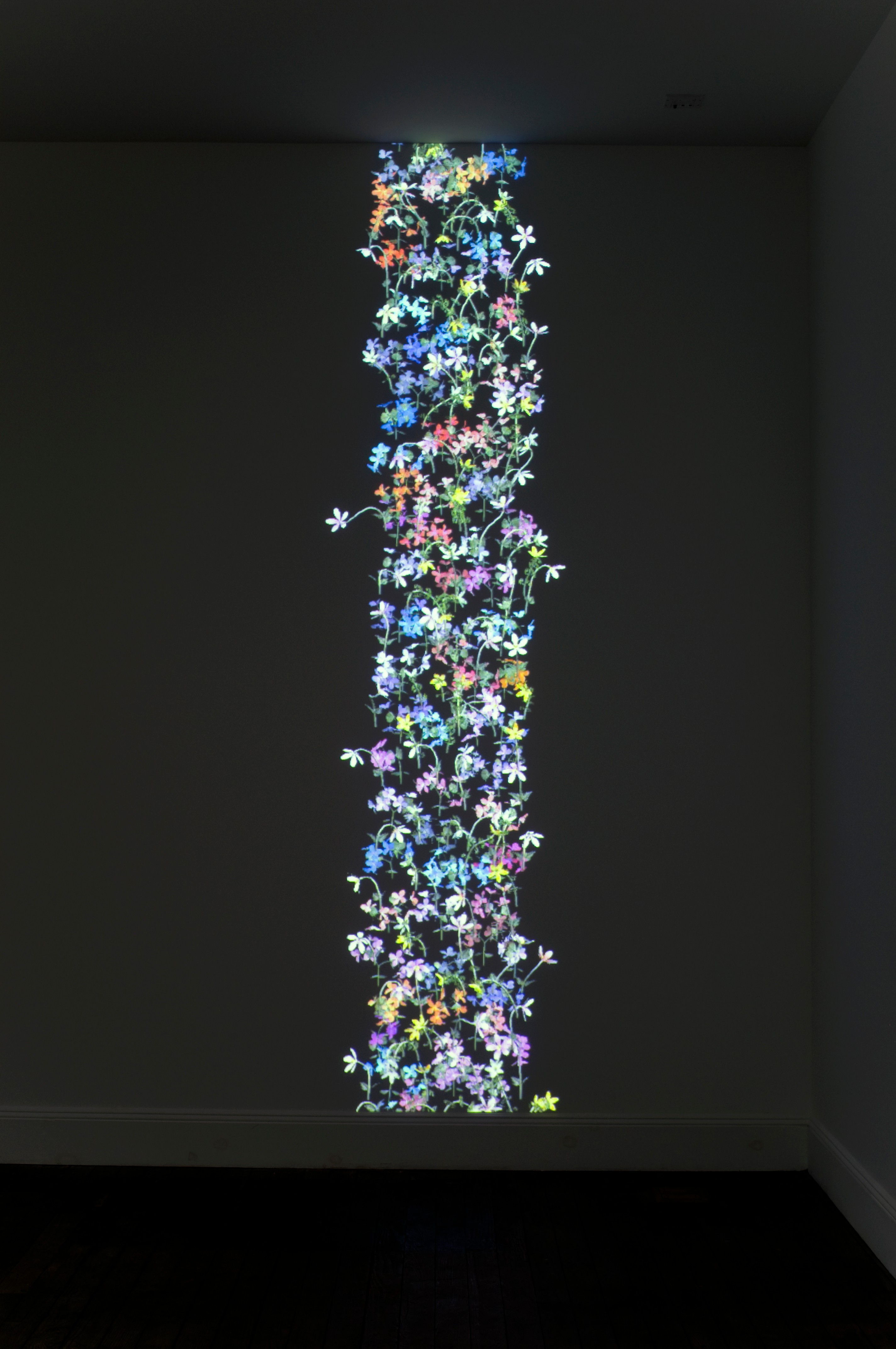
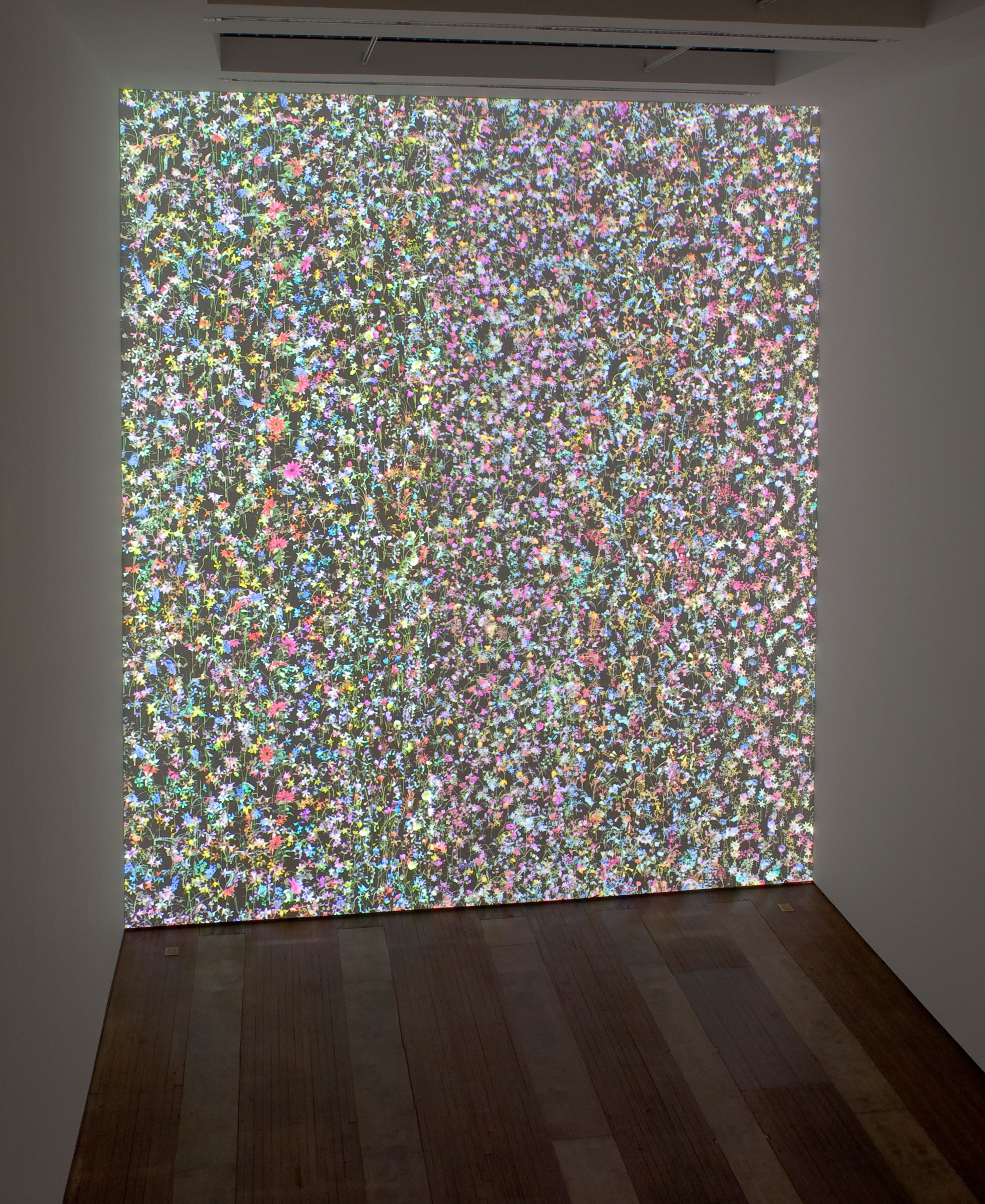
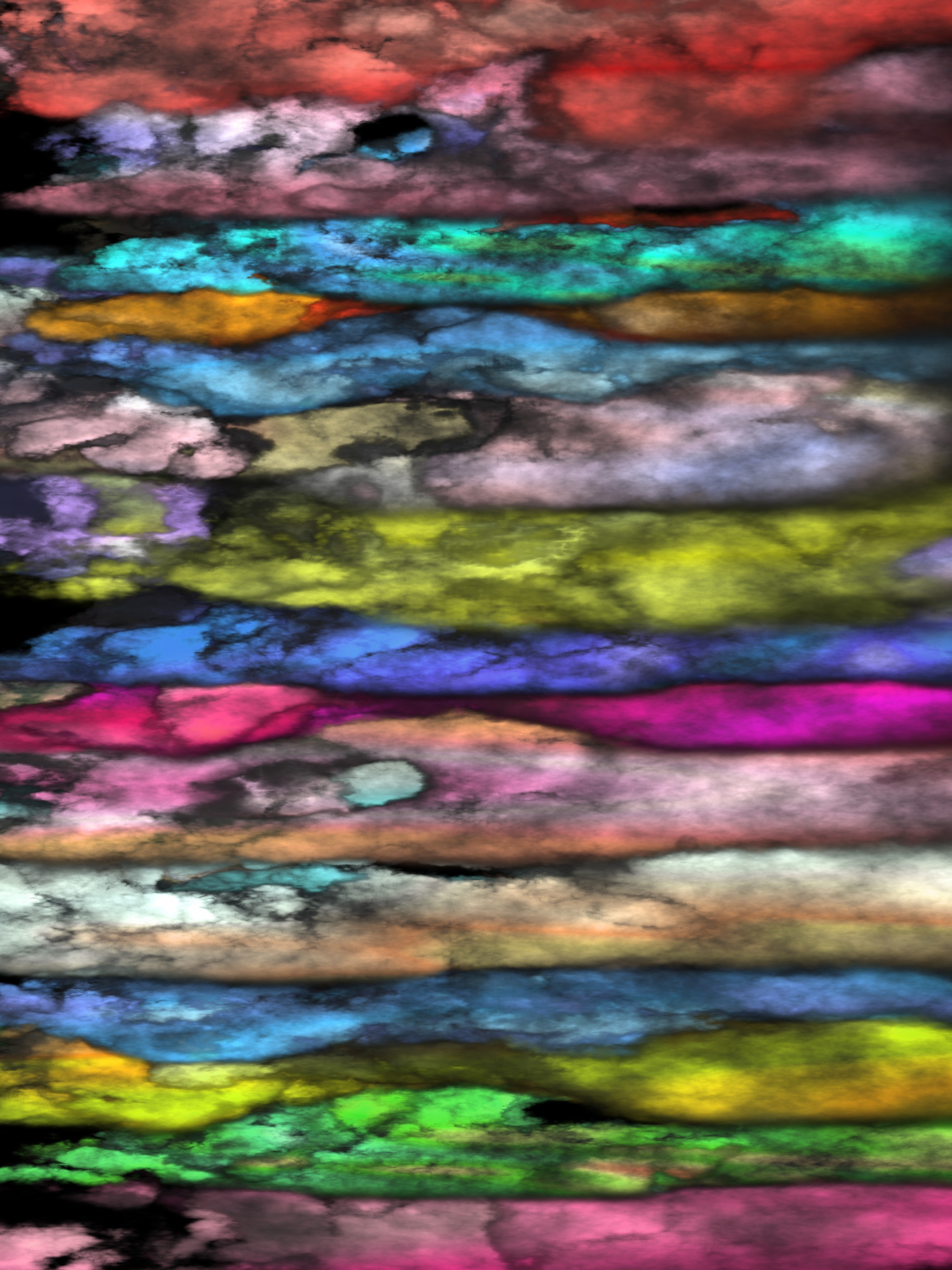
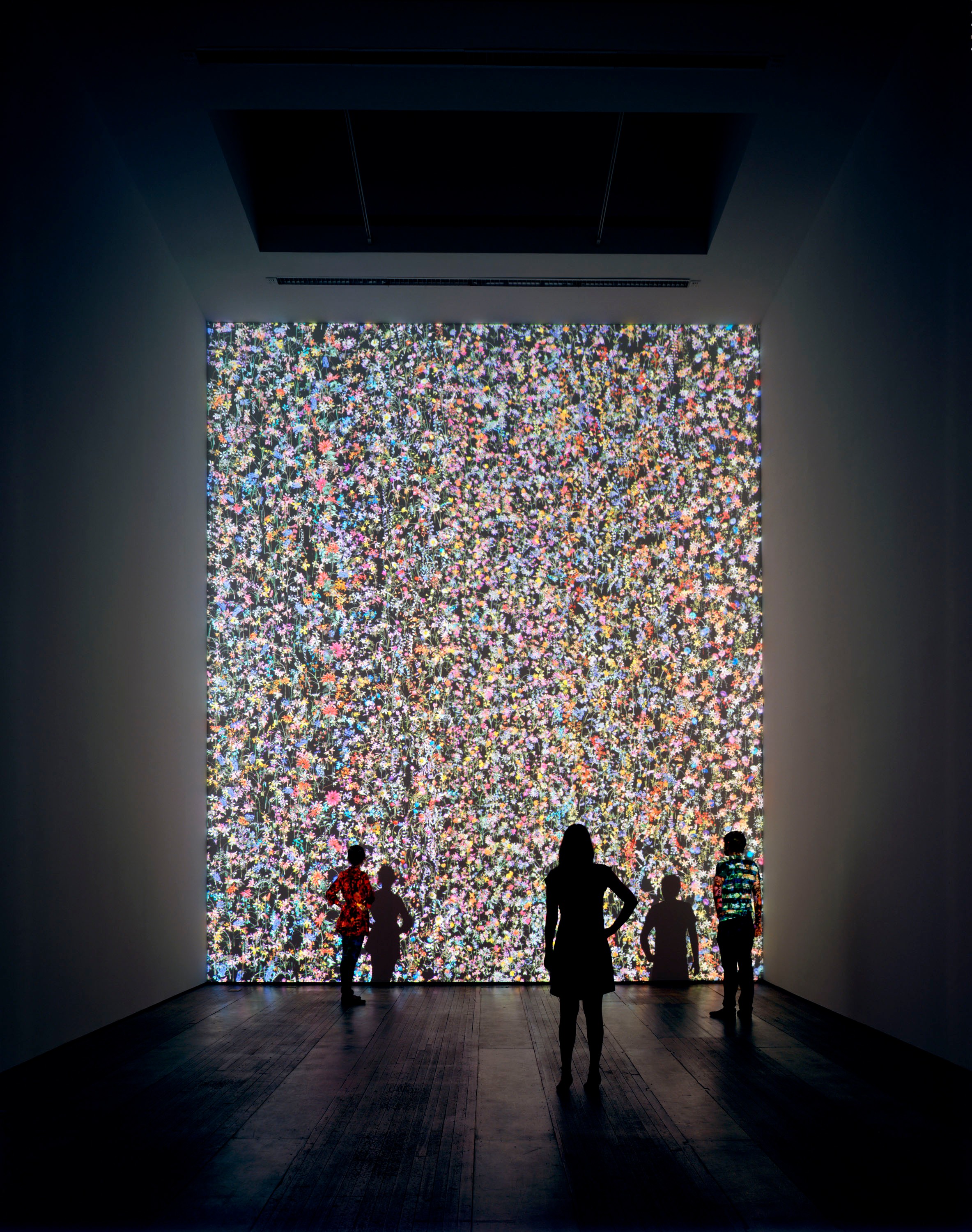
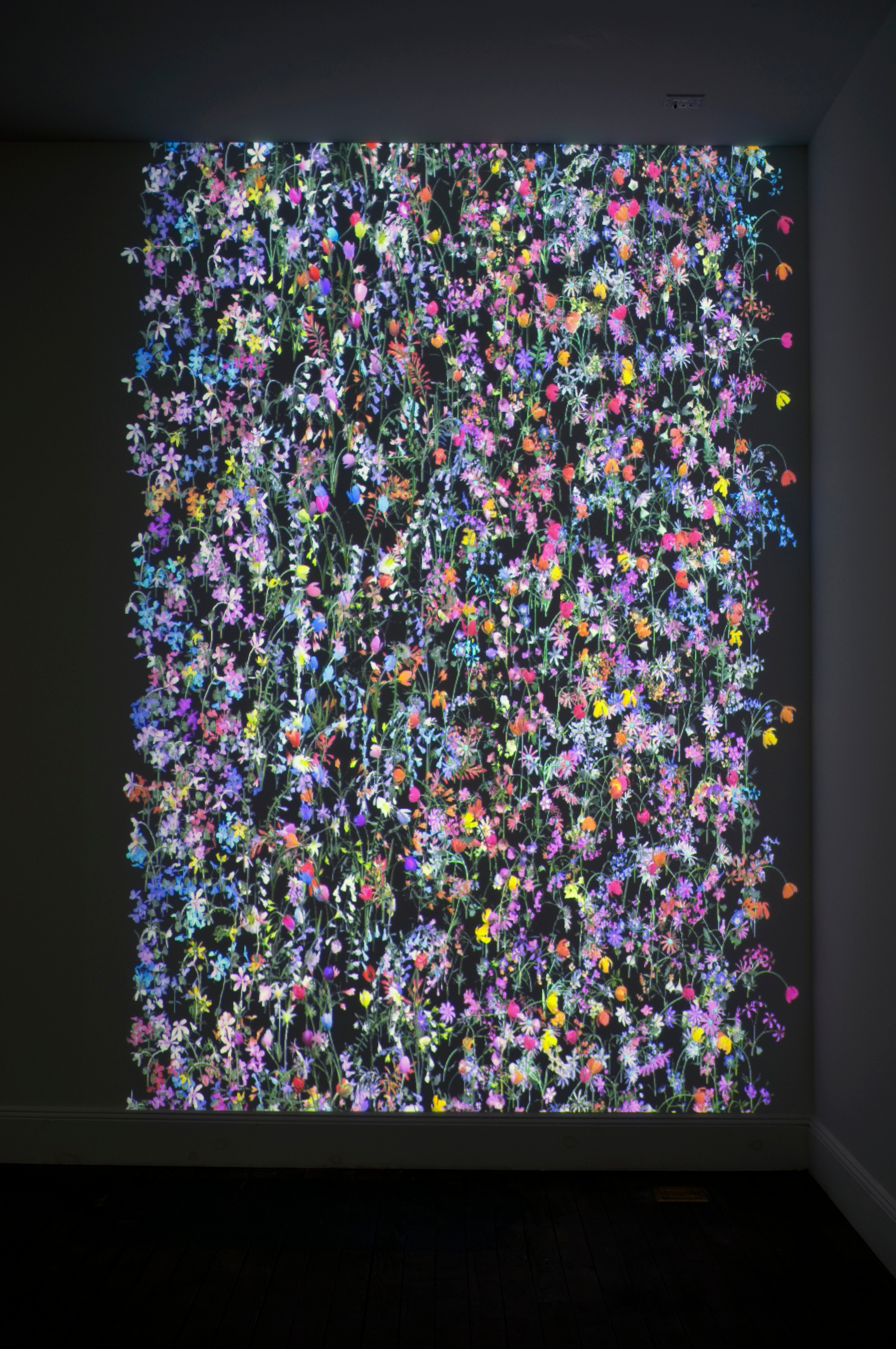
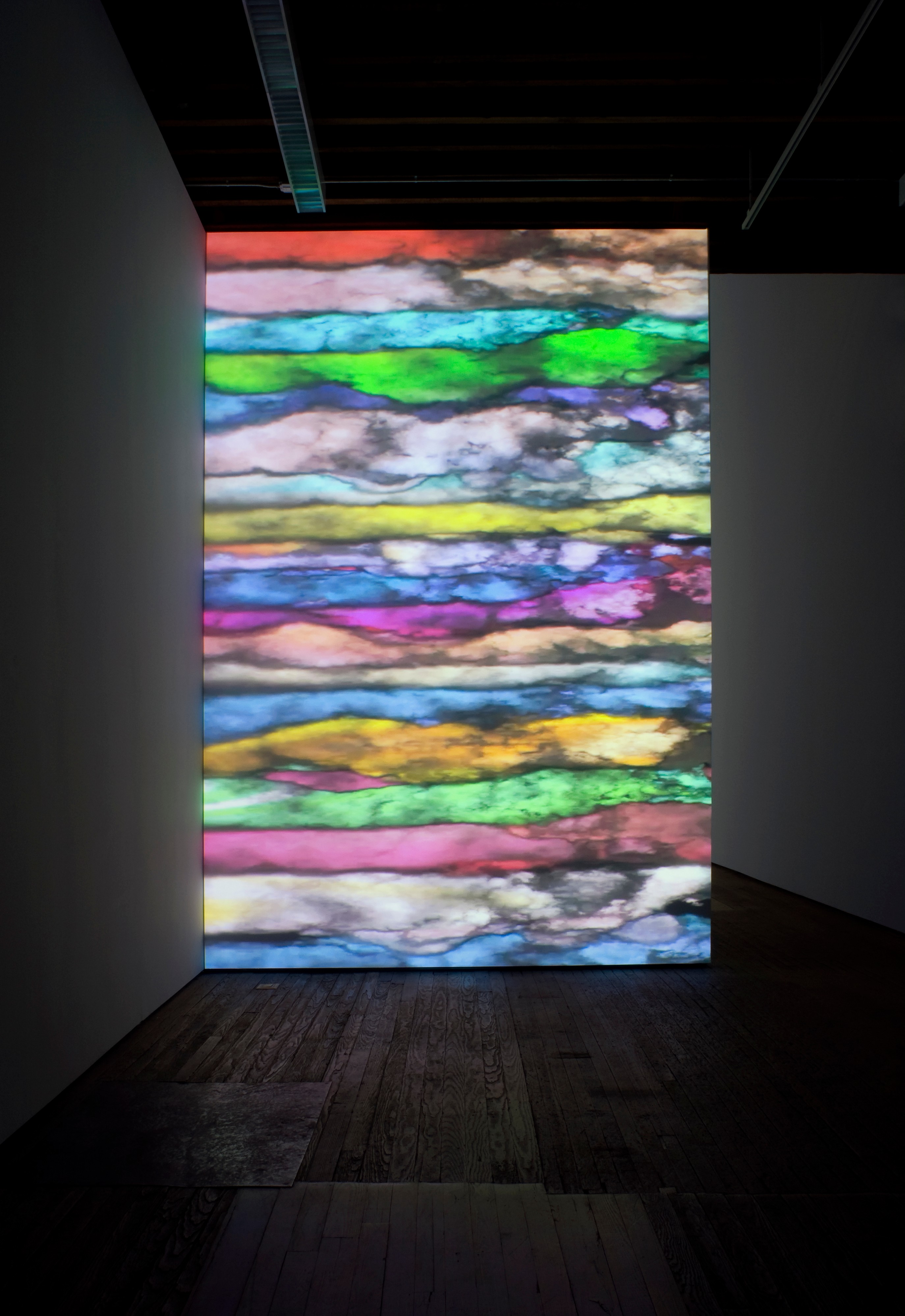
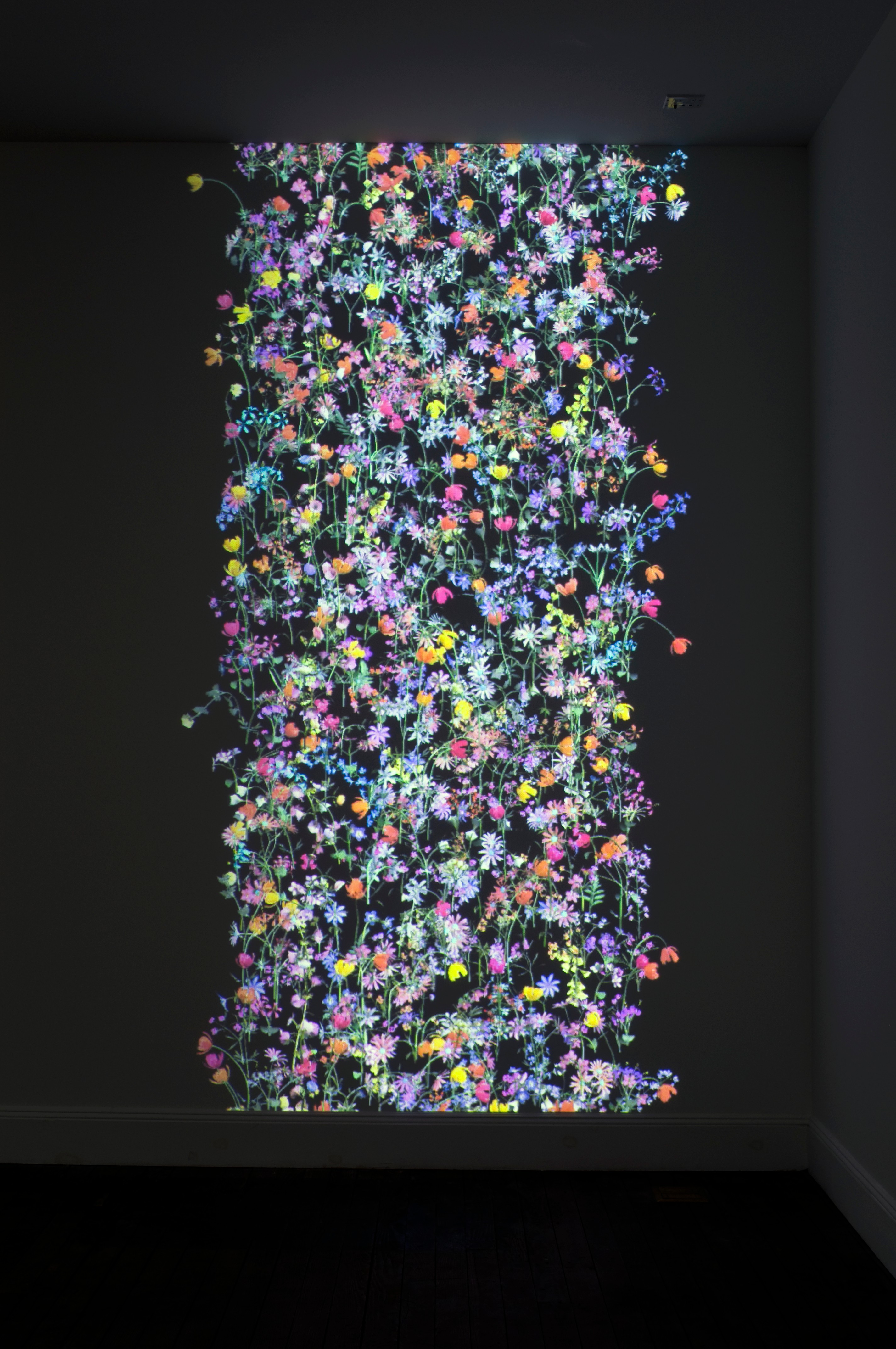
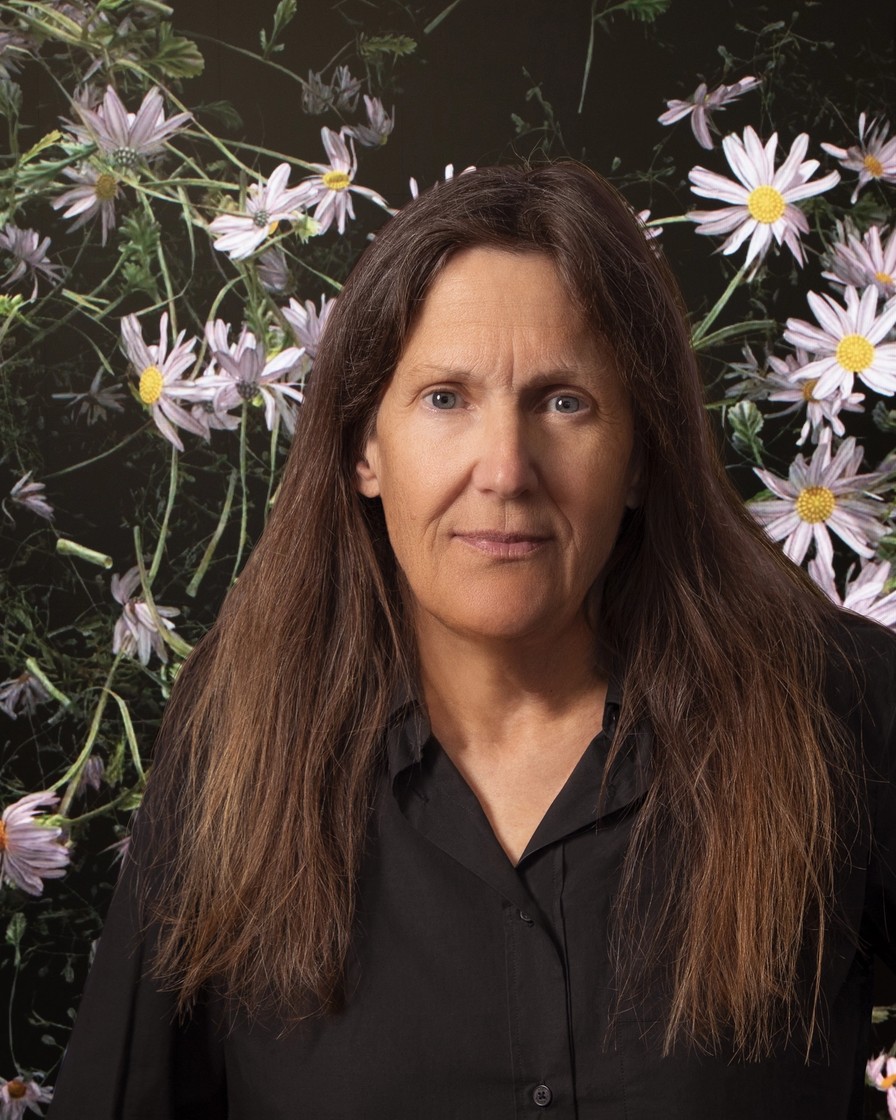
Jennifer Steinkamp (b. 1958, Denver, CO; lives and works in Los Angeles, CA) is a pioneer in the field of 3-D animation. Working exclusively in digital media, she uses cutting-edge technology to render organic and abstract forms in motion to give deeper insight into the often-unseen complexities of the natural environment in relation to human perception. Her immersive installations are projected at a large scale in response to the architecture in which they appear and alter the viewer’s typical experience of an art object, inviting a more sensorial understanding of our relation to space and time. For each series, Steinkamp designs and digitally simulates the movement of organic and abstract forms such as trees, flowers, floating fabrics, asteroids, organisms, and fruit. Her work is an examination of the natural environment that engages with art historical genres such as 16th century Dutch still-life painting, science fiction, scientific illustrations and political subjects.
Steinkamp’s works are displayed as site-specific projections that amplify their architectural setting by blurring the boundary between real and illusionistic space. These animated environments often have underlying personal or historical significance. For example, with three of her tree animations, shown in every season, Steinkamp titles each as an homage to a former teacher, such as Miss Znerold, Judy Crook or Mike Kelley. Other series, like Still-Life, are a critical nod to the 16th century genre of Dutch and Flemish still-life painting that offered visual allegories about the fragility of life and the passage of time. Composed through the careful orientation of everyday objects such as food, flowers, dead animals, and plants, these historical works were often notable for their static quality and macabre representation of death. In Steinkamp’s re-imagination of the still life, she animates this genre through the representation of (female) fruit bearing plants that move and collide, she is fascinated by the incorporeal in nature and science. If anything, this is a consistent current in her artwork. There is so much more in the universe than what we sense and feel; She believes we are surrounded by sentience in all lifeforms. She uses the tangible invisible forces in air and the uncanny forms and motion of plants to communicate this.