Skip to content

Multiple Artists

I Followed You into the Water

New York

Jul 5–Aug 10, 2012

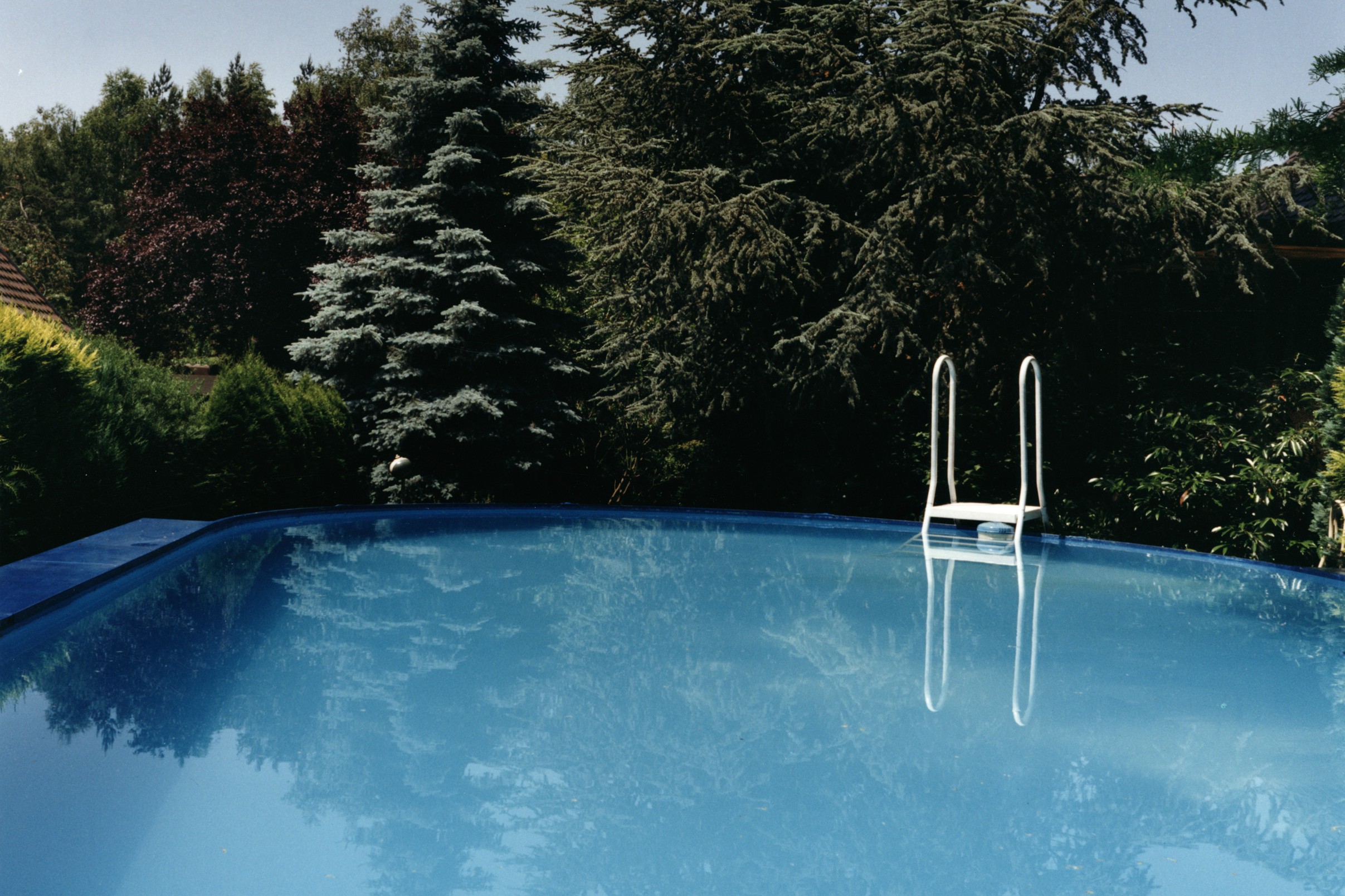
Photograph by Juergen Teller

540 W 26th St

New York, NY 10001

Lehmann Maupin is pleased to present I Followed You Into the Water, an exhibition of works inspired by our powerful attraction to bodies of water, on view from 5 July to 10 August at 540 West 26th Street.

Both evocative poetic device and visceral physical reality, water inspires an incredible depth and range of feeling. Featuring Hernan Bas, Ashley Bickerton, Billy Childish, Mary Corse, Tracey Emin, Teresita Fernandez, Anya Gallaccio, Tim Rollins and K.O.S., Juergen Teller, and Nari Ward, the works in this exhibition range from ponderous nostalgia to escapist fantasy, and from abstract phenomena to historical reference.
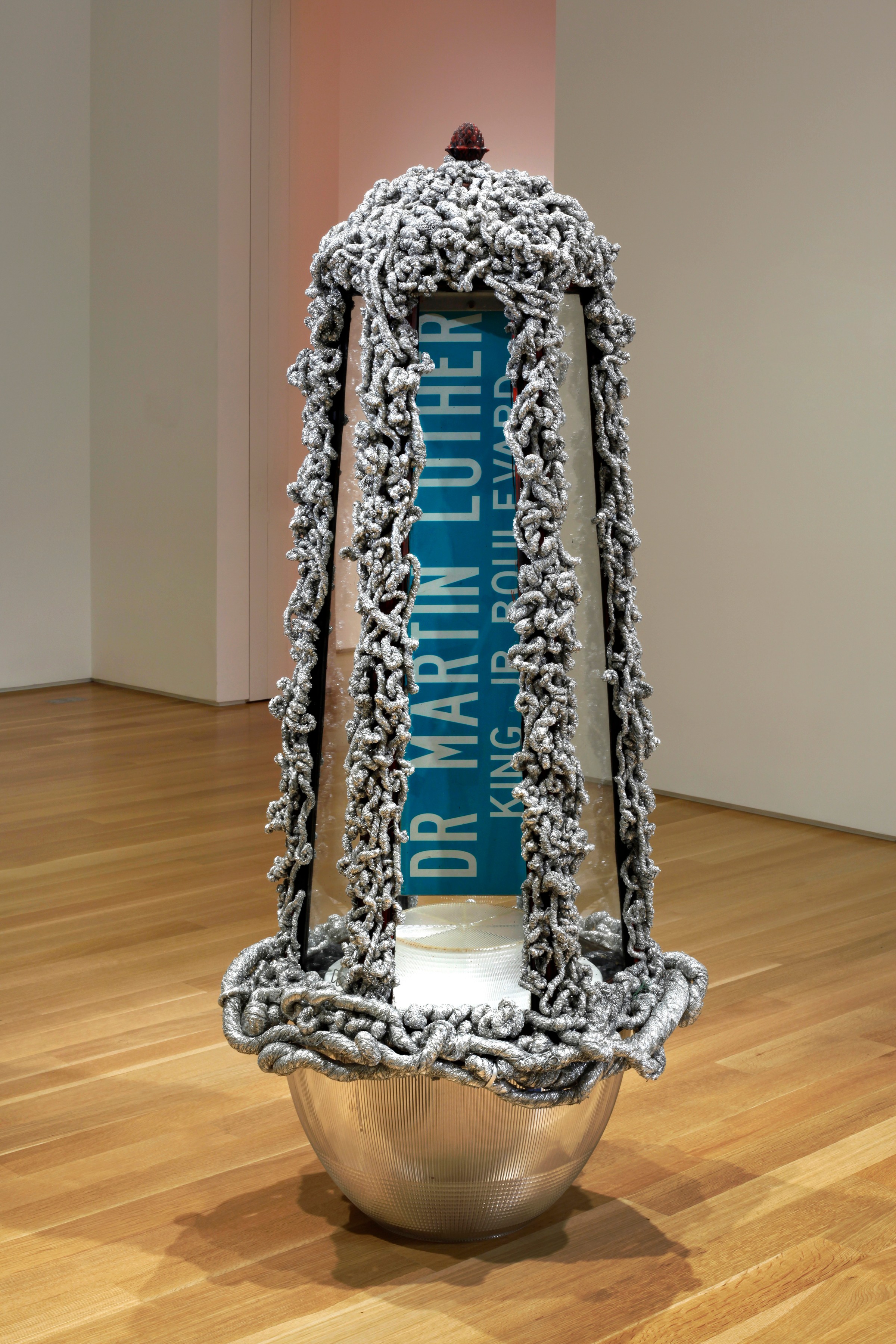
Sculpture by Nari Ward

Nari Ward

King Buoy, 2010

Exhibition Artists

Portrait of Hernan Bas

Hernan Bas (b. 1978, Miami, FL; lives and works in Miami, FL) creates paintings, works on paper, videos, and installations that weave together adolescent adventures with classical poetry, religious stories, mythology, the paranormal, and literature. Influenced by the Romantic era of the 18th century that glorified the sublime beauty of nature and the Decadent movement of the 19th century that evoked romantic nihilism, skepticism, excess, and artificiality, Bas’ early work often portrayed nearly hidden adolescent male figures, deep in contemplation amidst vast otherworldly landscapes. As the figure and the interiors they occupied became more and more prominent throughout Bas’ work, so did the social and cultural context within which they were living. Spanning a wide range of time periods and themes, Bas investigates inquisition, desire, and obsessions and invites the viewer to recognize their own curiosities and oddities.

While the young male figure remains prominent throughout Bas’ oeuvre, in his more recent work individual paintings become an in-depth investigation into a singular critical subject, addressing topics such as LGBTQIA+ activism and desire, politics, news, conspiracy theories, and the occult. Providing a unique perspective on American subculture and a contemporary version of History Painting, they allow us to consider the relevance of seemingly inconsequential moments in the past and present and offer space for critical reflection. For his November 2019 exhibition with Lehmann Maupin, TIME LIFE, Bas used the Time-Life Book series Mysteries of the Unknown as his inspiration. Published between 1987 and 1991, each book focused on a different paranormal topic, such as ghosts, UFOs, psychic powers, and dreams. Navigating the liminal space between reality and fiction, the grotesque and the beautiful, the odd and the mundane, Bas highlights cult phenomena from the past that offer insight into the political and social concerns of today.

Portrait of Billy Childish

Billy Childish (b. 1959, Chatham, Kent, United Kingdom; lives and works in Chatham, Kent, United Kingdom) is known for his introspective, autobiographical, and deeply emotional paintings, writing, and music. After leaving secondary school at age 16, Childish worked at the Naval Dockyard in Chatham as an apprentice stonemason. Initially denied an interview to the local art school, he produced hundreds of drawings that gained him entry to London’s Saint Martin's School of Art. Childish's defiance of authority led to his eventual expulsion from art school in 1981. Since then, Childish has attained a cult status worldwide, writing and publishing several novels, more than 40 volumes of confessional poetry and recording more than 170 LPs. This artistic output has always existed in tandem with his central practice as a painter, his devotion to the medium evinced by his uninterrupted flow of work dating back to the late 1970s.

Through all of these disciplines, Childish addresses social, political, and personal issues such as war, protest, his turbulent childhood and his struggles with alcoholism. While his confessional poetry and music explore these issues with startling honesty, Childish’s paintings are more subtle. His subjects are often drawn from his environment or are people he knows or admires, transformed into universal motifs: landscape paintings of his native Kent and other familiar lands, such as the Pacific North West and South West United States, appear alongside self-portraits and people significant to Childish’s life (both cultural and personal), including his American wife, Julie, and his children.

Portrait of Teresita Fernández

Teresita Fernández's work is characterized by an expansive rethinking of what constitutes landscape: from the subterranean to the cosmic, from national borders to the more elusive psychic landscapes we carry within. Fernández unravels the intimacies between matter, human beings, and locations. Her luminous, sculptural works poetically challenge ideas about land and landscape by amplifying the powerful, emotional connection in how we imagine place, and, by extension, one another. Fernández exposes the complex narratives that stem from distorted, colonial histories, elaborating on these themes in subtle ways that insist on intertwining beauty, the socio-political, the intimate, and the immense. Imagining the landscape with reciprocal sentience, Fernández has said “You look at the landscape, but the landscape also looks back at you."

Fernández is a 2005 MacArthur Foundation Fellow and the recipient of numerous awards, including a Creative Capital Award; Guggenheim Fellowship; the Louis Comfort Tiffany Biennial Award; an American Academy of Rome Fellowship (AFAAR); and a National Endowment for the Arts Individual Artist’s Grant in Visual Arts, among others. Her works have been exhibited and collected both nationally and internationally including: The Museum of Modern Art, New York; The Whitney Museum of American Art; the San Francisco Museum of Modern Art; The Menil Collection; Philadelphia Museum of Art; Pérez Art Museum Miami; Modern Art Museum of Fort Worth; Centro de Arte Contemporáneo de Málaga, Spain; The Museum of Fine Arts, Boston; SITE Santa Fe; The Smithsonian Museum of American Art; MASS MoCA; and Castello di Rivoli, Italy, among others. She lives and works in Brooklyn, New York

Portrait of Nari Ward

In a career spanning over three decades, artist Nari Ward (b. 1963, St. Andrew, Jamaica; lives and works in New York, NY) has gained recognition for an interdisciplinary and multimedia practice that engages historical and contemporary discourse around race, migration, democracy, identity, and community. Ward is best known for his wall and installation-based sculptural works created primarily from materials found and collected throughout Harlem, his longtime neighborhood in New York. These objects imbue his work with a sense of intimacy, reflecting the shared experience of community. Combining materials to re-contextualize their original meanings, Ward’s assemblages probe a range of spiritual and conceptual issues through literal and metaphorical juxtaposition.

Materially specific but conceptually ambiguous, Ward’s multimedia and performance works unfold into many possible interpretations—as materials and movements accumulate, so too do signifiers. Each found object—including baseball bats, strollers, shoelaces, cash registers, bottles, and shopping carts—contains a multiplicity of meanings and histories that speak to both collective experience and individual memory. The intentional synthesis of such objects, combined with the more traditional disciplines of painting, sculpture, and performance, allows for varied interpretations, inviting viewers to project their own associations and transcend the specific context of any given work. At the same time, Ward’s art reflects on the complexities of contemporary society, transforming overlooked material through artmaking to foreground forgotten histories or marginalized communities.

I Followed You into the Water | Lehmann Maupin