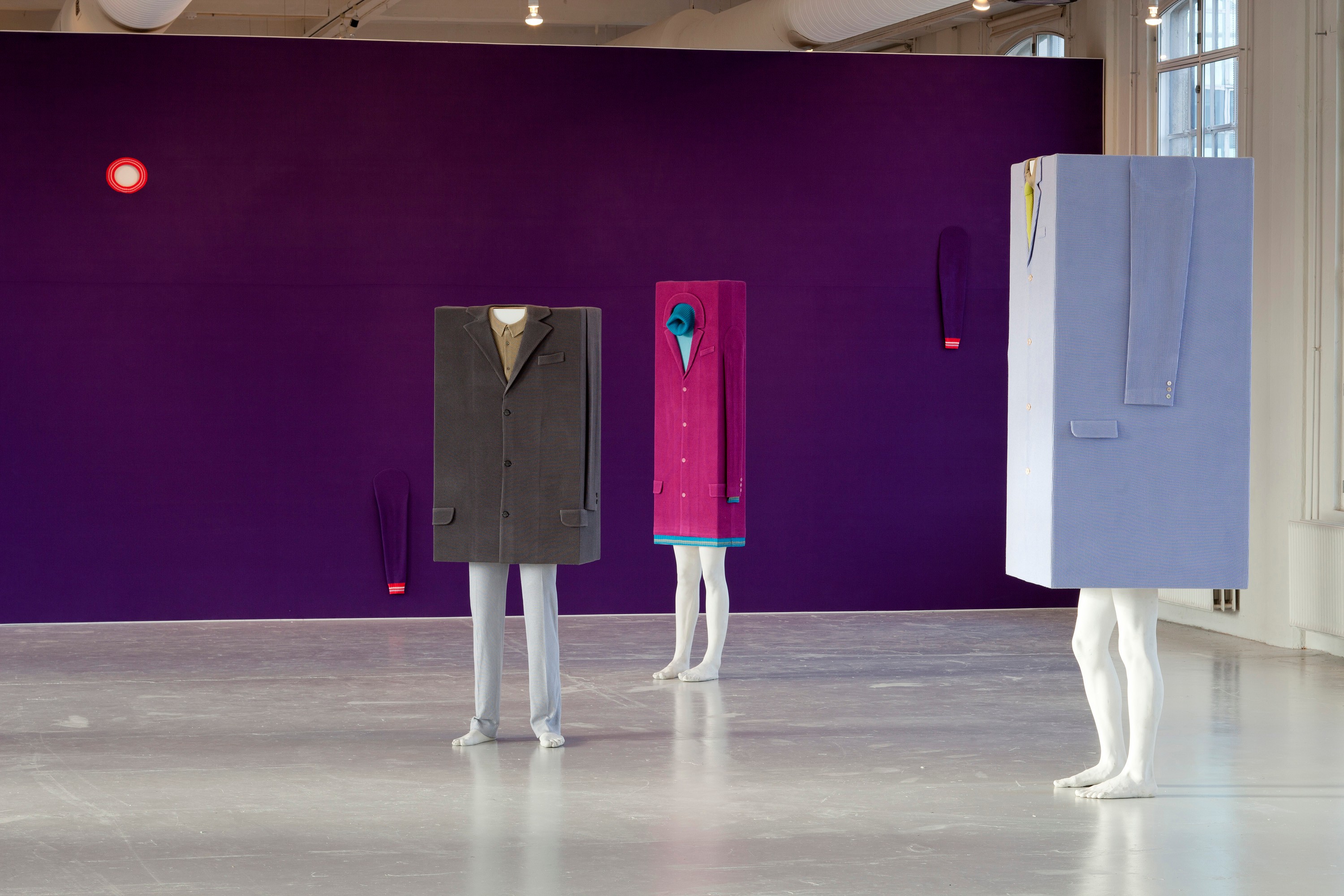
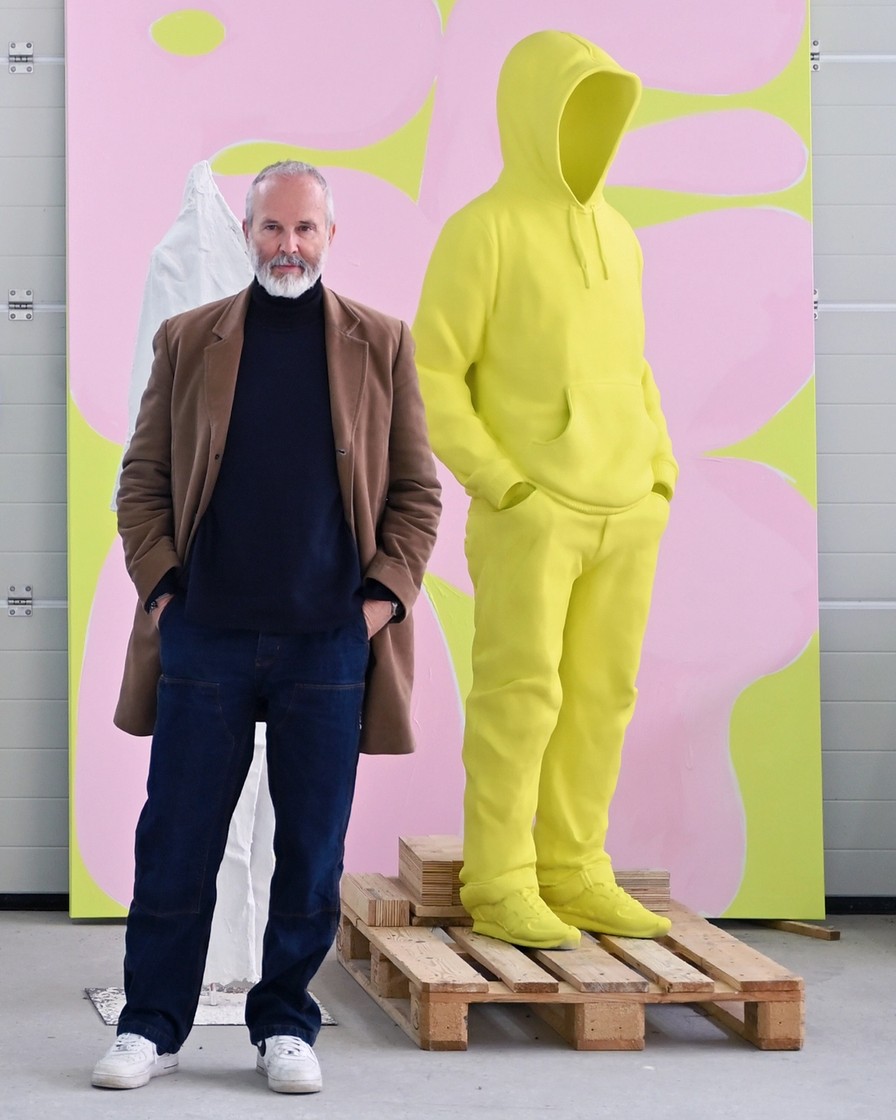
Erwin Wurm (b. 1954, Bruck an der Mur/Styria, Austria; lives and works in Vienna and Limberg, Austria) is an Austrian artist whose practice has radically expanded the possibilities of sculpture over the past four decades. Rooted in conceptual questions about what sculpture can be, how it can occupy space, and how the body, everyday objects, and gestures might become sculptural forms, Wurm’s work challenges conventional definitions of the medium. While his oeuvre is filled with larger-than-life-size pickles, anthropomorphic sausages, empty suits, and impossibly proportioned houses, Wurm is best known for his iconic One Minute Sculptures, which provide instructions for participants to create temporary sculptures by performing illogical poses with everyday objects. Through his paradoxical work, Wurm confronts philosophical questions about contemporary society—from obsessions with status and consumerism, to anxieties around traditional value systems, to the complexities of modern psychology. At the same time, the artist explores new possibilities for sculpture through ambitious formal experiments with volume, surface, scale, and duration. While Wurm considers the absurd an important tool, there is always an underlying social critique of contemporary culture. Wurm emphasizes this dichotomy by working within the liminal space between high and low and merging genres to explore what he views as an invented reality.