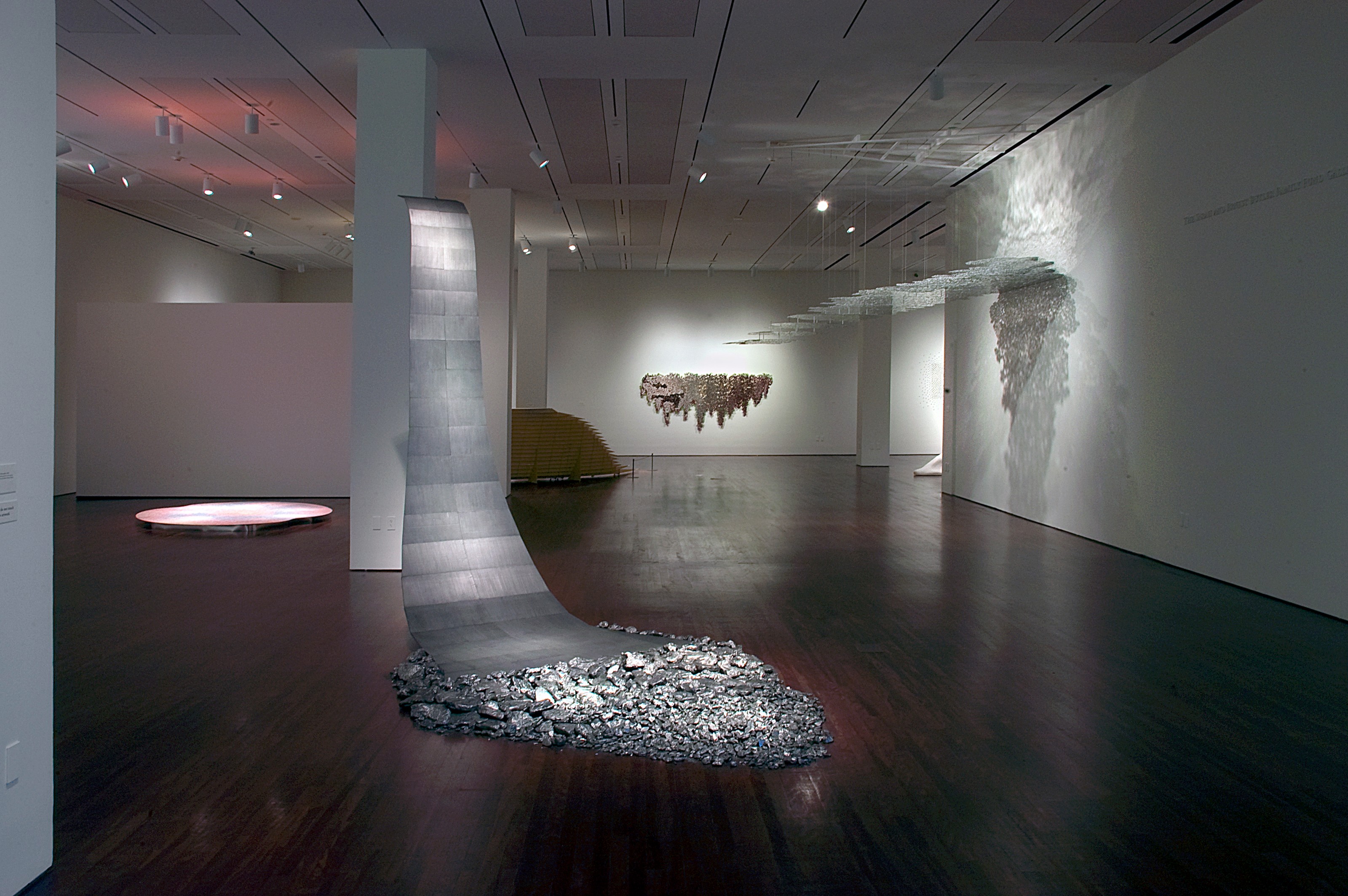
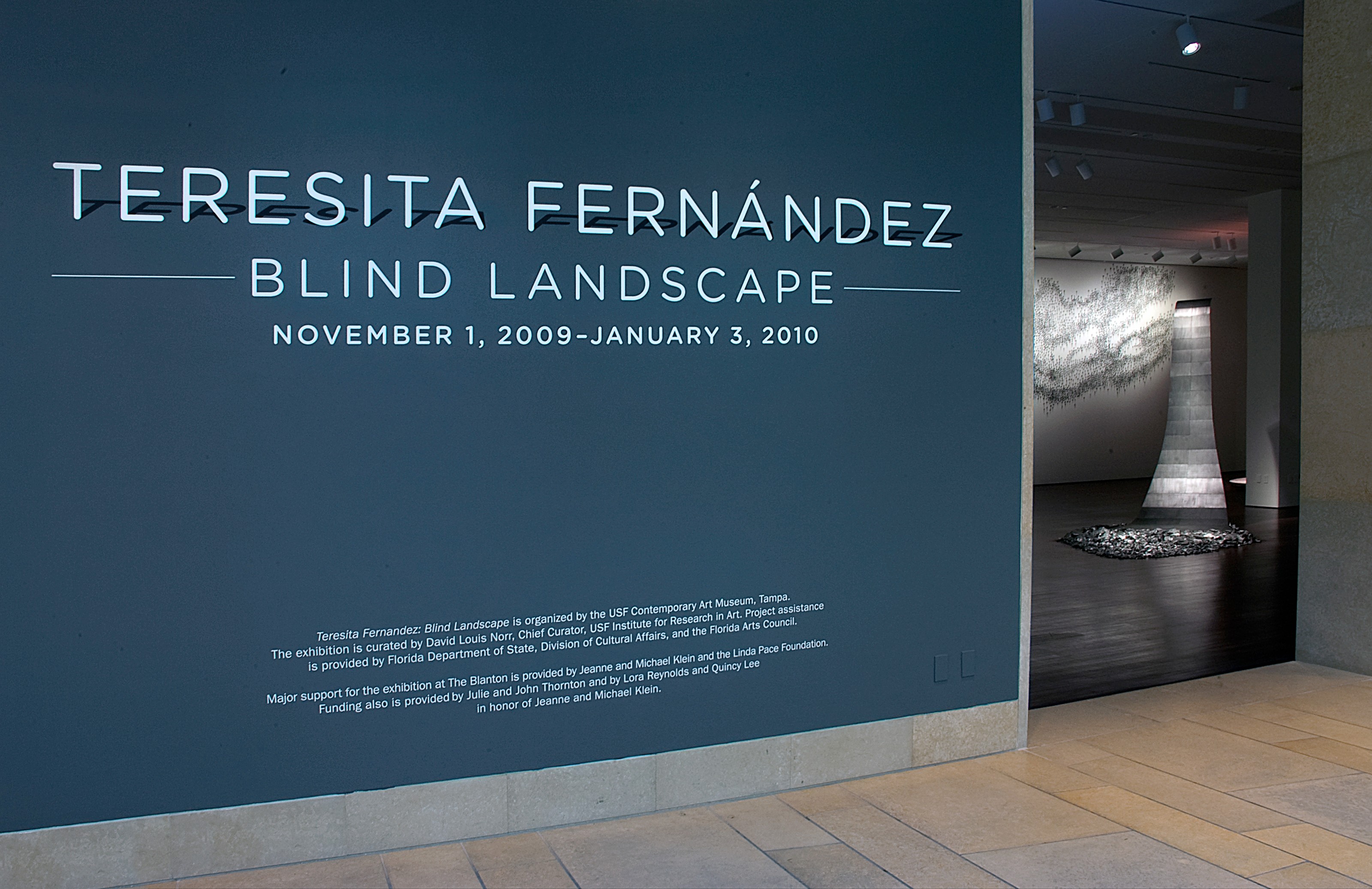
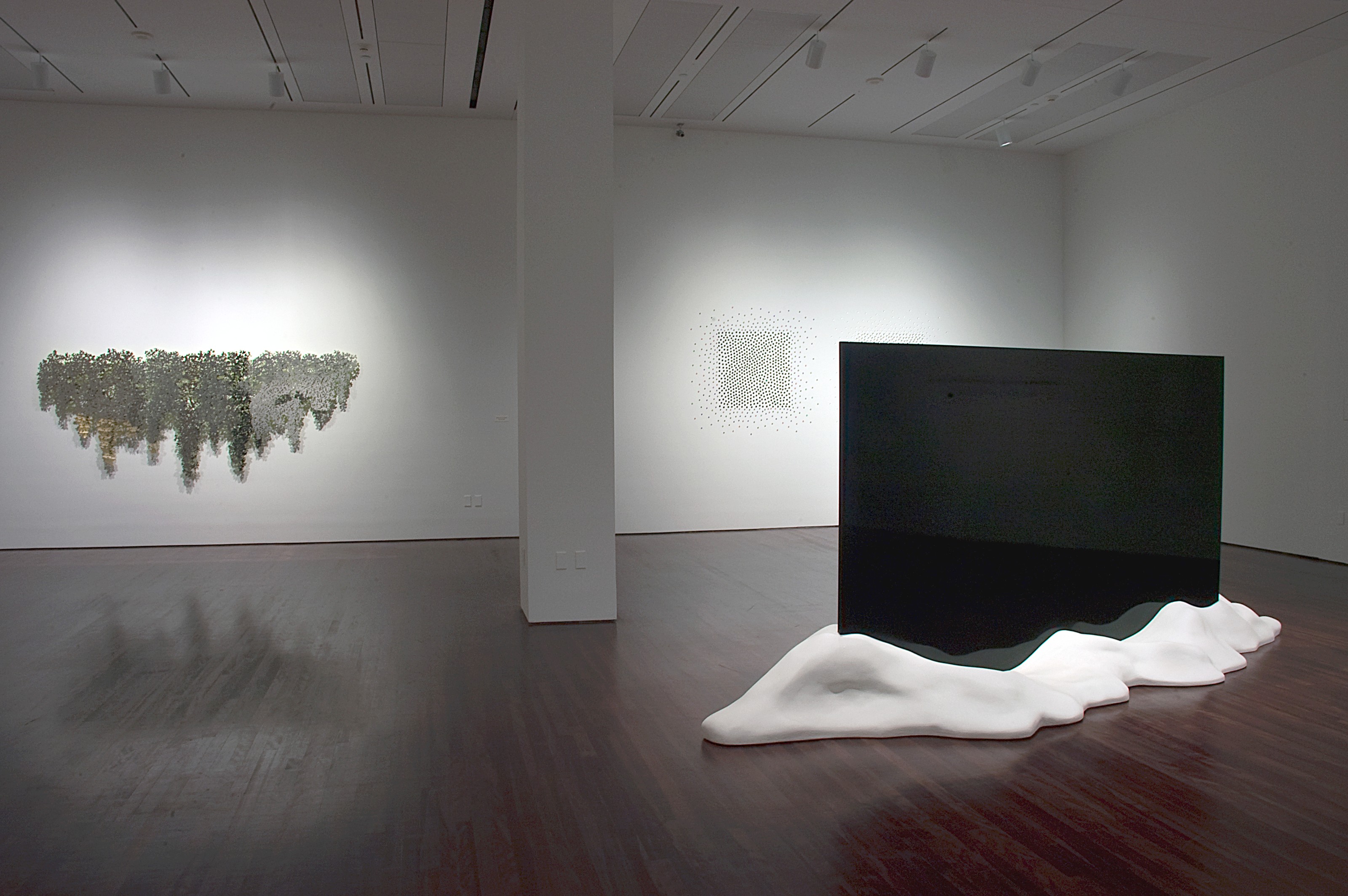
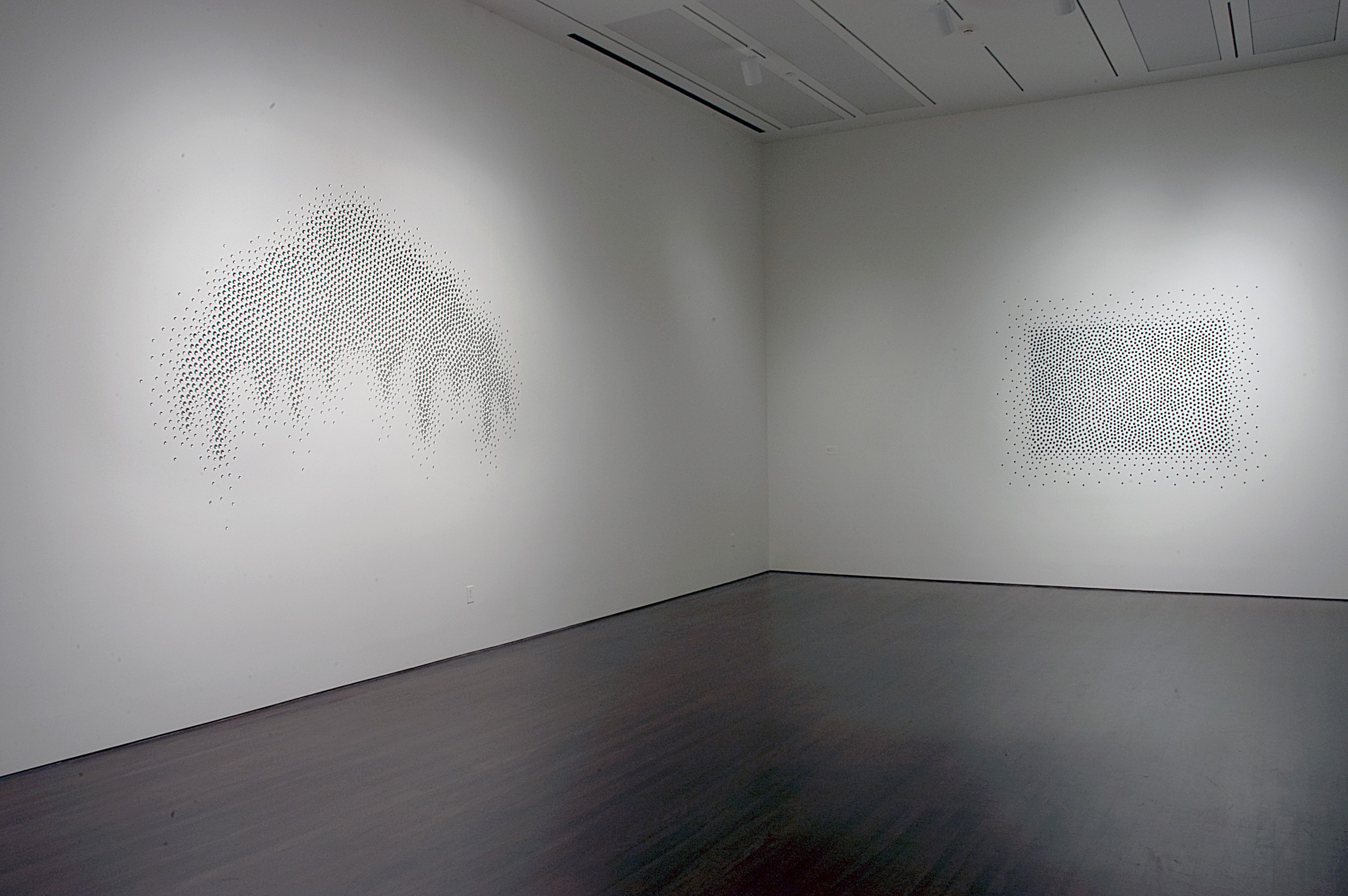
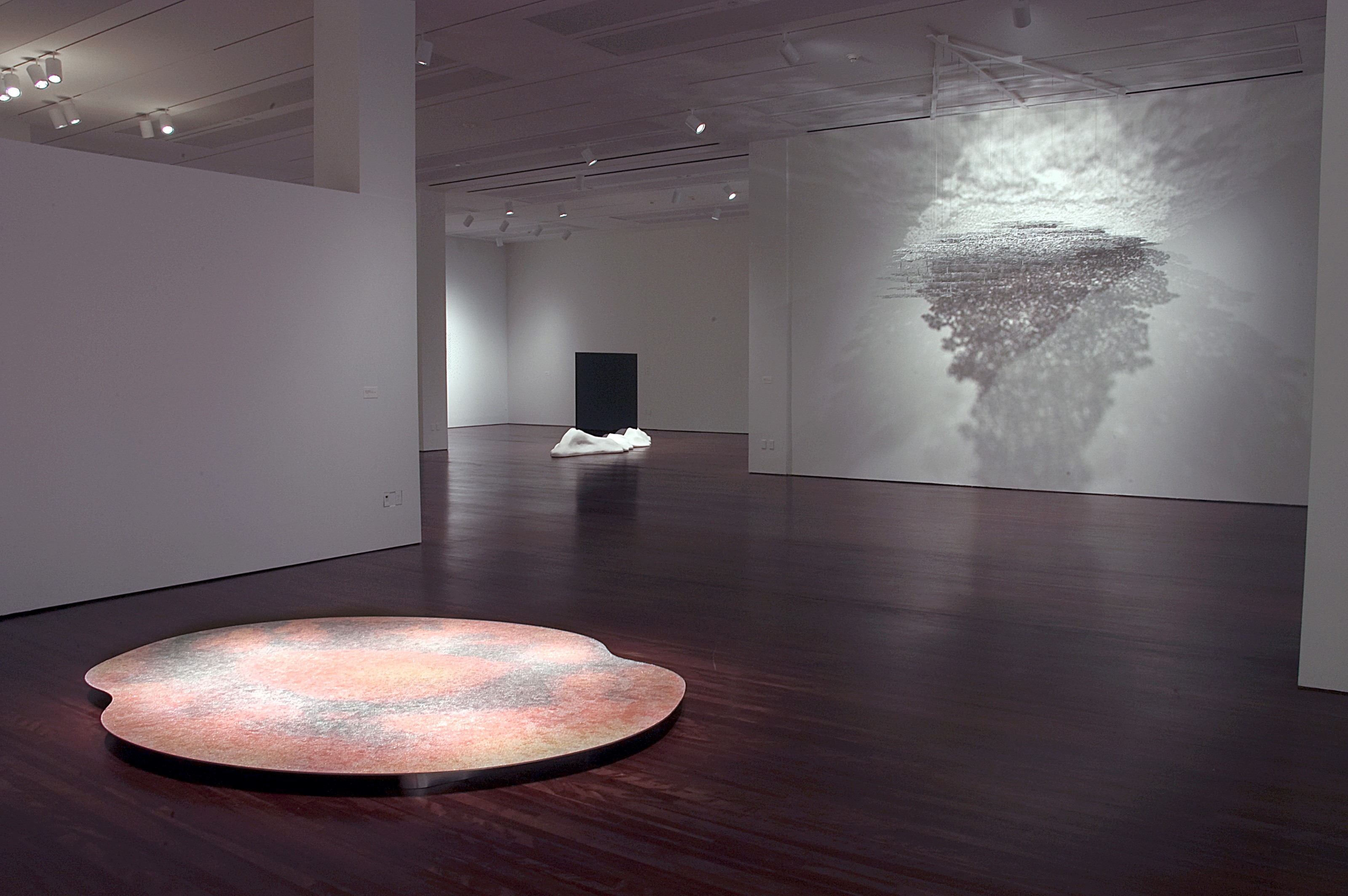
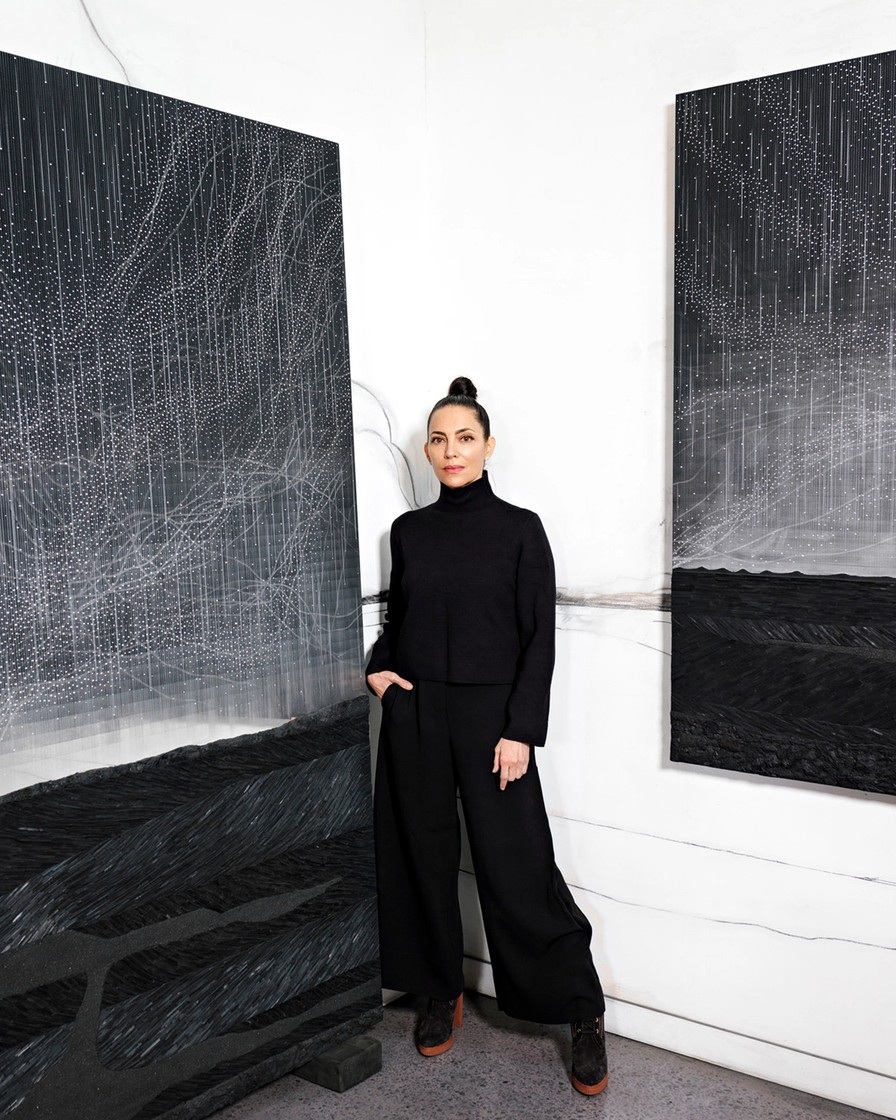
The Blanton Museum of Art at The University of Texas at Austin is pleased to present Teresita Fernández: Blind Landscape, a survey of new and recent works by this internationally acclaimed artist. The exhibition is organized by and premiered at the University of South Florida Contemporary Art Museum (USFCAM) and was curated by David Louis Norr, chief curator, USF Institute for Research in Art, in close collaboration with the artist. Accompanying Teresita Fernández: Blind Landscape, Drawn Toward Light is an exhibition featuring works from the Blanton's collections that use light as a medium. Both exhibitions will be on view November 1, 2009 to January 3, 2010. American artist Teresita Fernández (born in Miami, lives and works in Brooklyn) is widely known for her immersive installations and evocative large-scale sculptures that explore the cultural fabrication of nature. Characterized by her deft ability to transform common materials like steel, graphite and glass into forms and images reminiscent of the natural world, Fernández' works bring idea and experience into poetic tension. Meticulous, subtle, and always surprising, her sculptural scenarios offer viewers unique opportunities for contemplation and discovery.
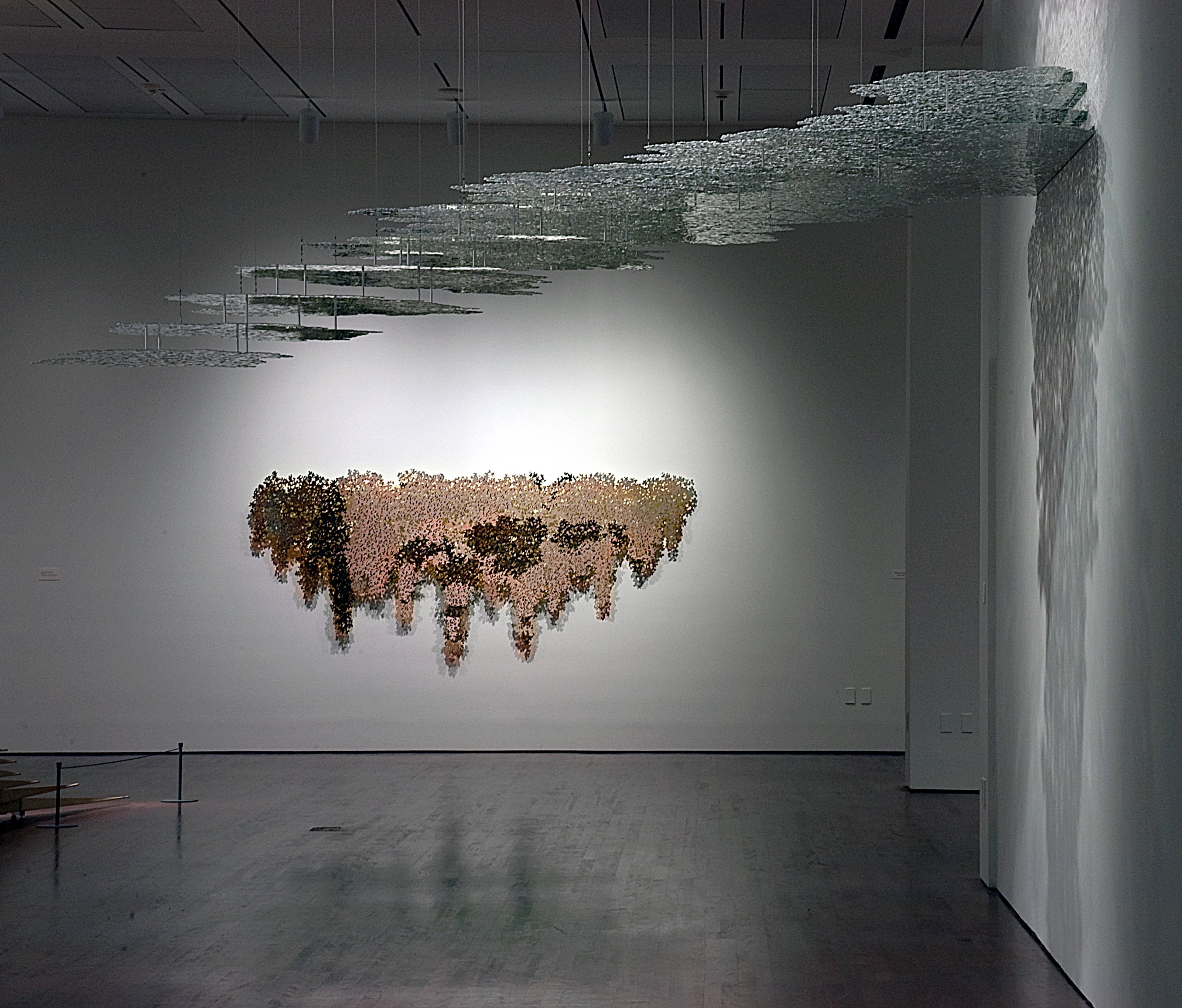
"Investigating the act of looking is central to Teresita Fernández' work," says Annette DiMeo Carlozzi, the Blanton's curator of American and contemporary art and director of curatorial affairs. "Her works address our experiences of light and space as they evolve moment-to-moment and respond to sensation, memory, and the process of perception." The Austin presentation of the exhibition includes five recent large-scale sculptures, a series of six wall works, and a new, monumental drawing made on site. Featured among the large-scale works is Vertigo (sotto en su) from 2007, comprised of layers of precision-cut, highly polished metal woven into a reflective and intricate arboreal pattern suspended high above the viewer, not unlike an immense, cascading tree branch. "The multiple planes of space through which the viewer looks become visible simultaneously, vacillating between object and optical phenomena, continuously disassembling and reassembling," writes curator Norr.