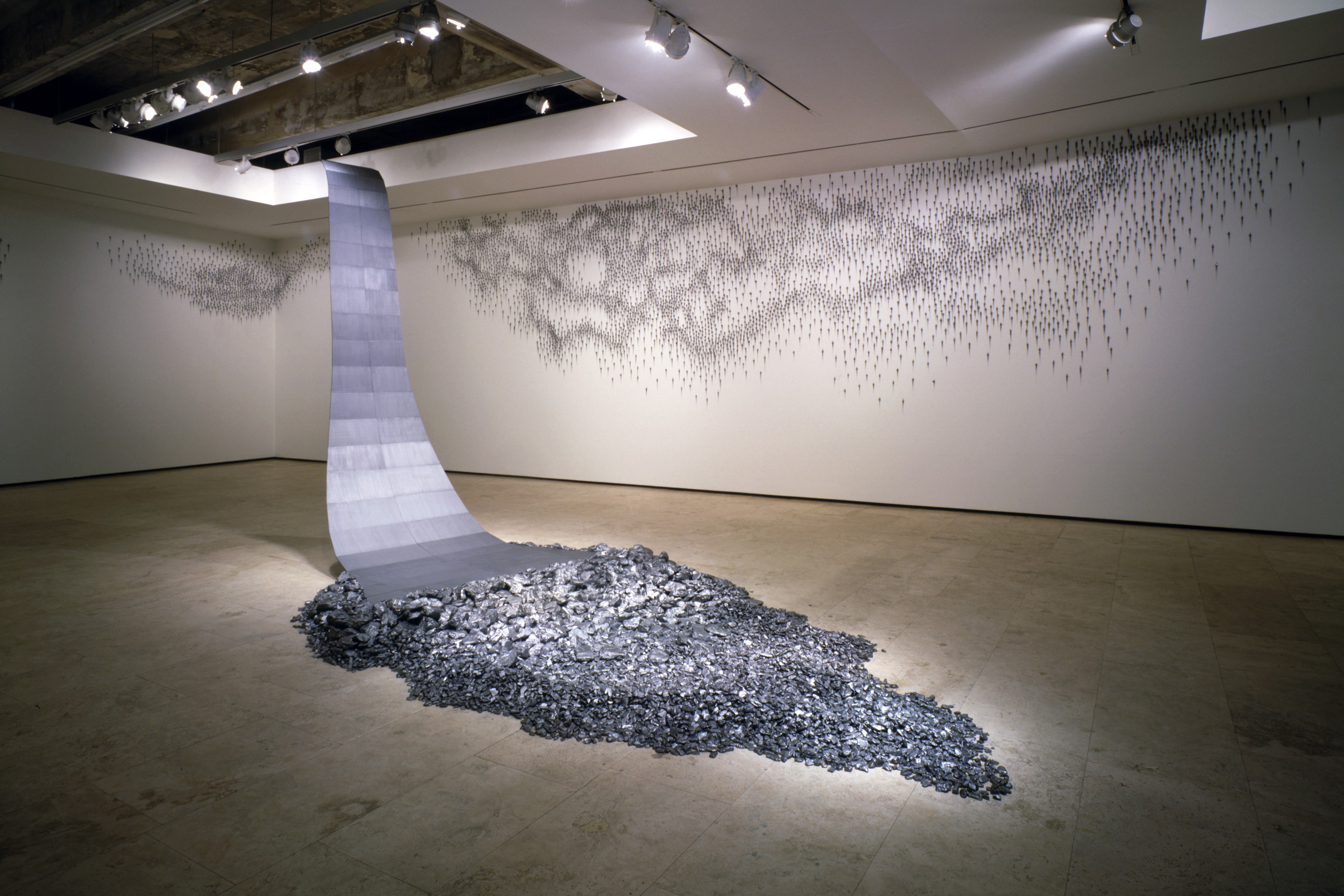
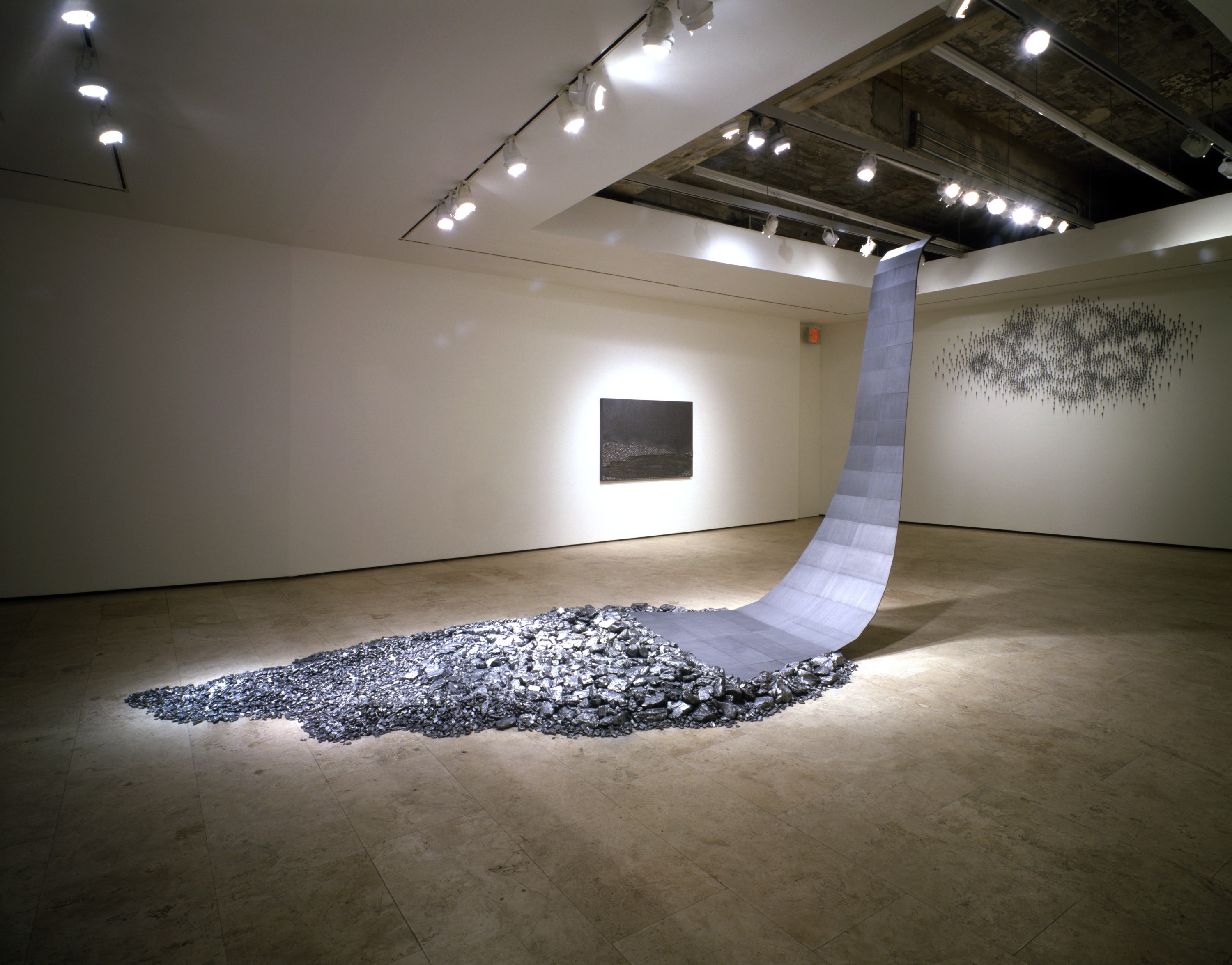
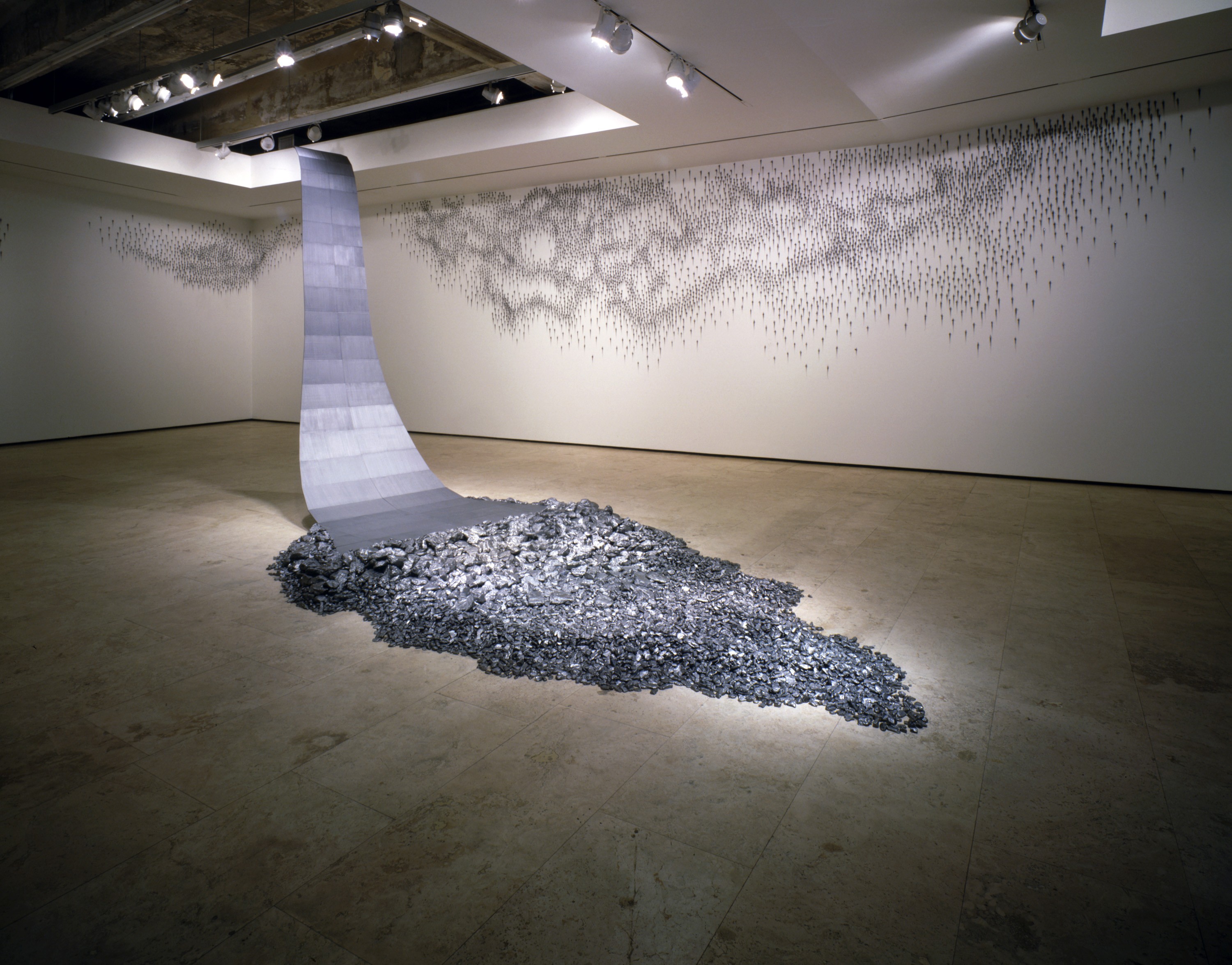
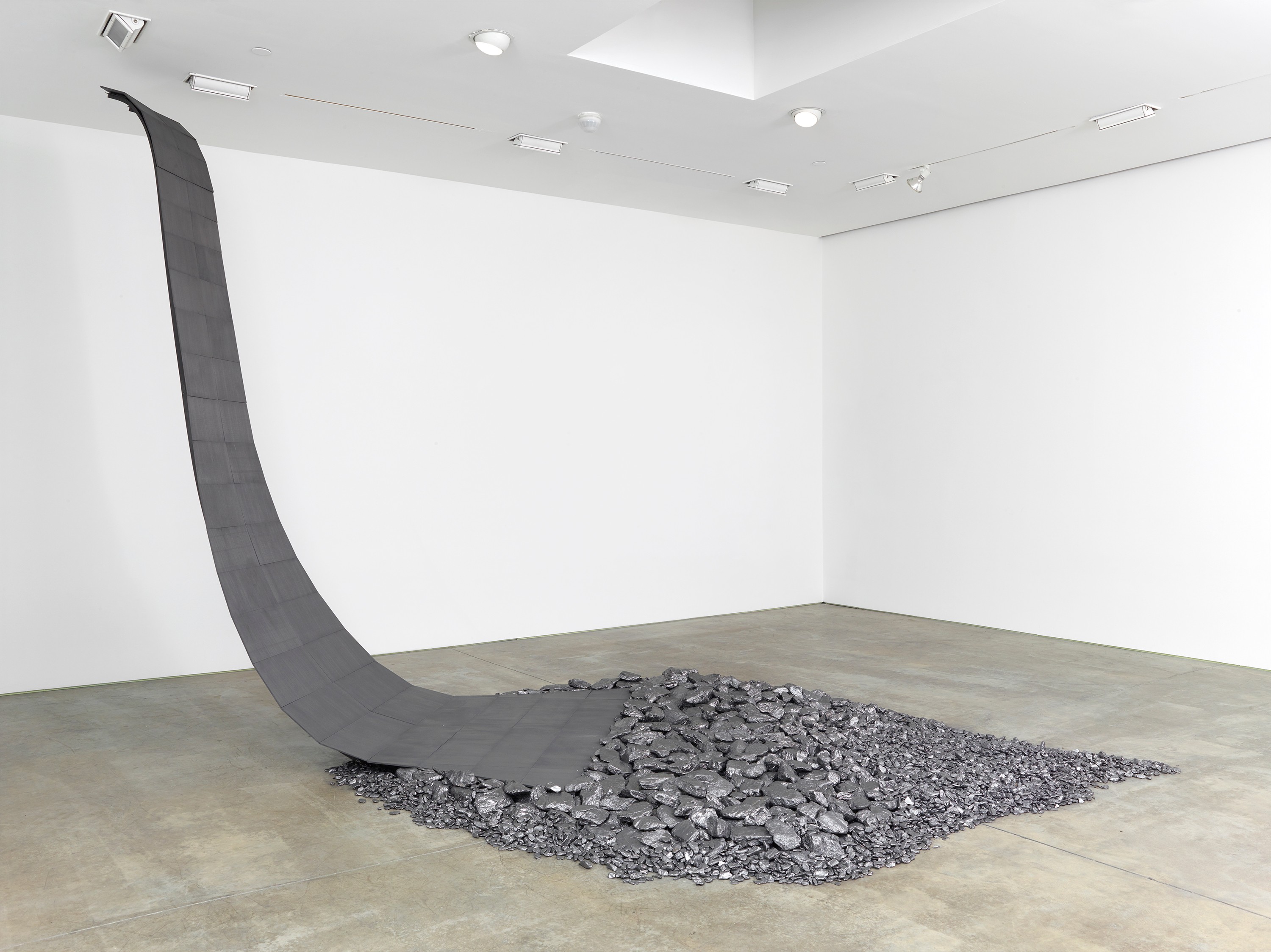
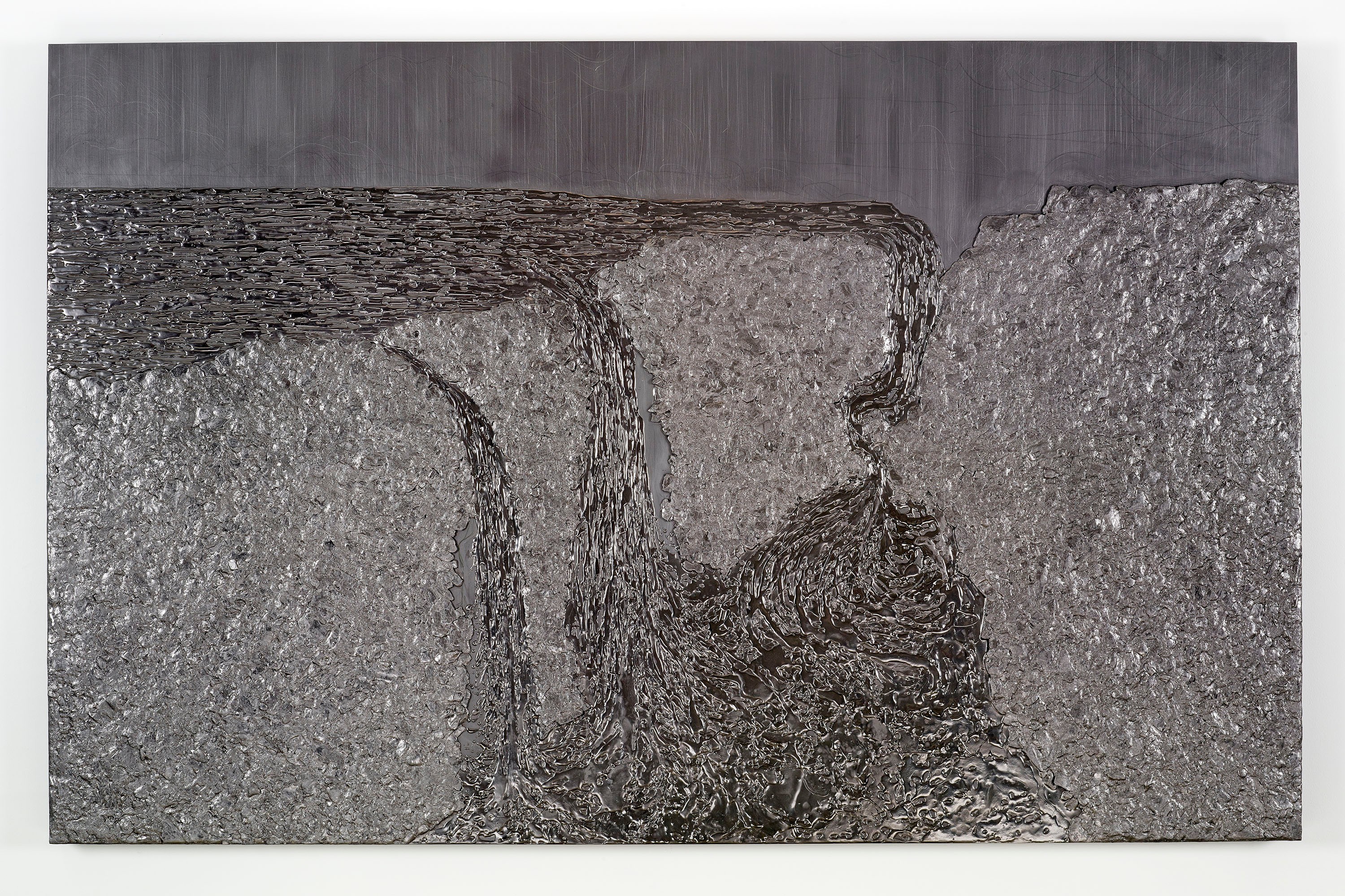
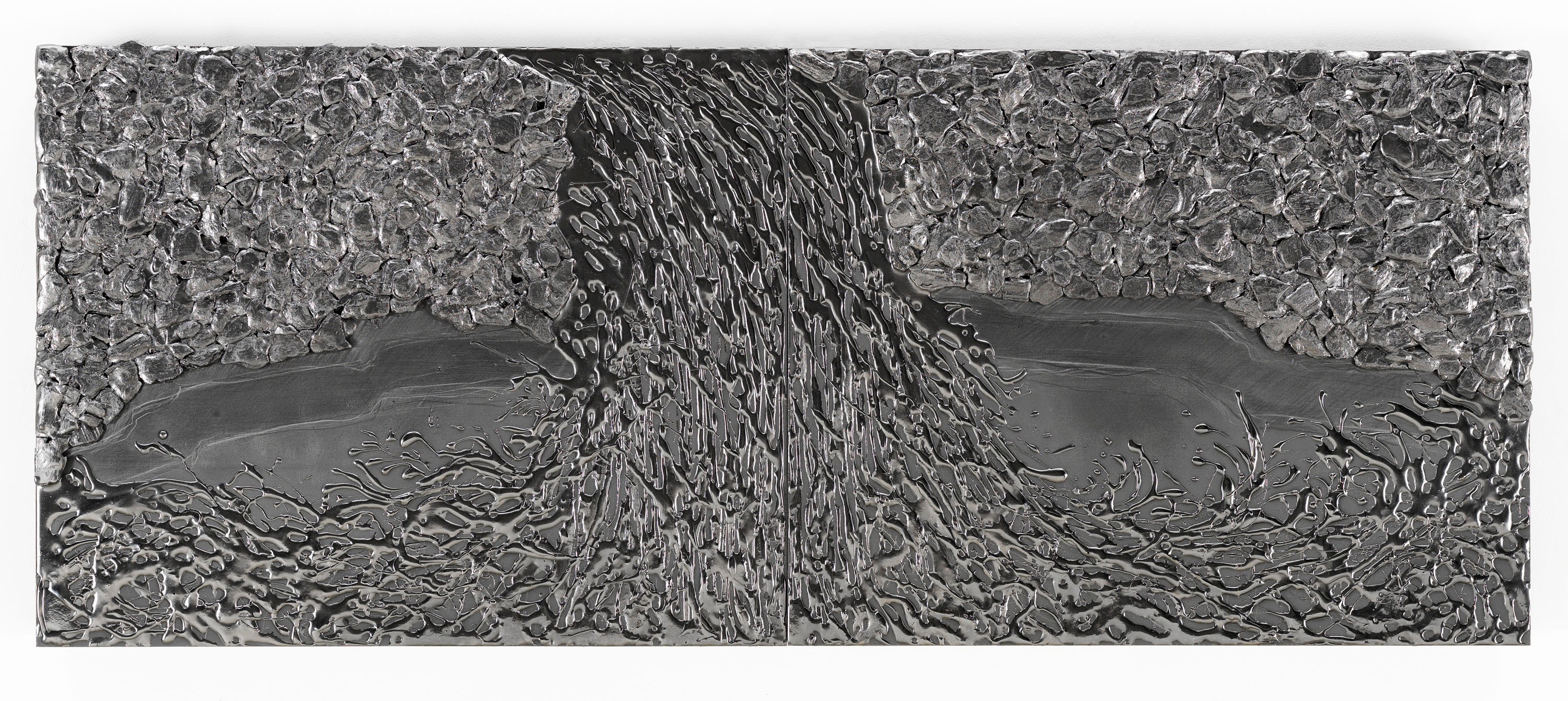
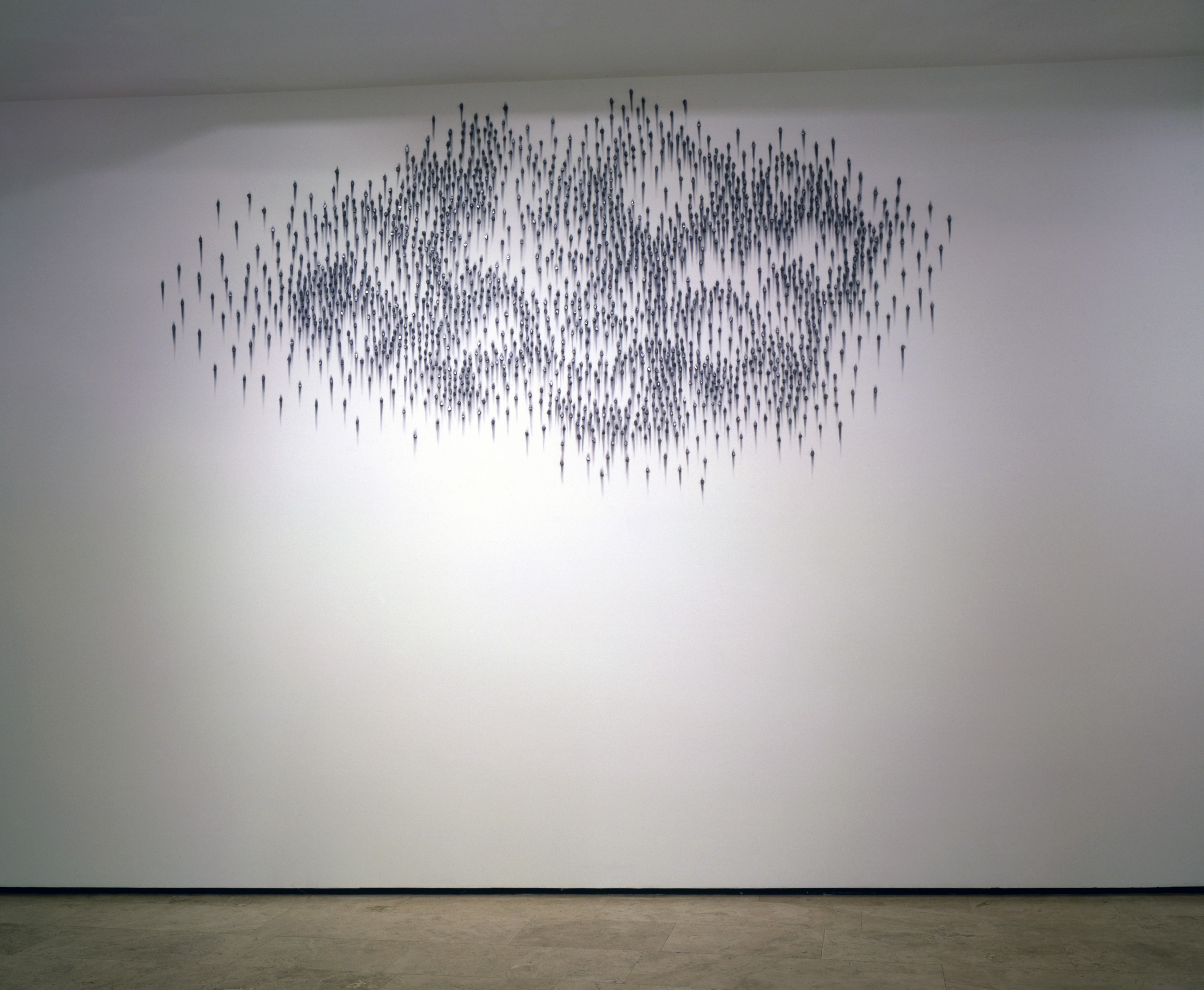
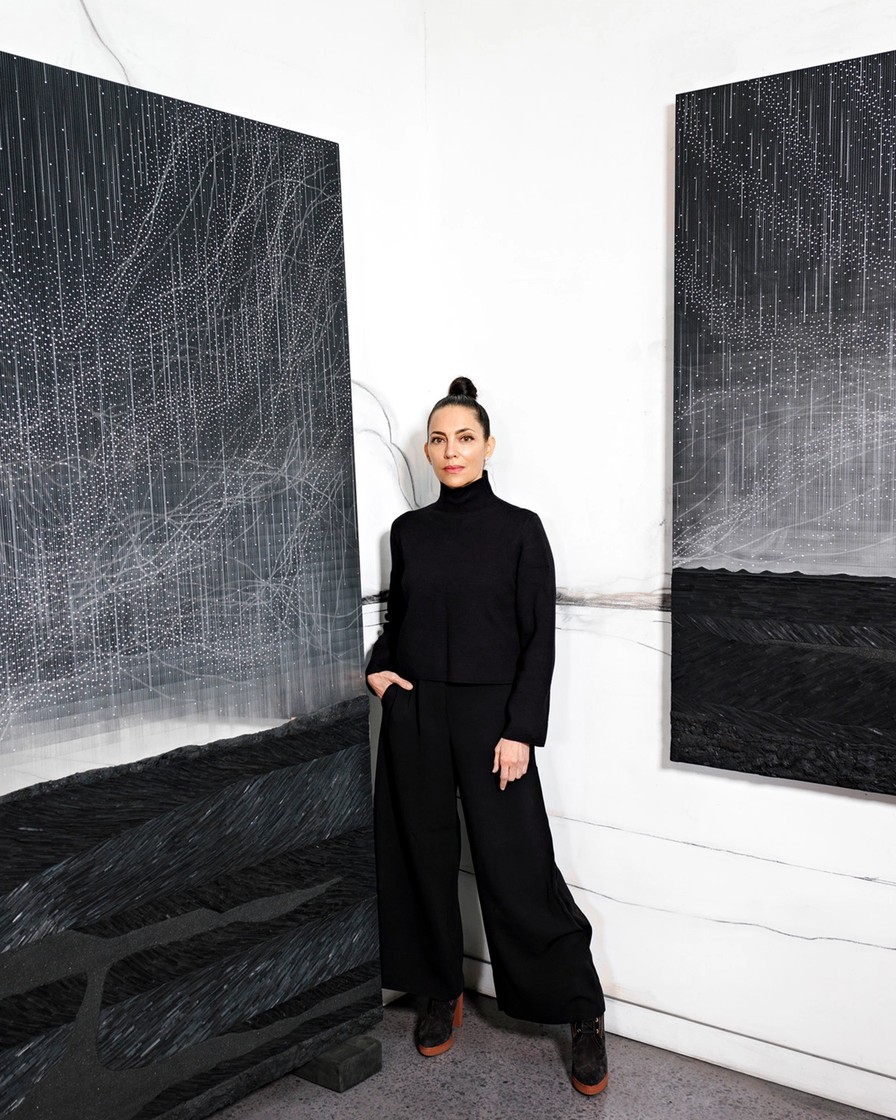
Lehmann Maupin is pleased to present a group of new works by Teresita Fernández for her fourth exhibition at the gallery's Chelsea location. Made entirely of graphite, the works in the exhibition establish a unique and unconventional vocabulary with the material itself. Referring to Borrowdale, England where graphite was first discovered and mined in the early 1500s, Fernández pushes the boundaries of this once sought-after and coveted material. Reimagining the graphite landscape of Borrowdale, her works reflect elements of sculpture and installation and redefine the notion of precisely what constitutes a drawing.
In Drawn Waters (Borrowdale), precision-machined, polished panels of graphite and massive fragments of the raw, mined material are assembled to create a large-scale sculpture of an undulating, dissolving waterfall. Alluding to Leonardo da Vinci's studies of moving water as well as to Robert Smithson's land pours, Fernández turns the idea of a drawing into tangible form, making a solid sculpture that is in effect a three-dimensional gestural graphite drawing, a line dragged through the gallery space. For Fernández, to assemble the sculpture is to engage in the act of drawing.
In her Nocturnal Series, Fernández creates works that are at once landscape painting, conventional drawing and sculptural relief. From afar these suggest dark, monochrome minimalist paintings. As viewers approach, the works slowly reveal detailed and lustrous romantic landscapes. Like a drawing over a drawing, the graphite--carved, polished, layered and drawn on--reflects light to depict luminous night scenes of oddly familiar but mysteriously displaced sites. In Passaic Pour, Fernández again nods to Smithson; the iconic Great Falls of Passaic are reinvented as a grand nocturnal scene of an immense pour.