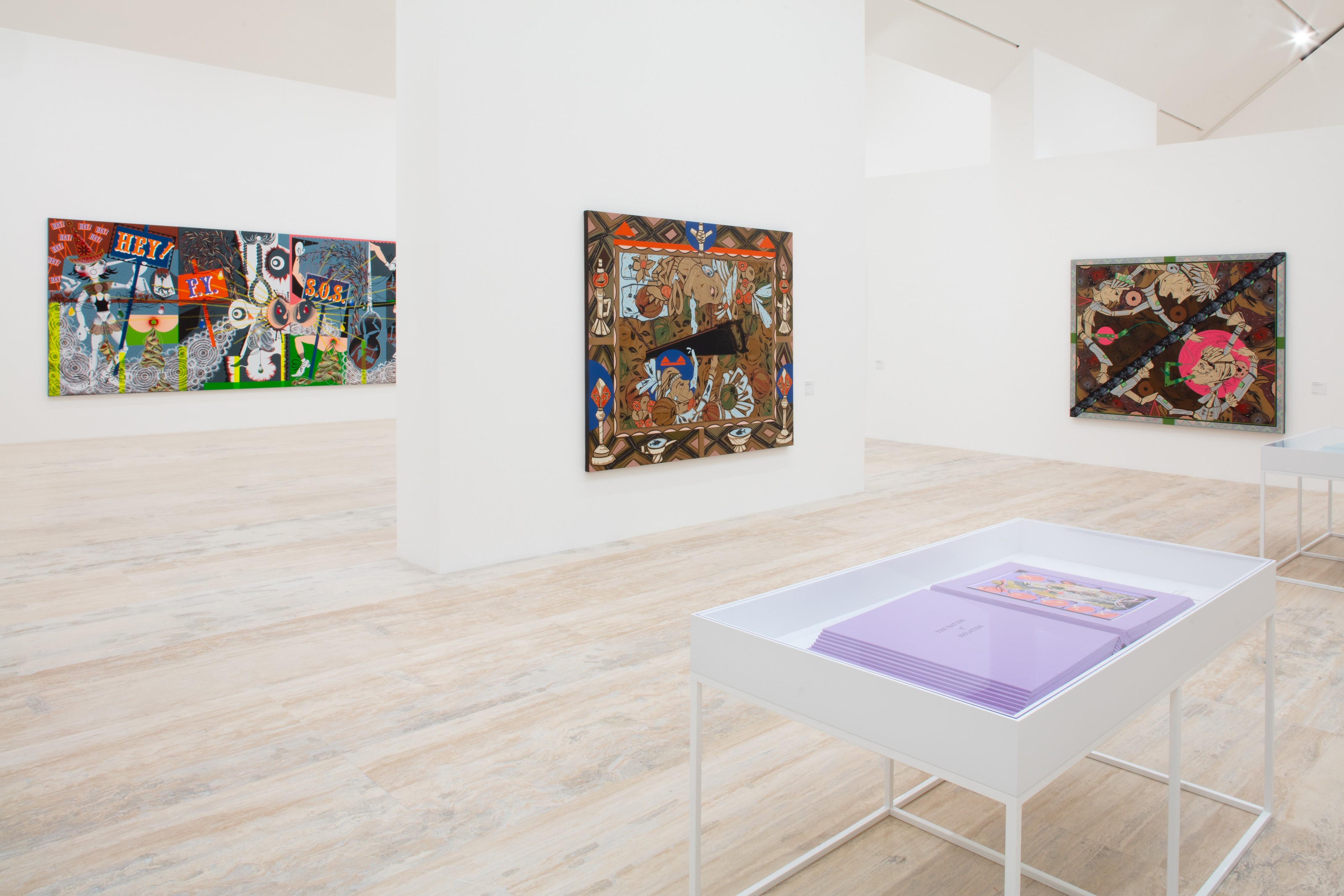
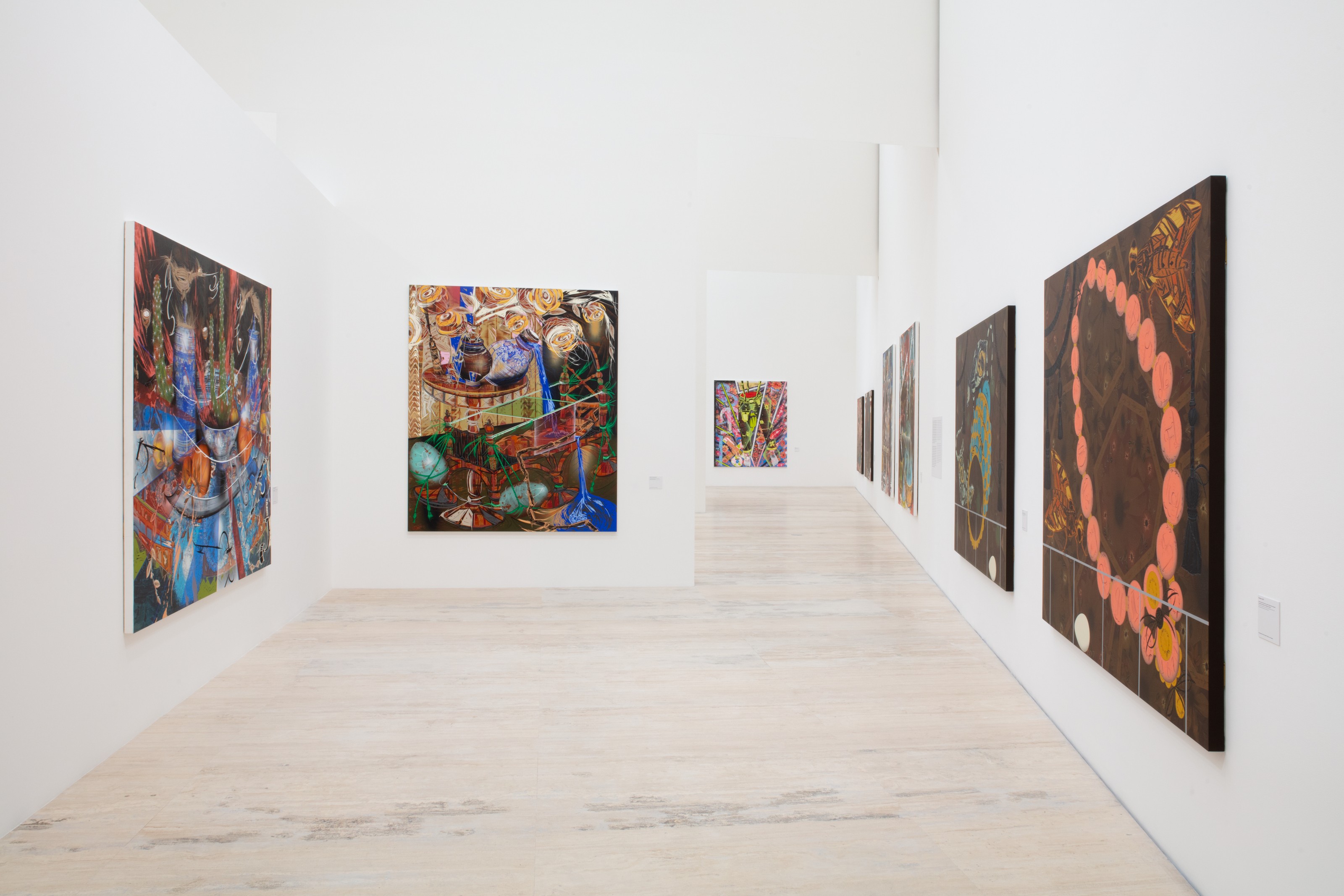
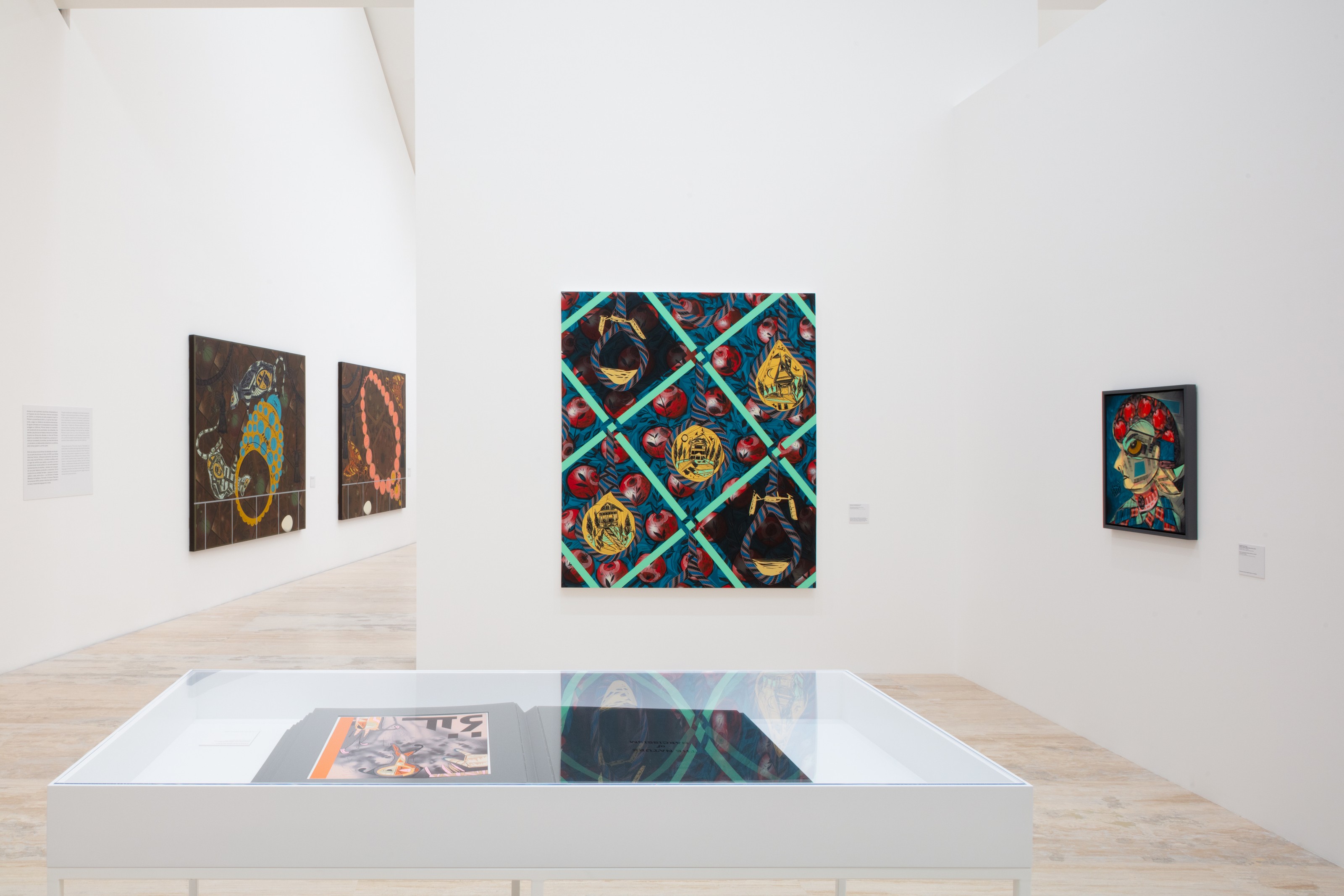
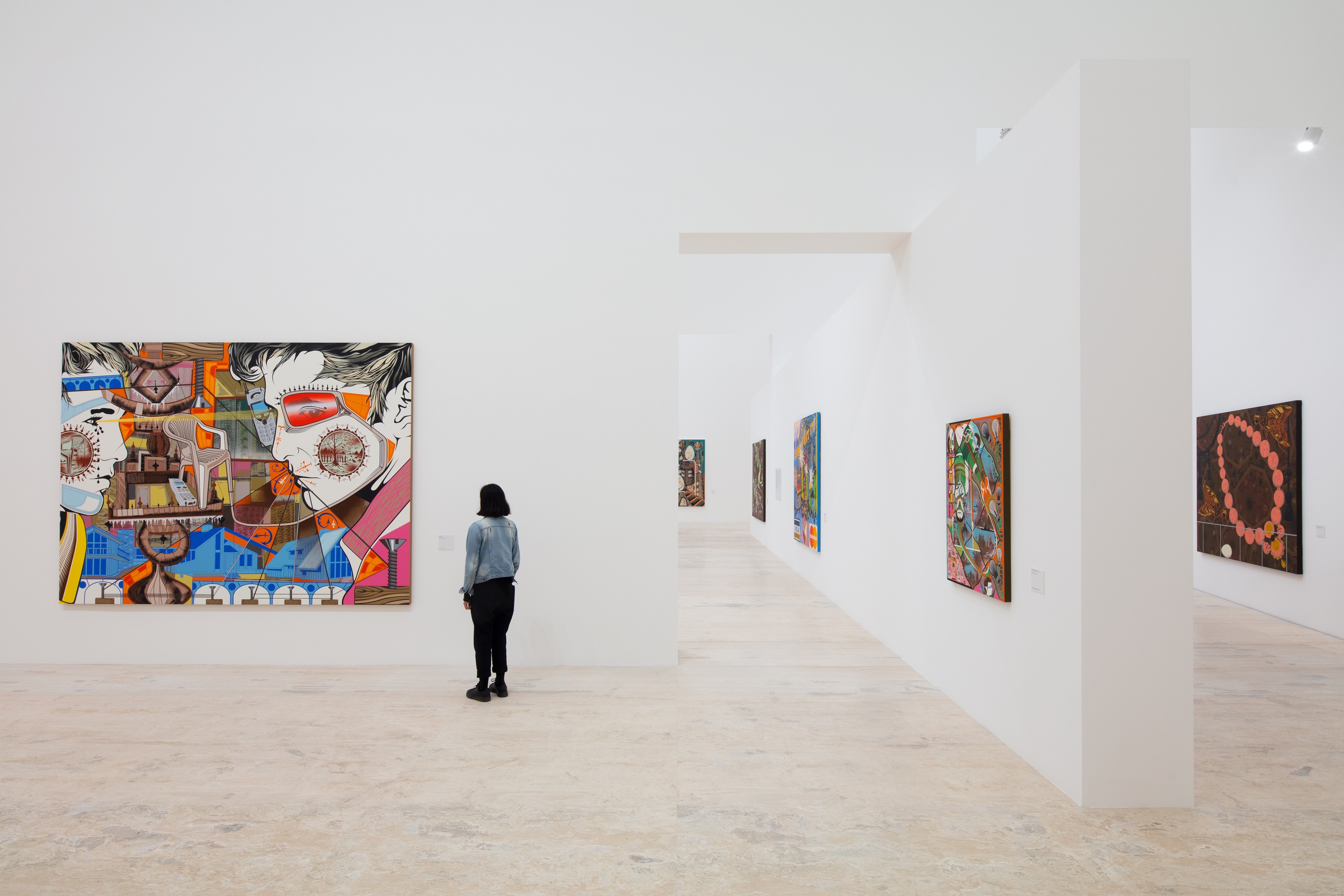
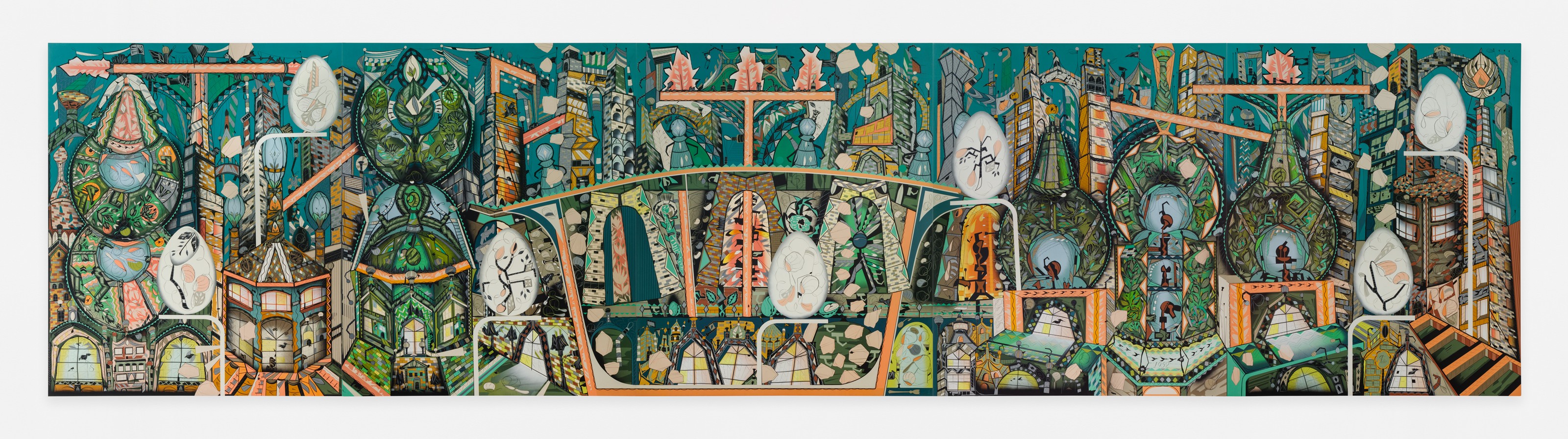
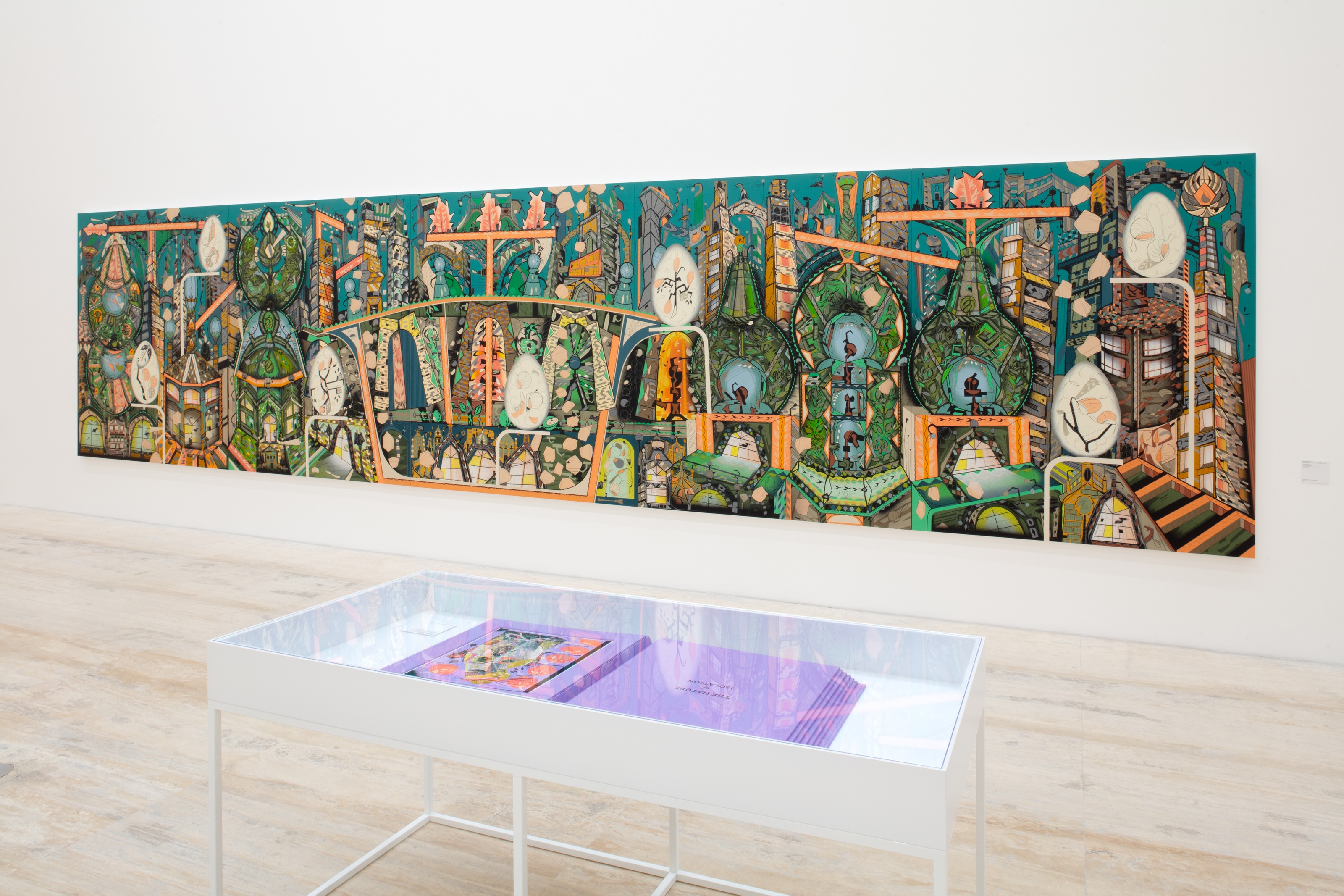
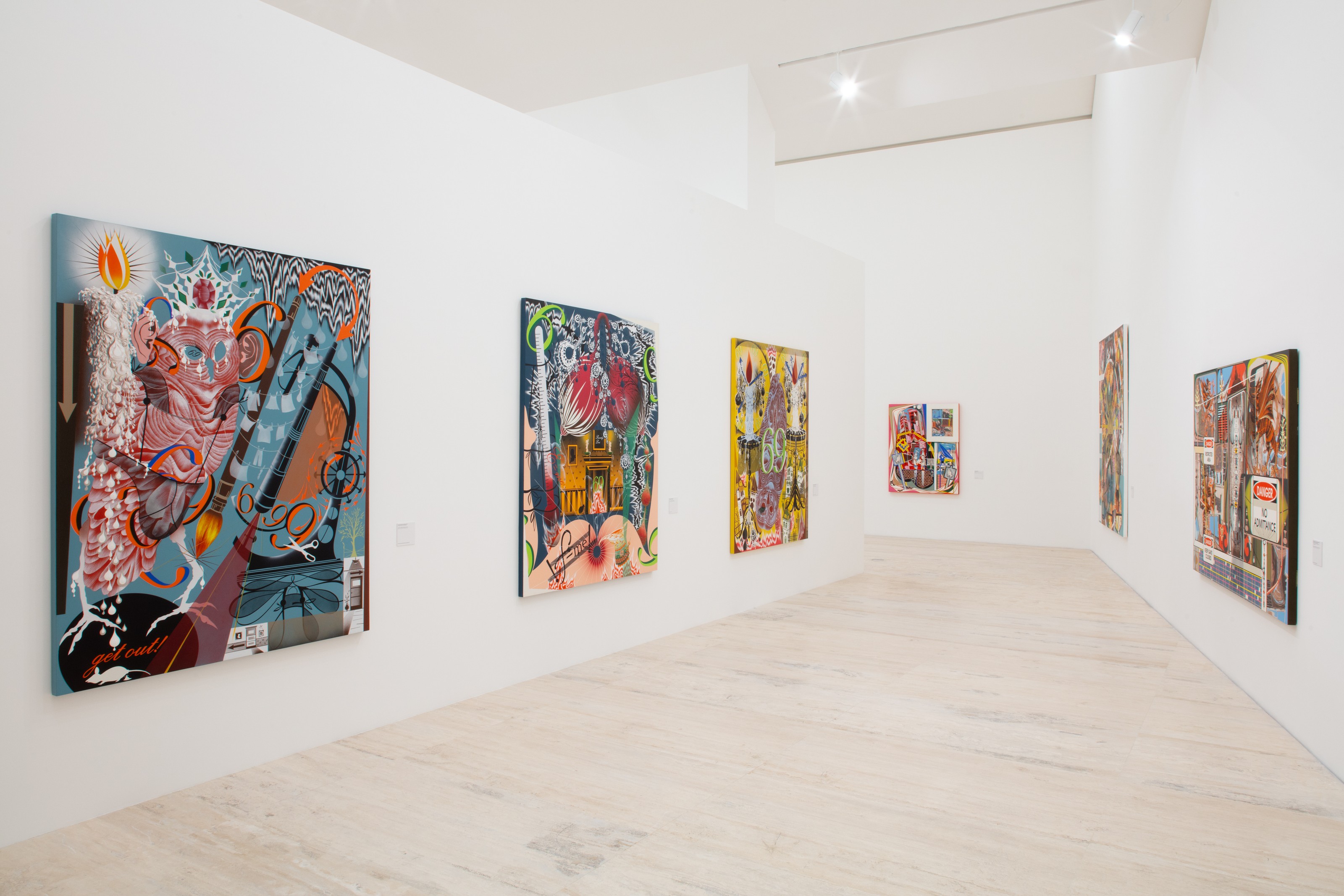
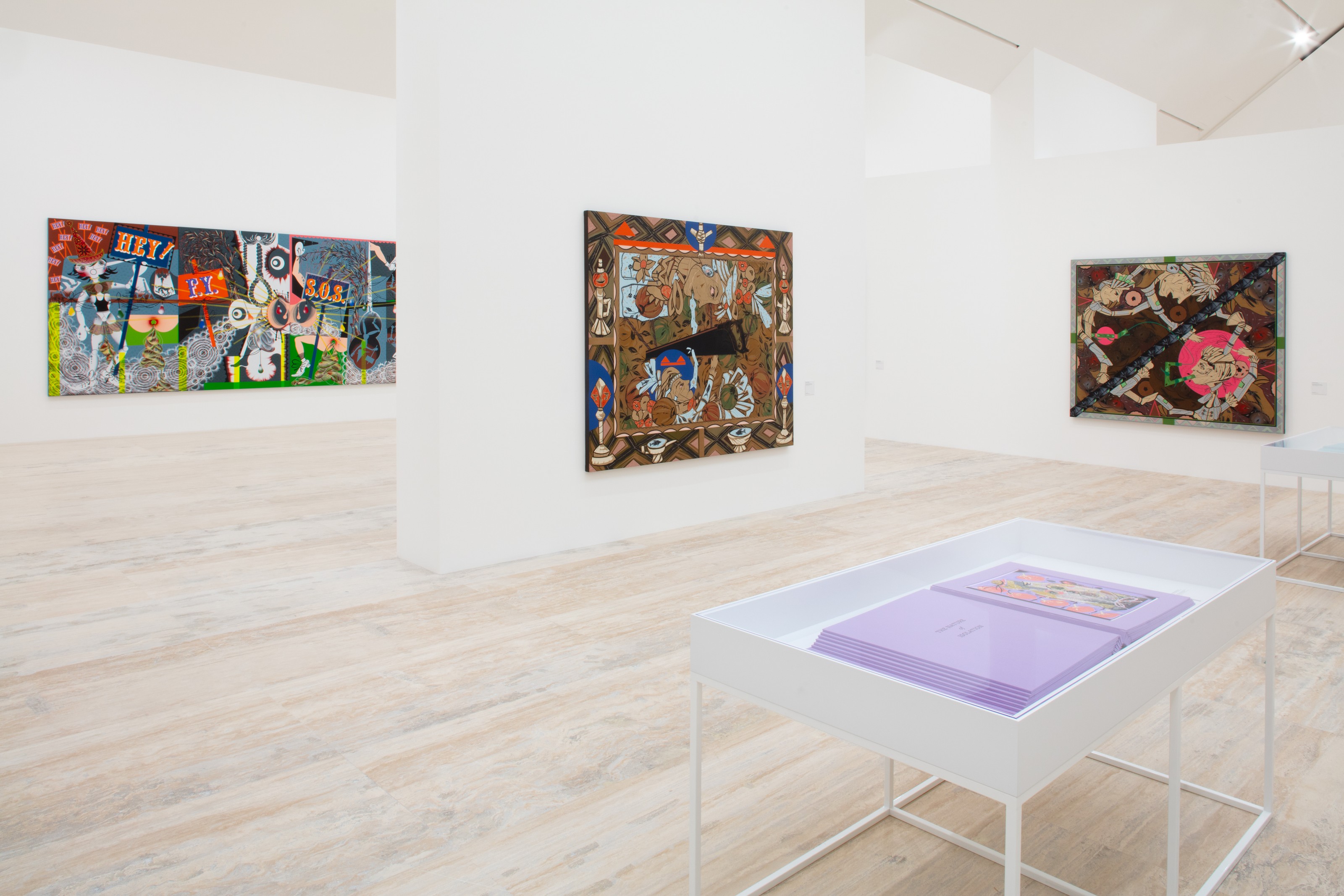
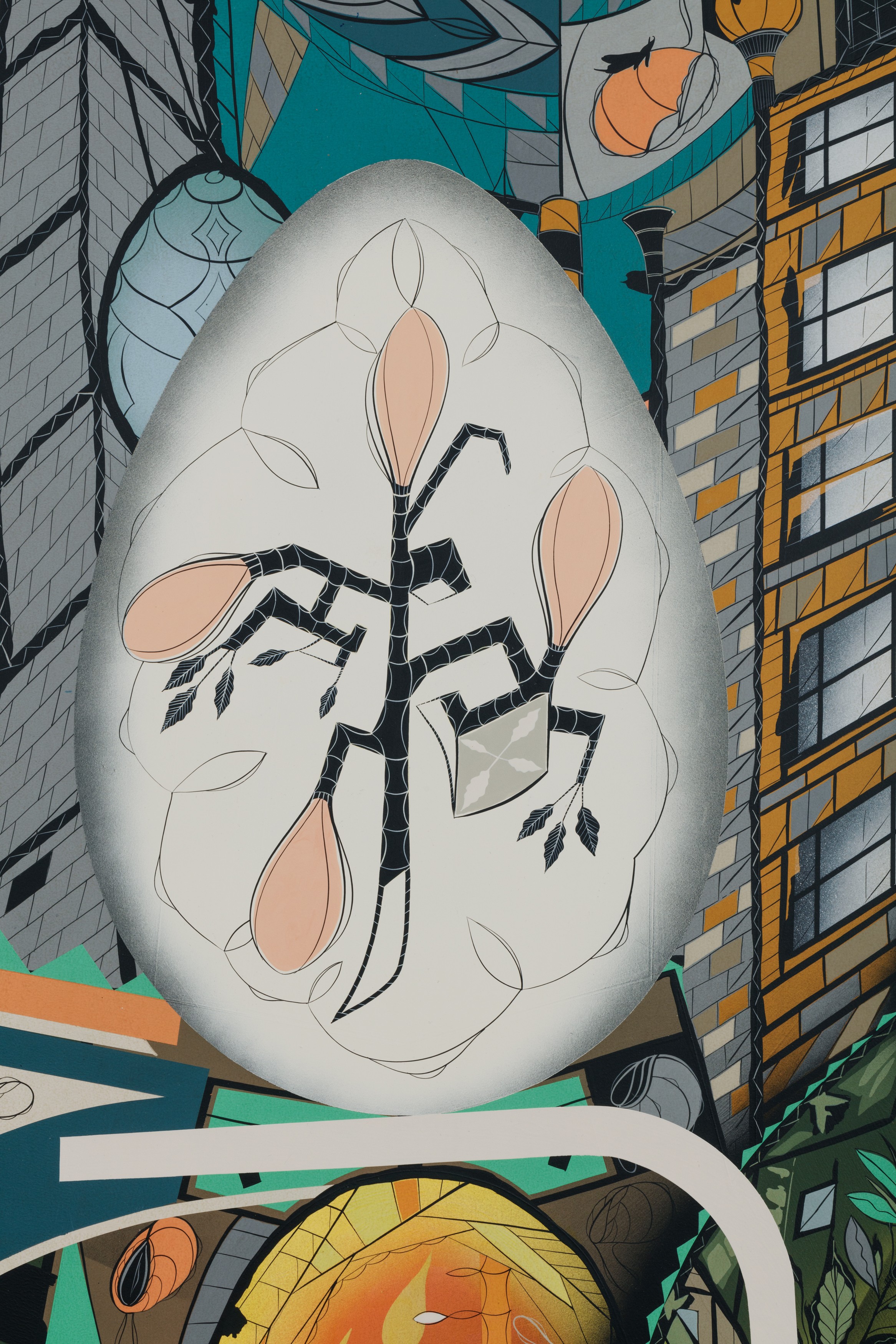
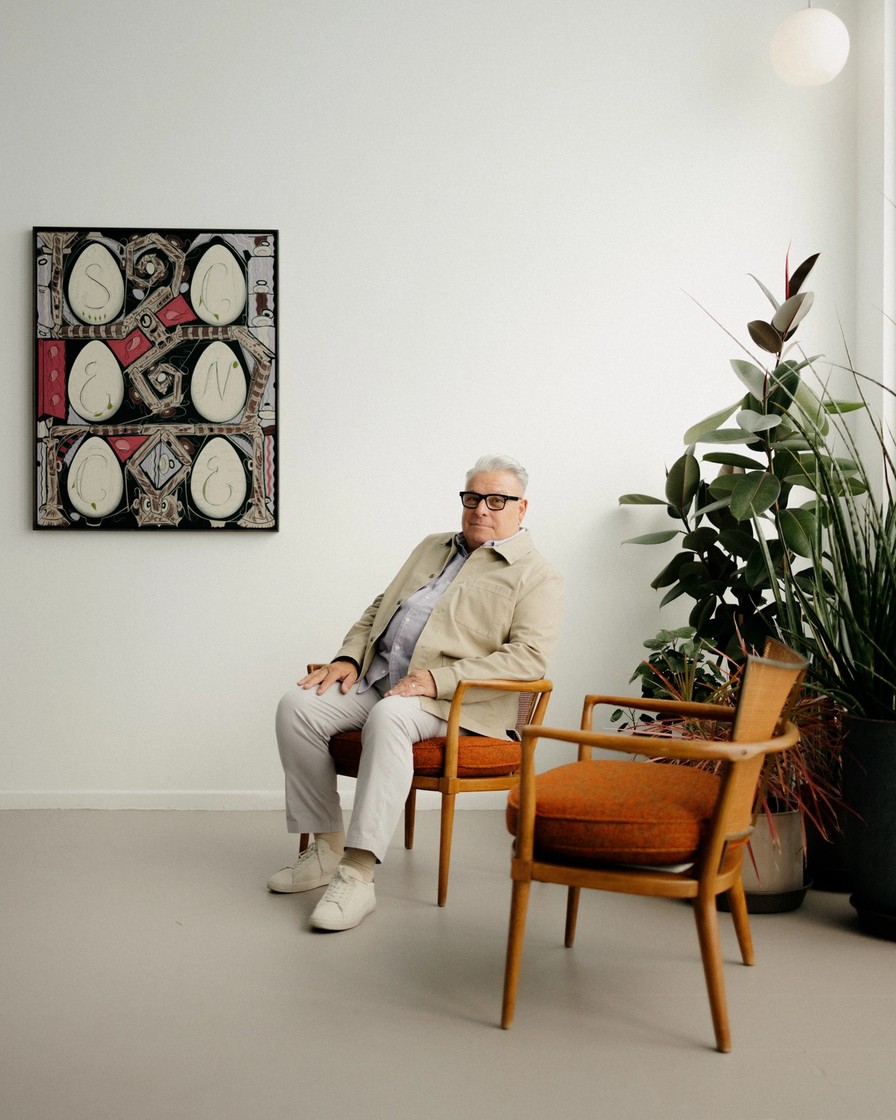
Over the course of his decades-long career, Lari Pittman (b. 1952, Los Angeles, CA, lives and works in Los Angeles, CA) has developed a unique visual aesthetic that has established him as one of the most significant painters of his generation. Pittman’s signature, densely-layered painting style includes a lexicon of signs and symbols (such as bells, eggs, animals, and ropes), a compilation of varied painting techniques, and a clear homage to the handmade, craft, and the decorative. Pittman creates complex compositions that mediate the tension between color, text, and imagery; landscape and decoration; and chaos and order with remarkable dexterity and often on a large scale, and the artist has an innate ability to create compositions in which each element within a painting is given equal space and significance.
In the mid-1970s, Pittman attended California Institute of the Arts in Valencia, California, completing a B.F.A. and an M.F.A. The Institute’s strong feminist arts program challenged the devaluation of art forms traditionally associated with women, and it was partially as a result of his engagement with this program that Pittman developed an interest in undermining aesthetic hierarchies and embracing the decorative arts. Pittman’s strong affinity for the decorative can be seen throughout his numerous bodies of work, and it has contributed to his singular visual style. While Pittman’s early works were informed by the socio-political struggle resulting from the peak of the AIDS epidemic, racial discord, and LGBTQ+ civil rights struggles that defined the last two decades of the 20th century, his later paintings evince a shift in focus towards interior spaces, including domestic and psychological subjects.