본문으로 건너뛰기

니콜라스 슬로보

Elizeni Ienkanyiso

London

3월 11일–2022년 4월 30일

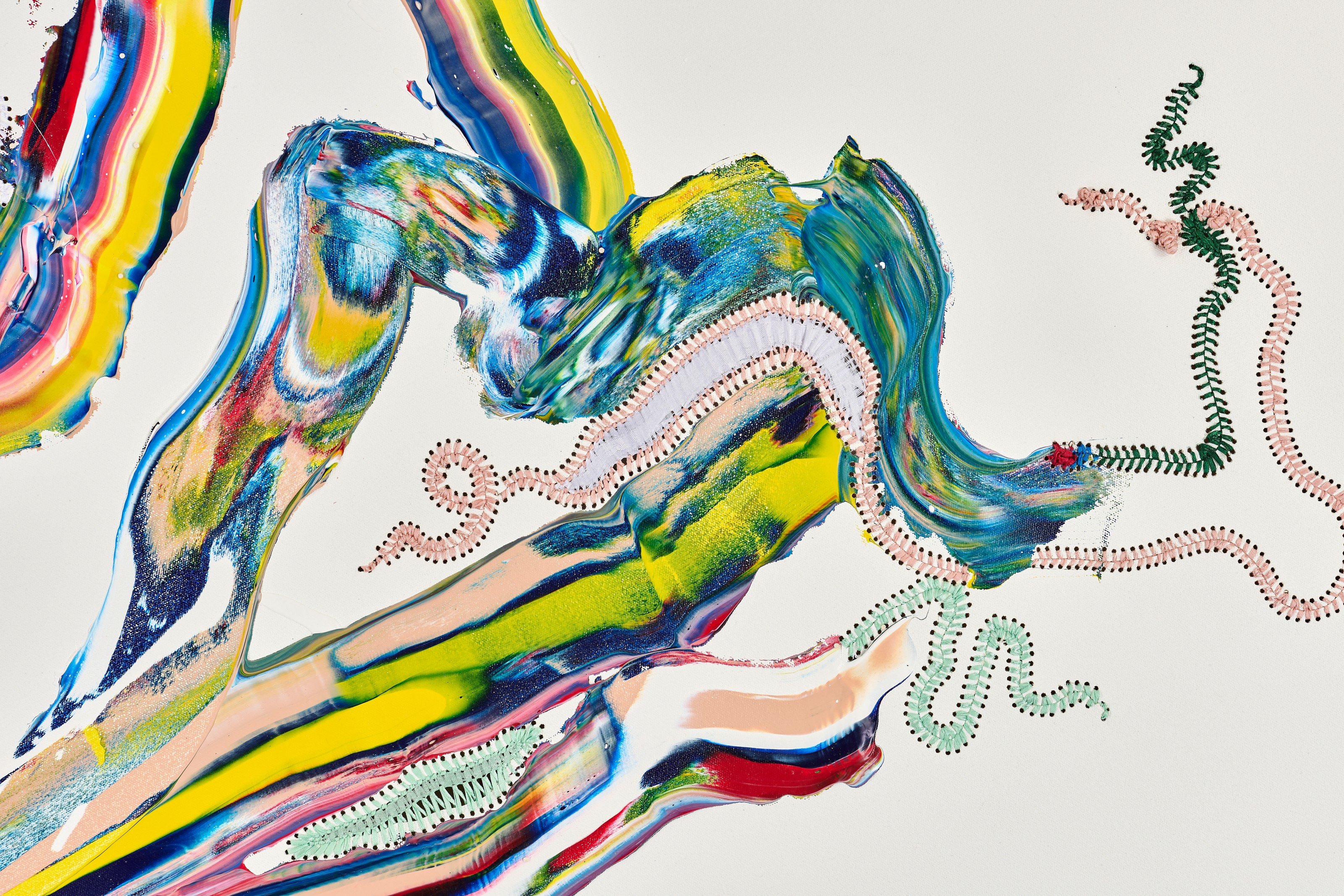
Detail of wall work by Nicholas Hlobo

No.9 Cork Street

Mayfair, London W1S 3LL

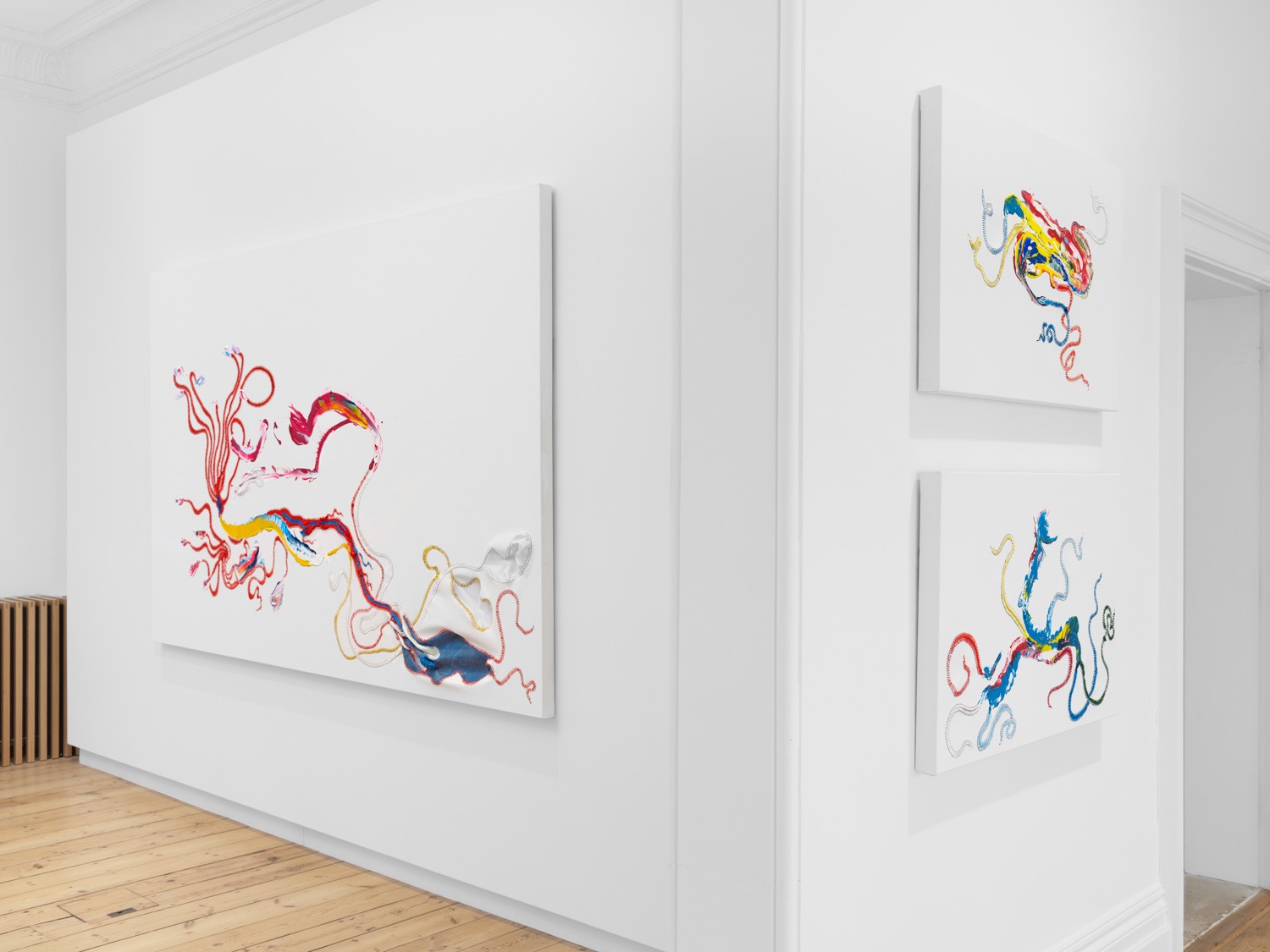
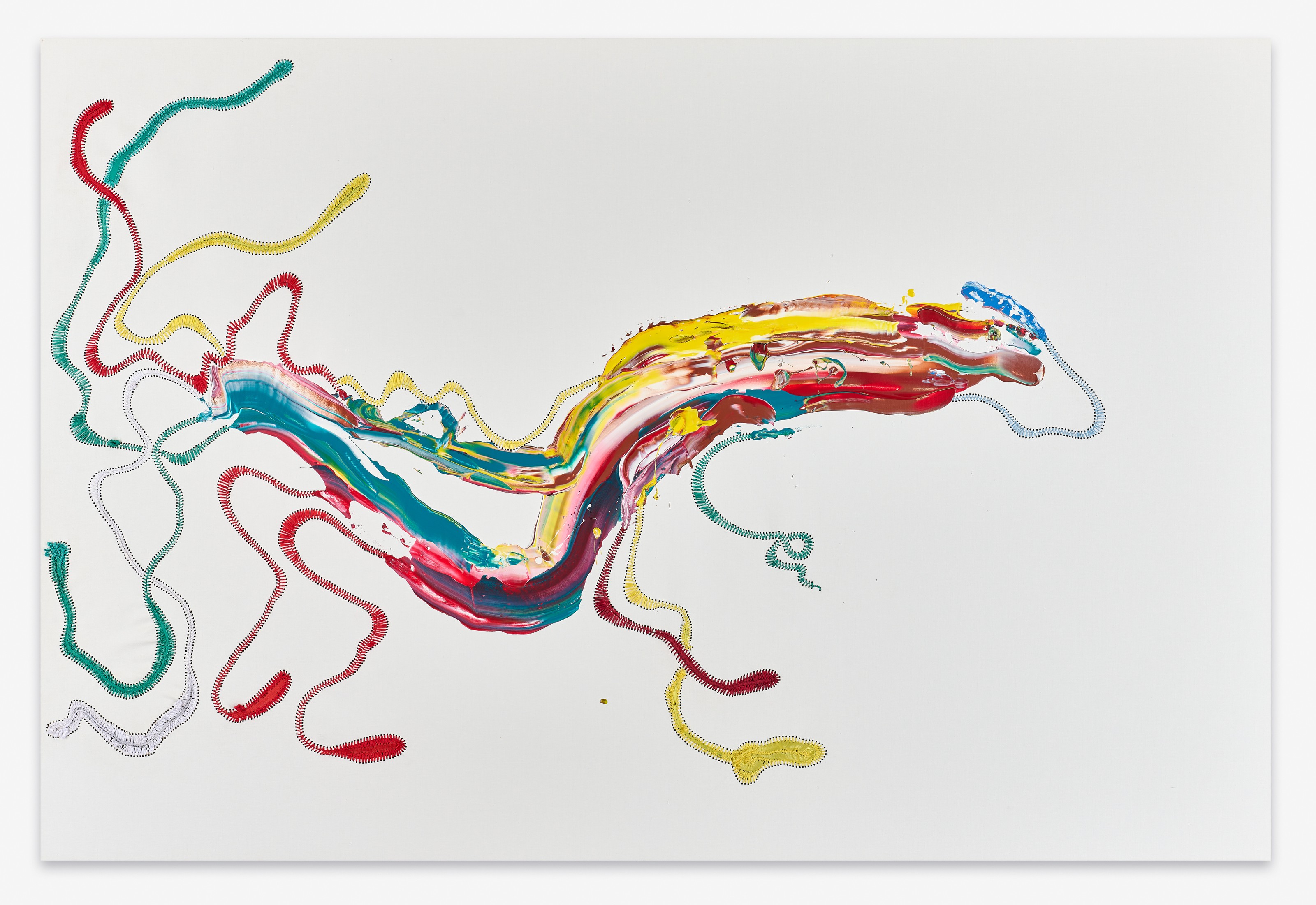
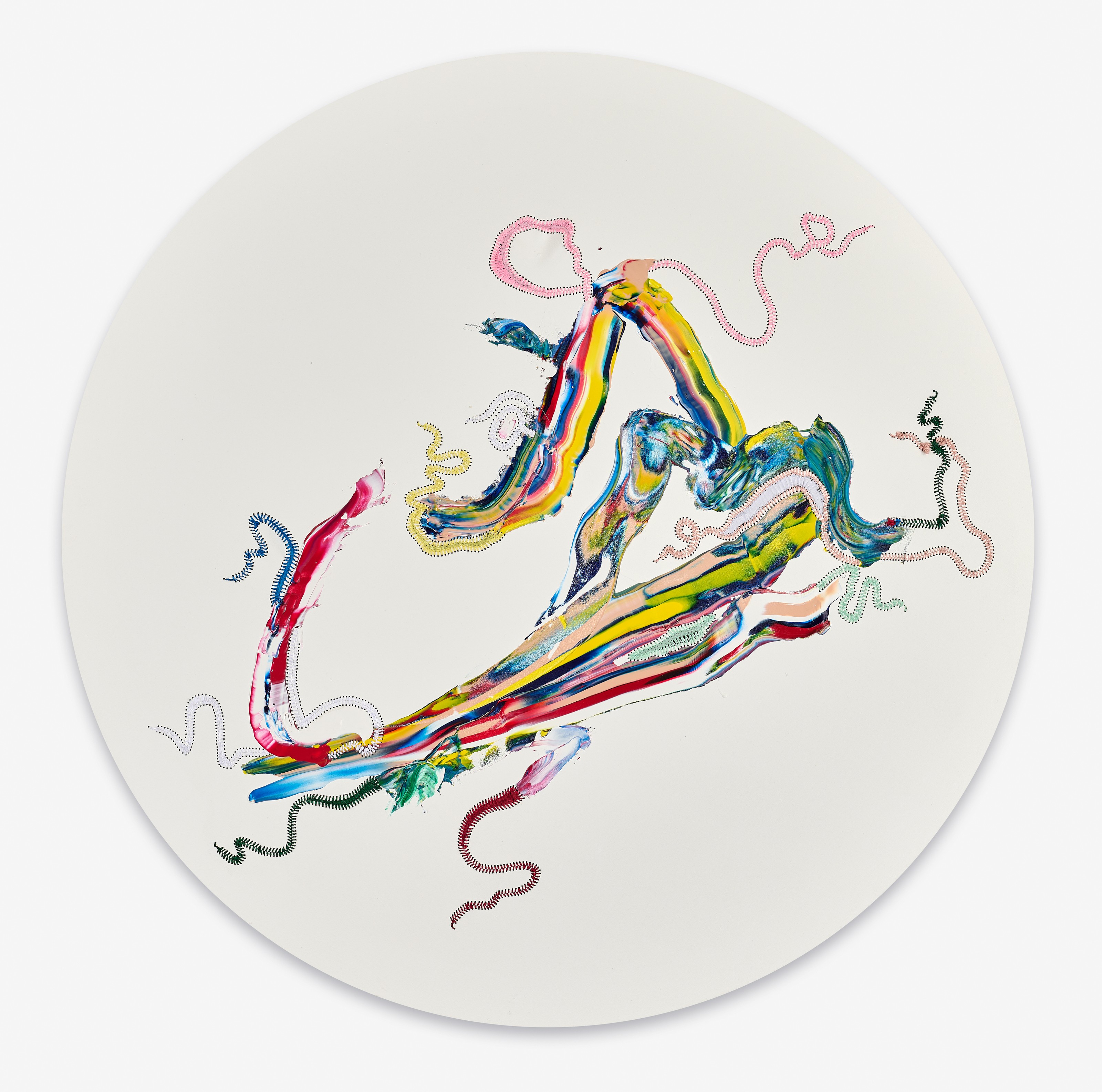
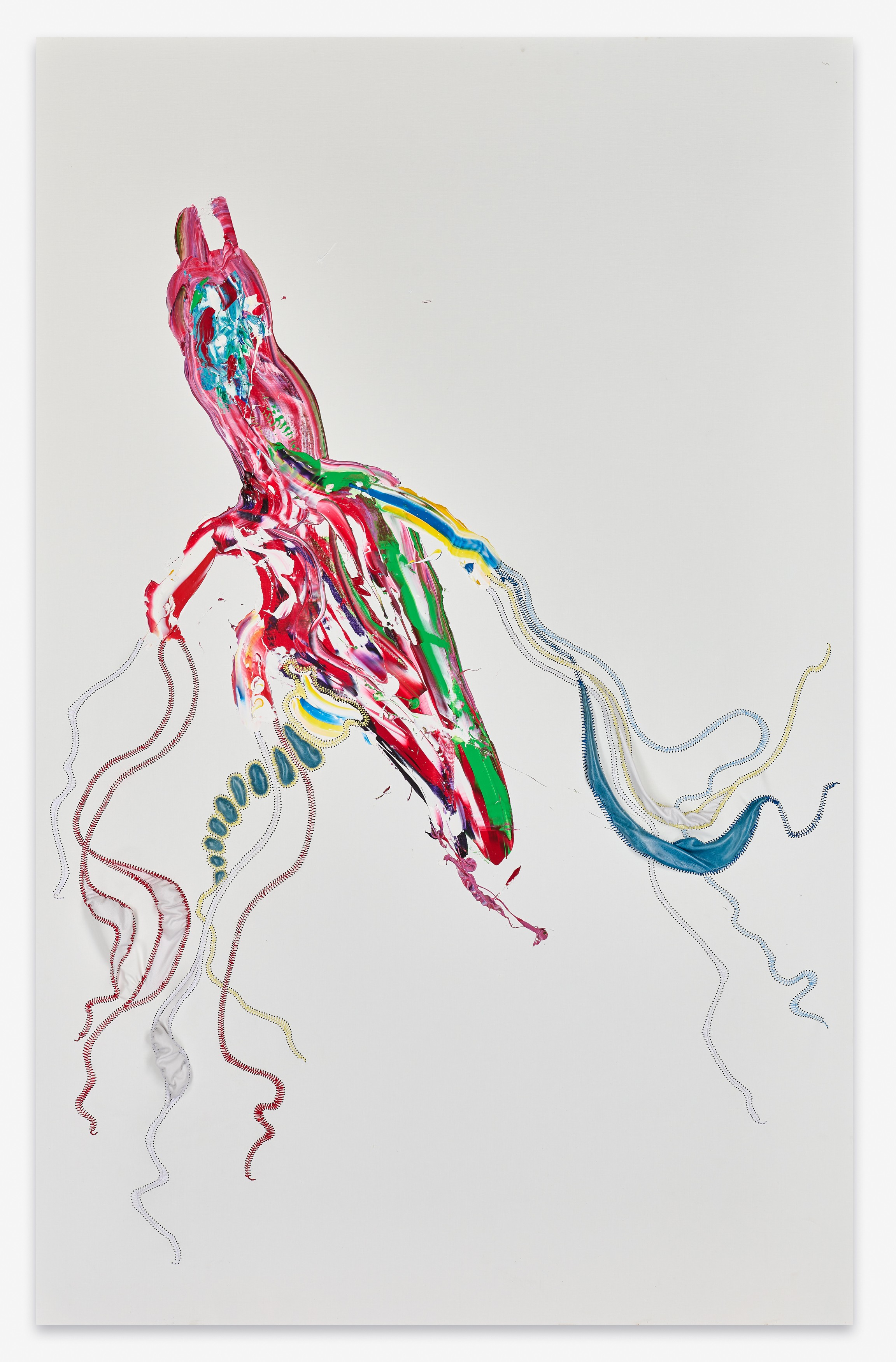
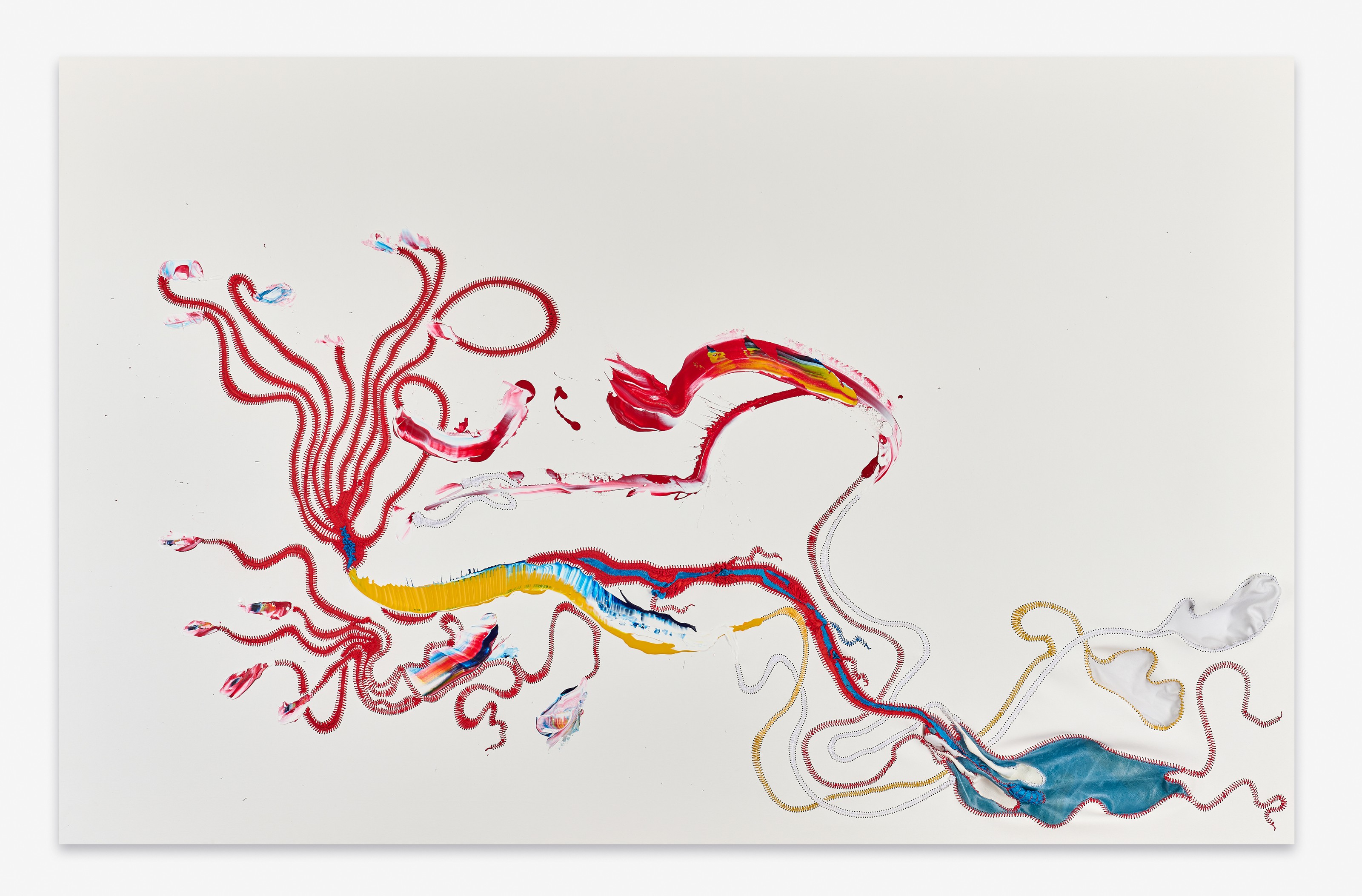
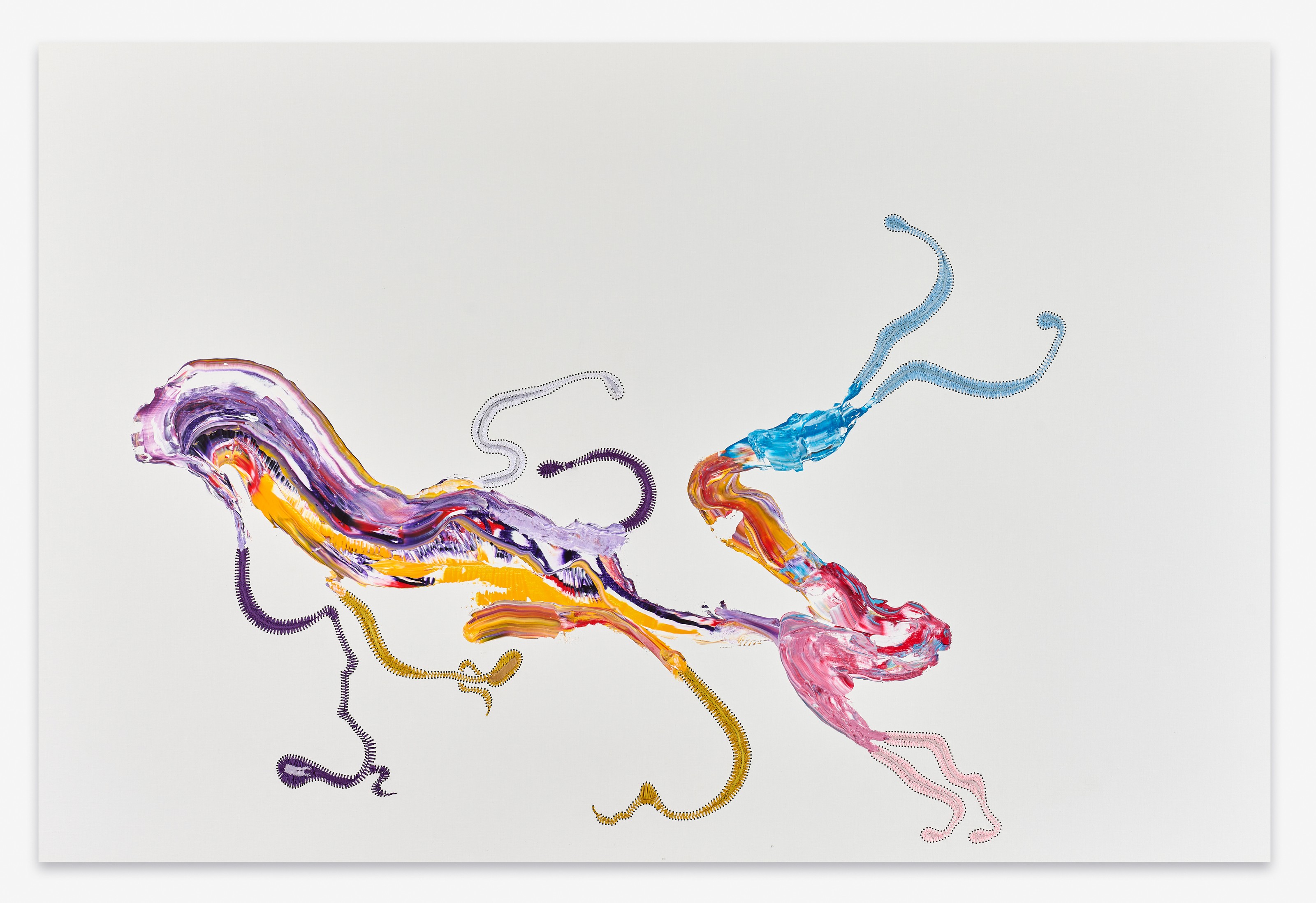
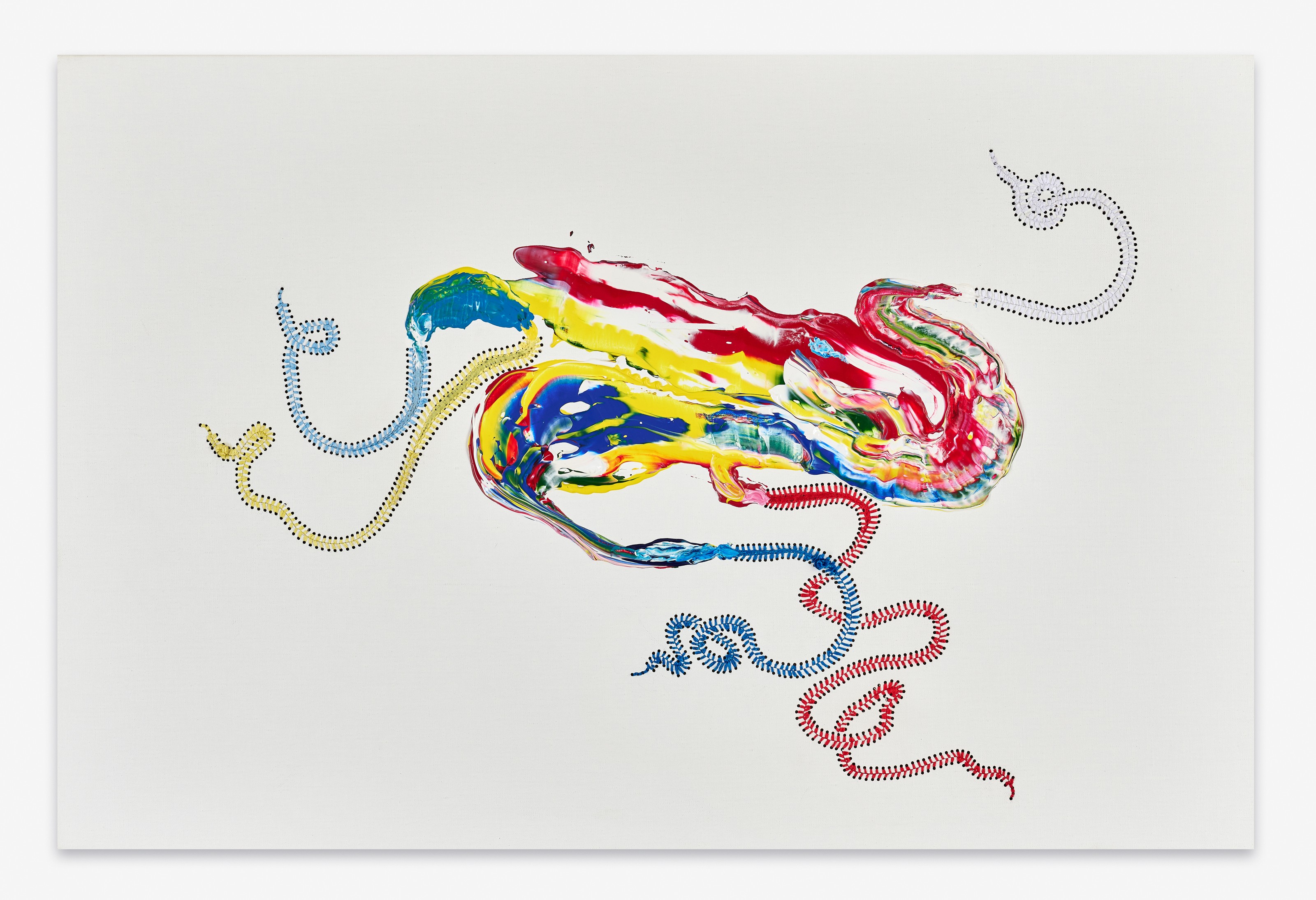
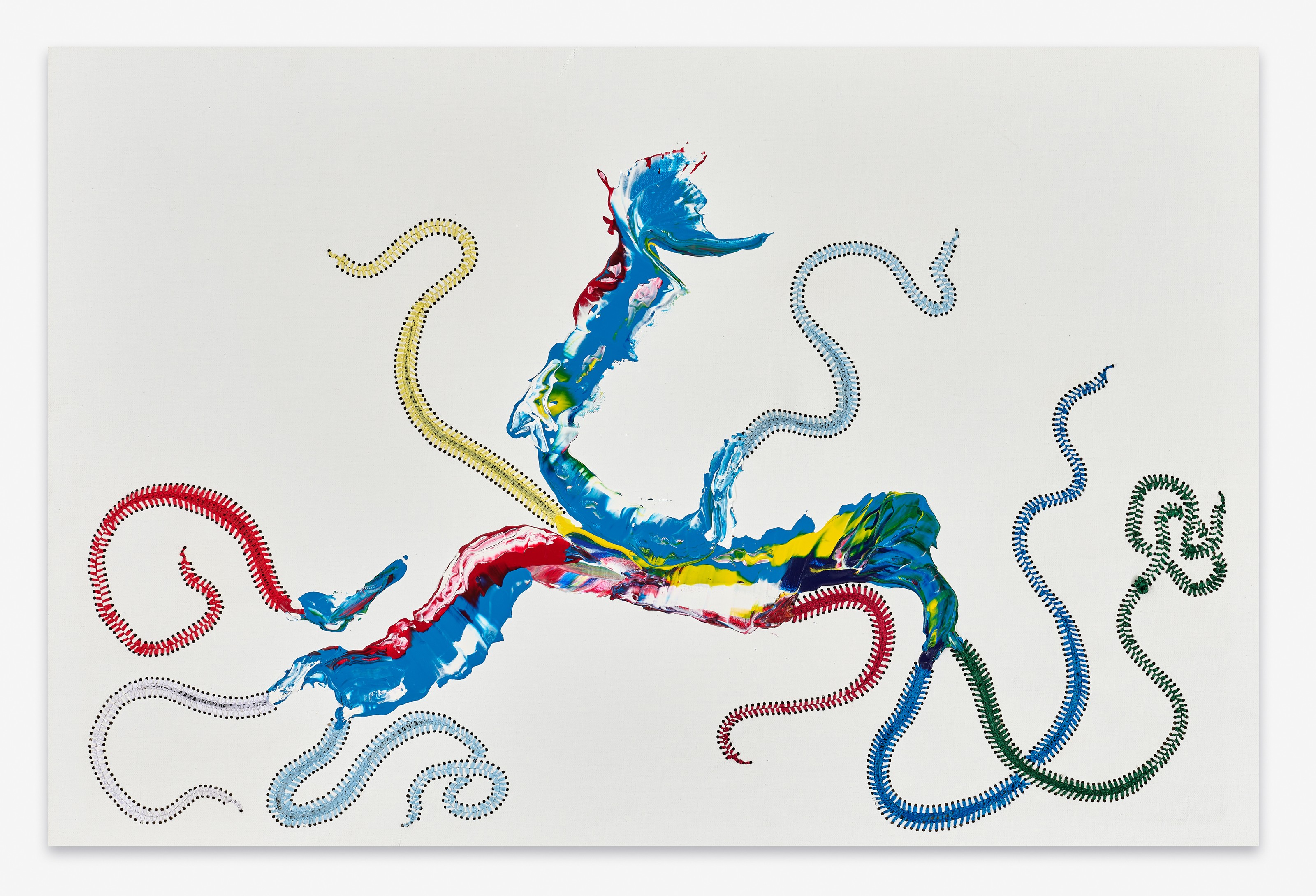
Lehmann Maupin presents Elizeni Ienkanyiso, an exhibition of new paintings by South African artist Nicholas Hlobo. This presentation marks Hlobo’s return to London and is the artist’s first solo show in the city since his exhibition at Tate Modern in 2008. Best known for his weaving and stitching of metaphorically charged materials, such as colorful ribbon, leather, wood, and copper, Hlobo creates composite objects that are intricate and seductively tactile. The results are highly evocative, and the artist combines anthropomorphic imagery and cultural symbols and traditions to create amalgamated forms that feel at once familiar, alien, and ancient. Hlobo’s practice engages themes of self-discovery and explores the intersections of his race, gender, and cultural and sexual identity within the context of his South African heritage. In his newest body of work, the artist introduces colorful acrylic paint for the first time, returning to a classic fine art medium that he has not employed since he was a student. Hlobo’s combination of acrylic with his signature leather and satin ribbon interventions unites craft and fine art materials within a single canvas, reflecting his enduring interest in resisting strict dichotomies and hierarchies in favor of fluid hybridity.

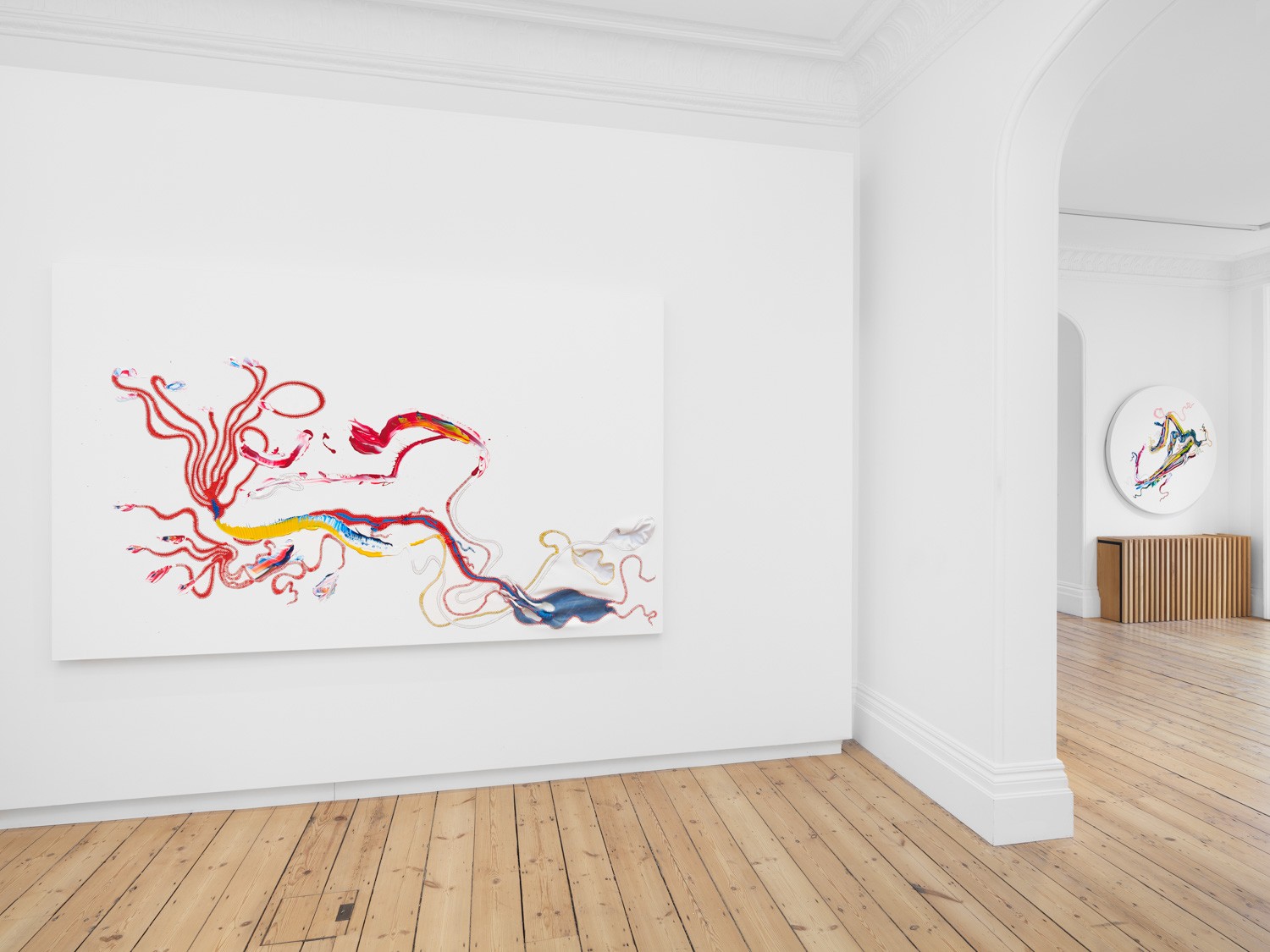
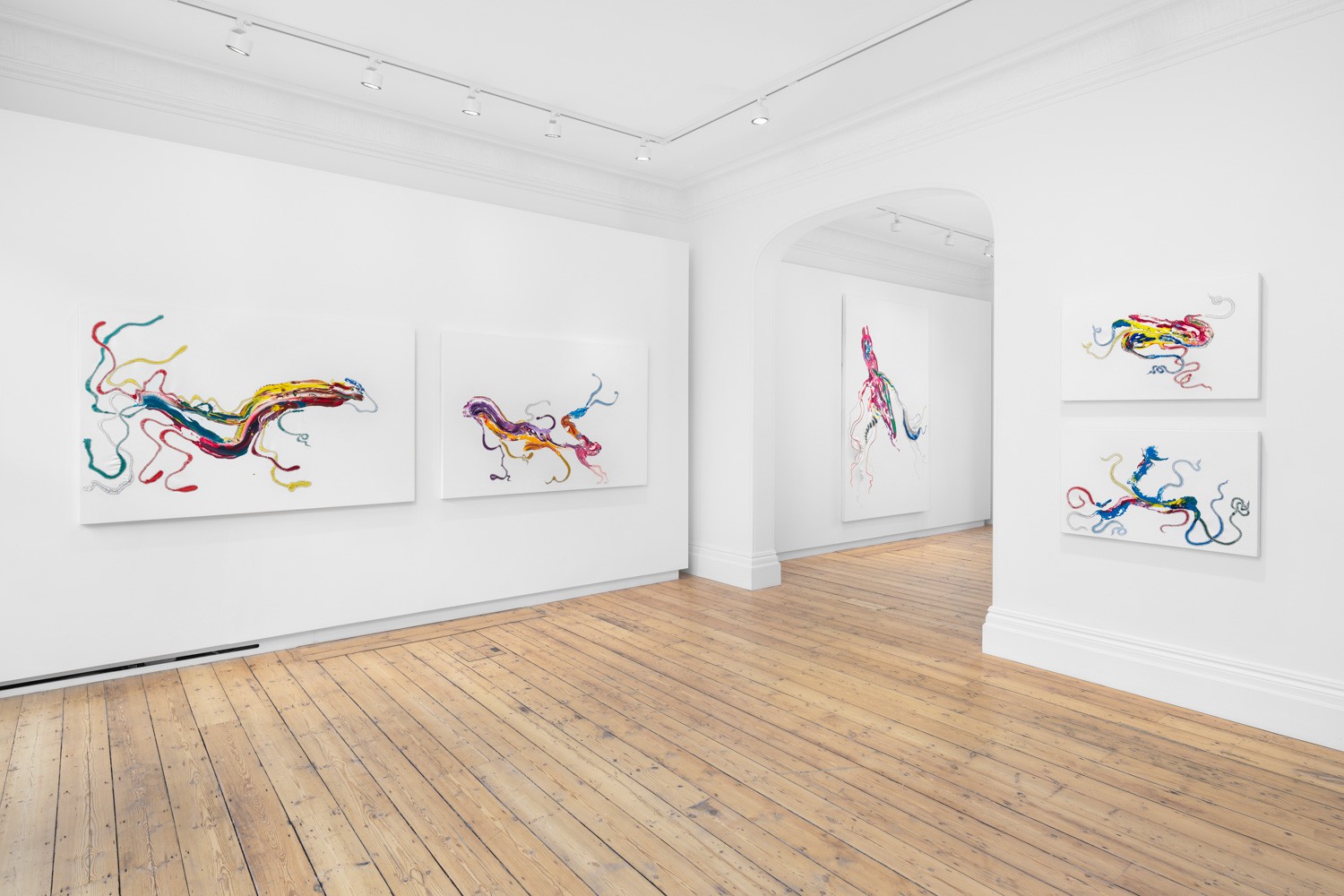
The works in Elizeni Ienkanyiso comprise a menagerie of reptilian and aquatic animals, including turtles, lizards, snakes, and hatchlings. Hlobo described the experience of creating these pieces as a process of “finding joy or warmth” after the effects of the global pandemic, and this sentiment is echoed in these animal’s cold-blooded nature and their need to seek heat to survive and flourish. The show’s title, which translates from Xhosa to “on the wave of enlightenment” is taken from the only circular canvas in the exhibition. In this work, the artist interprets the abstract forms and swirls as resembling a human-like figure surfing a giant wave. Considering the many metaphorical “waves” of the COVID-19 pandemic, here Hlobo implies recent demands to navigate global uncertainty and hardship and suggests that through traversing these difficult waters we can come to a new, more profound understanding of self and society. 

Installation view of Nicholas Hlobo at Lehmann Maupin London
Installation Views: 1 / 3
Wall work by Nicholas Hlobo

니콜라스 슬로보

Ndange Cilikishe, 2021

Wall work by Nicholas Hlobo

니콜라스 슬로보

Elizeni Ienkanyiso, 2021

Wall work by Nicholas Hlobo

니콜라스 슬로보

Iqokobhe, 2021

Wall work by Nicholas Hlobo

니콜라스 슬로보

Amakhos’abomvu, 2021

니콜라스 슬로보

Mpumlwana, 2021

Wall work by Nicholas Hlobo

니콜라스 슬로보

Sondela maCilikishe, 2021

Wall work by Nicholas Hlobo

니콜라스 슬로보

Iyuk’welidala, 2021

Wall work by Nicholas Hlobo

니콜라스 슬로보

Iyuk’welincinci, 2021

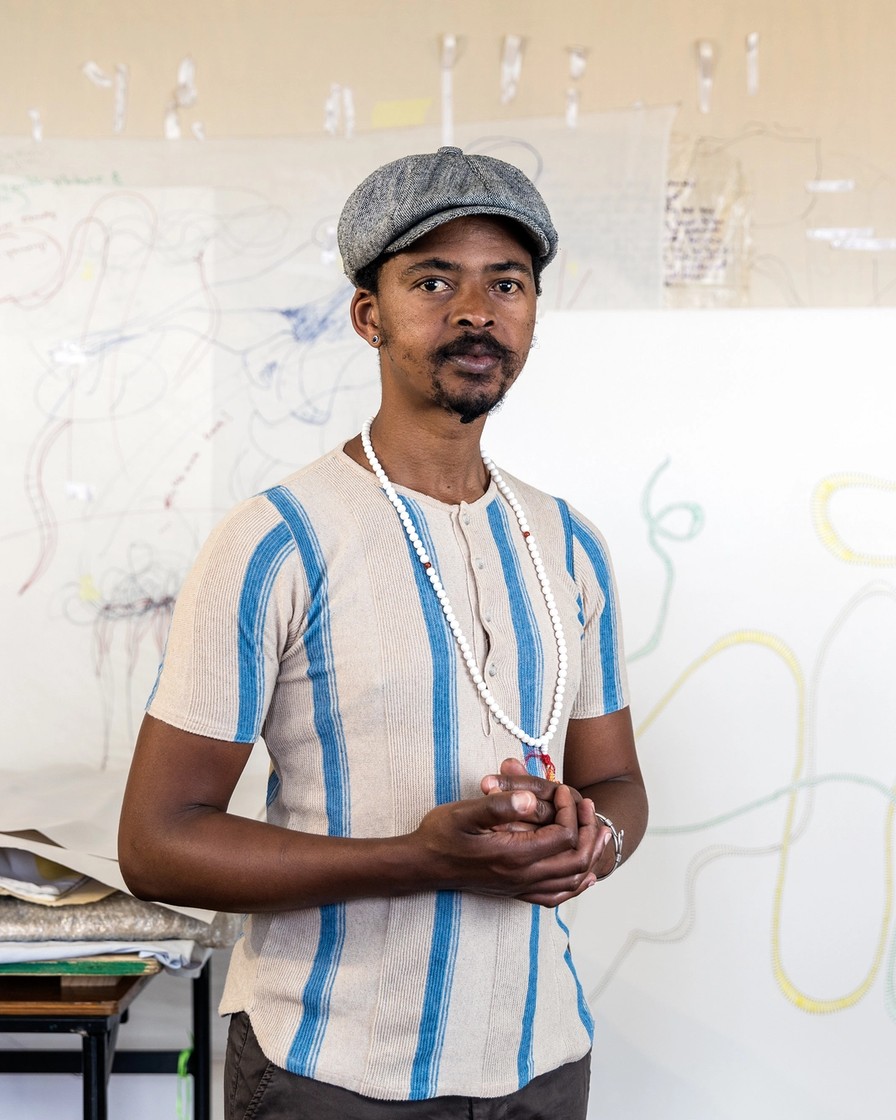
Portrait of Nicholas Hlobo

Nicholas Hlobo (b. 1975, Cape Town, South Africa; lives and works in Johannesburg, South Africa) began his career around the end of apartheid in 1994, when there was a new sense of freedom and national pride in South Africa. With the eradication of legalized and enforced discrimination and segregation, Hlobo and his peers were empowered to openly voice their opinions and ideas under the protection of new laws, and Hlobo’s subtle commentary on the democratic realities of his home country and concerns with the changing international discourse of art formed a foundational tenet of his practice.

Hlobo uses metaphorically charged materials such as ribbon, leather, wood, and rubber detritus, which he melds and weaves together to create two- and three-dimensional hybrid objects that are intricate and seductively tactile. Each material holds a particular association with cultural, gendered, sexual, or ethnic identities, and the works form complex visual narratives that reflect the various dichotomies present within the artist’s home country, as well as those that exist around the world. The results are highly evocative, and the artist combines anthropomorphic imagery with cultural symbols and traditions to create amalgamated forms that feel at once familiar, alien, and ancient. At its core, Hlobo’s practice engages themes of self-discovery and explores the intersections of race, gender, and cultural and sexual identity within the context of his South African heritage.

작가 알아보기
Elizeni Ienkanyiso | Lehmann Maupin