본문으로 건너뛰기

Multiple Artists

The 36th Bienal de São Paulo

São Paulo

2025년 9월 6일–2026년 1월 11일

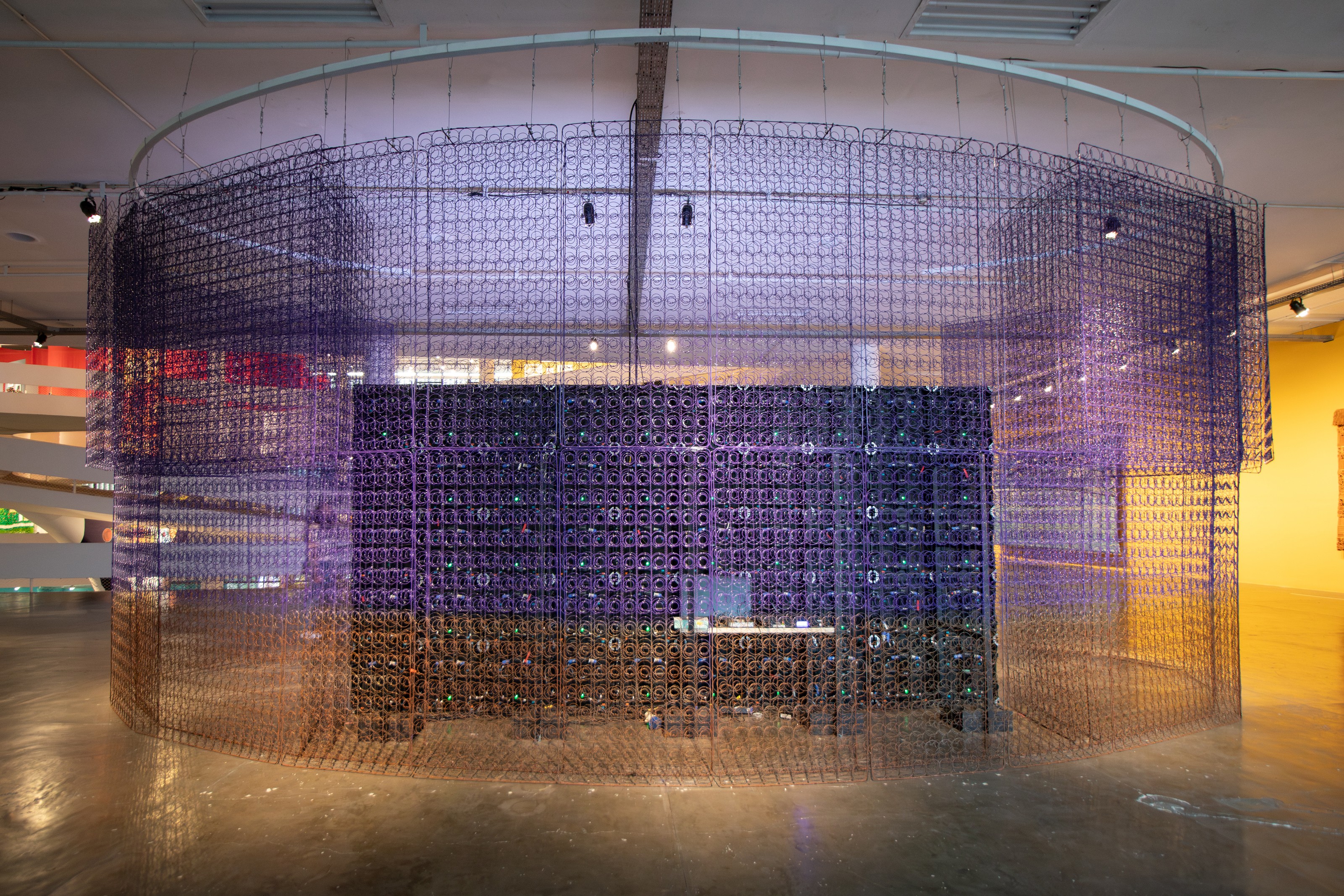
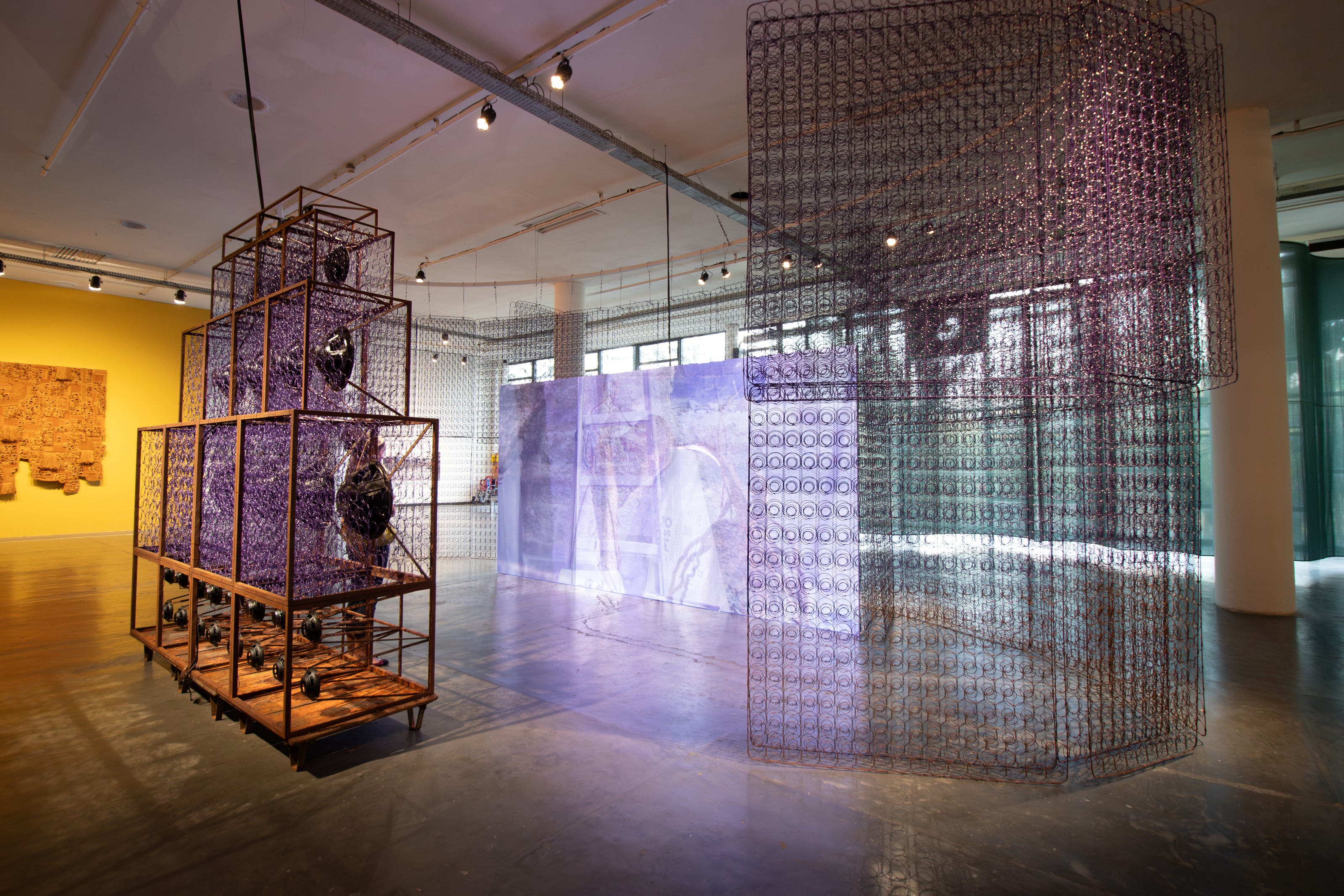
Nari Ward: Spring Seed Installation

The 36th Bienal de São Paulo – Not All Travellers Walk Roads–Of Humanity as Practice opens on September 6, with free admission until January 11, 2026. With the opening of the exhibition, the Bienal also launches its public program, the Conjugations: a series of debates, gatherings, performances, and activations, some of which are developed in collaboration with cultural institutions from various parts of the world and presented at the Bienal Pavilion throughout the exhibition’s four-month run.

The initiative seeks to explore how these institutions, grounded in different geographies, conjugate the notion of humanity through their everyday practices. Each organization invited curates a meeting in São Paulo involving thinkers, artists, performers, and diverse audiences, activating global connections with the local context.

Kader Attia: La Valise Oubliée
Installation Views: 1 / 3

Kader Attia: Curatorial Statement

Kader Attia is a French-Algerian multidisciplinary artist whose research-based approach has been instrumental for decolonial strategies – to backlash colonial history and museums. His interest and subjects found a turning point since he focused on creating tools for repair and care, either of objects, bodies, representations, and memories.

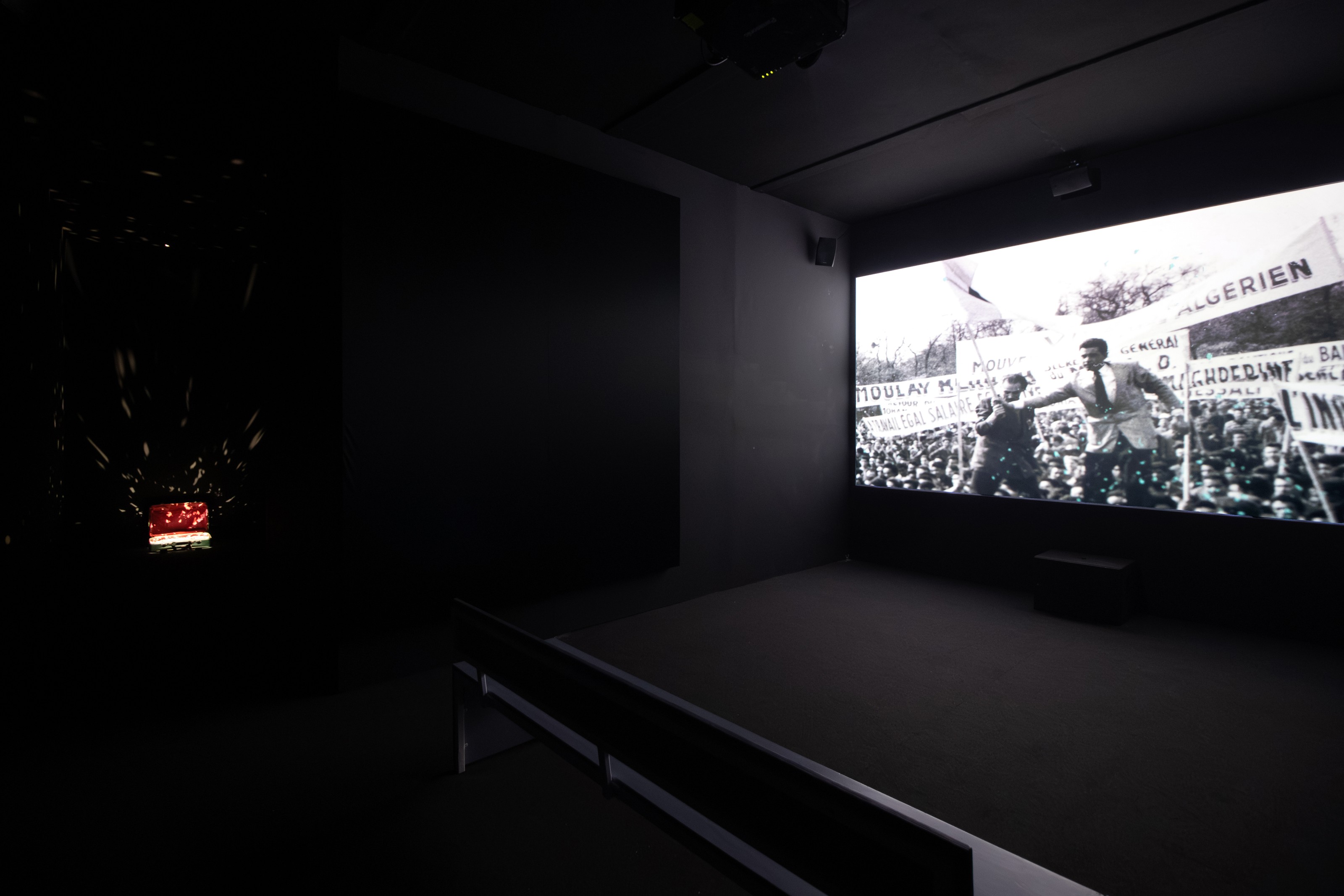
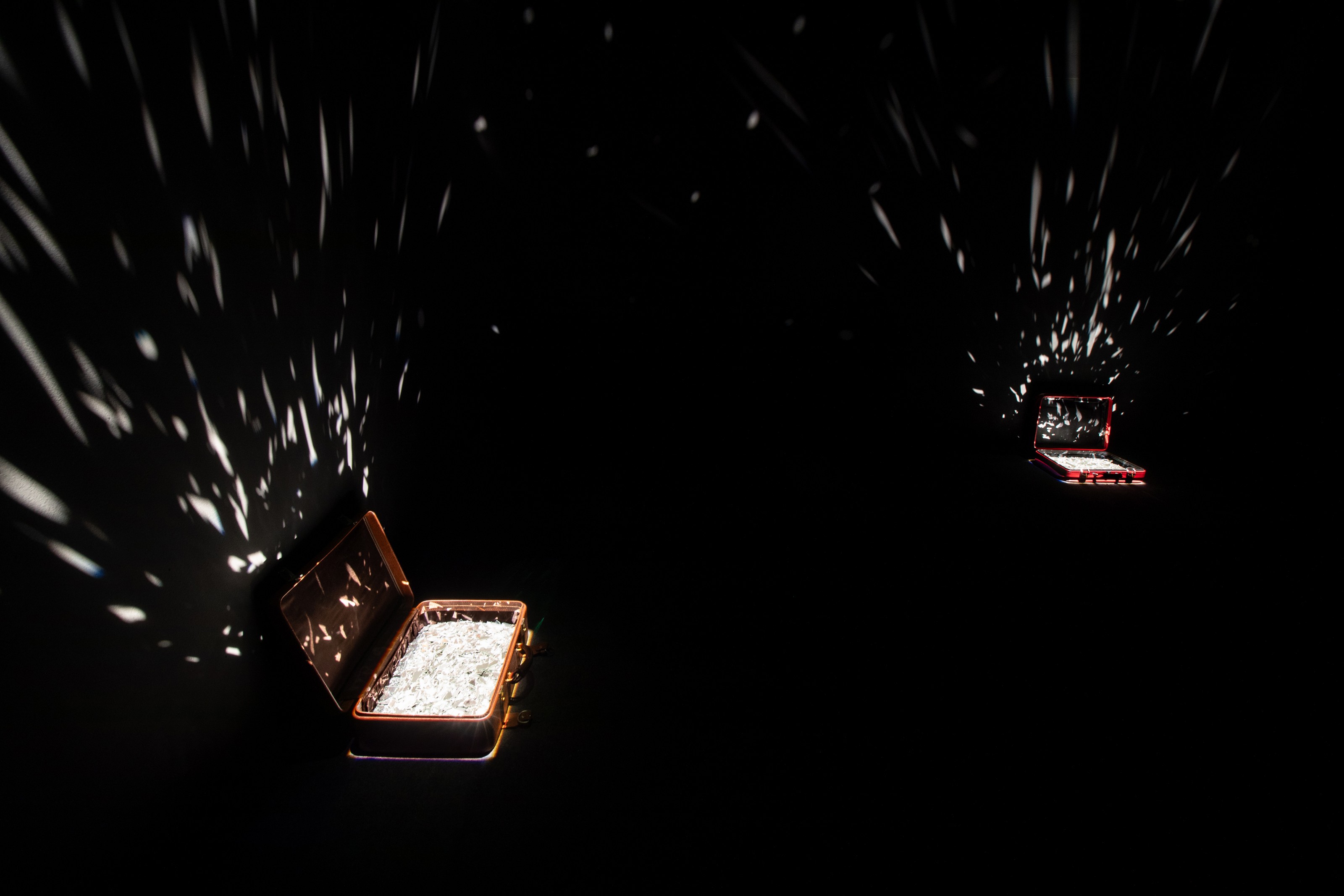
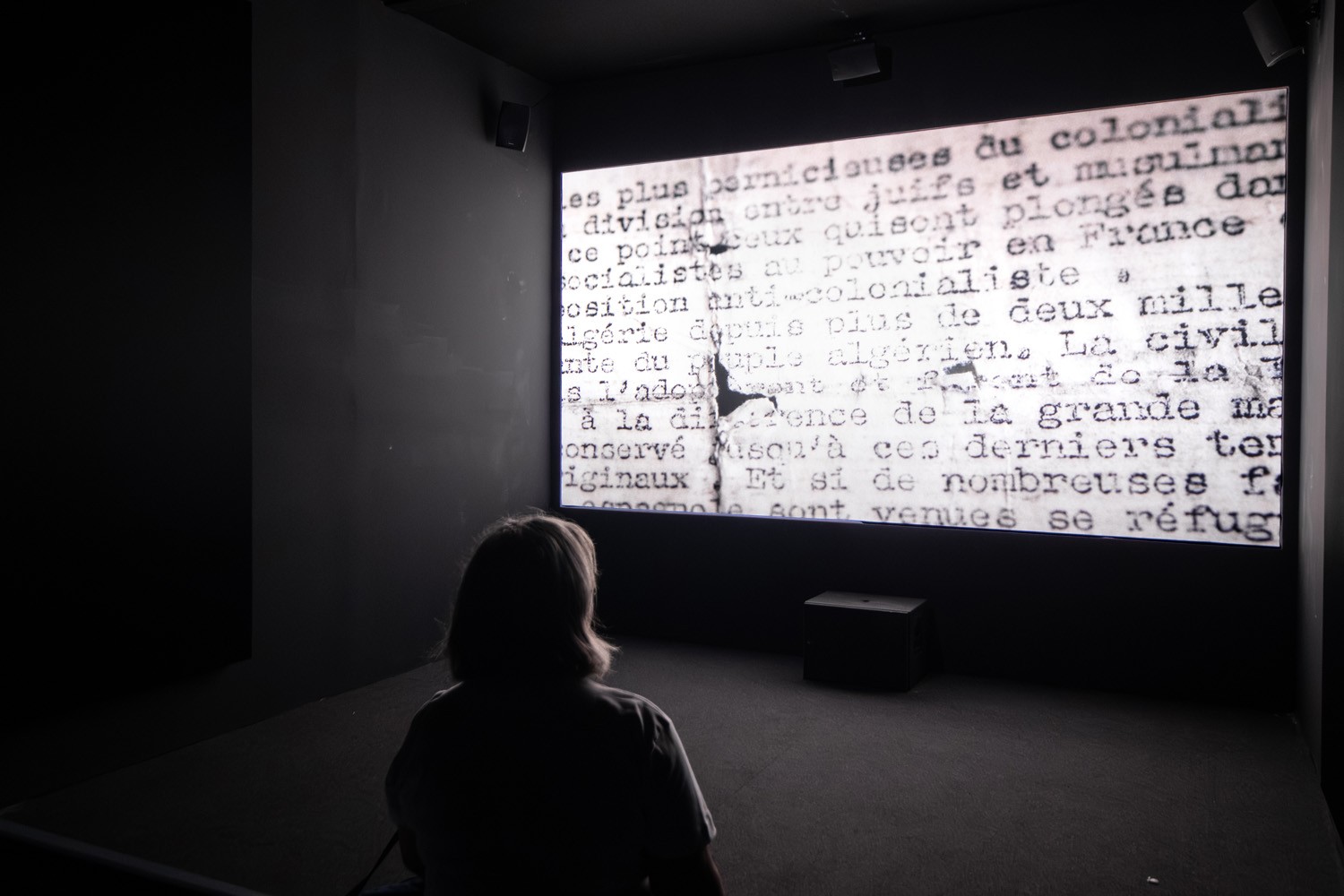
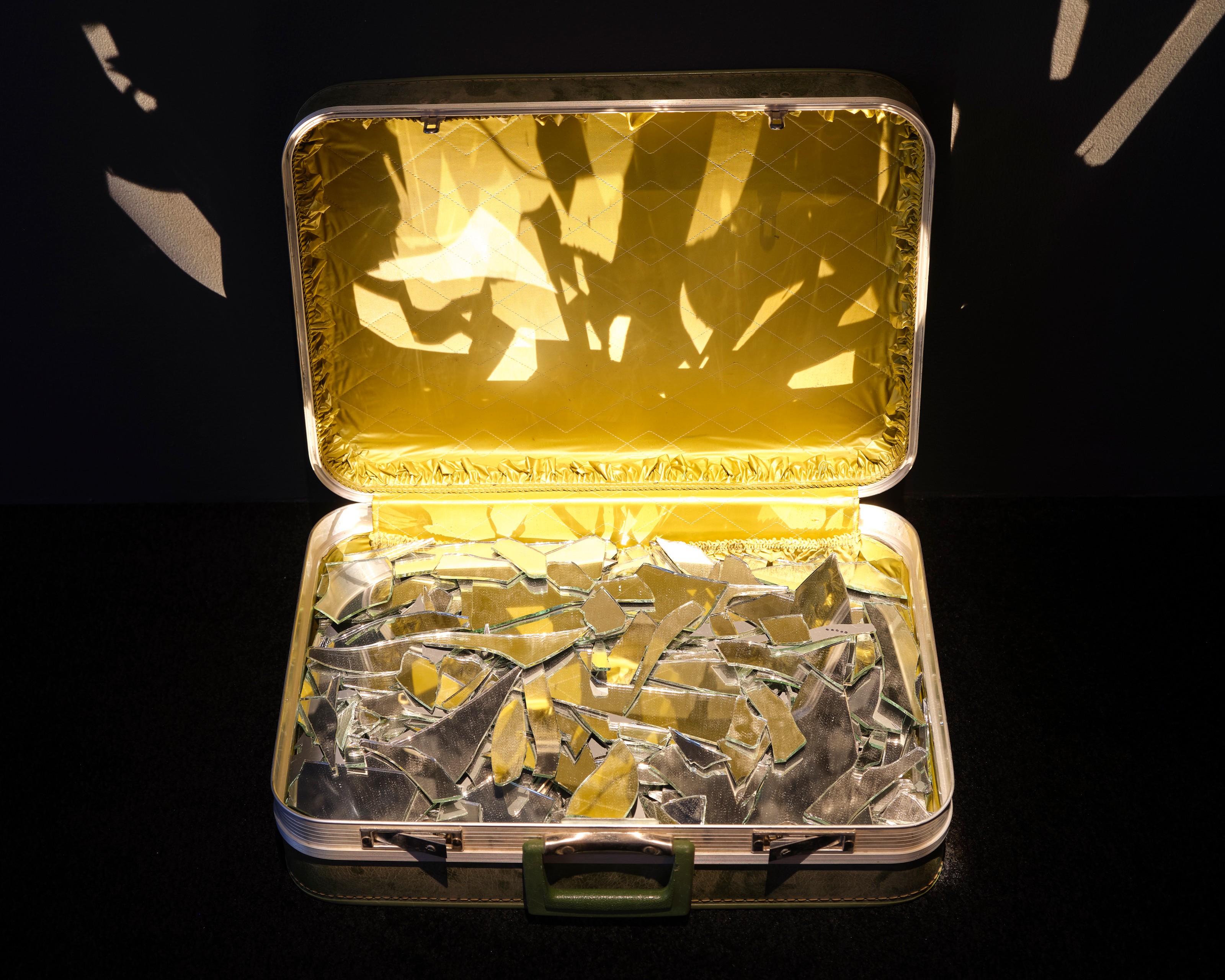
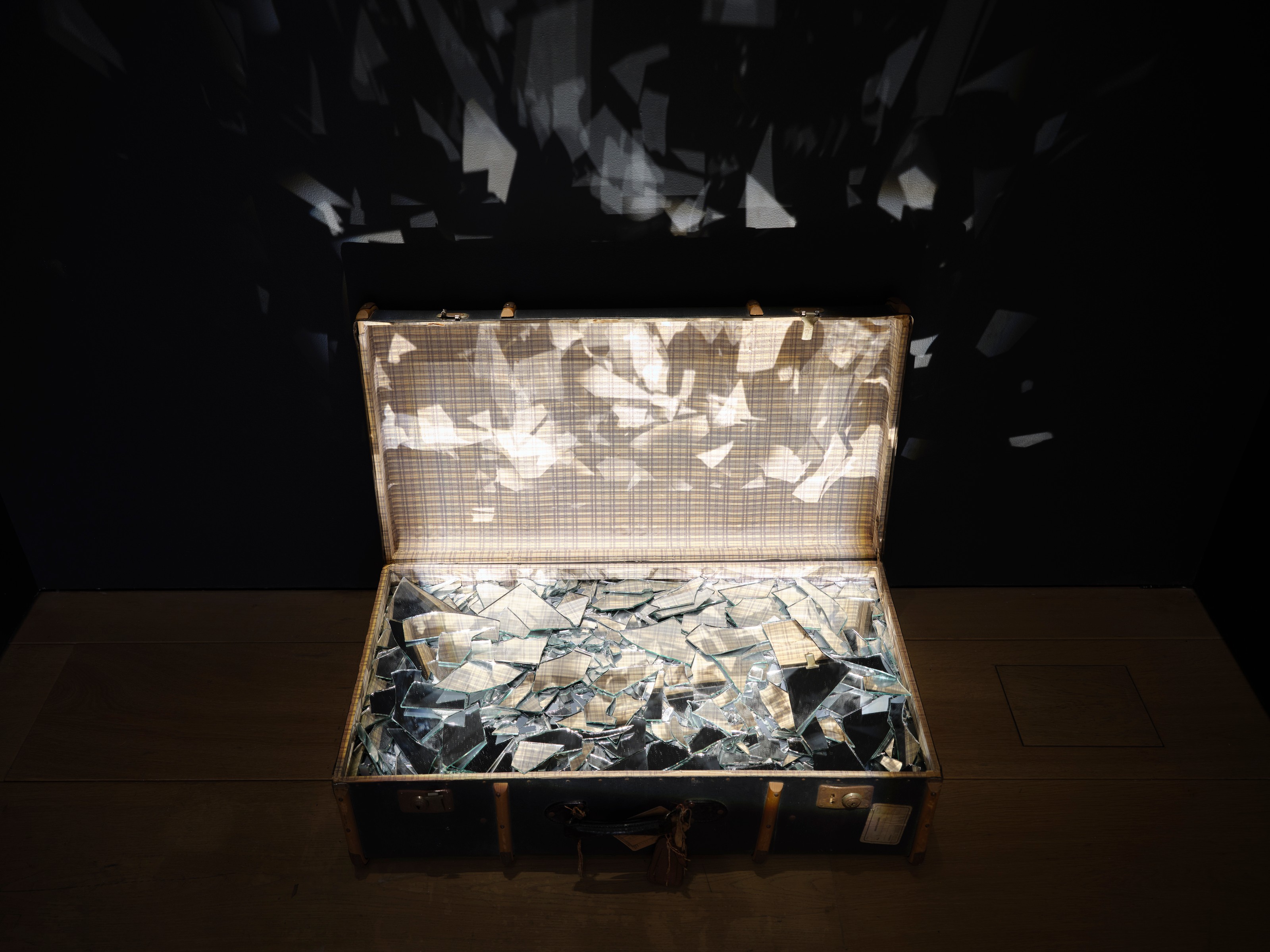
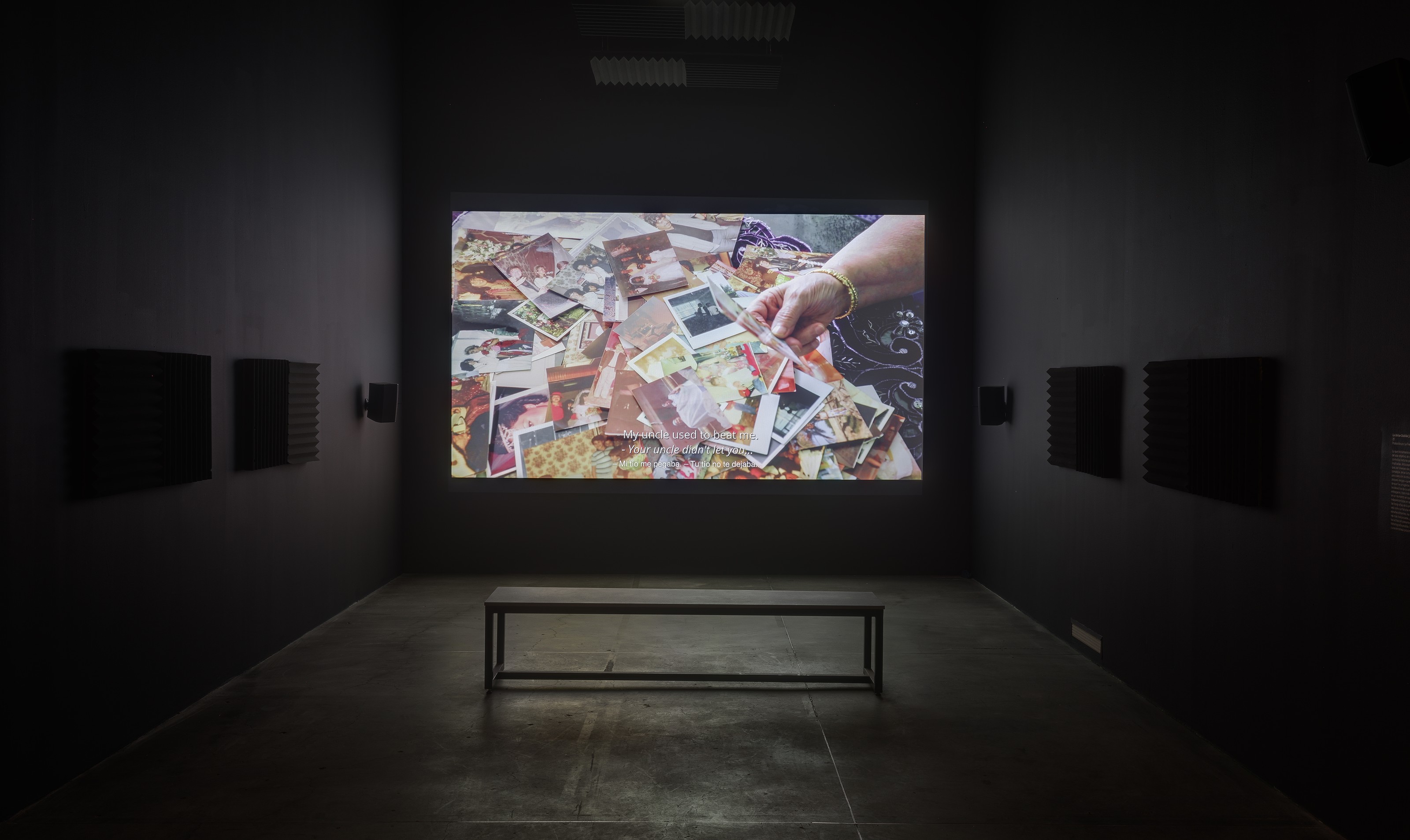
La Valise oubliée [The Forgotten Suitcase] (2024) interweaves individual and collective histories of the Algerian War (1954-1962), during which hundreds of thousands of Algerians were killed. This recent video work by Kader Attia takes the suitcase as a dynamic metaphor of both the past unveiled and the future to be edited (playing with the potentialities of an unfinished narrative). Attia unpacks three suitcases, three individual stories that interweave threads of our collective history: those of French artist and Algerian sympathizer Jean-Jacques Lebel, feminist decolonial thinker Françoise Vergès, and Attia’s mother. The memorabilia removed from the luggage evokes intense, sometimes traumatic memories – from a secret letter by a member of the Algerian National Liberation Front (entrusted to Lebel) to a photo album belonging to the controversial lawyer Jacques Vergès (Françoise Vergès’s uncle), who defended Algerian militants during the war, to photographs of the artist’s mother. By juxtaposing different narrative levels and threads, Attia tells the story both of his family and of the countless nameless men and women who resisted and organized in the shadows against colonialism.

As often in Kader Attia’s work, the awakening of consciousness about the immensity of the destruction and loss under colonialism (either through ecology, architecture, or economy…) goes with a traumatic experience of counting, reenacting, and archiving the dead or the wound. Hence a general ghostly memory is efficiently enacted in his installations and video works; as exercises of exorcism.

Having grown up between France and Algeria, Kader Attia uses his own transcultural experience (including the neocolonial suburban lower class condition) as an introspective research eventually becoming a tool against neocolonial power structures. From The Repair of Occident to Extra-Occidental Cultures (2012), shown at dOCUMENTA (13), Kassel, to the recent Un descenso al paraiso [A Descent into Paradise] (2025), at MUAC, Mexico City, Kader Attia’s art of repair walks on the thin line between dis-membering and re-membering.
—Morad Montazami

Sculpture by Kader Attia

카데르 아티아

Untitled (Green Suitcase), 2025

Sculpture by Kader Attia

카데르 아티아

Untitled, 2025

Film by Kader Attia

카데르 아티아

La Valise Oubliée, 2024

Nari Ward: Spring Seed
Installation Views: 1 / 4

Nari Ward: Curatorial Statement

Nari Ward gathers stories from objects and places, transforming them into powerful narratives. The materials he chooses – whether discarded strollers, shoelaces, worn firehoses, or cotton balls – carry layered histories and echoes of lived experiences. Like an archaeologist of the everyday, Ward excavates remnants of consumer culture, societal trauma, and diasporic stories, exposing tensions between memory and forgetting, identity and belonging. Through his multidisciplinary and inventive practice, he converts these abandoned relics into spaces of reflection and reclamation, bridging personal and collective memory, private and public stories, and addressing questions of social justice, power, and overlooked histories.

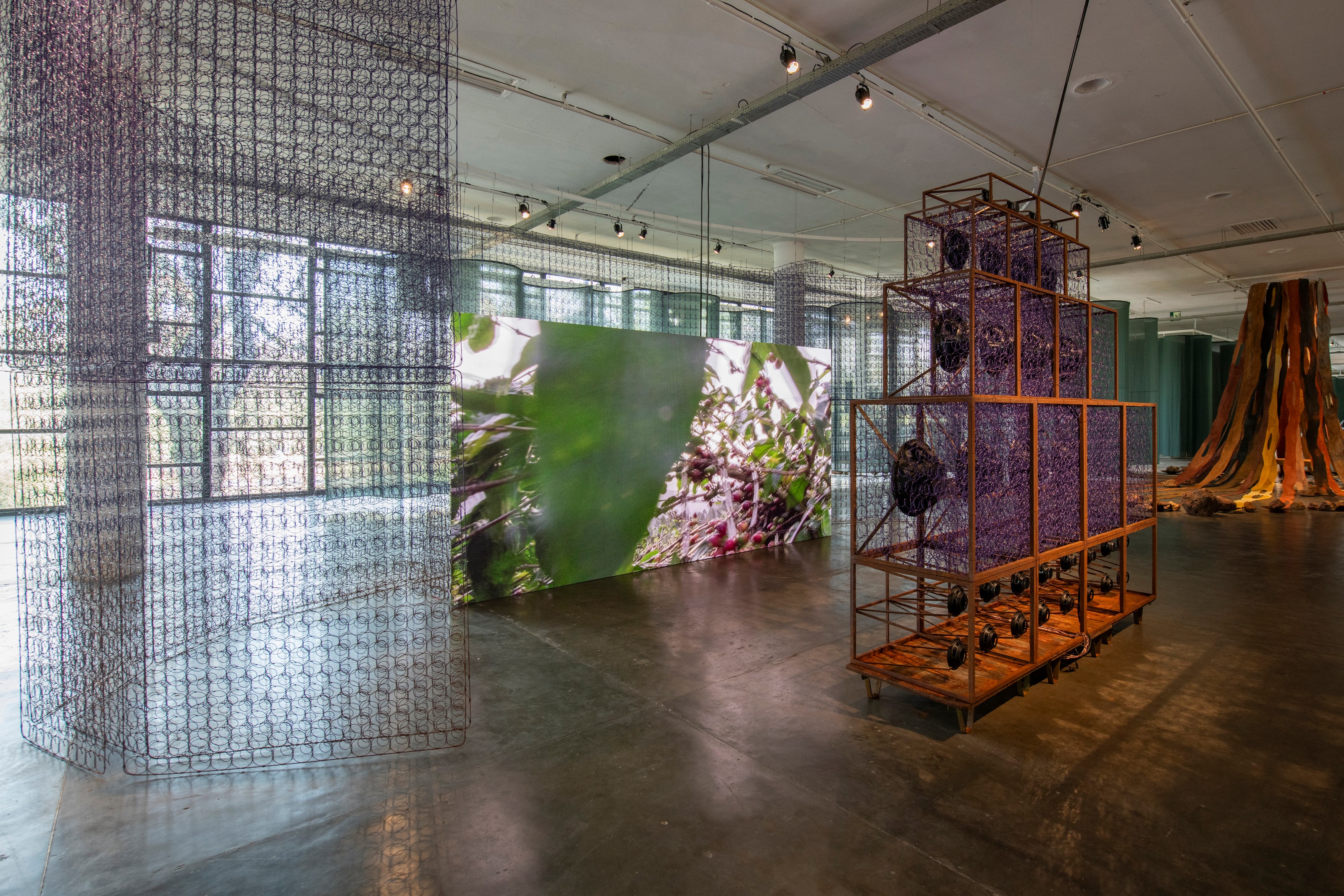
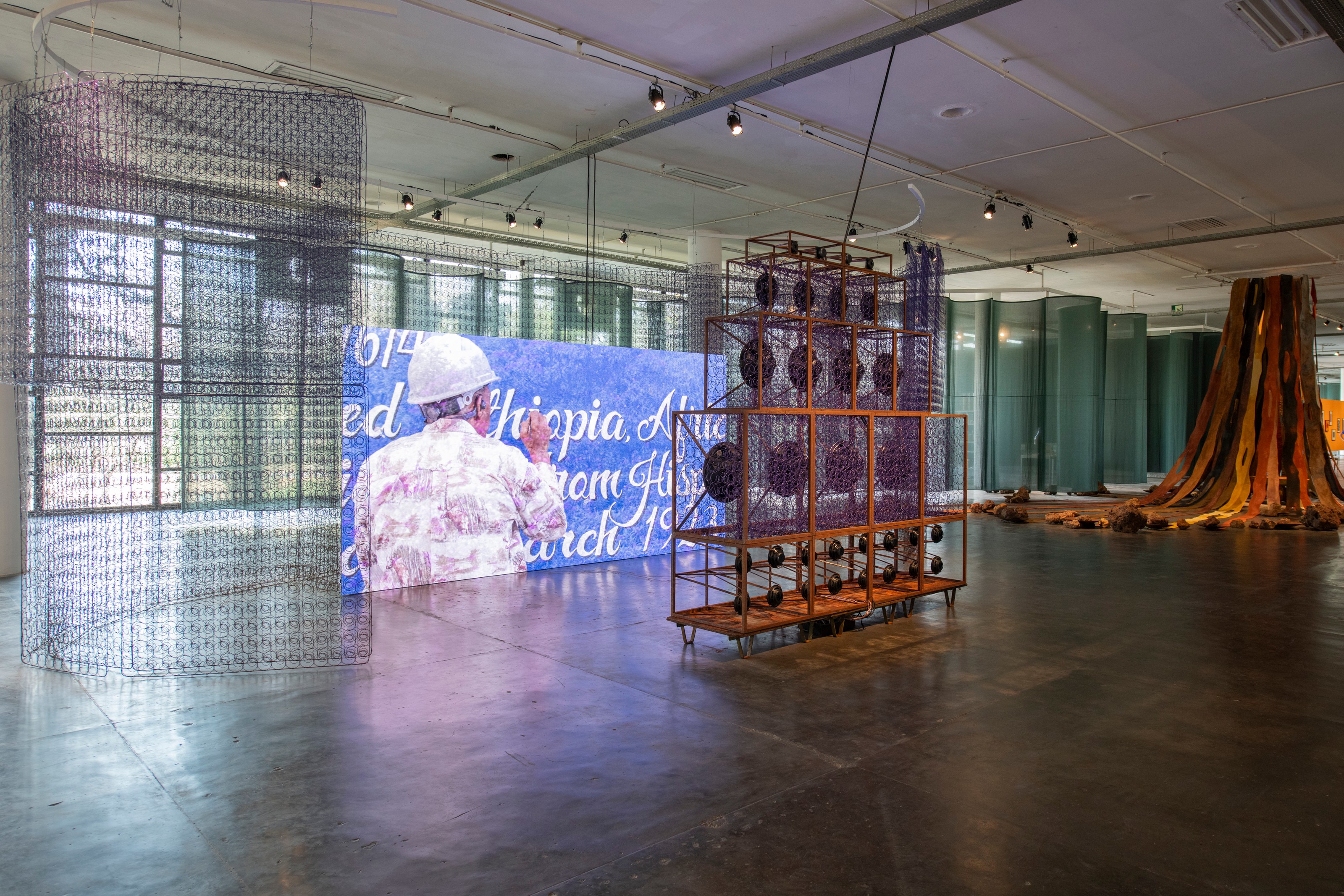
Spring Seed (2025), his new project for the 36th Bienal de São Paulo, traces the intangible cultural and commercial entanglements of Jamaica – where Ward was born and raised before migrating to New York at the age of twelve – Brazil, and Japan through the trajectory of coffee, a commodity deeply tied to labor economies, global consumerism, and colonial histories, yet equally associated with desire and leisure. At the center of the installation, an enclosed arena made of bedsprings houses a new video that interweaves footage from Ward’s trips to São Paulo’s Liberdade neighborhood (its Japanese-Brazilian community), Bahia, and Jamaica’s Blue Mountain coffee region. A symbol of luxury and exclusivity, Blue Mountain coffee is cultivated in small quantities, with most of its production exported to Japan, where it is prized for its rarity and refinement. Within this intimate space, which viewers need to enter, an altar-like speaker system, draped in ironed cotton covers infused with Blue Mountain coffee grinds, functions as both a sculptural and multi-sensorial element, layering sound recordings from São Paulo’s Chapel of Our Lady of Souls of the Afflicted – built on an ancestral Black and Indigenous gravesite. These sonic and visual textures resonate with Ward’s earlier works, such as the video Spellbound (2015), which explored Savannah, Georgia’s fraught histories of slavery, colonialism, resilience, and emancipation.

Through his charged assemblages, Ward not only reclaims discarded materials but also reimagines the potential they carry. Spring Seed extends this ongoing exploration into collectivity, mapping unseen flows and exchanges while complicating dominant narratives. By weaving together visual language, sound, and scent, and by employing moving images – a medium inherently capable of traversing time and space – Ward embraces a non-linear approach that activates the viewers’ imagination, revealing the energies and hidden forces that shape a sense of community and belonging. In doing so, he creates a space where memory resists erasure, and the past speaks powerfully to the present – just as a seed springs to life.
—Roberta Tenconi

Exhibition Artists

Portrait of Kader Attia

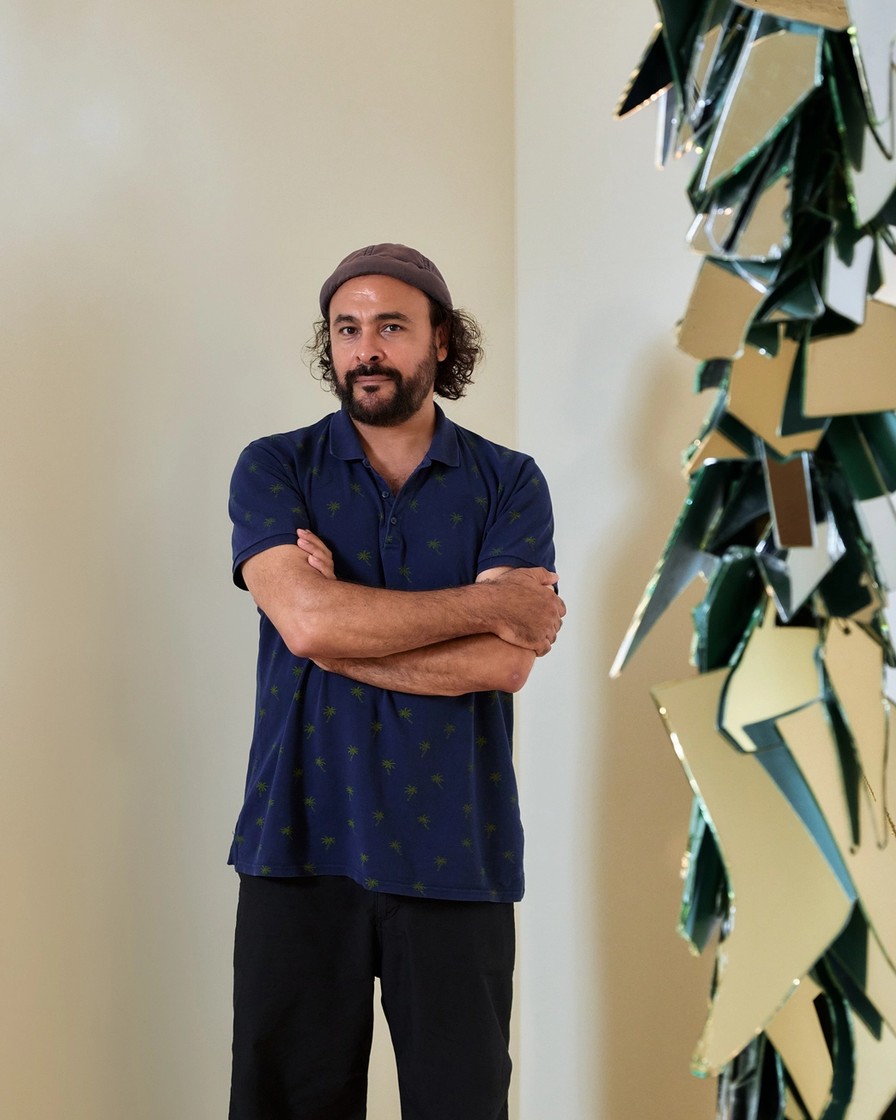
카데르 아티아(1970년 프랑스 두니 출생)는 알제리와 파리 교외에서 성장했으며, 현재 베를린과 파리를 오가며 활동하고 있다. 서로 다른 문화 속에서 살아온 경험을 바탕으로 아티아는 전 세계의 사회적, 역사적, 그리고 문화적 차이를 탐구하는 작업 방식을 발전시켜 왔다. 그의 설치와 조각 작품은 서구와 비서구 문화 간의 관계를 시적이면서도 직설적으로 드러낸다. 건축, 인체, 문학, 역사를 아우르는 복합적 탐구를 통해 그는 식민 지배와 갈등의 맥락 속에서 개인과 문화가 어떻게 형성되는지를 보여준다. 작가가 수집한 유물, 그리고 일상 또는 전쟁에서 소비된 물건은 갤러리 공간을 성찰의 장으로 전환하며, 관객으로 하여금 역사에 관한 다층적이고 불완전한 해석을 마주하도록 이끈다. 아티아는 이러한 재전유가 우세와 열세, 전통과 현대, 그리고 낯섦과 익숙함 사이에 놓인 틈을 메울 수 있다고 믿는다.

아티아는 1993년 프랑스 파리 뒤페레 응용예술학교, 1994년 스페인 바르셀로나 마사나 대학, 1998년 프랑스 파리 국립 고등장식예술학교에서 학위를 취득했다. 그의 개인전은 카타르 도하 마타프 아랍 현대 미술관(2021), 네덜란드 위트레흐트 비에이케이(2021), 스위스 취리히 미술관(2020), 브라질 상파울루 세시 폼페이아(2020), 캘리포니아주 버클리 미술관 & 태평양 필름 자료관(2019), 영국 런던 헤이워드 갤러리(2019), 프랑스 발드마른 현대미술관(2018); 스페인 바르셀로나 호안 미로 재단(2018), 캐나다 토론토 파워 플랜트(2018), 뉴햄프셔주 해노버 후드 미술관(2018), 프랑스 파리 팔레 드 도쿄(2018), 호주 시드니 현대미술관(2017), 독일 코블렌츠 루트비히 박물관(2017), 미주리주 세인트루이스 밀드레드 레인 캠퍼 미술관(2017), 벨기에 겐트 시립 현대미술관(2017), 프랑스 파리 퐁피두센터(2016), 독일 프랑크푸르트현대미술관(2016), 스위스 로잔 주립 미술관(2015), 독일 베를린 쿤스트베르케 현대미술 연구소(2013), 영국 런던 화이트채플 갤러리(2013), 프랑스 파리 시립 현대미술관(2012), 매사추세츠주 보스턴 현대미술관(2007), 그리고 프랑스 리옹 현대미술관(2006)에서 개최되었다. 그가 참여한 단체전으로는 독일 베를린 그로피우스-바우의 ⟪YOYI! Care, Repair, Heal⟫(2022), 대한민국 서울의 리움미술관 ⟪Human, 7 Questions⟫(2021), 스페인 빌바오 구겐하임 미술관의 ⟪The Roaring Twenties⟫(2021), 프랑스 파리 께브랑리 미술관의 ⟪Africa Reborn⟫(2021), 스위스 취리히 미술관의 ⟪Smoke and Mirrors: The Roaring Twenties⟫(2020), 독일 베를린 그로피우스-바우의 ⟪Down to Earth⟫(2020), 프랑스 파리 퐁피두센터의 ⟪Global(e) Resistance⟫(2020), 덴마크 오르후스 아로스 미술관의 ⟪Mythologies - The Beginning and End of Civilizations⟫(2020), 프랑스 파리 팔레 드 도쿄의 ⟪Our World is Burning⟫(2020), 아랍에미리트 두바이 자밀아트센터의 ⟪Phantom Limb⟫(2019), 매사추세츠주 보스턴 현대미술관의 ⟪When Home Won’t Let You Stay: Migration Through Contemporary Art⟫(2019~2020, 미네소타주 미니애폴리스 미술관 순회전), 워싱턴 D.C. 필립스 컬렉션의 ⟪When Home Won’t Let You Stay: Migration Through Contemporary Art⟫(2019), 독일 뮌헨 현대미술관의 ⟪The Flow of Forms⟫(2017), 오스트리아 빈 레오폴드 미술관의 ⟪Foreign Gods: Fascination Africa and Oceania⟫(2016), 뉴욕주 뉴욕 구겐하임 미술관의 ⟪But a Storm Is Blowing from Paradise: Contemporary Art of the Middle East and North Africa⟫(2016), 독일 함부르크 다이히토어할렌의 ⟪Picasso in Contemporary Art⟫(2015), 워싱턴 D.C. 국립 아프리카계 미국인 역사 및 문화 박물관의 ⟪The Divine Comedy: Heaven, Purgatory, and Hell Revisited⟫(2014~2015, 조지아 서배너 SCAD 미술관과 독일 프랑크푸르트현대미술관 이동), 뉴욕주 뉴욕 뉴뮤지엄의 ⟪Here and Elsewhere⟫(2014), 뉴욕주 뉴욕 현대미술관의 ⟪Performing Histories⟫(2012), 그리고 영국 런던 테이트 모던의 ⟪Contested Terrains⟫(2011)이 있다.
Portrait of Nari Ward

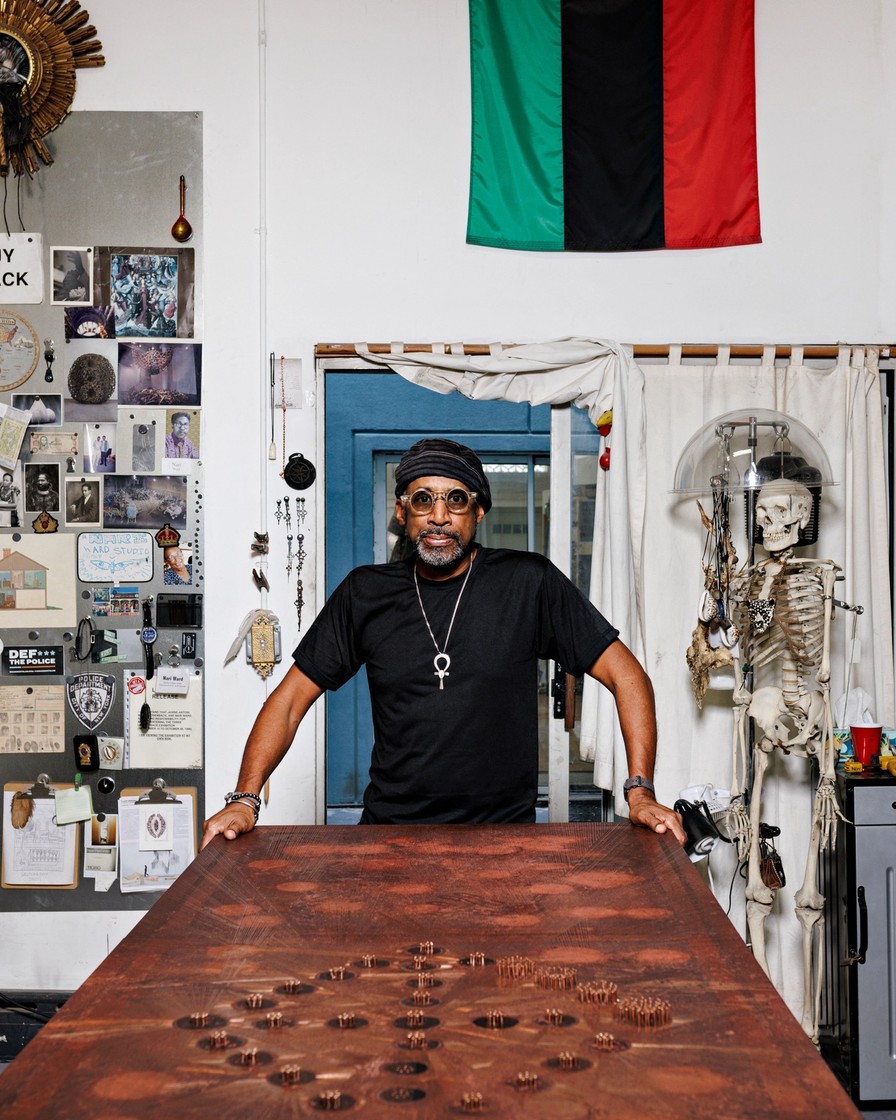
자메이카의 세인트 앤드루에서 태어나 현재 뉴욕에서 거주하며 작업하고 있는 나리 워드는 명성 높은 예술가로서 그의 경력을 30년 넘게 이어나가고 있다. 다양한 매체와 분야를 오가는 그의 창작 과정은 인종, 이민, 민주주의, 정체성, 그리고 공동체와 같은 주제를 다루며 역사와 동시대의 담론을 형성해내고 있다. 몇 년 동안 할렘에 머무르면서 수집한 재료로 구현해 낸 그의 조소 작업은 벽 또는 바닥에 설치되어 워드의 작품세계를 대표하고 있는데, 특히 워드가 재발견한 사물은 그의 작업에 친밀감을 불어넣으며 집단이 공유하는 경험을 상기시킨다. 재료를 결합하고 재해석한 워드의 아상블라주는 사물의 의미를 문학적이고 은유적으로 병치하여 영적, 그리고 개념적인 주제를 탐색한다.

이처럼 고유한 사물을 통해 모호한 개념을 이야기하는 워드의 다중매체, 그리고 퍼포먼스 작업은 재료와 동작, 그리고 기표 간의 체계를 재정립하여 작품의 무궁무진한 해석 가능성을 모색하고 있다. 야구 방망이, 유모차, 신발 끈, 계산대, 병, 그리고 쇼핑 카트처럼 각각의 사물은 여러 겹의 의미와 역사를 내포하여 개인적이지만 집단적인 기억을 동시에 어루만지고 있다. 일상에서 접하는 물건을 회화, 조소, 그리고 퍼포먼스처럼 고전적인 기법으로 풀어내어 독창적인 조화와 질서를 꾀하는 워드는 관객으로 하여금 특정한 맥락에서 벗어나 스스로 작품을 해석하도록 독려한다. 또한, 동시대 사회의 표상으로서 그의 작업은 쉽게 지나친 사물들을 다시 찾아내어 소외된 개개인과 잊힌 역사를 조명한다.

Not All Travellers Walk Roads–Of Humanity as Practice | Lehmann Maupin