본문으로 건너뛰기

길버트 앤 조지

Kröller-Müller Museum

Otterlo

7월 9일–2010년 11월 21일

Gilbert & George at Kröller-Müller Museum

Otterlo

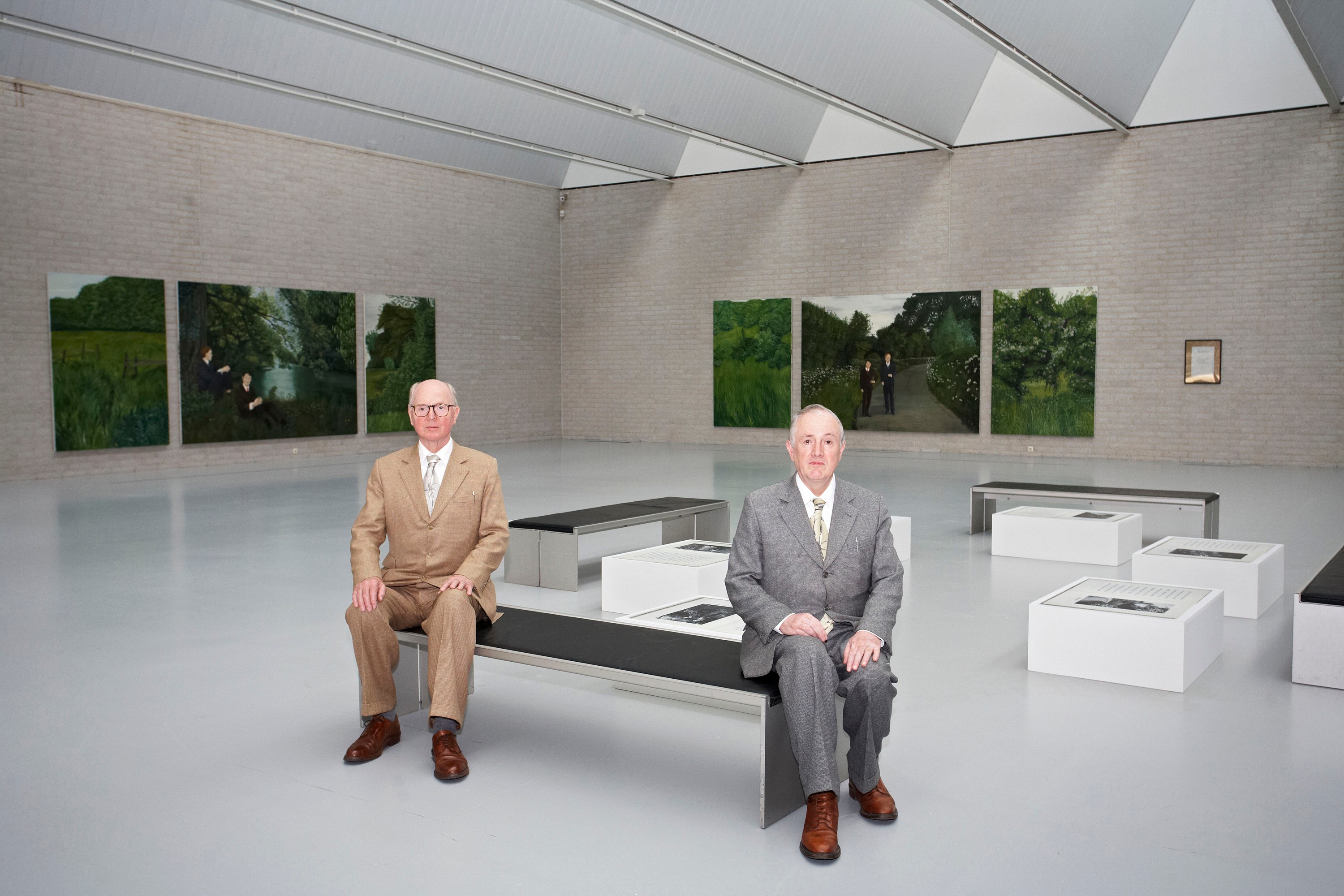
From July 9th, The Paintings (with Us in the Nature) 1971 by Gilbert & George is on display in the large exhibition space in the Quist wing. This unusual "Sculpture" from 1971 consists of 6 huge painted triptychs. At that time, the artists called this a ‘new romantic sad beautiful sculpture’. Painted in oils on linen in the winter of 1970-71, the "Sculpture" is a recreation of the emotions they experienced the previous summer in the English countryside.
This is the only sculpture by these ‘human sculptors’ using this technique. The 1960s and 70s were a time of artistic experimentation around an expanded conception of art: artists broadened the possibilities for large-scale art and with tremendous ingenuity, which remains a source of inspiration. In those years Gilbert & George used various new and classical techniques in order to convey their personal experience of time and space to the public in the form of an artistic experience. They became renowned for their performances as living sculptures in museums, with grease paint on their faces and hands, but they also distributed printed sculptures by post, sung and danced as musical sculptures, produced video sculptures, made drawings as pieces of sculpture and wrote sculptures in the form of books.

Huge negative based pictures eventually became their most important artistic medium. In The Paintings (with Us in the Nature) they set out their relationship to nature. They depict themselves sitting and strolling in the overwhelming presence of nature. In every triptych (each measuring 230 x 680 cm) a single element from culture is always present as a counterpoint. The context of the museum and its collection, in which (critical) examinations of paradise form a spearhead, will allow The Paintings (with Us in the Nature) to be shown to optimal advantage. Other pictures and charcoal on paper sculpture by Gilbert & George from the collection will be on display simultaneously in the museum’s print room.

Portrait of Gilbert & George

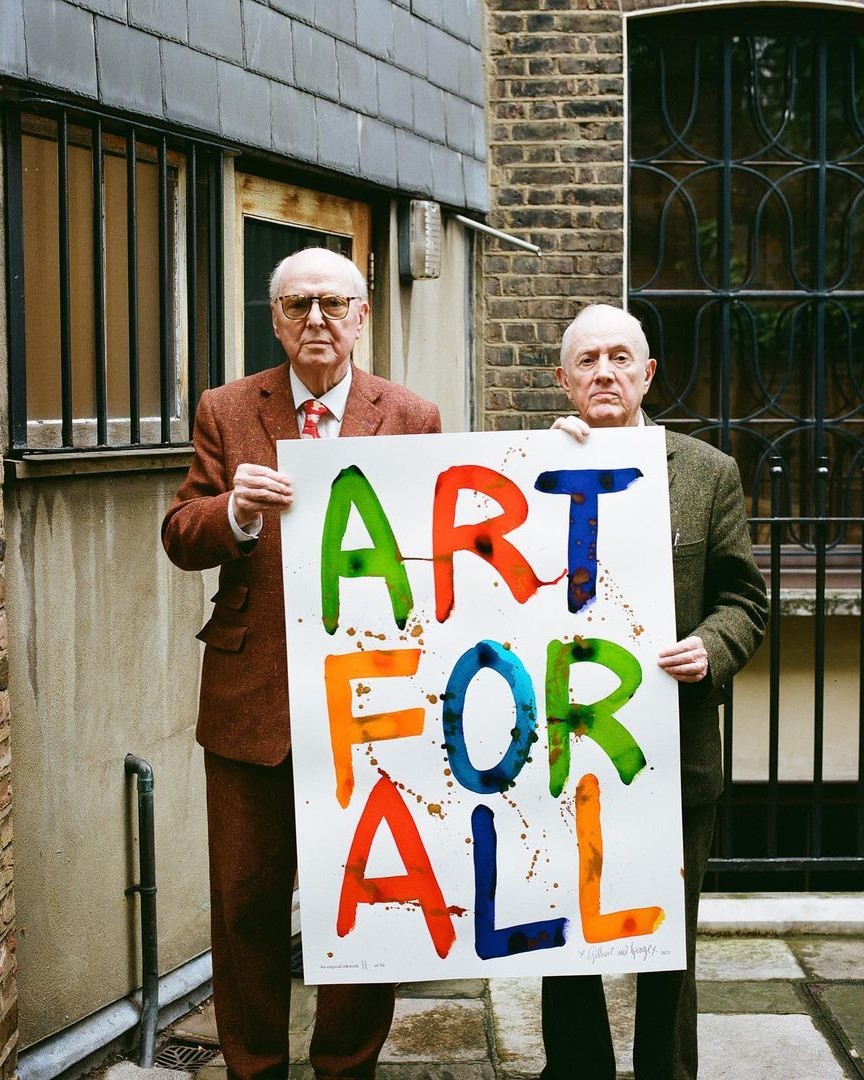
Gilbert & George (b. 1943, San Martin de Tor, Italy & 1942, Plymouth, United Kingdom; lives and works in London, United Kingdom) met in 1967 in art school at Saint Martin’s, where they first developed their signature form of “living sculptures” by walking around the streets of London with their heads and hands coated with multi-color metallic powders. Since then, they have lived and worked together, their individual identities subsumed into a vision of animate sculpture, becoming representations of the universal human condition, which is a central theme in their work. Their embrace of video technology, along with their well-known photo-collage works, allowed Gilbert & George to extend their living sculptures beyond a particular time and place and broadcast their art to wider audiences, establishing their motto of “art for all.”

Shortly after art school, they moved to London’s East End, then a bustling immigrant and working-class neighborhood, which has served as their home and studio for almost 50 years. Their changing neighborhood, which has become a gentrified creative center, has significantly influenced their work. The artists often appear in their work as witnesses to life unfolding in the sociopolitical and urban conditions of this area. Through imagery specific to London and the East End in particular, Gilbert & George create an ongoing portrait of the city that includes street signs, ginkgo trees, graffiti, postering, and gum-stained sidewalks.

The Paintings (with Us in the Nature) 1971 | Lehmann Maupin