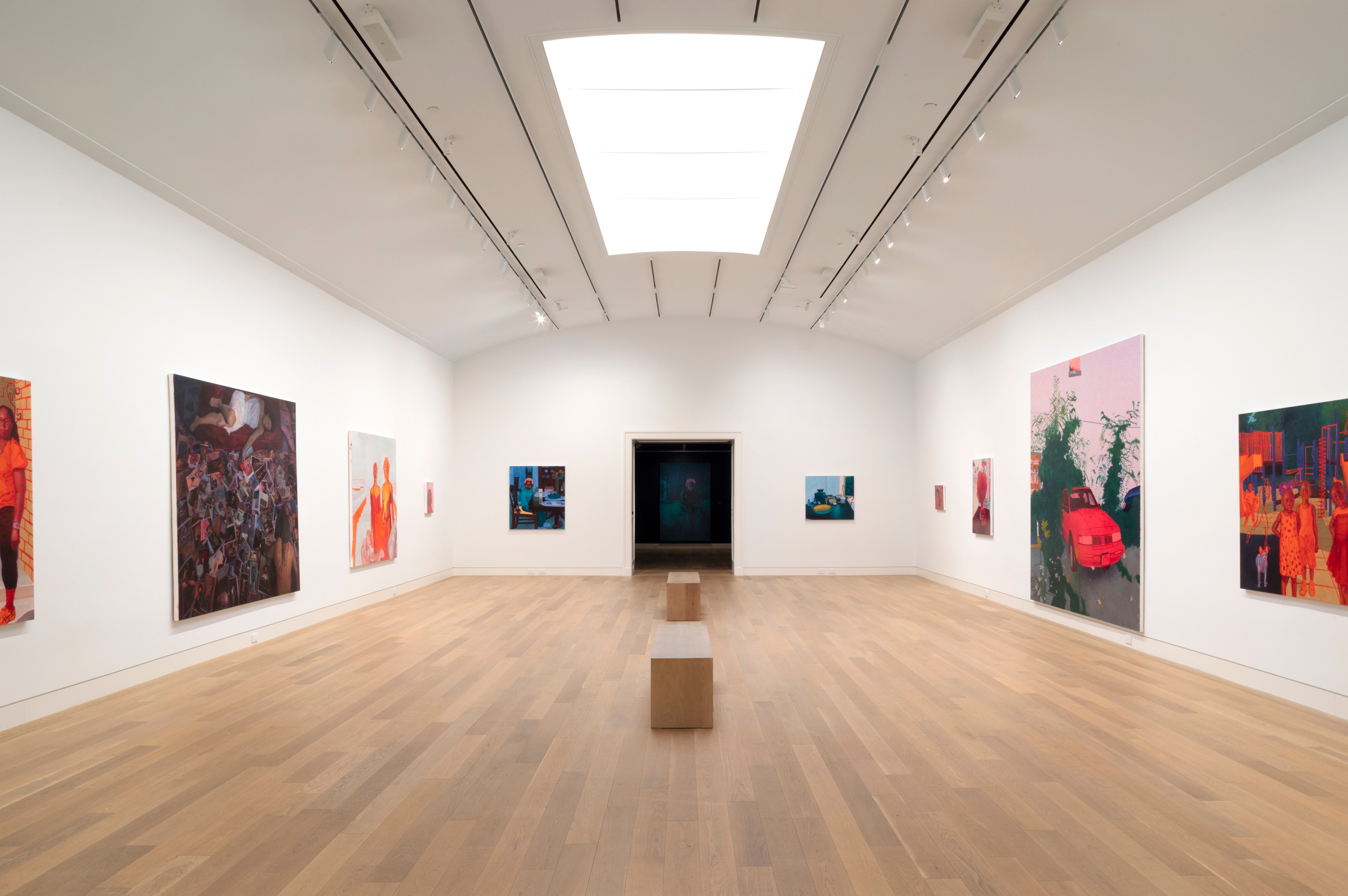
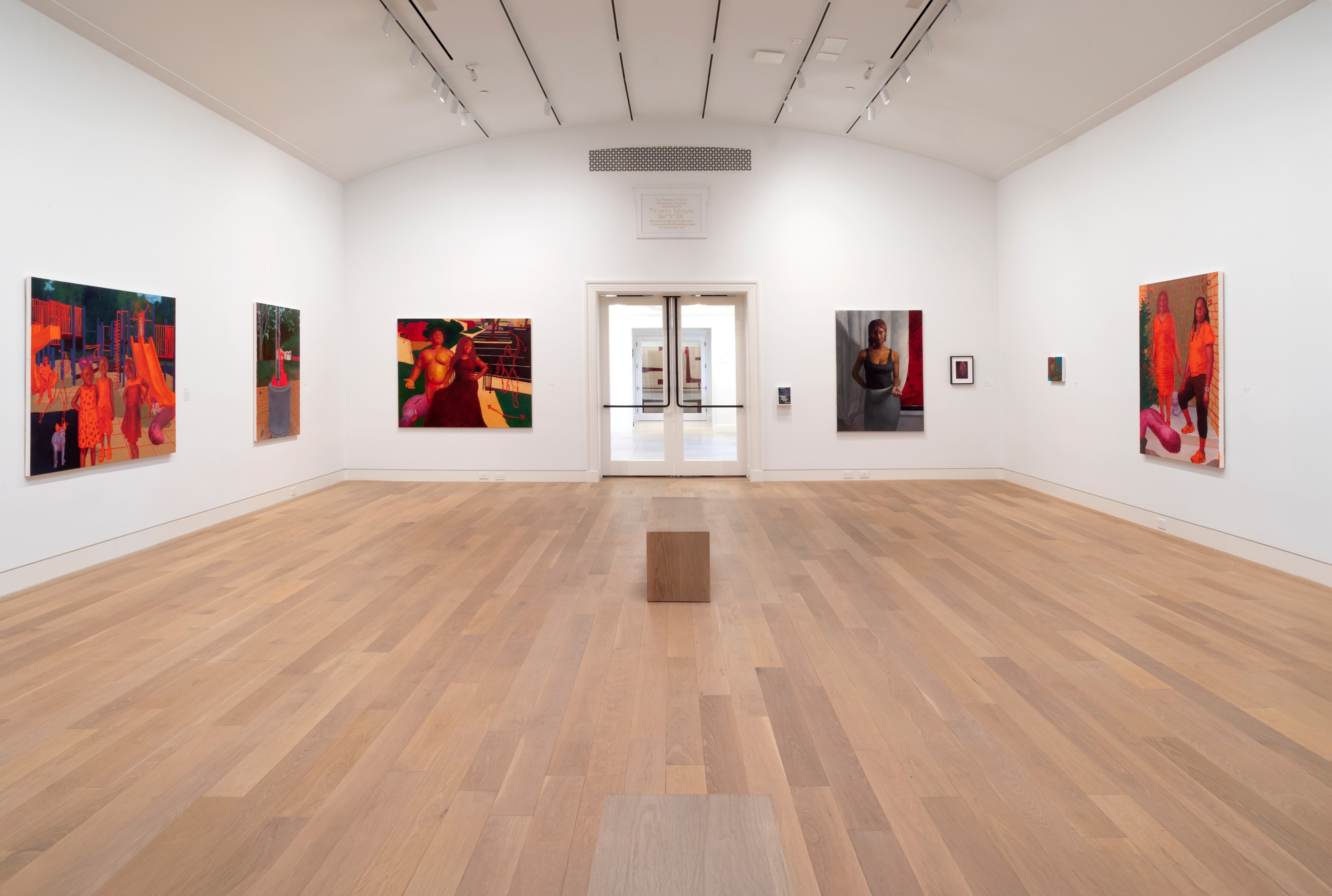
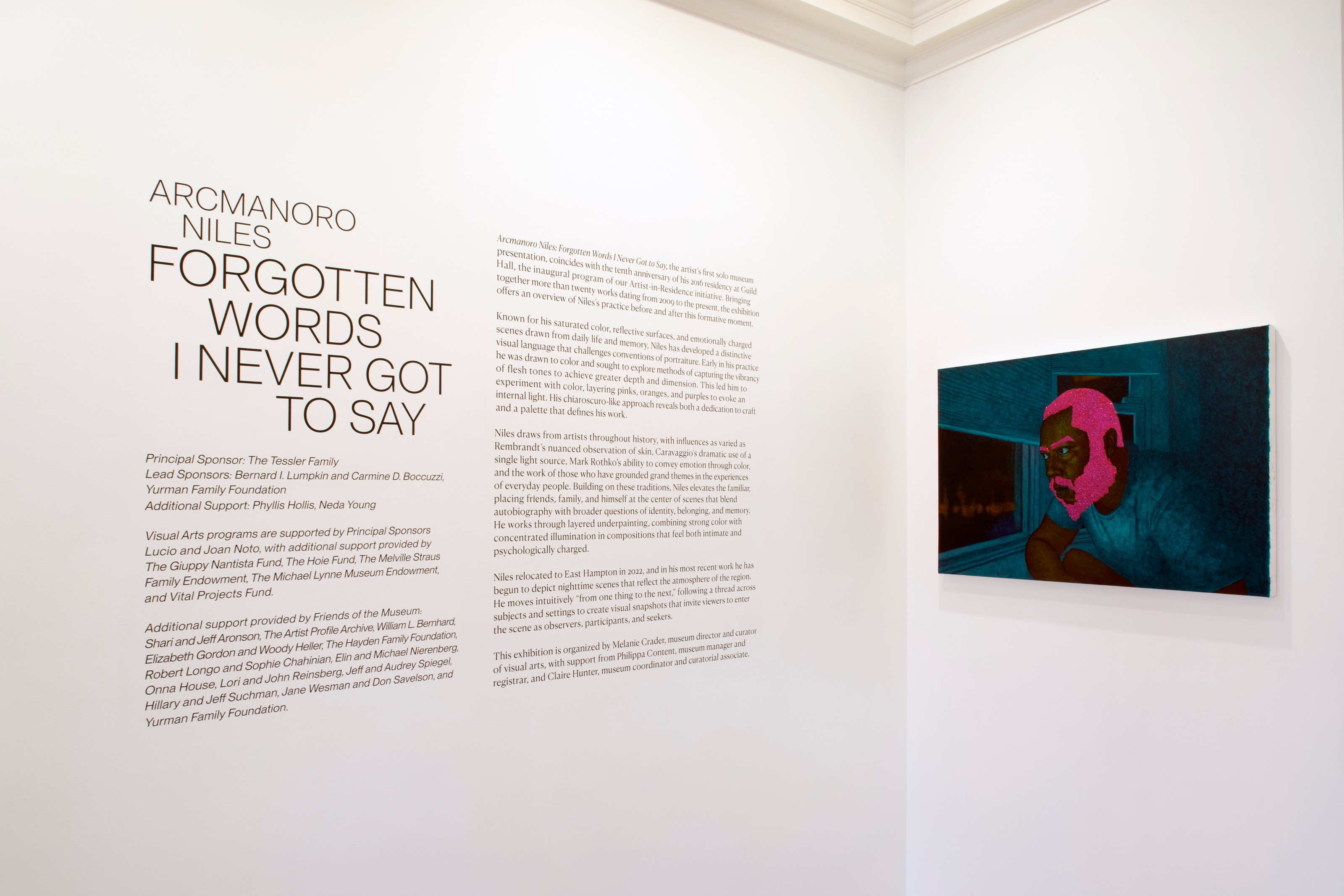
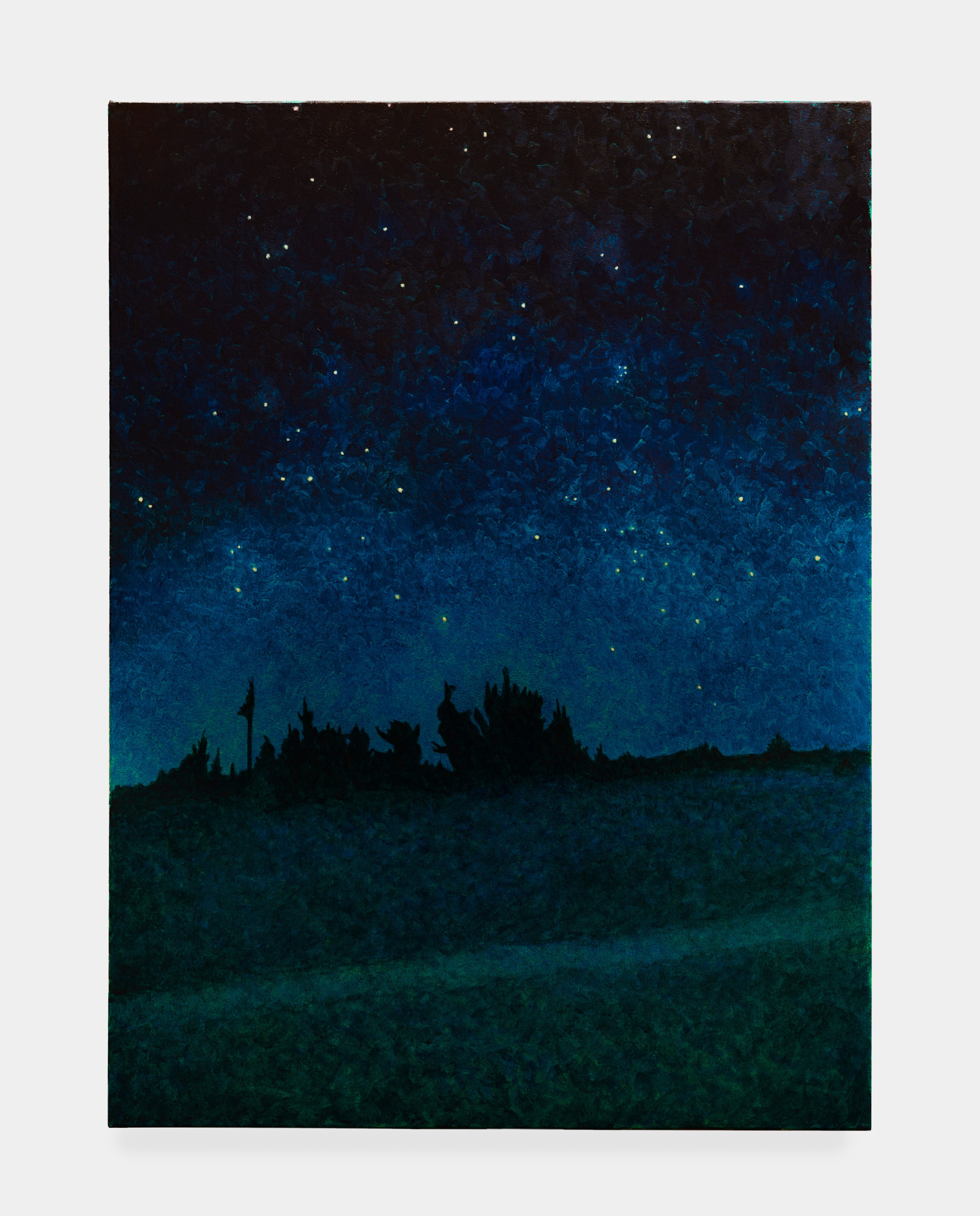
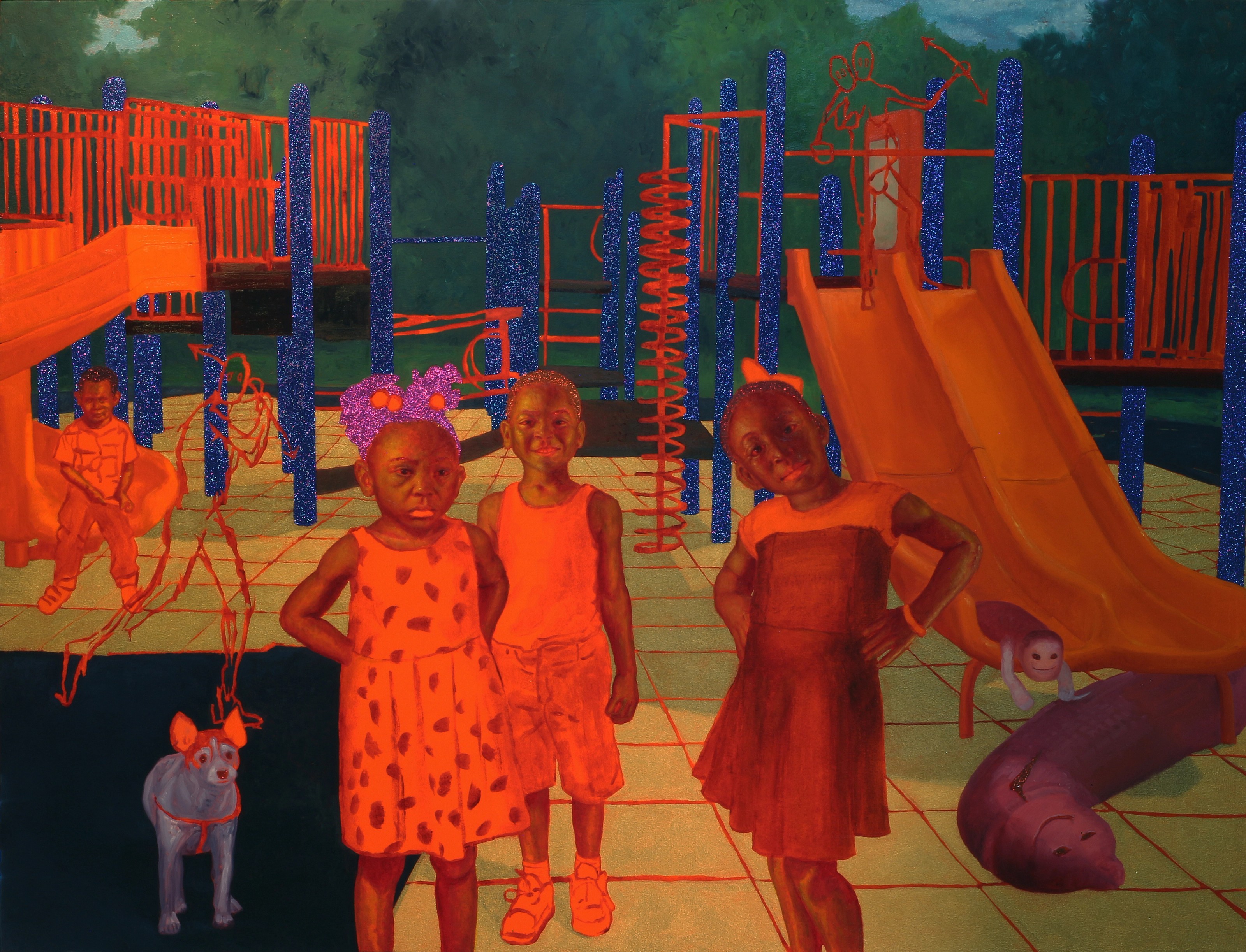
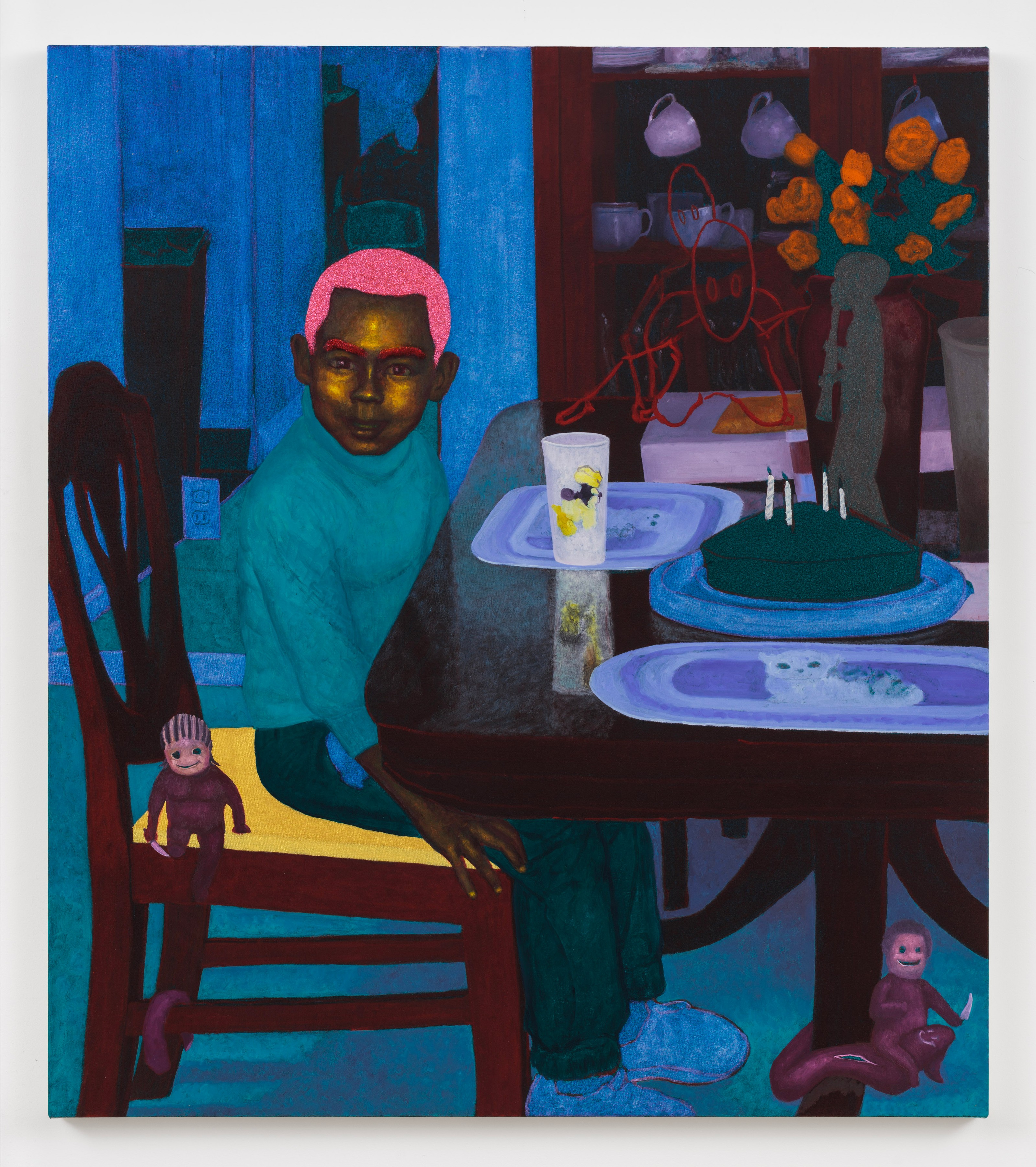
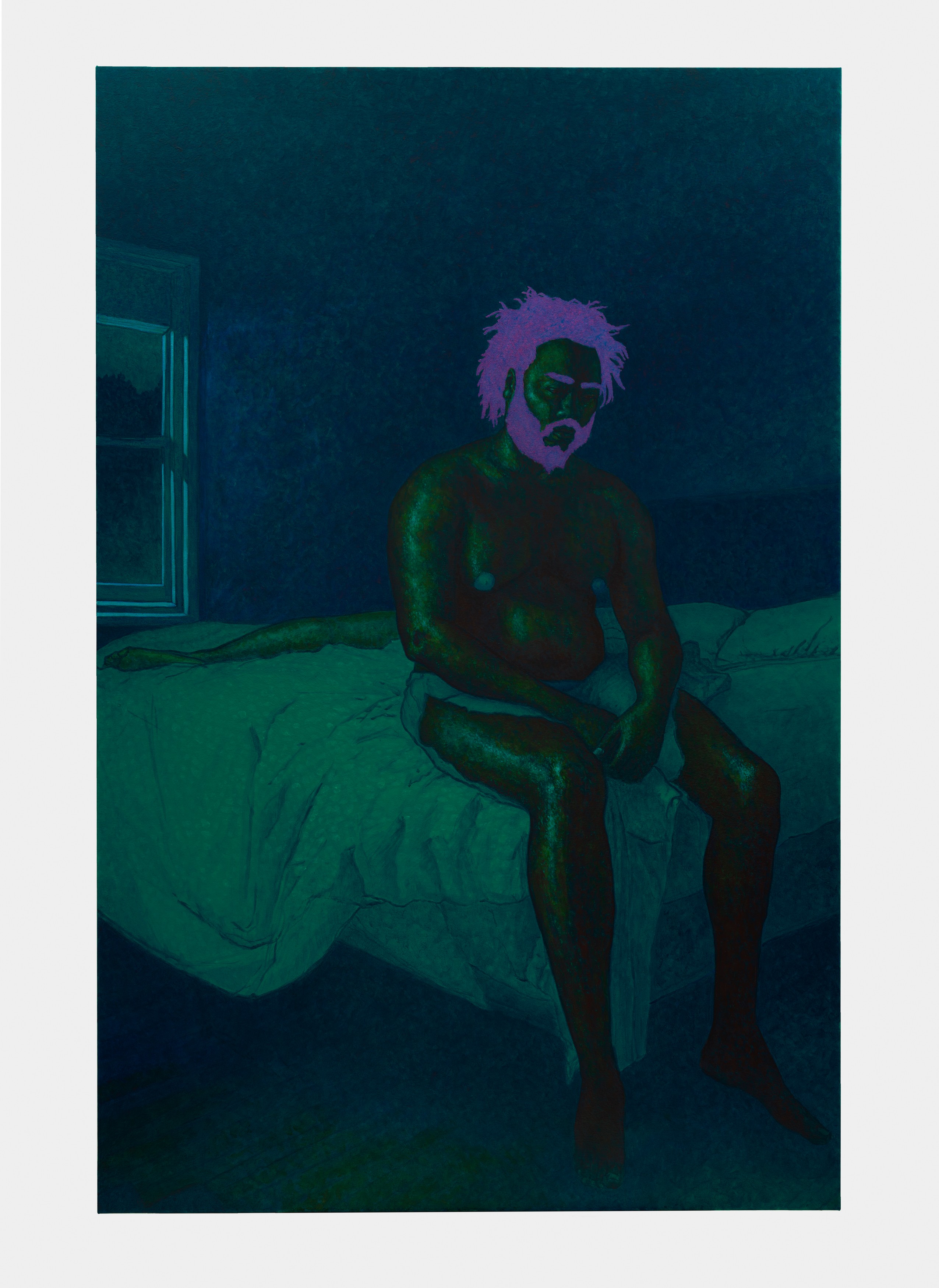
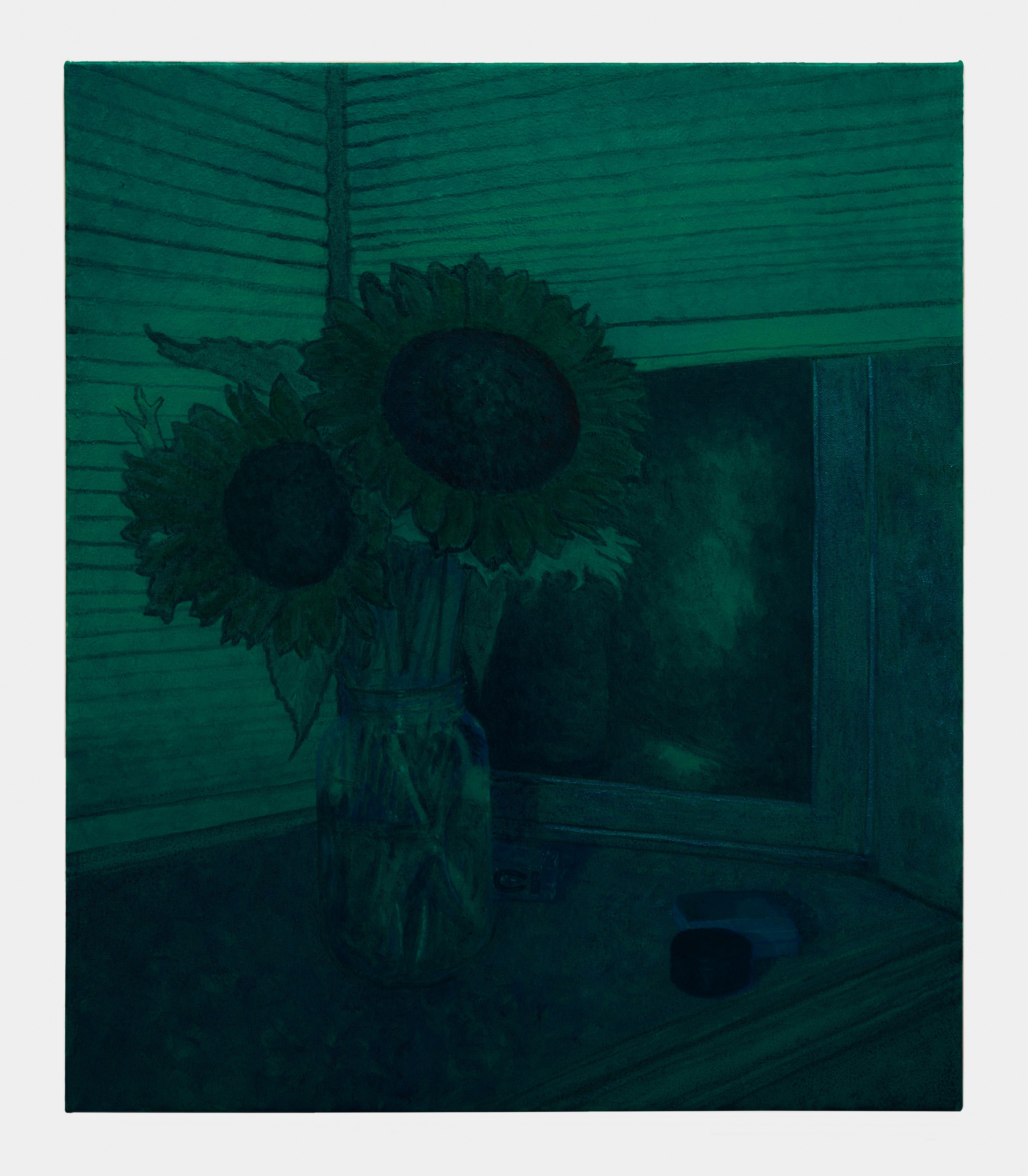
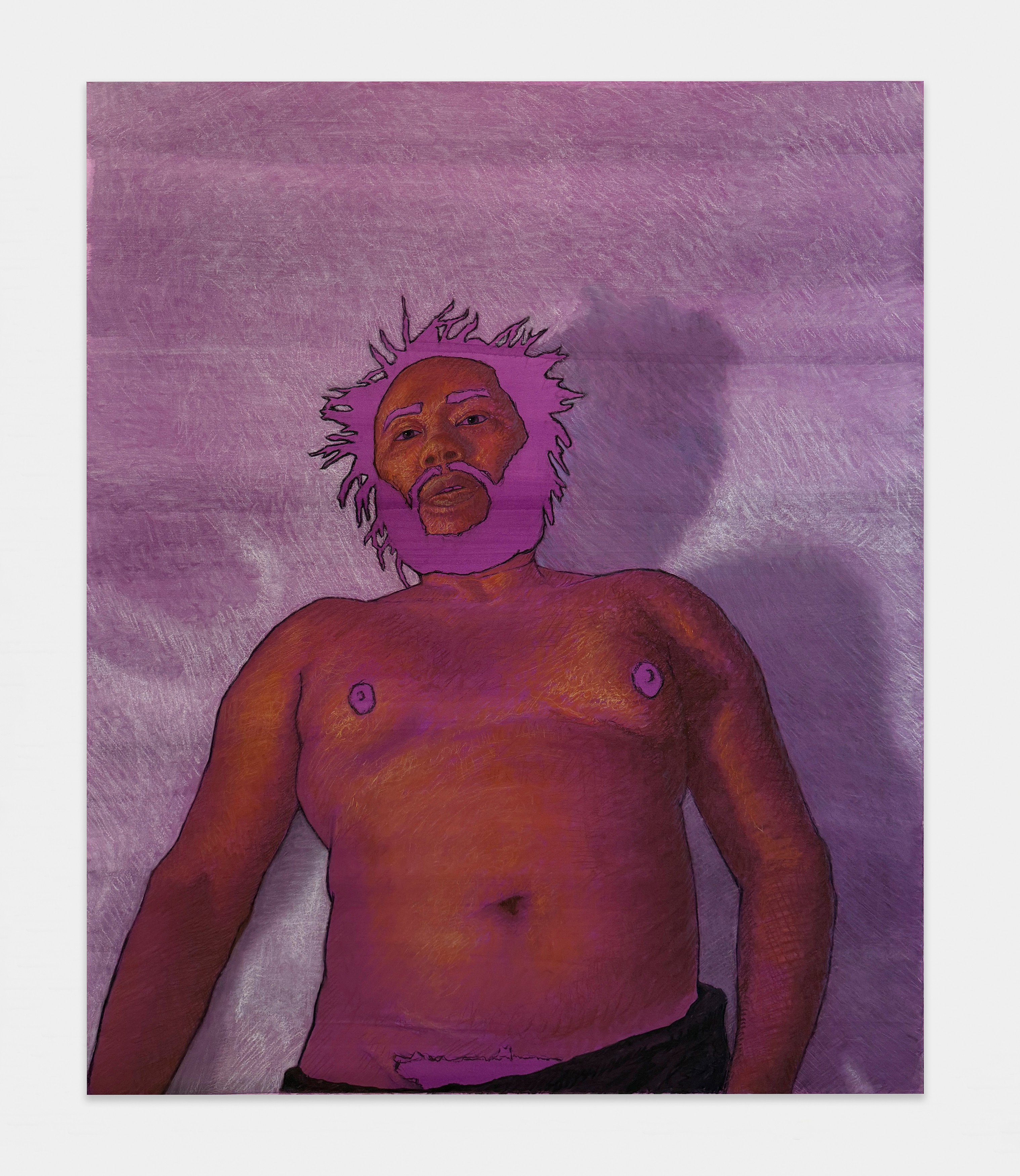
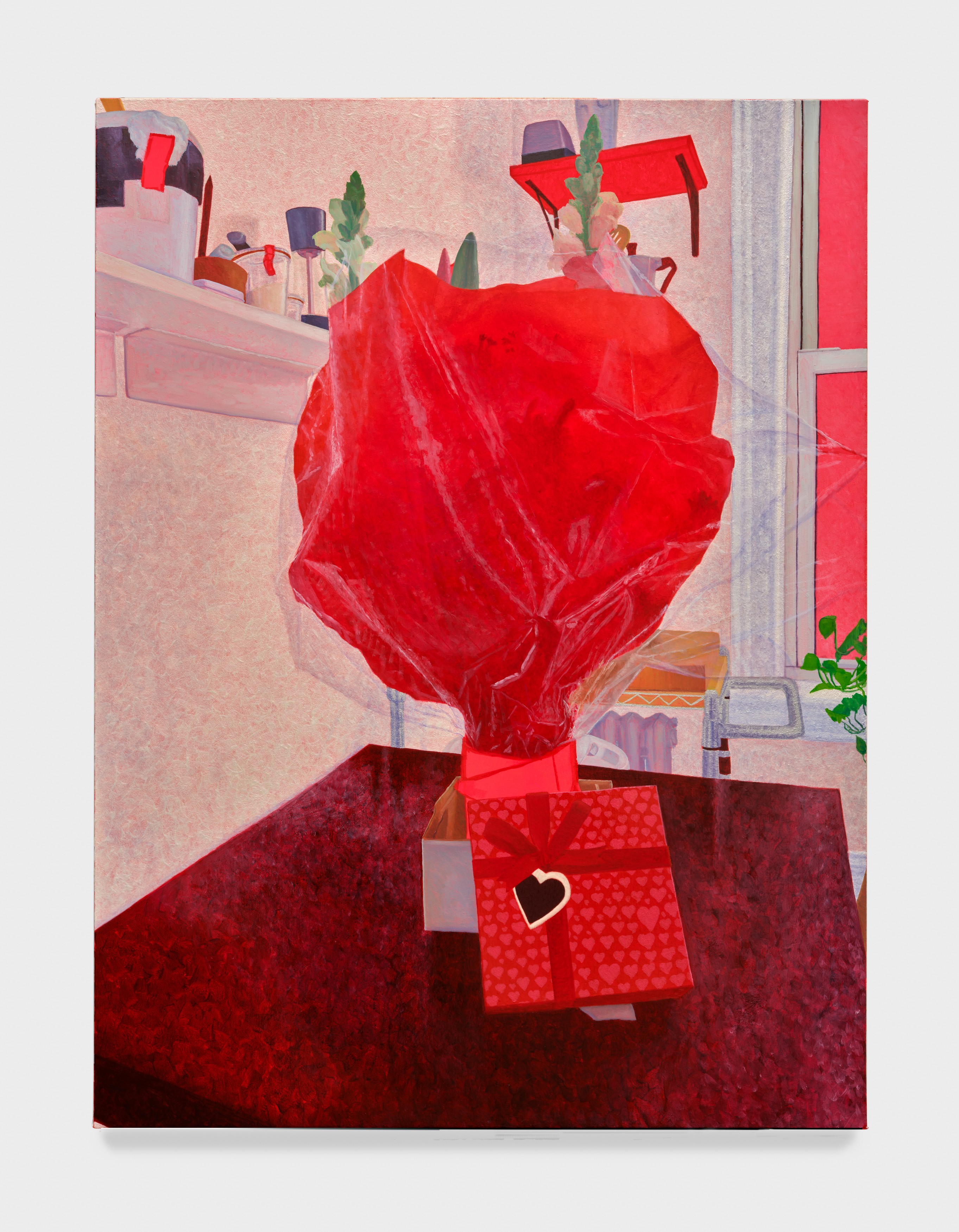
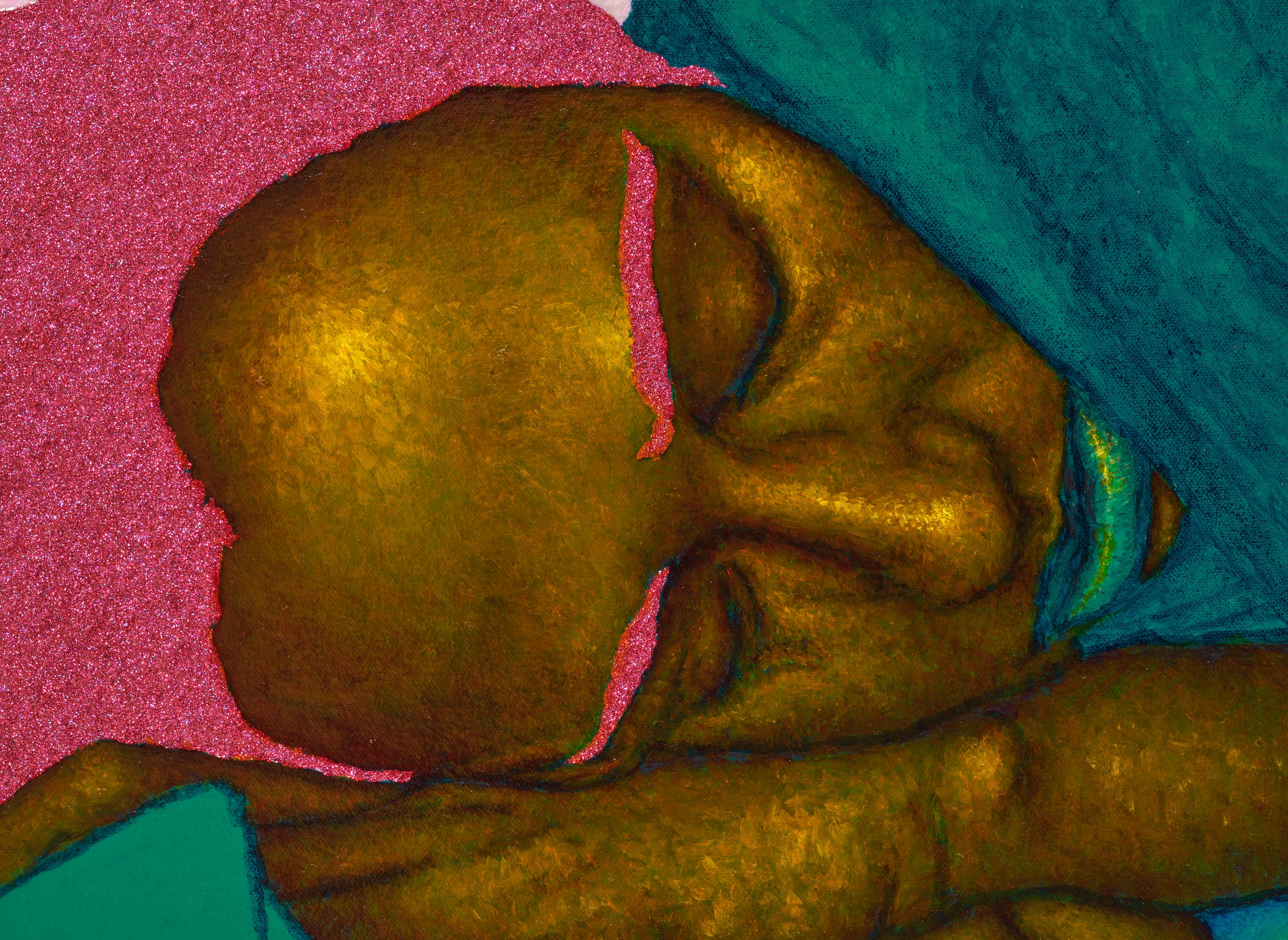
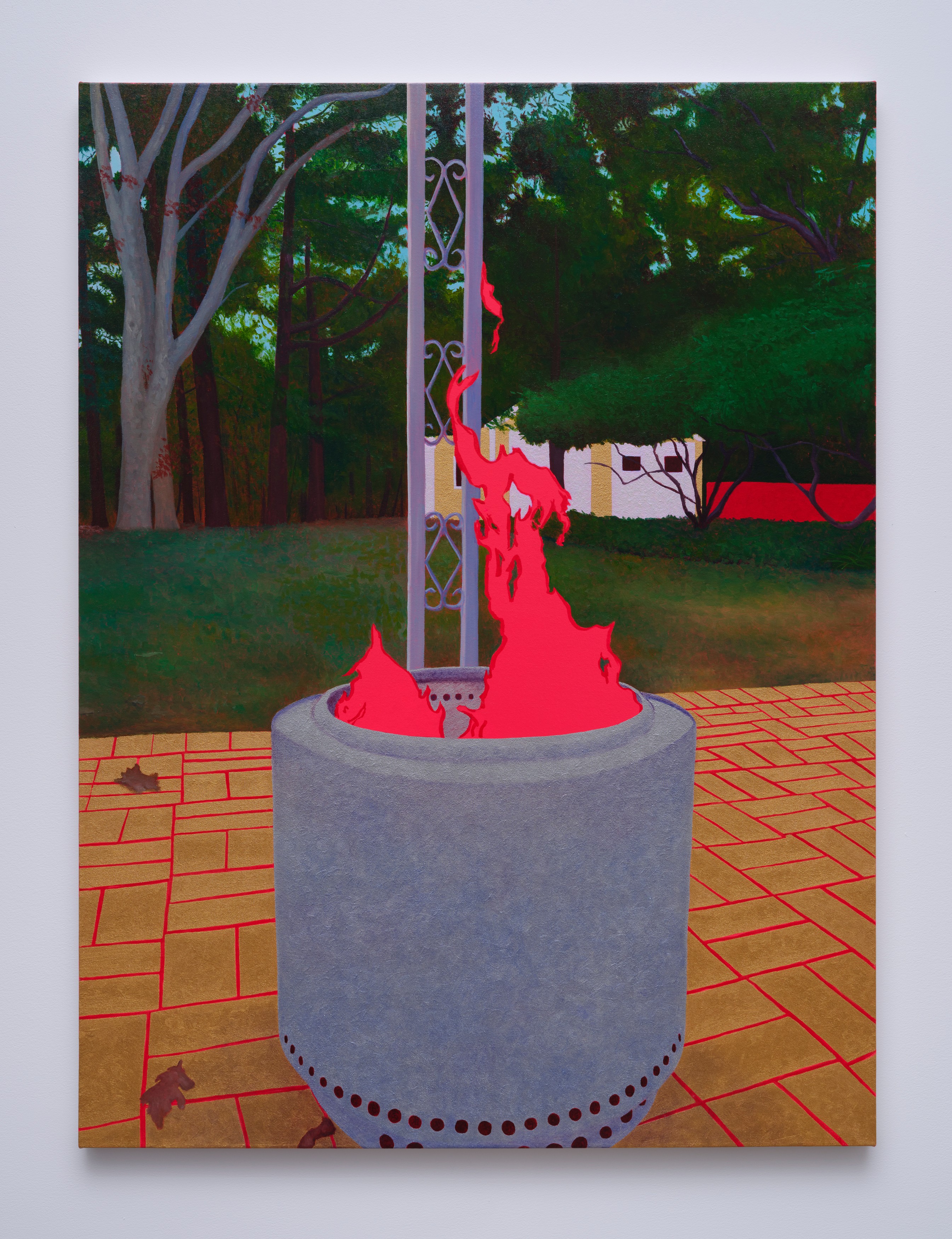
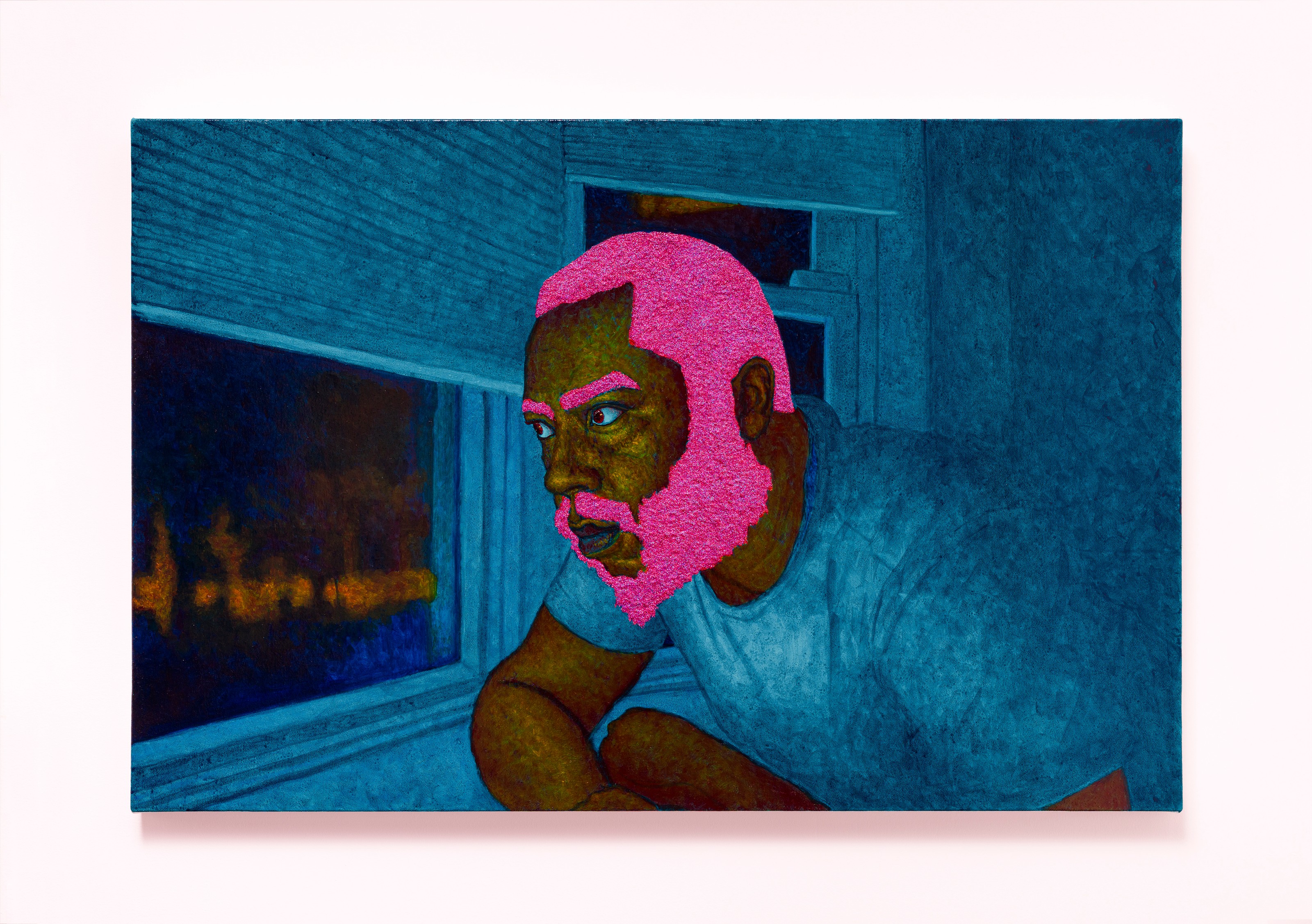
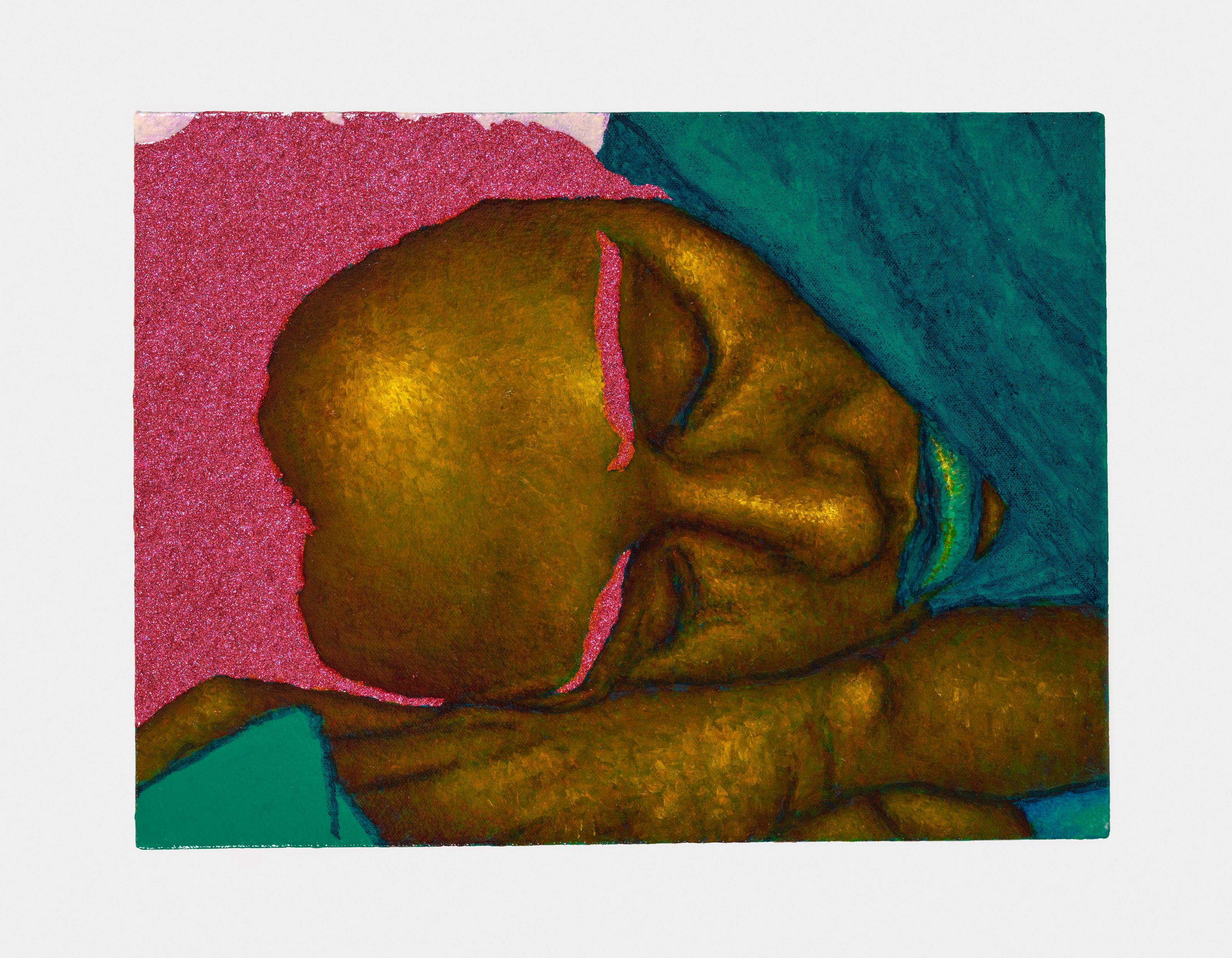
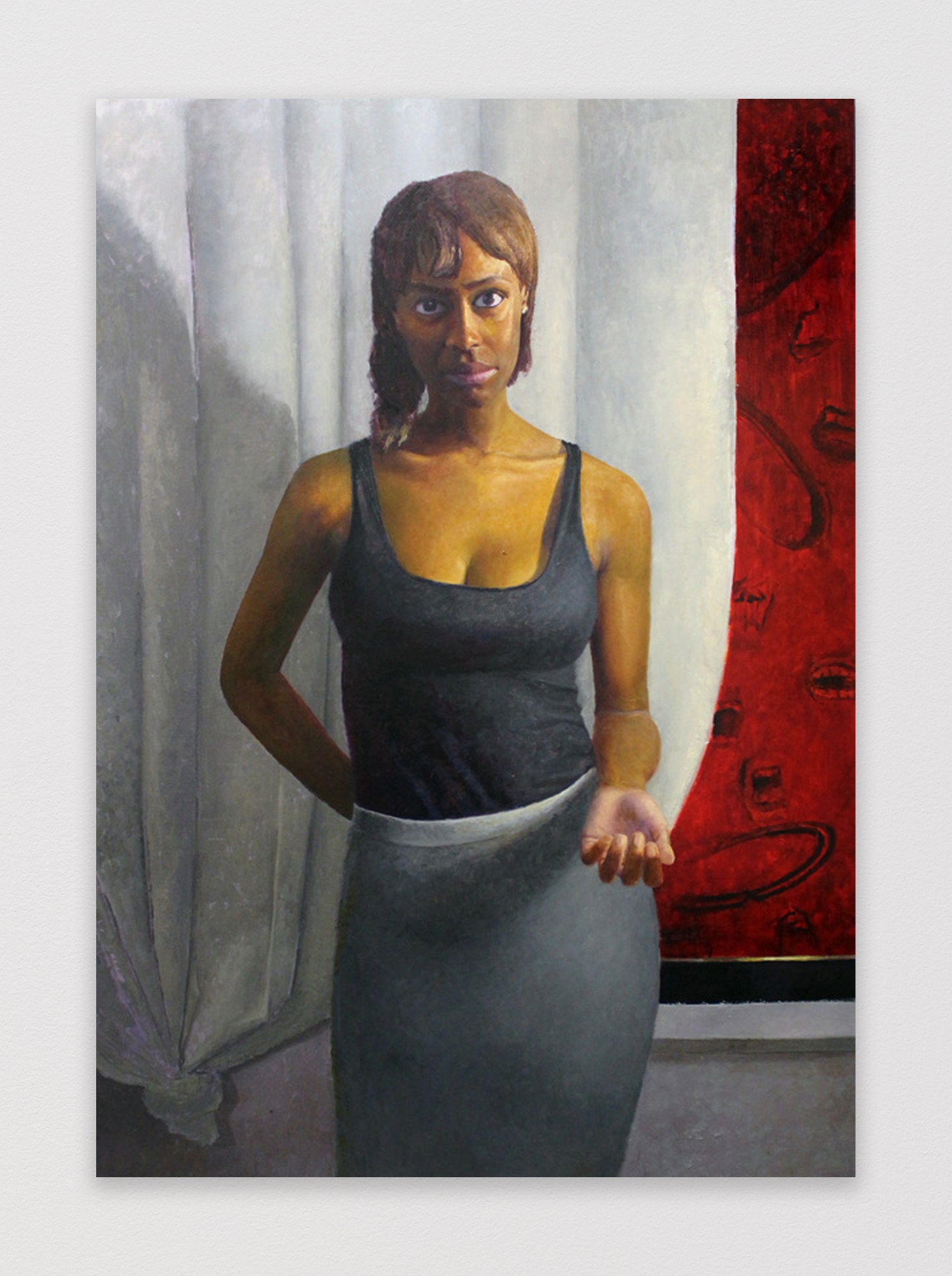
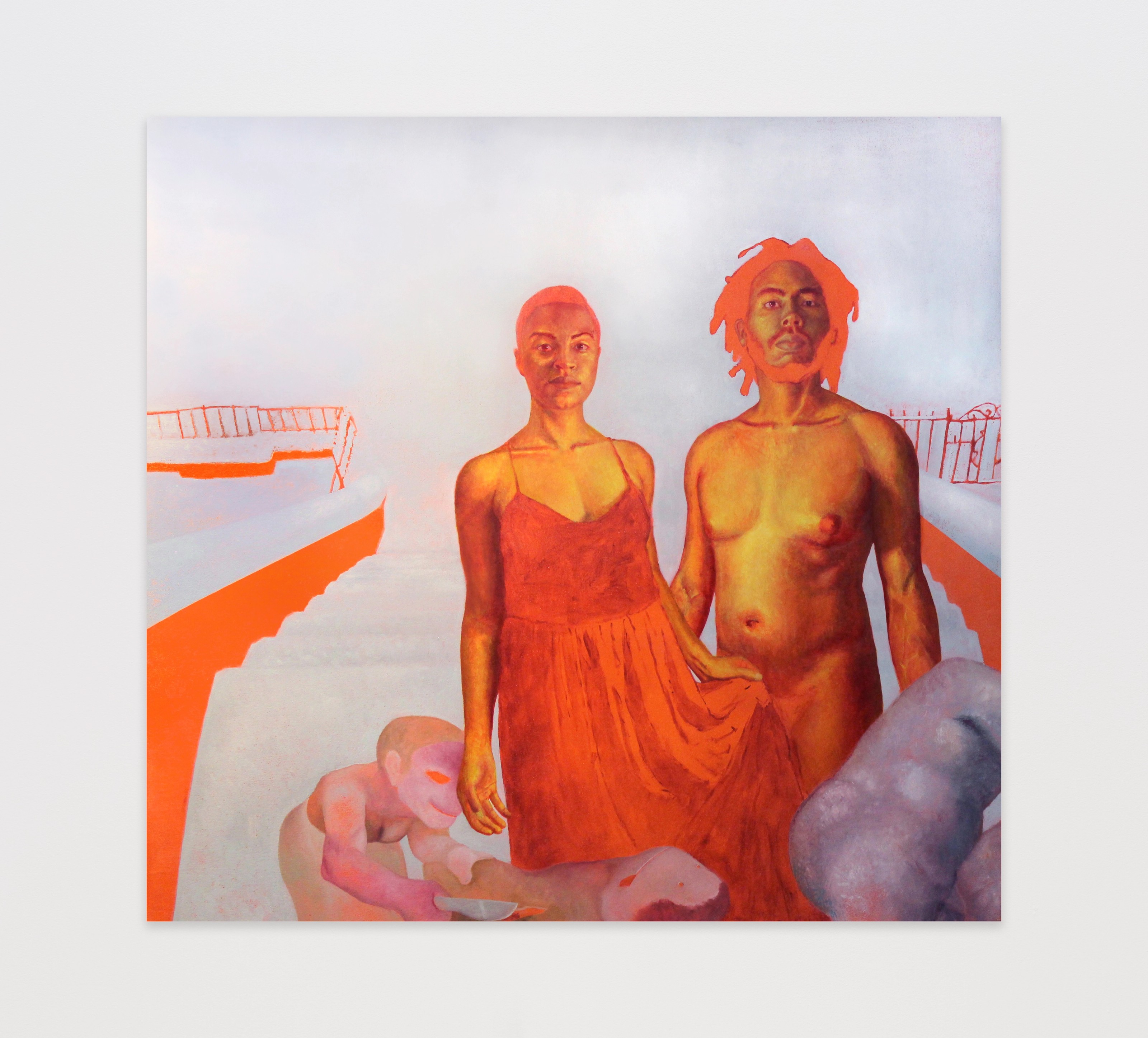
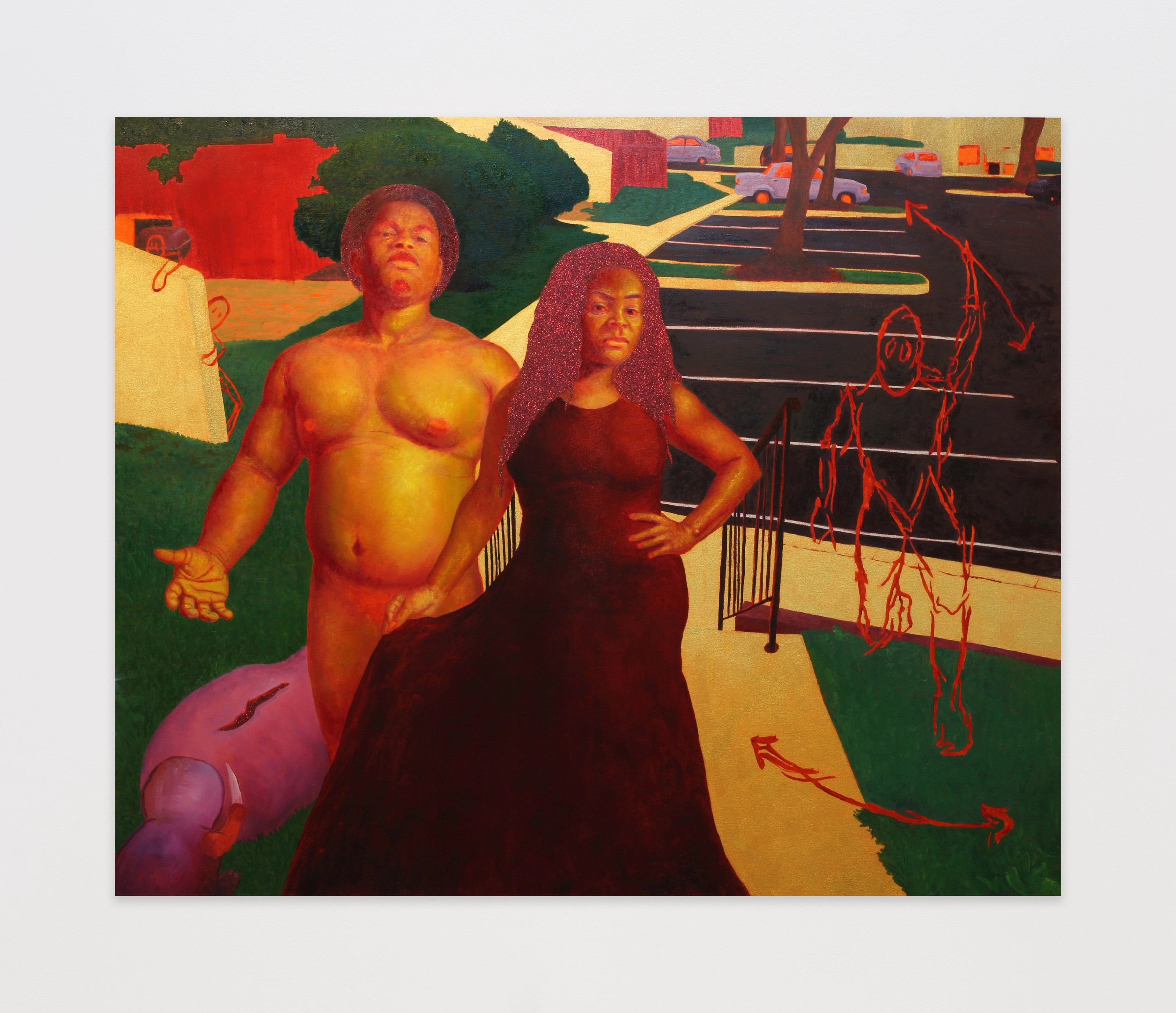
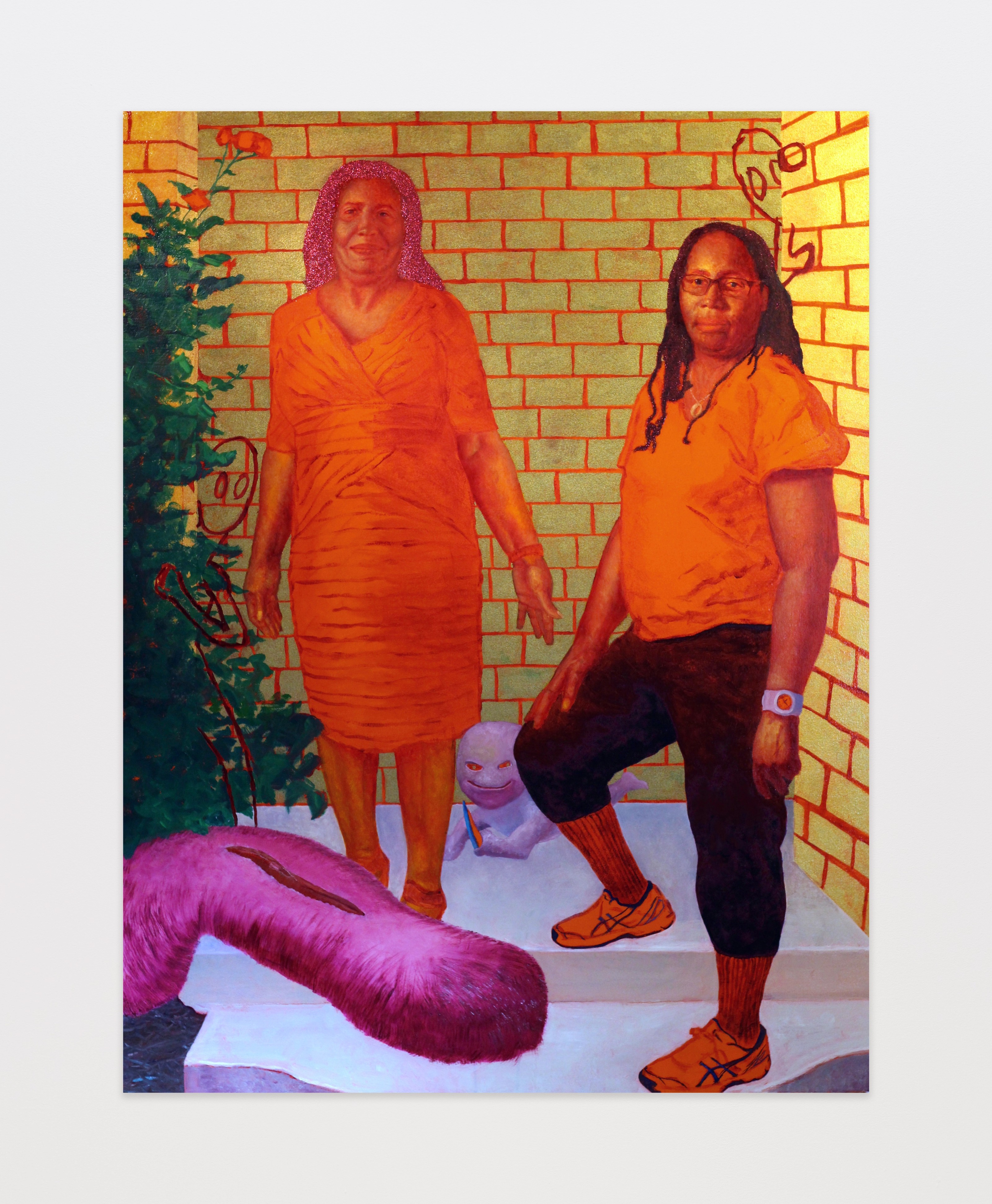
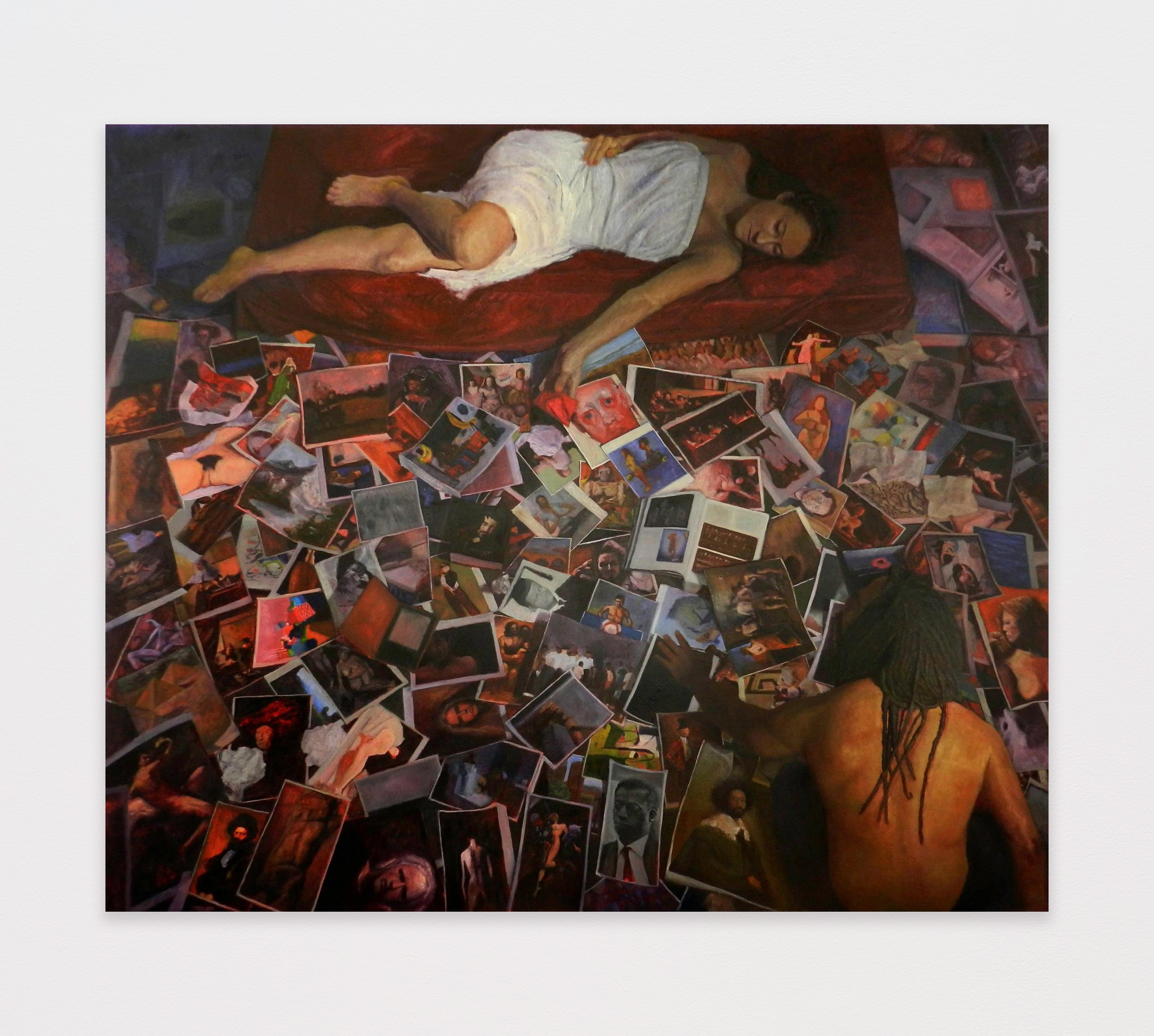
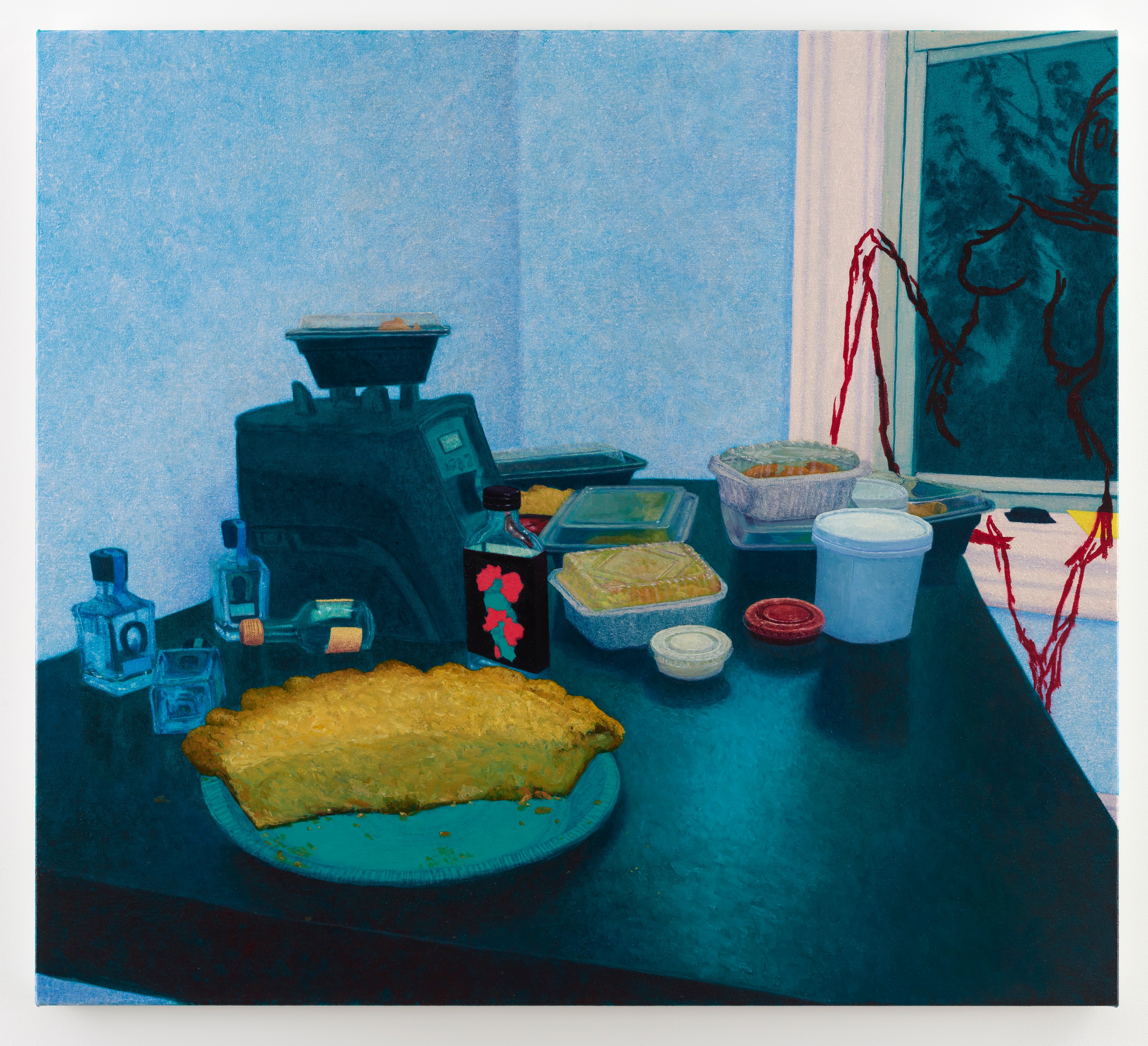
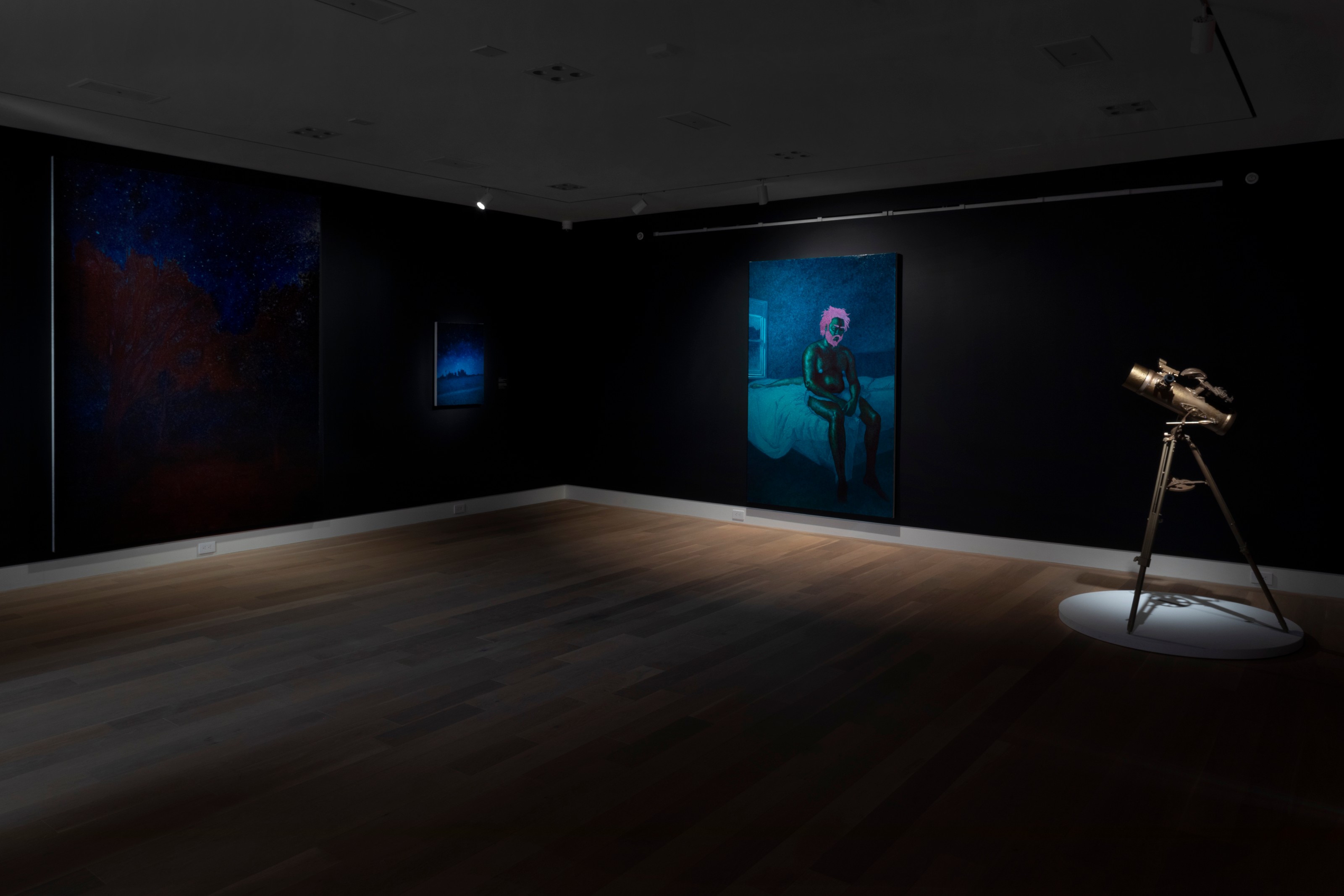
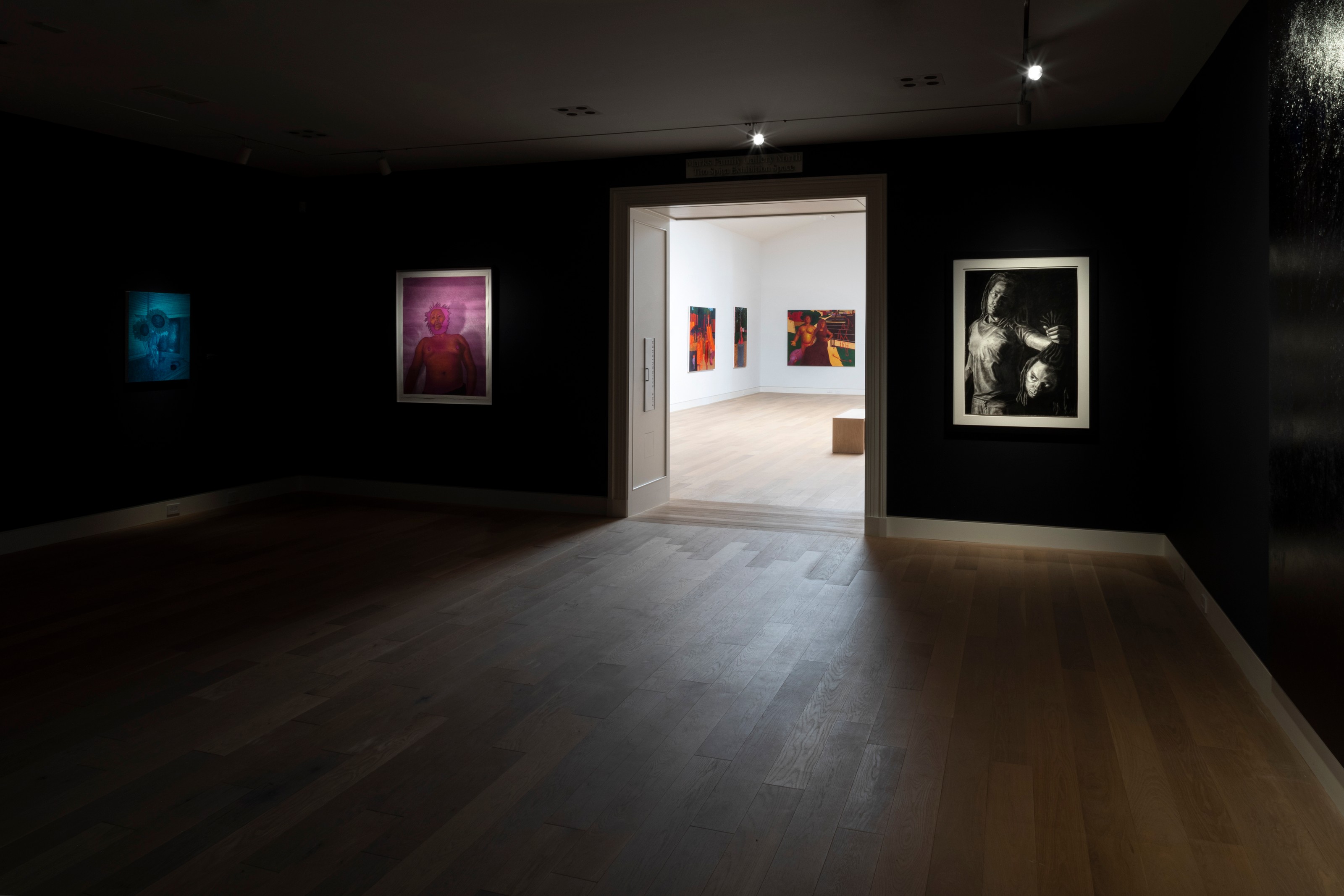
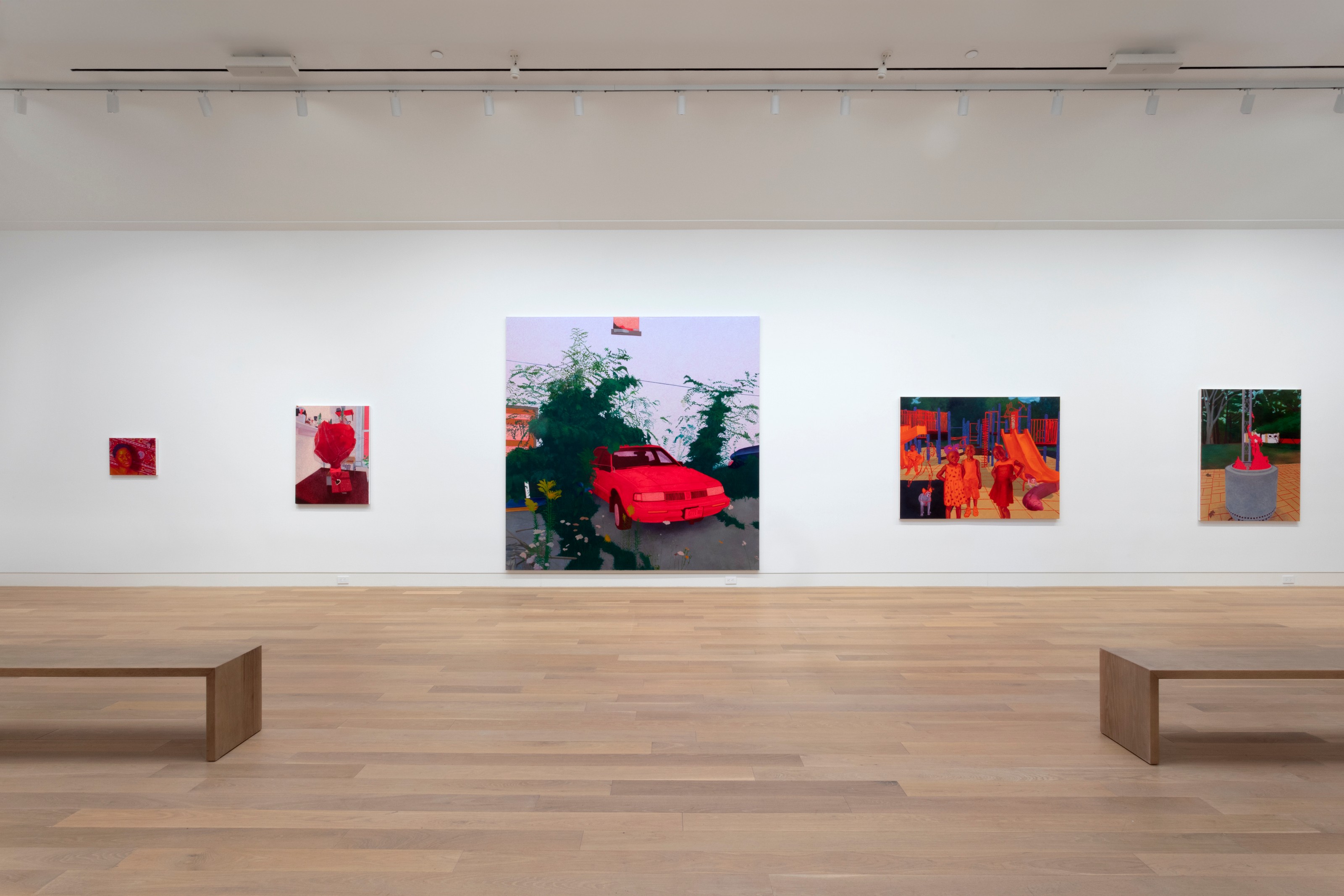
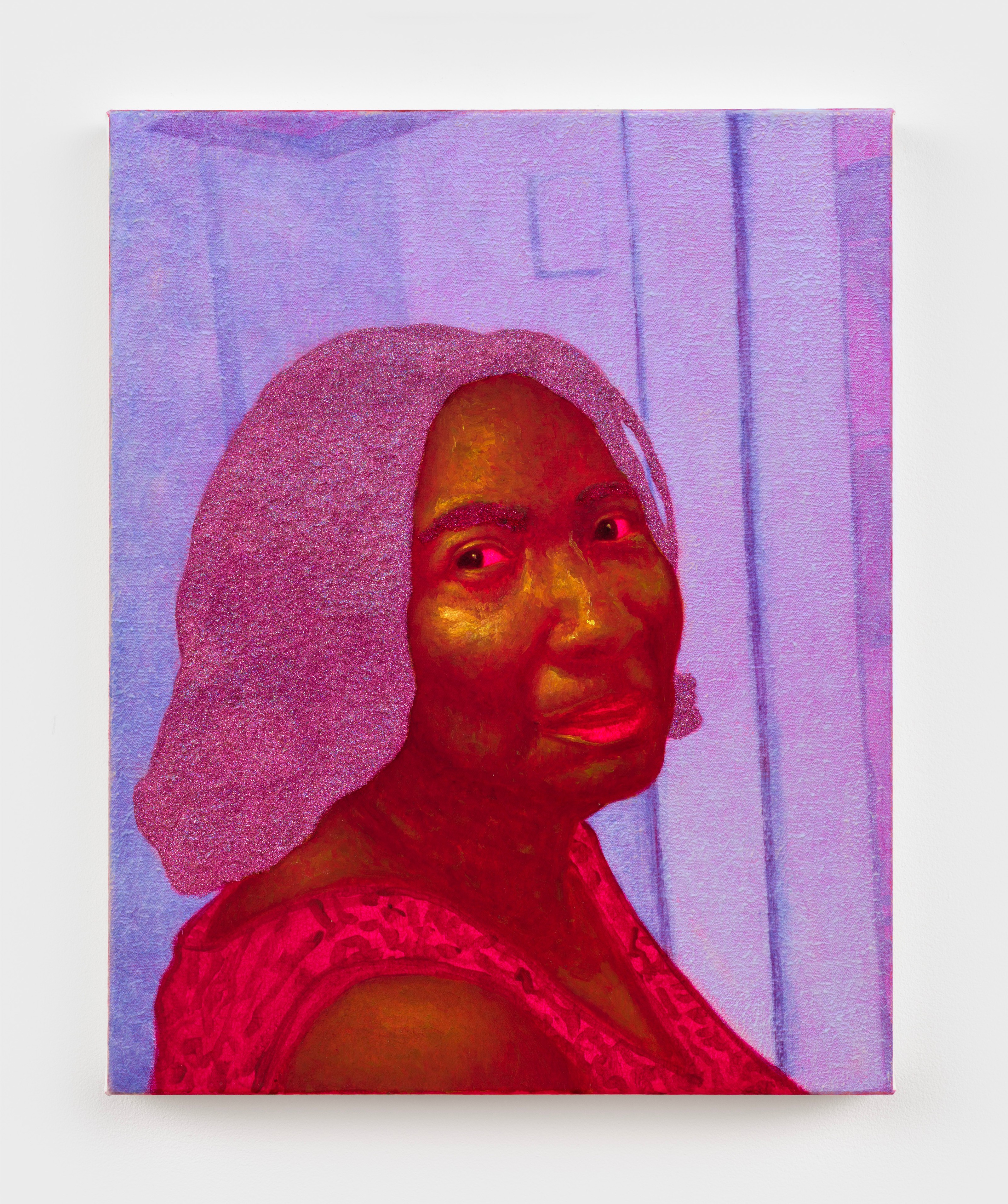

Arcmanoro Niles (b. 1989, Washington, D.C.; lives and works in New York, NY) makes vivid, brightly-hued paintings that expand our understanding of traditional genre painting and portraiture. Niles offers a window into seemingly mundane moments of daily life―a child seated at the table for breakfast, a man about to get into his car, a couple in their bedroom―with subjects drawn from photographs of friends and relatives and from memories of his past. The paintings, though intensely personal and autobiographical, engage in universal subjects of domestic and family life while also making reference to numerous art historical predecessors, including Italian and Dutch baroque, history painting, Color Field painting, and ancient Egyptian sculpture. Though drawing from many styles and genres, Niles is particularly inspired by the paintings that 16th-century Italian painter Caravaggio created of daily life through representations of his family and friends. In depicting not only people close to him but the places and times they inhabit, Niles creates his own record of contemporary life.
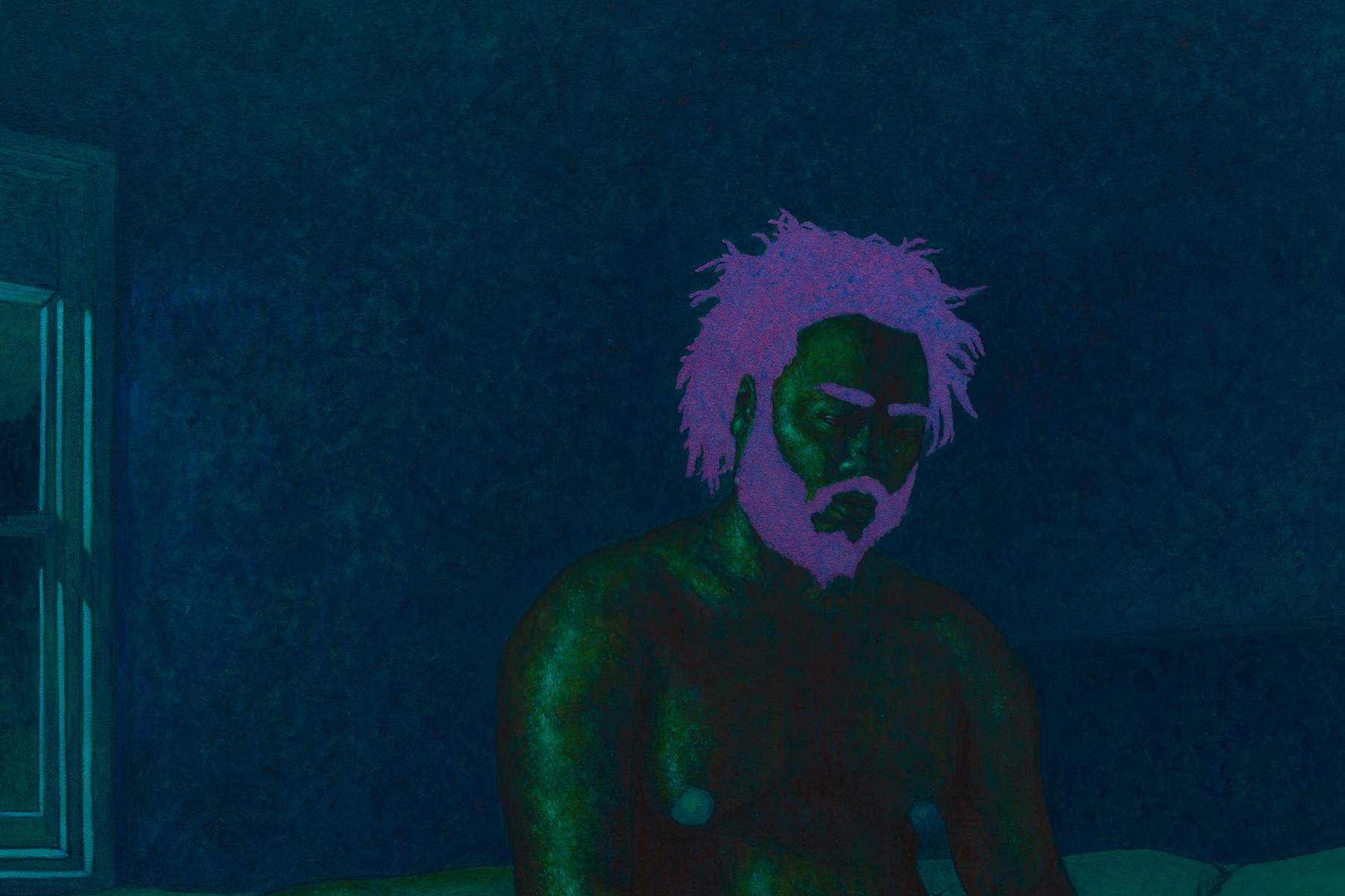
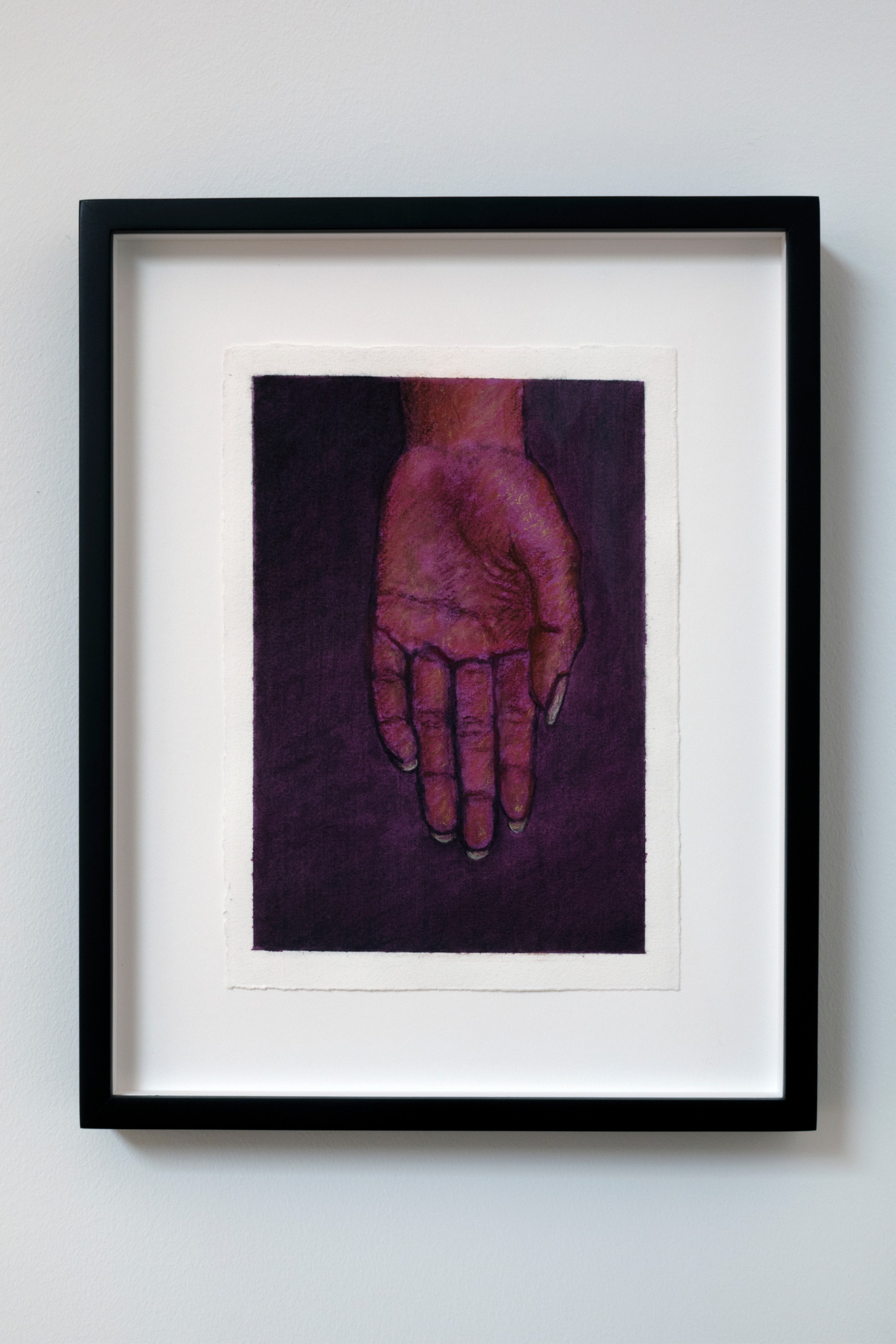
A signature aspect of Niles’ work is his use of vibrant oranges, pinks, purples, blues, and greens, which he layers, color after color, to create a saturated glow. The brown skin of each figure is rendered with a gold-like tone, their hair a glimmering halo of purple, orange, or hot pink glitter. Initially working in more traditional realist modes, in 2015 the artist began to create paintings with highly vivid color as a response to his frustration at not being able to achieve the depth of tonality he saw in the skin tones of his family and friends. Once he began to incorporate oranges and pinks into the background scene, he was able to achieve a depth and energy in his work that solidified his methods and shifted the way every painting has looked since. During this period, Niles also began to incorporate what he calls “seekers” into his work. These seekers take the form of small, gestural characters and more fleshy, gremlin-like figures that represent our most basic human impulses and desires. “Seekers,” says Niles, “are more impulsive, chasing whatever they think will make them happy in that moment, with no fear of consequence, while the human subjects are more vulnerable and open with their feelings.” The seekers both move the viewer formally through the painting and invite us to imagine what events might have occurred before or after the scene depicted, hinting at the inner motivation for each figure.